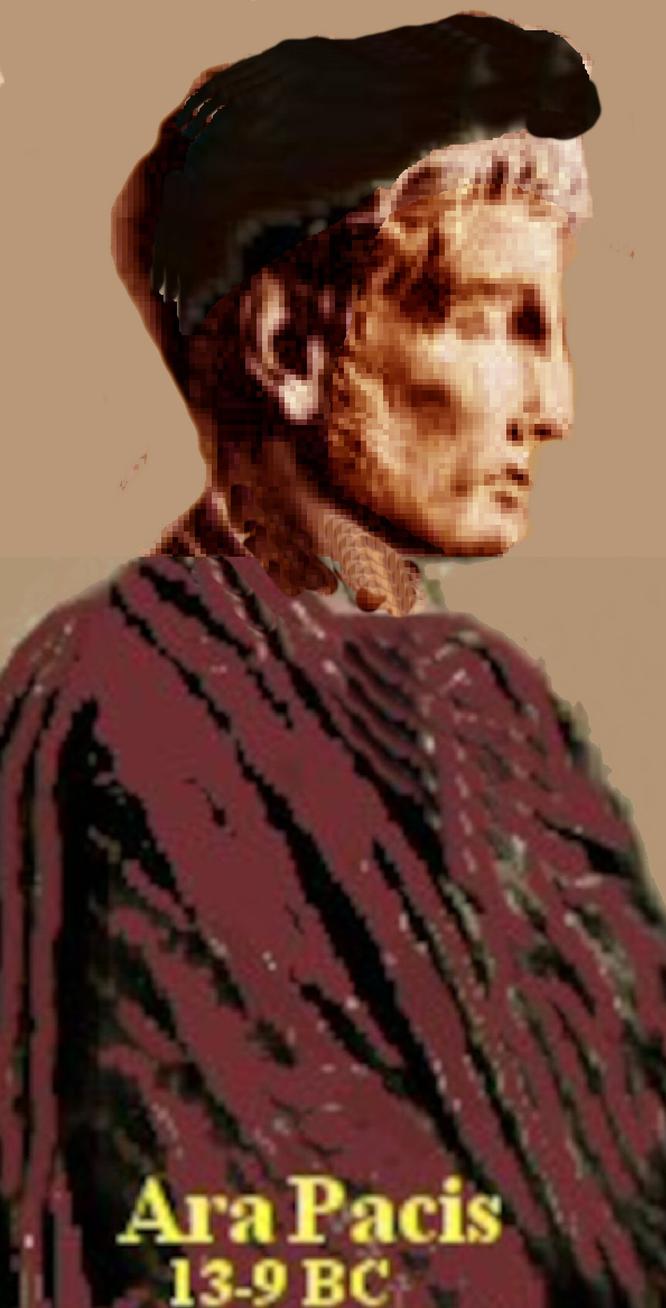
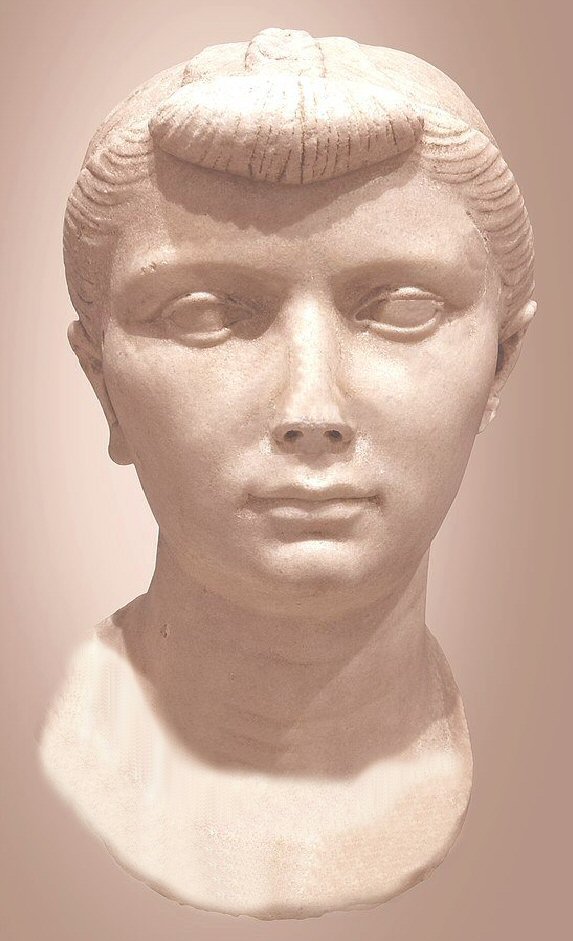
  R.2.7/H.2.22 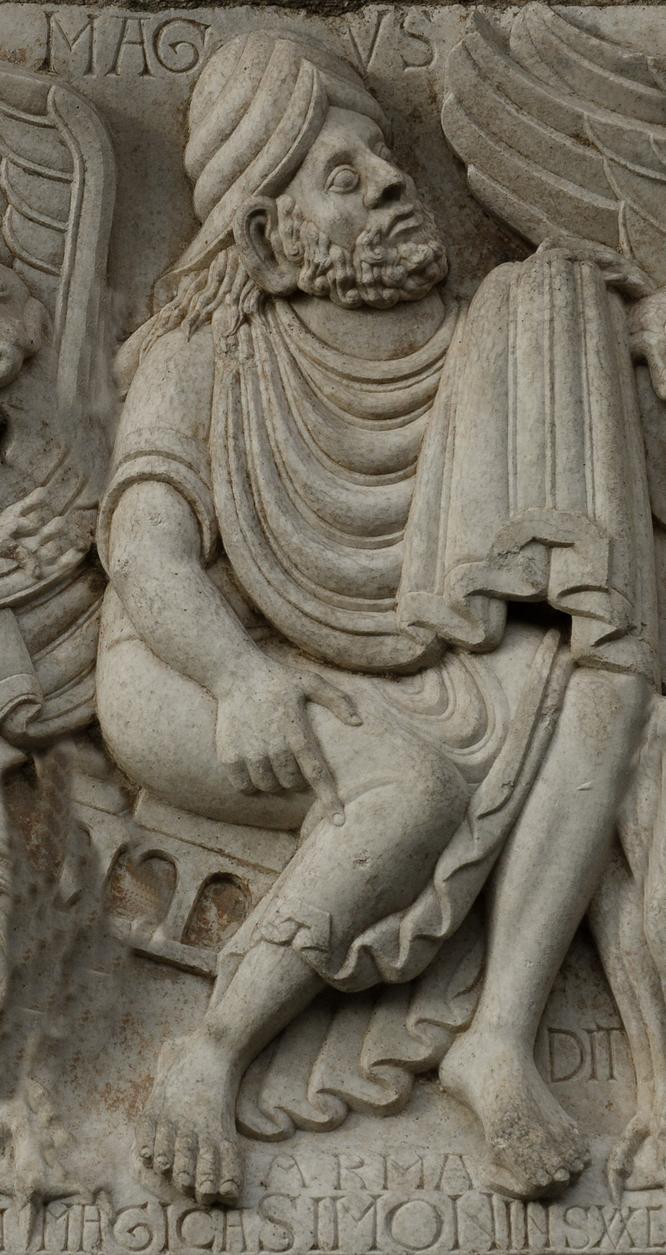 Simon Magus (1-5) | 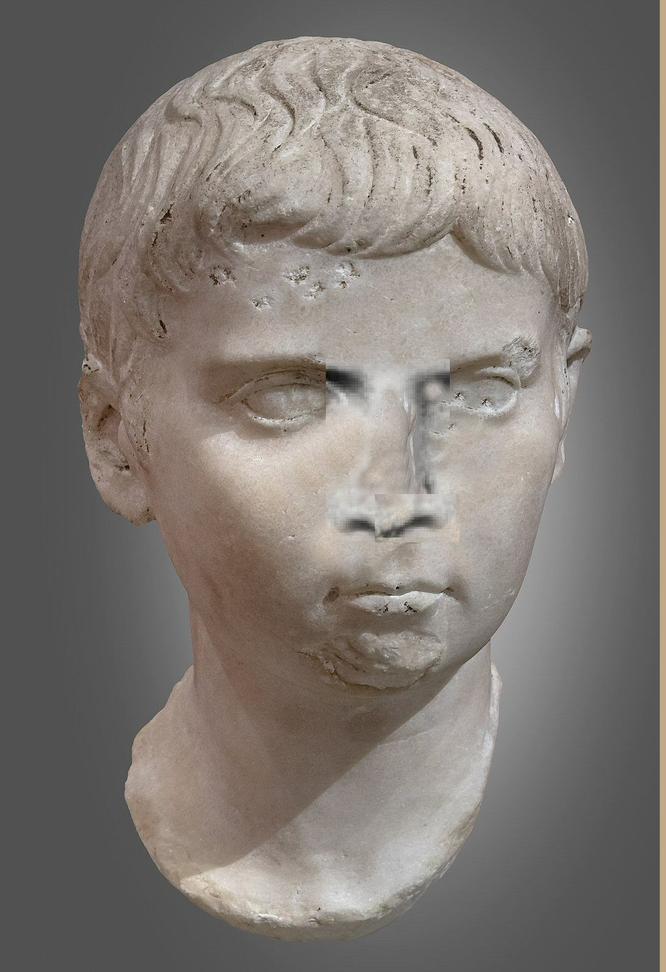 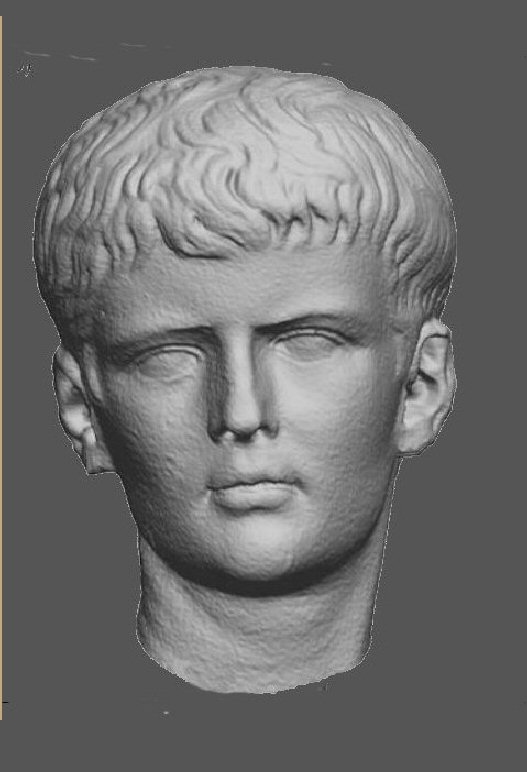 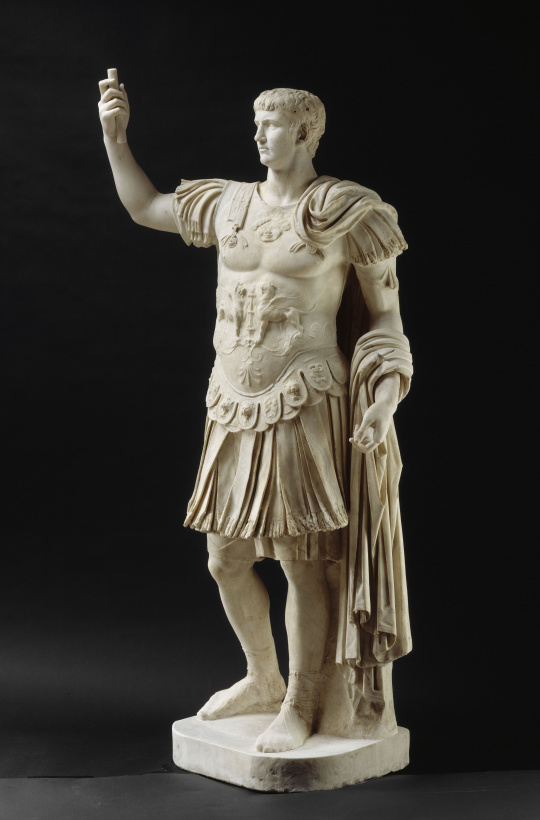 (son of Julia daughter of Augustus) |
Book I — Blood of Caesar; Blood of Redemption
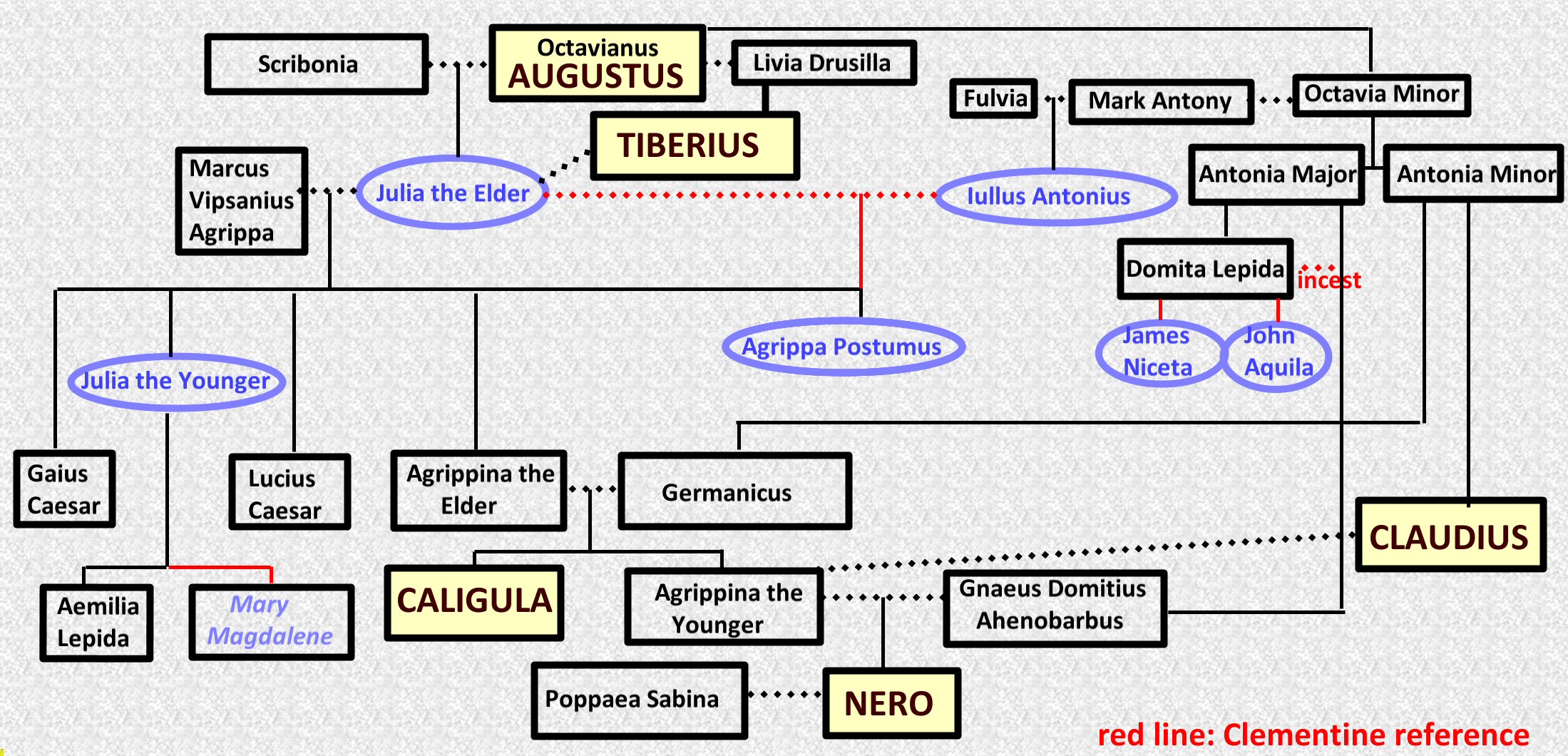
First Five Roman Emperors and me
Chapter 1: Fragments Set in Order
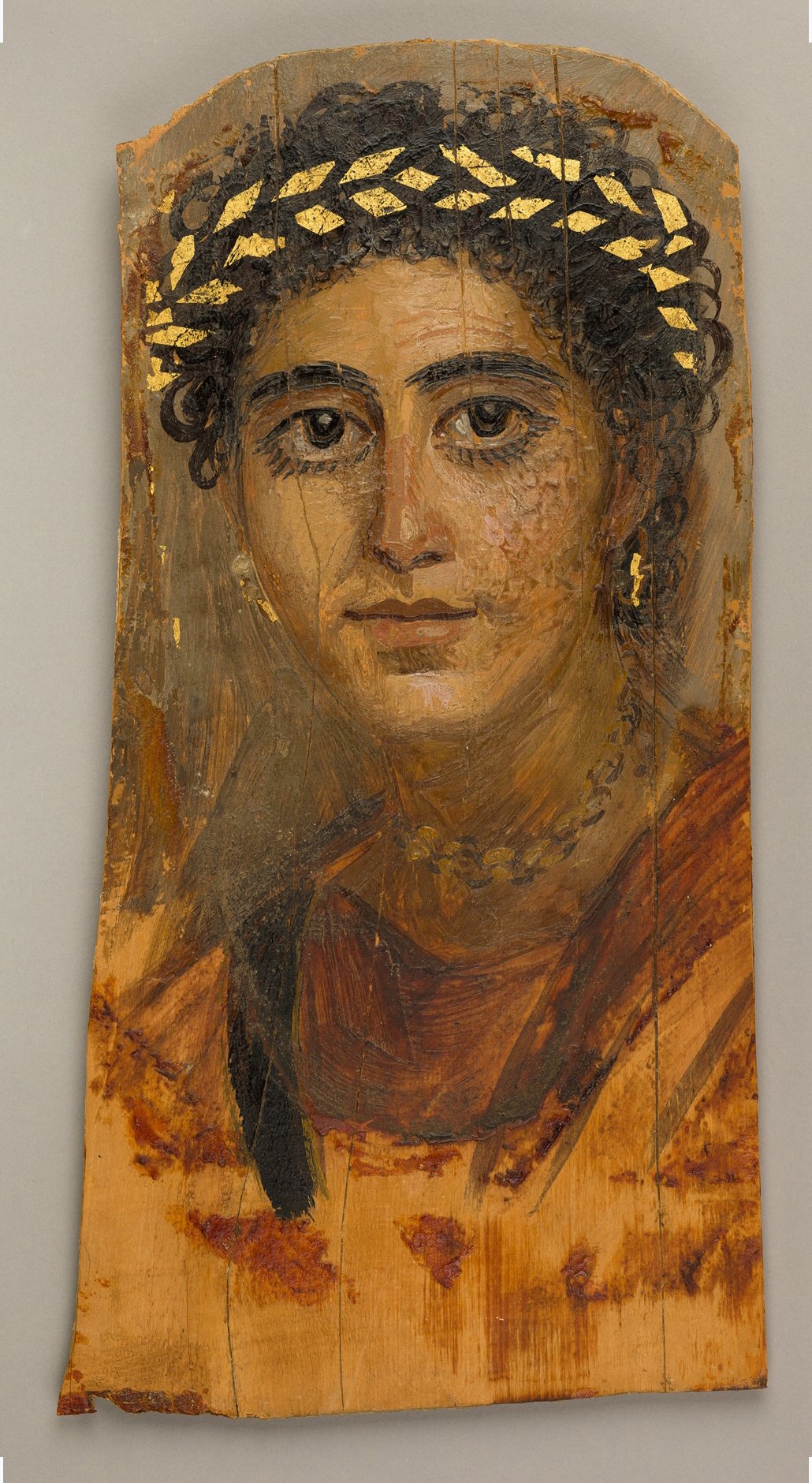
Phoebe (3-3)
It was 60 AD. I was Phoebe—once a messenger of Paul’s letters, now entrusted to review the scrolls that might speak to the early beginnings of the Way in Rome.
Paul sat at a small table, held under the authority of Nero, though not confined. The lamplight moved across his page as he wrote, each stroke deliberate, measured. He did not hurry. Outside, the sound of soldiers passed at intervals—boots against stone, a reminder that his freedom had limits.
I reached for a scroll I had not been asked to read.
Opening it, a single line caught the light:
“Simon, the son of Antonius and Rachel.”
It did not align with what I had been told.
I crossed the room.
“Is this Simon—the Magician?”
Paul did not answer at once. He finished the line before him, then set the stylus aside.
“You have taken an interest in what was set apart,” he said.
I anwered casually,
“I found it among the others.”
Turning back to his writing,
“That does not make it the same.”
I held the scroll open.
“Is it him?”
A pause.
“Yes.”
He gestured toward the shelf.
“His sister kept an account. Of his early life.”
I hesitated.
“Agrippina the Elder?”
He inclined his head, but did not speak her name.
I had arrived at her name by inference alone. Her brothers had died young. Postumus remained—the last grandson of Augustus.
If this was her record, then it preceded interpretation.
I unrolled the scroll carefully. The papyrus was worn, the ink thinned with time. I did not rush.
A single misread word could shift a century. A restored lineage might overturn what generations had come to believe.
Then I saw it again.
“Son of Antonius.”
I traced the letters to be certain.
Not son of Agrippa.
Not son of Julia.
Antonius.
The name did not sit within Rome—it pressed against it.
The house of Mark Antony. Rome had already buried it.
I did not yet understand what it required. Only that it would not remain contained.
Names precede understanding. Meaning follows.
I set the parchment aside, letting the words settle without forcing them into place.
The accounts I had received concerning Jesus did not always speak the same words. If it did not, then this record stood apart from them.
I did not resolve the difference.
Not yet.
The accounts of Jesus did not speak with one voice.
In some, he spoke as one sent.
In others, as one bearing authority not easily defined.
He called himself the Son of Man. Yet those around him named him differently—
sometimes more, sometimes less.
I had seen how meaning shifted in transmission.
If a life could divide from its telling, then so too could its nature.
I did not resolve which account held.
Not yet.
But the pattern was not unfamiliar.
A name altered.
A role recast.
A life made to carry what others required of it.
If Simon had been remembered as a deceiver, then I had to consider whether that judgment belonged to him—
or to the version that survived.
If “son of Antonius” held, then his position within Rome had not been incidental.
If it did not, then the name itself required explanation.
Either way, the question remained.
What had been preserved—and what had been assigned?
I would need to follow the line where it began.
Agrippina the Elder.
Her record did not interpret. It observed.
That was where I would start.
As I closed the pages of my thoughts for the night, the paths before me did not converge. They widened.
One led through the records of the imperial house—through Agrippina, through the line Rome had shaped and concealed.
Another followed the accounts of the movement—where names had shifted, and roles had hardened into judgment.
Somewhere between them, the same life appeared in different forms.
I did not yet know how they met.
Only that they did.
I had not witnessed the beginning. Only its consequences—heard in fragments, carried in letters, shaped in memory.
If I was to understand what had been preserved, I would have to move backward—before the divisions, before the names had settled.
Not to recover what was lost,
but to see how it had been made.
It was not the life I was following—
but the way it had been told.
I would stop myself from speaking words others had placed in Simon’s mouth.
I would let only what survived in the telling speak through me.
Chapter 2: Julia the Elder’s Secret
Horace, Odes 4.2
That night, as I lay down, Horace’s words, “Iullus, whoever vies with the poet Pindar,” drifted into my mind, and for the first time the faded inscription—“Simon, the son of Antonius and Rachel”—seemed less a mystery than the beginning of an answer.
The name Iullus Antonius followed me into sleep.
In my dream, I saw a boy of ten years old awaken to shouting.
Hidden Father
Tac. 1.53; Dio 55.10; Tac. 1.53; Dio 54.26; Suet. Aug. 1–3; Macrobius, Saturnalia II.5.2
It was 2 BC.
Boots struck the marble floors. Doors opened too quickly. Wood splintered. Voices moved through the house without restraint, as though nothing within it required permission anymore.
The villa at Boscotrecase had always held a kind of stillness. Even the shadow of Vesuvius moved across its walls with a regularity I had come to expect—measured, predictable.
That morning, it did not move.
My mother seized my arm. There was no explanation. Only urgency.
She pulled me into her chamber and closed the door behind us. The sounds continued beyond it—closer now.
“Listen to me,” she said. “You must hear this once. And then never speak of it.”
I nodded.
She turned—not to me—but to the far wall.
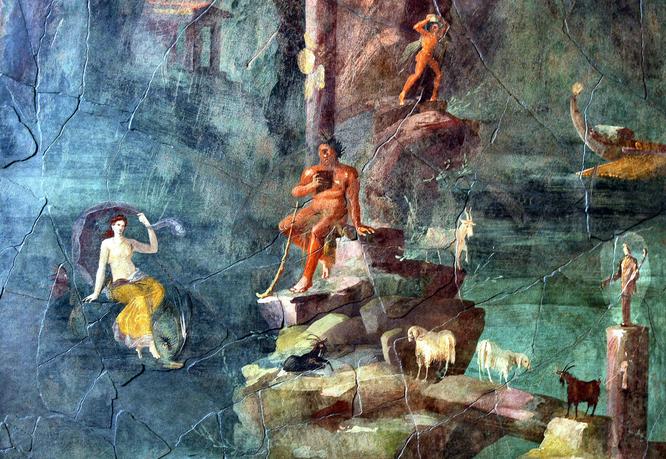
'Polyphemus, Galatea, & Aci', Agrippa Postumus villa, Boscotrecase (5-3)
The fresco. Acis. Galatea. The Cyclops.
“Do you see them?”
“Yes.”
“The Cyclops is how I have come to see Tiberius.”
“I am Galatea.”
She paused as her hand hovered over Acis.
“He is Iullus Antonius.”
I remembered how he would sword fight with me.
She turned to me.
“They believe you are Agrippa’s son.”
She paused.
“You are not.”
The words did not settle at once.
The noise outside came closer.
“You are Iullus’ son.”
I almost shouted, but she put her hand in front of my lips as I lowered my voice.
“Uncle Iullus?”
“Yes. I am telling you now because I will not be here to tell you later. Your grandfather is sending me away.”
“Where?”
“Pandateria.”
“For how long?”
“As long as he chooses.”
She held my gaze.
“You must understand why.”
She spoke then with a clarity that allowed no misunderstanding.
“When Agrippa returned ill, he did not come to me.”
“When he died, the house changed. Iullus did not leave at once. That was enough.”
When I was born, she named me for Agrippa. Postumus. “Posthumous” was safe—necessary.
“All was contained,” she continued, “until I was given to Tiberius. He left. I was lonely.”
“Iullus came and went. Others did as well. That is what they will say.”
Her eyes did not move.
“That is not what matters.”
A blow struck the outer door.
“What matters is that they cannot know about you. If they name him, he dies.”
Another blow.
“And if they put it together—”
She did not finish.
“Does he know?”
“Yes. He knows what you are.”
The latch began to split.
“Then why—”
“Because silence has kept you alive.”
She took my face in her hand as she looked into my eyes.
“You will say nothing.”
“I won’t.”
“You will remember.”
“I will.”
“And you will be careful of Tiberius,” she said, her hand resting upon the Cyclops. “He seeks to crush you as well.”
The door broke.
Guards filled the threshold.
They took her.
She did not resist.
She did not look back.
I was Agrippa Postumus, the last grandson of Augustus. Ten years would pass before I saw her again—after my grandfather Augustus had died, and after Rome had already announced my own death.
My Mother’s Exile
Suet. Aug.
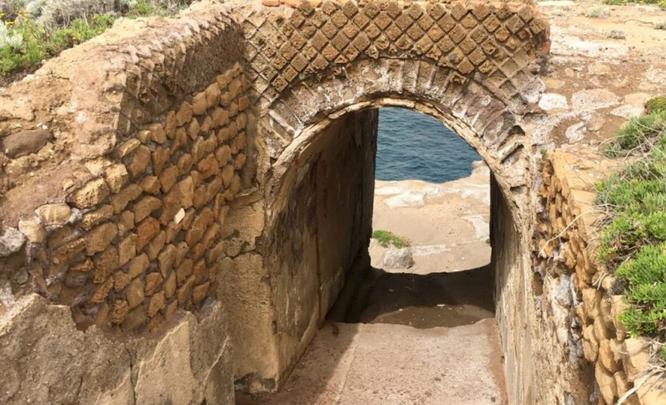
Pandateria (Ventotene) Island (5-4)
The decree came—my mother was sent to Pandateria.
I did not understand the severity of her punishment. Only that she was gone.
Later, I would read her words from that island:
“No wine to dull the hours, and no company fit to pass them.”
Even in that, her voice remained controlled—almost amused, as though she refused to give the confinement the satisfaction of breaking her.
But removal does its work. I lost my protection from my stepmother Livia. She would make sure that I would not stand in the way of her son’s ascension to the throne.
Time continued as it does in Rome—without pause, without acknowledgment of what it leaves behind.
My brothers died, one after the other, far from the city. My sisters were placed into lives that mirrored what had been done before—marriages, alignments, calculations that extended beyond them.
Everything continued.
That was the nature of it.
Only later did Rome turn its attention toward me.
In 4 BC, Augustus adopted me. The act appeared decisive.
It was not. It only made me more vulnerable.
Within a few years, I was removed.
At seventeen years old, I was sent away to Planasia.
An island—like hers.
I did not deserve it.
And even then—I would not yet understand what it meant to have been born into the house of Augustus.
My Father’s Suicide
Suet. Aug.; Dio 55.10
Iullus Antonius did not remain long after.
Suicide would silence the truth.
Legacy of the Fresco
MMA 20.192.16
I was sent elsewhere.
Houses changed. Names remained.
But the fresco remained with me.
Galatea turning away.
The Cyclops watching.
The mortal already lost.
I did not speak of what she told me. Not then. Not for many years.
But from that day forward, something in my life could not be removed.
Two Fathers
Dio 54.28
And so I had two fathers.
Agrippa was my legal father, but the name I carried was Postumus—“born after my father’s death.”
Another remained unspoken.
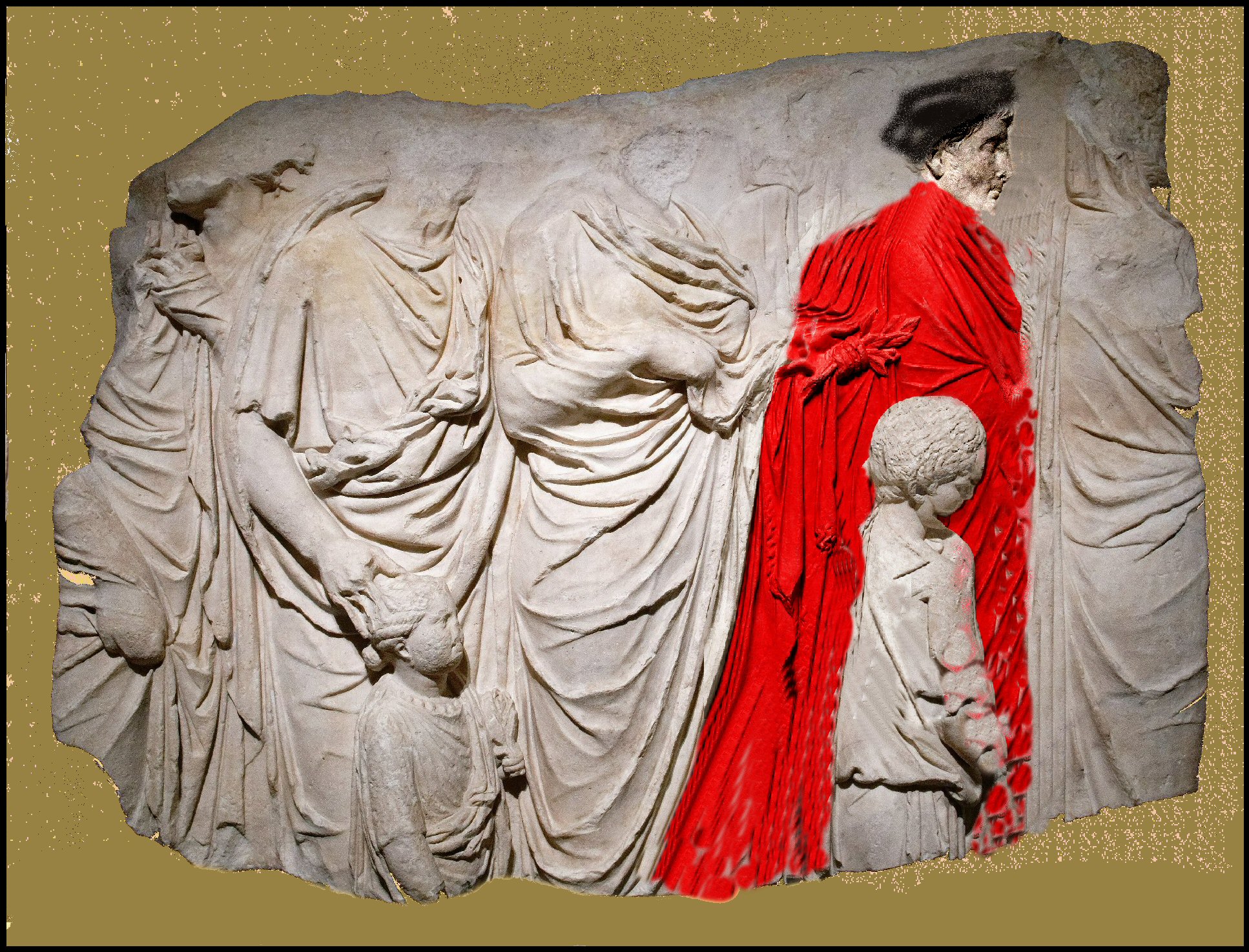
Ara Pacis north frieze (5-1a) (1-1a)
As a child, I vanished into the Ara Pacis, Rome’s altar to peace, completed when I was three.
The marble procession of my family circled endlessly.
I walked among them.
My hands touched carved faces that did not blink.
I belonged there.
I felt a kinship to the man leading the northern procession. He was my true father. I was drawn to him.
I must have recognized something of myself in him. Below him, the little boy was me.
The Last Living Grandson of Augustus
As the last living grandson of Augustus, I was raised beneath edifices that proclaimed eternity: the Forum of Augustus, the Theater of Marcellus, the Mausoleum, the Ara Pacis.
Rome surrounded me with marble certainty that history had reached its final form.
My father, Marcus Agrippa, had shaped these monuments with his own hands, raising baths, porticoes, aqueducts, and civic order from the ambitions of Julius Caesar.
Stone after stone declared the same truth:
Rome ruled all things—its provinces, its peoples, its children.
Even me.
The Pax Romana.
I was taught that Augustus had brought peace to the world.
Yet that peace was not born. It was imposed.
Civil war ended not in healing, but in exhaustion.
This was called peace.
But it was only silence enforced by power.
Chapter 3: His Mother Julia, Only Child of Augustus
Julia Elder (6-1)
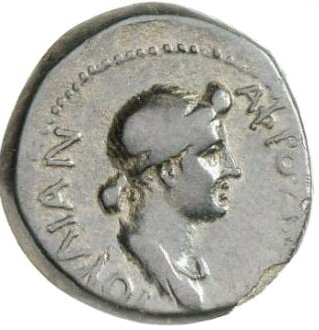 (6-2)
(6-2)
Phoebe at Bibliotheca Palatina
Roman History, Velleius Paterculus
The next morning, the guards at the house let me pass, their eyes wary but obliging. “Good day, Phoebe,” they said. I stepped onto the Appian Way, the sun warming the ancient stones beneath my sandals. I was determined to learn more about the Augustan family of Agrippa Postumus. Merchants arranged their stalls, reminding me of the moneylenders whose tables Jesus had overturned. Travelers lingered at the roadside, and the scent of baking bread and smoke drifted from distant rooftops. Each step carried me farther from the quiet world of Paul’s communion with Jesus, yet closer to the hidden currents surrounding his rival. I wondered whether my studies in Latin and Greek would prove equal to the task ahead.
The streets thinned as I climbed toward the Palatine Hill, and my heart quickened. Soon, I would be surrounded by marble and scrolls, the voices of centuries pressing from fragile pages. I made my way to the Bibliotheca Palatina and traced my fingers along its marble shelves until I found the volume marked Roman History by Velleius Paterculus. In that hushed and reverent space, the world outside—the Appian Way, the vendors, the scent of bread—faded. Here, I sought to understand the household of Augustus, and through it, the fate of Agrippa Postumus.
With notebook in hand, I turned the fragile pages. It quickly became clear that what lay before me was no unguarded record, but a history carefully arranged—polished where it must shine, silent where it must conceal. There were no intimate confessions like those preserved in Agrippina’s diary, yet the outline was unmistakable: a household ordered under the severe discipline of Livia Drusilla, the wife of Augustus.
The name Agrippina, drawn from Marcus Vipsanius Agrippa, signaled more than lineage. It was a declaration—of loyalty, of prestige, of calculated continuity. Through it, the lines of Julian and Vipsanian blood were bound together, ensuring that daughters such as Agrippina the Elder and Agrippina the Younger carried within their very names the architecture of empire.
Yet it was not this official account alone that held my attention. Tucked among the references—crossed through with marginal notes and echoed in other historians—I discerned a deeper pattern, one less carefully veiled.
Life in the Shadow of Livia
SuetA, Dio 48.34, VP 2.75
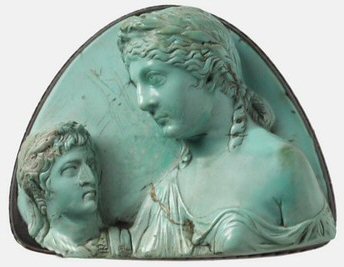
Livia and (Tiberius?) (4-13)
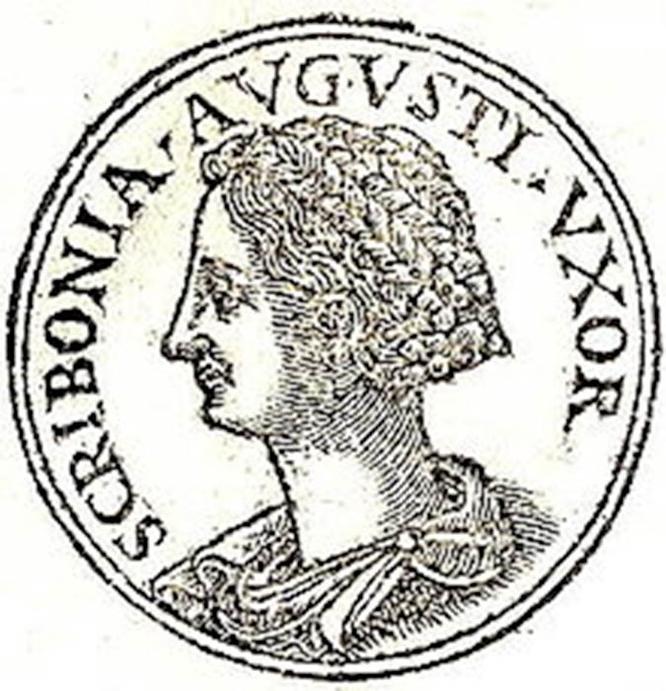
Grandmother Scribonia(6-3) In late 39 BC, Julia was born to Scribonia, and on that day Octavian—not yet Augustus—divorced her, citing Scribonia’s shrewish disposition. The marriage had replaced an earlier alliance with the household of Mark Antony, and Octavian then married Livia, who was already pregnant with her first son, Tiberius, named after his father. In four months, he had reordered his world, severing one bond and forging another, as though human ties were instruments of state; Julia entered not a home, but an apparatus of power—and all who passed through it, daughters and sons alike, seemed already marked for exile, scandal, or early death.
Under Livia’s governance, the imperial household moved with austere precision. Girls spun wool, spoke with care, and received no visitors unobserved; their words and gestures were recorded in meticulous daybooks. The emperor himself instructed the boys in reading and command, but Livia’s lessons, though quieter, carried greater permanence: obedience. As I read, I could not escape the sense that Julia’s life had been determined long before she could name it as her own. The imperial family was a selection mechanism that eliminates threats.
At fourteen, she was given in marriage to her cousin, Marcus Claudius Marcellus, the chosen successor. Two years later, he was dead—leaving her neither child nor position, only absence.
Life with Marcus Agrippa
Macrobius, Saturnalia 2.5.2; Dio 54.28.1–2; Dio 55.11.6–7
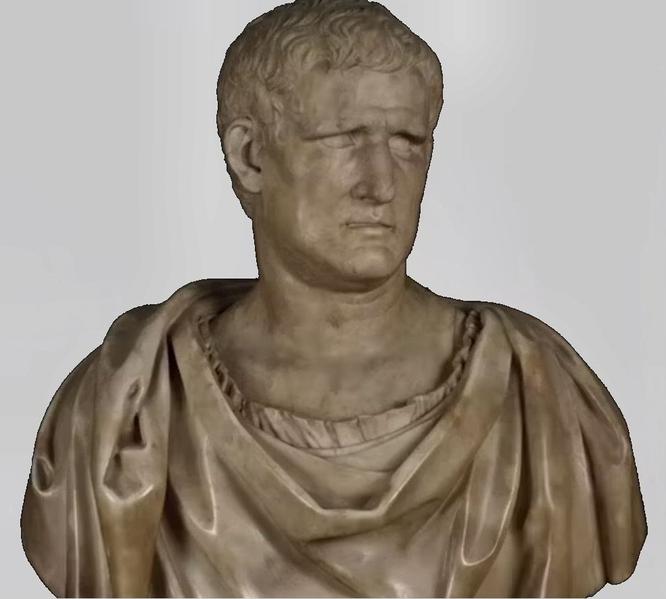
Marcus Vipsanius Agrippa (1-4)At eighteen, Augustus acted again. He joined her to Marcus Vipsanius Agrippa, his most trusted ally, a man decades her senior. Agrippa set aside his own wife to comply. Julia, scarcely eighteen, stepped into her role without recorded protest, though I sensed the cost beneath that silence. If Livia could not secure the succession, Julia would.
And so she did. She traveled the breadth of the Empire at Agrippa’s side, observing governors, soldiers, and foreign princes—not merely as ornament, but as witness. She bore sons—Gaius and Lucius—and daughters—Julia the Younger and Agrippina the Elder—and at last the boy, Agrippa Postumus, born into a world already burdened with expectation. I imagined him beneath the spectacle of Rome, perhaps even joining the staged naval battles, absorbing without understanding the weight that awaited him.
Tiberius' Departure and Julia's Exile
SuetT, SuetA
But the apparatus of power did not loosen its hold. In 12 BC, Julia, now twenty-eight, was compelled into marriage once more—this time to Tiberius, Livia Drusilla’s son. The union was bitter and brief. A child, lost in infancy, deepened the fracture between them. Years later, Tiberius withdrew to Rhodes, leaving behind only distance and rumor. The accusations that gathered around Julia read to me less as revelations than as tools—sharpened for use when needed.
What struck me most was not her fall, but what followed in its wake. It was not an ending, but a pattern. Her children inherited not security, but peril—as though the blood of Augustus carried with it not protection, but exposure.
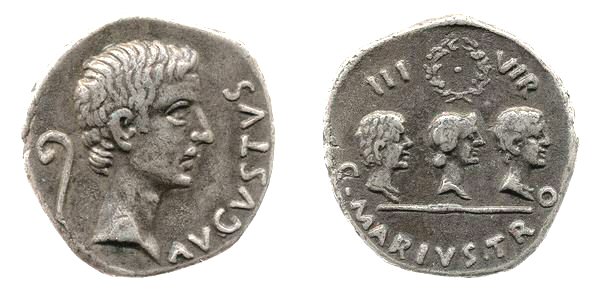
Augustus/ Gaius, Julila, & Lucius (1-5)
Lucius Caesar died in Massilia; Gaius Caesar fell abroad, far from the city that had named him heir; and Julia the Younger, gentle and learned, was pulled into the same undertow, as though exile and disgrace were not punishments but inheritances.
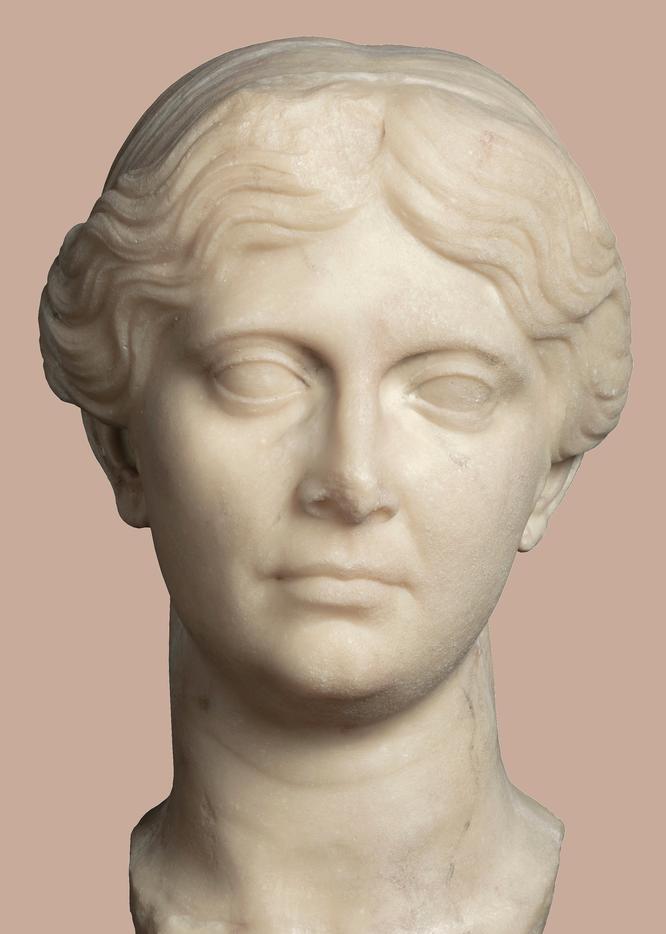
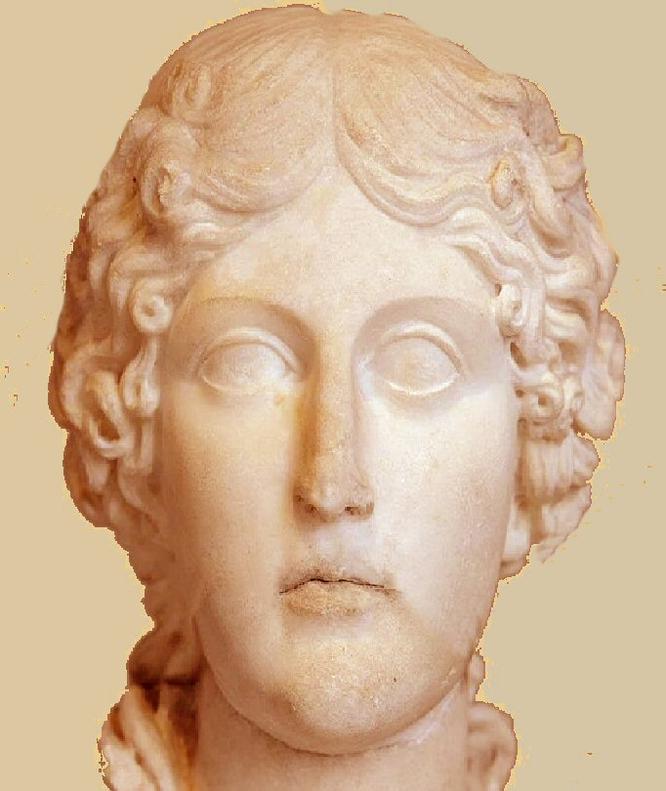
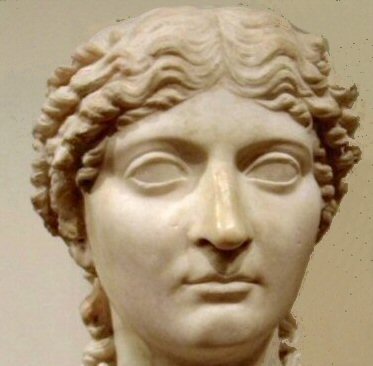
Julia the Younger (1-6) Agrippina the Elder (1-7) Agrippina the Younger (1-8)
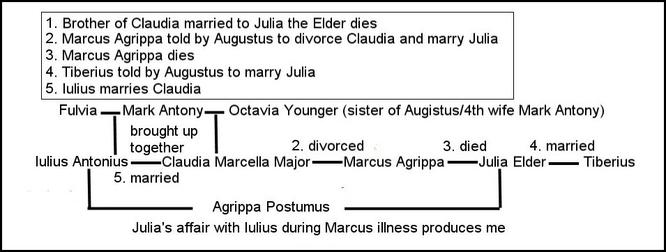
Julia Elder (6-1)
(6-2) Phoebe at Bibliotheca Palatina
Roman History, Velleius Paterculus
The next morning, the guards at the house let me pass, their eyes wary but obliging. “Good day, Phoebe,” they said. I stepped onto the Appian Way, the sun warming the ancient stones beneath my sandals. I was determined to learn more about the Augustan family of Agrippa Postumus. Merchants arranged their stalls, reminding me of the moneylenders whose tables Jesus had overturned. Travelers lingered at the roadside, and the scent of baking bread and smoke drifted from distant rooftops. Each step carried me farther from the quiet world of Paul’s communion with Jesus, yet closer to the hidden currents surrounding his rival. I wondered whether my studies in Latin and Greek would prove equal to the task ahead.
The streets thinned as I climbed toward the Palatine Hill, and my heart quickened. Soon, I would be surrounded by marble and scrolls, the voices of centuries pressing from fragile pages. I made my way to the Bibliotheca Palatina and traced my fingers along its marble shelves until I found the volume marked Roman History by Velleius Paterculus. In that hushed and reverent space, the world outside—the Appian Way, the vendors, the scent of bread—faded. Here, I sought to understand the household of Augustus, and through it, the fate of Agrippa Postumus.
With notebook in hand, I turned the fragile pages. It quickly became clear that what lay before me was no unguarded record, but a history carefully arranged—polished where it must shine, silent where it must conceal. There were no intimate confessions like those preserved in Agrippina’s diary, yet the outline was unmistakable: a household ordered under the severe discipline of Livia Drusilla, the wife of Augustus.
The name Agrippina, drawn from Marcus Vipsanius Agrippa, signaled more than lineage. It was a declaration—of loyalty, of prestige, of calculated continuity. Through it, the lines of Julian and Vipsanian blood were bound together, ensuring that daughters such as Agrippina the Elder and Agrippina the Younger carried within their very names the architecture of empire.
Yet it was not this official account alone that held my attention. Tucked among the references—crossed through with marginal notes and echoed in other historians—I discerned a deeper pattern, one less carefully veiled.
Life in the Shadow of Livia
SuetA, Dio 48.34, VP 2.75
Livia and (Tiberius?) (4-13)
Grandmother Scribonia(6-3)
In late 39 BC, Julia was born to Scribonia, and on that day Octavian—not yet Augustus—divorced her, citing Scribonia’s shrewish disposition. The marriage had replaced an earlier alliance with the household of Mark Antony, and Octavian then married Livia, who was already pregnant with her first son, Tiberius, named after his father. In four months, he had reordered his world, severing one bond and forging another, as though human ties were instruments of state; Julia entered not a home, but an apparatus of power—and all who passed through it, daughters and sons alike, seemed already marked for exile, scandal, or early death.
Under Livia’s governance, the imperial household moved with austere precision. Girls spun wool, spoke with care, and received no visitors unobserved; their words and gestures were recorded in meticulous daybooks. The emperor himself instructed the boys in reading and command, but Livia’s lessons, though quieter, carried greater permanence: obedience. As I read, I could not escape the sense that Julia’s life had been determined long before she could name it as her own. The imperial family was a selection mechanism that eliminates threats.
At fourteen, she was given in marriage to her cousin, Marcus Claudius Marcellus, the chosen successor. Two years later, he was dead—leaving her neither child nor position, only absence.
Life with Marcus Agrippa
Macrobius, Saturnalia 2.5.2; Dio 54.28.1–2; Dio 55.11.6–7
Marcus Vipsanius Agrippa (1-4)
At eighteen, Augustus acted again. He joined her to Marcus Vipsanius Agrippa, his most trusted ally, a man decades her senior. Agrippa set aside his own wife to comply. Julia, scarcely eighteen, stepped into her role without recorded protest, though I sensed the cost beneath that silence. If Livia could not secure the succession, Julia would.
And so she did. She traveled the breadth of the Empire at Agrippa’s side, observing governors, soldiers, and foreign princes—not merely as ornament, but as witness. She bore sons—Gaius and Lucius—and daughters—Julia the Younger and Agrippina the Elder—and at last the boy, Agrippa Postumus, born into a world already burdened with expectation. I imagined him beneath the spectacle of Rome, perhaps even joining the staged naval battles, absorbing without understanding the weight that awaited him.
Tiberius' Departure and Julia's Exile
SuetT, SuetA
But the apparatus of power did not loosen its hold. In 12 BC, Julia, now twenty-eight, was compelled into marriage once more—this time to Tiberius, Livia Drusilla’s son. The union was bitter and brief. A child, lost in infancy, deepened the fracture between them. Years later, Tiberius withdrew to Rhodes, leaving behind only distance and rumor. The accusations that gathered around Julia read to me less as revelations than as tools—sharpened for use when needed.
What struck me most was not her fall, but what followed in its wake. It was not an ending, but a pattern. Her children inherited not security, but peril—as though the blood of Augustus carried with it not protection, but exposure.
Augustus/ Gaius, Julila, & Lucius (1-5)
Lucius Caesar died in Massilia; Gaius Caesar fell abroad, far from the city that had named him heir; and Julia the Younger, gentle and learned, was pulled into the same undertow, as though exile and disgrace were not punishments but inheritances.
| |
Agrippina the Elder, still a child when her mother was cast out, did not yield to it. She forged from that loss a will strong enough to shape emperors—yet even in her strength, the pattern held. Power did not spare her; it only delayed its cost.
Her son, Caligula—once a child in miniature armor among the legions of Germanicus, affectionately named “little boots”—would ascend at last to the height denied his forebears. Yet even that ascent followed the same design: elevation, isolation, destruction. He was cut down not by distant enemies, but by the hands meant to guard him, within the very heart of the palace.
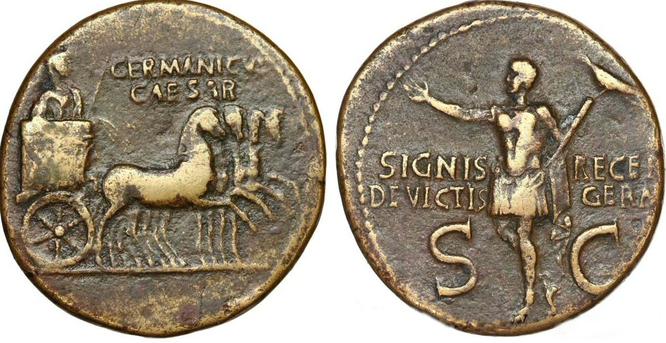
Germanicus Coin (1-10)
And Germanicus himself—the figure upon whom so many hopes had rested—was widely believed to have been poisoned, removed before his promise could take form. With him vanished the last semblance of stability, leaving his family to navigate not merely the currents of empire, but a system that seemed to consume its own bloodline generation by generation.
And beyond her stood Agrippina the Younger, daughter of Agrippina the Elder—watching, absorbing the lessons of ascent and ruin. She would marry her paternal uncle, Claudius, and maneuver her own son, Nero, onto the throne, ensuring her line endured where others had been extinguished—proving that survival itself demanded a ruthless mastery of peril.
Her youngest surviving son, Agrippa Postumus, would not be immune to the apparatus of power, as its hammer would soon fall upon him.
Julia’s charges were made formal—and exile followed to the remote island of Pandateria. She was said to have written from captivity, “No wine to dull the endless hours, and no servants clever enough to amuse me.” Even in complaint, her wit endured—a sharp humor masking the cruel toll of a gilded cage. She had done her duty to produce heirs; now she was forced to be a mere spectator in the shifting fortunes of power.
I closed these accounts slowly, my fingers lingering on their worn edges. As each name passed before me—Julia, Gaius, Lucius, Agrippina, Germanicus—I found myself no longer seeing separate tragedies but repetitions of the same design. These were not merely lives recorded in history, but lives arranged—pressed into shape by lineage, by expectation, by a design that preceded them. And I felt, with growing unease, that this force—the unseen gravity of inheritance—was not confined to them alone. It was something I recognized. A life defined before it is chosen... and perhaps never fully escaped.
Book II — Simultaneous Threads of ‘the Way’ Across Oceans
Chapter 4: The Dilemma of Calendars and Prophecies
Lk. 3:23; Rev. 6:1–17; 2 Cor. 12; Rev. 18:24; Acts 16:6; Ant. 20.9.1; Lk. 2:1
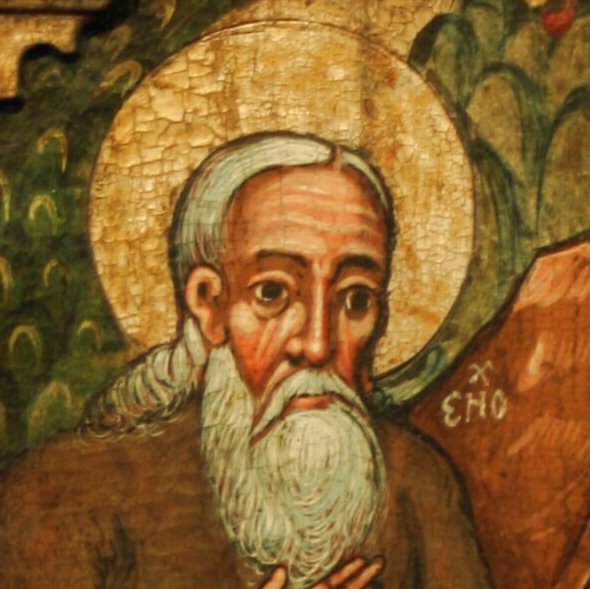
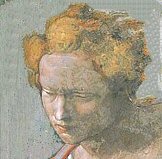
Enoch and Daniel (2-6, 2-7)
Rome — Time as Authority
Rome did not measure time neutrally. It fixed time to authority.
Years were named by rulers, decrees, and registrations. What could be dated could be administered; what could be administered could be preserved. Time, in Rome, was an instrument of control.
The decree of Caesar Augustus—that all the world should be registered—extended that control even to birth. Existence itself entered the imperial record.
Yet when I trace the sequence backward—through governorships, censuses, and the age assigned to Jesus at the beginning of his ministry—the structure no longer resolves cleanly. The transition from 1 BC to AD 1 does not behave as a boundary.
It behaves as a break.
What appears as a single year functions instead as an unaccounted interval within the system. I do not take this to be a simple omission. It appears instead as a compression produced by the limits of Roman reckoning.
The later system of Dionysius Exiguus did not remove that compression. It stabilized the calendar by shifting its anchor—aligning the count not to the birth it claimed to mark, but to a secondary sequence that displaced the chronology forward by associating it with James, Jesus' younger brother. Whether that association reflects deliberate revision or later harmonization, I cannot determine. It remains, however, a recurring feature of the chronology.
Within the reconstruction I have followed, the decree of Augustus establishes the administrative frame, while the transition into legal responsibility provides the point from which the sequence may be tested.
6–7 AD → minus 12 → 7 BC
This is not intended as an exact historical calculation. It is a calendrical back-projection that aligns a ritual threshold with the administrative record. If that reconstruction is sound, the birth of Jesus falls earlier than the Roman system can represent without compression.
Rome preserved continuity.
But in preserving continuity, it appears to have obscured the very moment it intended to fix.
Judea — Time as Fulfillment
Within the Judean materials, time is not measured forward.
It is interpreted as fulfillment.
Events matter not because they occur, but because they correspond to what has already been spoken. Within this framework, two distinct systems govern expectation: one expansive, one exacting.
The Enochic Structure — Acceleration
| World Ages | |||
|---|---|---|---|
|
|||
The Enochic tradition organizes history into fixed ages moving from creation toward judgment and restoration. Each age carries a defined character. With the onset of the final phase, time no longer appears to proceed evenly.
It accelerates.
This acceleration changes the way history is perceived. Events that would ordinarily unfold across generations begin to occupy the same horizon. Temple expansion, messianic expectation, and impending destruction collapse into proximity.
From a Roman perspective this may appear as coincidence or disorder. Within the Enochic framework, however, it functions as an expected convergence. The tradition does not describe events occurring more quickly so much as distinctions between them becoming compressed.
Daniel's Measure — Constraint
Dan 9:24–27; Ezra 7:11–26; Mt 26:26–29; Ant 18.1.1; 1QM
| Prophecy of Daniel | |||
|---|---|---|---|
|
God has appointed seventy "weeks" for your people and your holy city. From the issuing of the decree to restore and rebuild Jerusalem, there will be seven weeks and sixty-two weeks. After the full sixty-two weeks, the Messiah will be "cut off" and seemingly have no legacy or power. Then the people of a coming ruler will destroy the city and the sanctuary. |
|||
| Event | Weeks | 360-day Years | Date |
| Decree to restore Jerusalem Ezra 7:11–26 | Start | March 14, 457 BC | |
| Rebuilding (troublesome times) | 7 | 48.27 | Autumn 408 BC |
| Messiah appears (John the Baptist) | 62 | 427.51 | Spring 27/28 AD |
| (Actual mission begins with Jesus) | Spring 29 AD | ||
| Crucifixion ("cut off") | 69 | 475.78 | Spring 33 AD |
| End of 70th week | 70 | 482.62 | 34/35 AD |
| Events not part of the prophecy | |||
| Christian Church (2 weeks / 14 years from the mission) | 2 | 14 | 43 AD |
| Destruction of the Temple by Titus | 70 AD | ||
The system attributed to Daniel proceeds differently.
It does not expand time.
It fixes it.
From the decree to rebuild Jerusalem, the sequence advances through defined intervals toward the arrival of the Anointed One. The progression is numerical rather than interpretive.
More significantly, it does not terminate at arrival. It fixes an outcome.
The Anointed One is not merely anticipated.
He is scheduled.
Once initiated, the sequence does not adjust. Where the Enochic structure permits acceleration, Daniel permits no drift. The event must occur within established limits.
Intersection — Where Chronology Breaks
Read independently, each system remains internally coherent.
Read together, they become difficult to reconcile.
One accelerates time.
The other constrains it.
Yet within the traditions surrounding Jesus, both appear to operate at once.
Acceleration and precision converge within a span too narrow for Roman chronology to accommodate. At that point, the record begins to fracture. What Rome attempts to enumerate cannot fully contain what prophetic structure has already defined.
The resulting misalignment need not be understood as error.
It may instead mark the boundary where two different temporal systems intersect.
The Zero Interval — Compression, Not Absence
The modern transition from 1 BC to AD 1 conceals a structural problem. The absence of a year zero forces discontinuity into the count.
The issue is not merely numerical.
The interval functions as a point of compression in which birth, recognition, preparation, and emergence are drawn into a sequence too dense for linear chronology to distinguish cleanly.
If the reconstruction is correct, this compression is not an artificial insertion but a consequence of attempting to preserve both systems simultaneously.
Remove it, and Daniel's fixed sequence no longer resolves.
Remove Daniel, and Enoch's acceleration loses its definition.
My Place Within It
It is within this compressed interval that my own inquiry begins to make sense.
Agrippa Postumus belongs securely within Rome's administrative system. His birth and death are preserved within its records.
Simon does not.
Whether they represent the same life viewed through different traditions, or whether one has been recast through another, I cannot yet determine.
What I can observe is that the instability appears precisely where temporal compression is greatest. Simon enters the record not through Rome's chronology but through the unfolding of the Way, where encounters follow a different temporal logic from the one preserved by imperial administration.
If compression unsettles chronology, it may also unsettle identity.
Between Rome and Judea
Rome fixes time to power.
Judea reads time through fulfillment.
Neither system, taken alone, fully contains what occurred.
Between them, movement begins.
Before the call to repentance, before public teaching, the current of the Way was already in motion—across regions, across languages, and throughout the diaspora. Dispersion did not sever connection to the Temple; it extended it.
In some accounts, figures such as Menahem appear as points through which that movement can be traced. In others, the pattern survives while the individuals recede.
It was not yet a religion.
It was a pattern.
Rome preserved order.
Prophecy preserved meaning.
Somewhere between them, I suspected, lay the life I had come to recover.
Chapter 5: Agrippa Postumus Greets Joseph, Mary, and Jesus in Rome
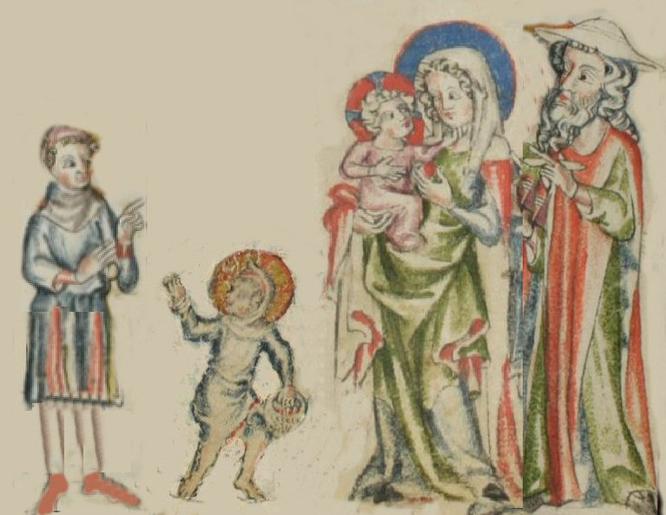
Postumus, Jesus, James, Mary, Joseph (collage: Infancy Gospel of Thomas)(7-2)
The accounts do not preserve this meeting in a single form. Fragments appear—names, movements, brief exchanges—held in different records, none complete on their own.
What follows is not what was written in one place, but what can be assembled from what remains. The surviving testimonies agree on only a handful of details: the season, the arrival of Joseph's family in Rome, Agrippa Postumus's journey across the bridge, and a meeting remembered long afterward by those who believed it changed him. Where the records fall silent, I have followed the course that seems most faithful to the evidence.
The Bridge over the Tiber
Ant. 16.2, 17.8.1–2; War 2.2.1–3; Dio 54.8.1–2; Lk. 15:11–32
Sitting in the warming sun as breezes rose from the river's currents, I imagined myself a witness to this extraordinary meeting that would quietly alter the course of several lives. I pictured Jesus as a child, his impish smile lighting his face as he attempted—even then—to ease the tension between his father and his brother, Theudas. Whether his smile was truly as I imagine it, no record can tell me, yet every tradition preserves the same impression of a boy whose joy softened those around him.
The Tiber flowed beneath the bridge, its restless currents echoing the invisible currents flowing between Rome and Judea. Looking back across the years, I cannot help but think that history often turns, not upon battles or decrees, but upon conversations no one thought important enough to preserve.
It was the middle of June in the year AD 2. From the movements of Herod's household and the chronology preserved elsewhere, the time appears to fit. Joseph and his wife Mary stepped off the ship at Ostia after a long voyage from Jerusalem. With them were Jesus, now eight years old, and James, scarcely one year old.
As the first blush of dawn lit the mouth of the Tiber, a small ferry carried them northward. They passed beneath the Pons Sublicius, the water lapping quietly against its piers.
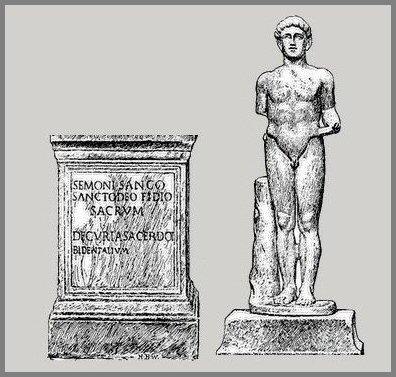
"Simoni Deo Sanco" (8-2)
The boat landed a little farther upstream, near a shrine dedicated to an ancient Sabine deity. It has always seemed one of history's little ironies that generations later Justin Martyr would mistake its inscription as referring to Simon himself—Simoni Deo Sancto—creating a confusion that endured long after both men were gone.
From there the family crossed toward Trastevere, where Herod Antipas had taken a residence while awaiting Augustus's judgment concerning Herod's will.
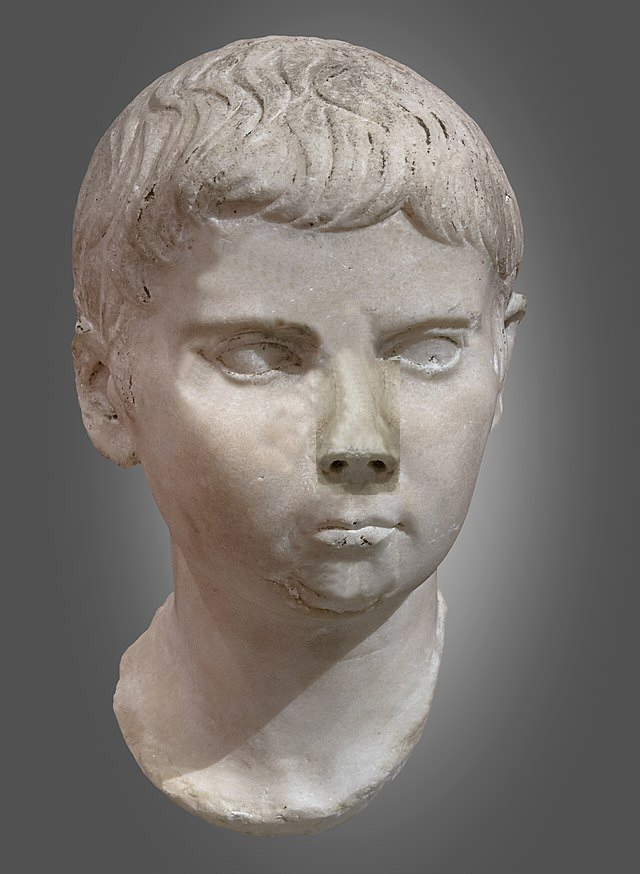
The young Marcus Agrippa Postumus (1-3)
Agrippa Postumus, meanwhile, had not slept.
The day before, his toga virilis had been marked by a small ceremony at thirteen, but by evening the house belonged to his brother Lucius and his eighteenth birthday. When the wine came out, he was sent away—though he lingered a little too long behind a statue of Bacchus, only just rousing himself in time to escape unseen. He was still wearing his tunic of fine linen dyed Tyrian purple, now slightly smudged.
Three years had passed with his mother still banished from his life. He could no longer bear it. He was old enough now, he thought, to prove to his mother in exile that he could stand up for her before his grandfather. He was on his way to protest his inferior standing before Augustus.
Halfway across the bridge, he encountered a small family approaching from the opposite side—a man in the long robes of Judea, a woman carrying a child, and a rambunctious boy running ahead. Their garments were plain, yet there was a quiet radiance about them, as though they moved within a light unseen by others.
“I see by your dress that you have come from Judea,” he said.
“You have spoken rightly,” the man replied. “We are staying across the Tiber in Trastevere. Antipas has taken a house there among our people while he waits upon Augustus concerning Herod's will. We will remain only for a season.”
“I had heard that Herod's sons had come to Rome to dispute the inheritance,” he said. “The Herodian house has long been friendly with ours. My mother once told me that Herod the Great twice chased down my father, Marcus Agrippa, upon the open sea—lavishing him with gifts and professions of friendship.”
The man's eyes brightened. “Then fortune has favored our meeting. I am Joseph; this is my wife, Mary, and our sons—Jesus, and the younger, James. We are followers of the Way, sent by our father Heli and the elder Simeon the Essene to proselytize among the Jewish families of Rome. And you, I am guessing, are Agrippa Postumus, grandson of Augustus.”
“Born five months after my father's death. They call me Postumus—meaning ‘after death,’” he said, bowing slightly.
I imagined Mary's expression softening at something she perceived in him. “Then you are a son parted from his father.”
Her words touched something unguarded within him.
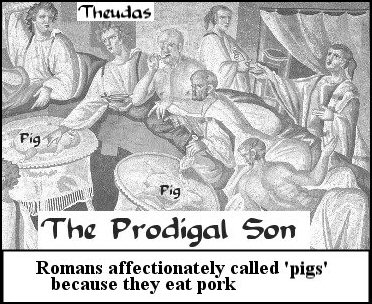
“Perhaps I am like the well-known proverb of the prodigal son. In every house there is one who excels—and one who stumbles.”
The boy Jesus stepped closer, his face alight, and began to recite:
“There was a man who had two sons—and the younger of them said, ‘Father, give me the share of property that falls to me.’”
Joseph smiled. “Yes, Jesus often recites this allegory. I think he knows it has a particular meaning for me.”
Seeing Postumus's interest, he gestured toward a stone bench overlooking the now-golden water.
“Come, sit. I have some dates from the market—the road from Ostia was long.”
Postumus hesitated. “I was on my way to see my grandfather, but there is no great hurry.”
He offered his hand to Mary as she settled with the baby on her lap.
“Tell me more of this story,” he said to Jesus, eager to encourage him.
Jesus continued brightly, “Not many days later, the younger son gathered all he had and journeyed into a far country—”
Joseph finished in a sterner tone: “—and there he squandered his inheritance in reckless living.”
Postumus's eyes widened, sensing his own life. “You speak as one who has lived such things.”
Joseph's eyes dimmed. “Yes. My brother Theudas turned away from our house. Our father divided the tithes between us, but Theudas joined the followers of Judas the Galilean—men who call themselves Zealots and stir the people to ruin.”
Mary laid a gentle hand upon Joseph's arm, warning him not to go too far in his bitterness.
Joseph, recovering his composure, said, “Yes, that parable is universal, but its message teaches an important lesson of forgiveness—one that we, as members of the Way, must follow.”
Jesus went on quietly, unwilling to leave his story unfinished: “So he went and joined himself to one of the citizens of that country, who sent him into his fields to feed swine.”
Joseph sighed. “My brother has done likewise—feeding on that which defiles. He takes refuge with Archelaus, though he will soon fall from Caesar's favor.”
Still Jesus persisted, “I will arise and go to my father, and will say, ‘Father, I have sinned against heaven and before you.’”
Joseph, completing the next line with restrained irritation, said, “And the father received him with open arms.”
Caught up in the same feeling, Postumus said, “Yes, the unfairness angers me, as I see it does you—that my brothers are always treated better than I.”
Joseph paused slightly. “This talk grows too personal,” he murmured.
Young James began to fidget in Mary's arms, and Mary whispered gently, “Center yourself, dear.”
Postumus replied, “Forgive me. I did not mean to awaken painful memories.”
But Jesus would not let the tale end in shadow.
“Bring quickly the best robe,” he said proudly, “and put it on him; and put a ring on his hand and shoes on his feet. Bring the fatted calf and kill it, and let us eat and make merry!”
Joseph laughed then, his spirit lightened. “Thank you, Jesus. Your joy and compassion will make you a Therapeut yet—dancing and singing your way to God.”
Mary added, “The Way to God lies within ourselves. It is the heart that transforms—with joy and love.”
Her words lingered within Postumus.
“Then perhaps your Way has already begun its work. I was ready to shout at my grandfather—but now I feel peace.”
He rose and bowed to them.
“I should not keep you any longer, as you must be tired. I am glad we met. I will tell my sister Julilla and her husband to visit you—they would be open to the details of your Way.”
I could see it clearly—something had shifted within Postumus. Perhaps the Way was a road he would one day walk fully, not only in thought but in purpose. He turned back and went home, the weight of anger toward his grandfather easing from his chest. And in that quiet moment, he thought—perhaps one day Augustus would welcome him back.
Chapter 6: The Circle of Julia the Younger
Julia the Younger
|
Hierarchy of The Way - The Great Banquet Lk 14:16–18, 21–24 |
|||
|---|---|---|---|
| "A man gave a great banquet and invited many. At the appointed time he sent his servant to those who had been invited, saying, 'Come, for everything is now ready.' But they all alike began to make excuses." | |||
|
Field Materialism |
Yoke of Oxen Worldly Pursuits |
Marriage Human Attachments |
Result Invitation Declined |
| "Then the master became angry and said, 'Go quickly into the streets and lanes of the city and bring in the poor, the crippled, the blind, and the lame.'" | |||
|
Poor Therapeuts (Orphans) Class 10 |
Crippled Widows Class 11 |
Blind Nazarites 50-Day Retreat Class 12 |
Lame 60-Day Retreat Class 13 |
| "The servant said, 'Sir, what you commanded has been done, and still there is room.' Then the master said, 'Go out to the highways and hedges and compel people to come in, so that my house may be filled.'" | |||
|
Highways Wayfarers Jewish Gentiles Class 14 |
Hedges Gentiles Class 15 |
||
Lk 14:16–18, 21–24; Exod. 6:3
I had to grow older before Julilla shared her story of connection—to the Way, and to the poet Ovid. It began when Postumus spoke of Joseph, Mary, and Jesus—and of the Way—to his sister Julia the Younger, whom he fondly called Julilla. She, too, was moved, stepping headlong onto a path both spiritual and perilous.
Julilla was impulsive, unprepared for the contradictions stirring within her. According to Julia, her days were given to meditation, reciting the teachings of the Way, feeling a serenity she had never known. By night, she read Ovid, his verses whispering of desire and defiance, and her heart raced with a thrill that seemed almost sinful. She said the words seemed to awaken courage and longing at once, and she admitted to wondering whether it was wrong to love both the path of devotion and the pull of forbidden beauty.
It was said that Augustus had banned Ovid for precisely this reason: his poetry tempted women to imagine lives beyond the duties chosen for them. Julilla lived every day in that defiance, a tightrope stretched between reverence and temptation. Sometimes she wept at her own weakness, other times she laughed at it, knowing that the same heart could hold both a prayer and a poem, a devotion and a dangerous delight, each feeding the other in ways no law could tame.
A month later Julia the Younger arrived with her husband, Lucius Aemilius Paullus, and their daughter, Aemilia Lepida, to visit Joseph and Mary at the house of Herod Antipas. Antipas, having returned to Perea, had graciously welcomed the family into his home.
The reception room was adorned with paintings of satyrs and nymphs—the rage of the day, inspired by Horace and Ovid.
Lucius paused, as Julia later described it, “Now, this is a humorous setting for the Way!” Smiling he added, “It is, of course, the inner self that matters.”
Mary offered some unfermented grape juice. “I apologize for not offering wine. We are only permitted unfermented juice.”
Julia nodded. “That is fine. My grandmother Scribonia believed overindulgence in wine led to my mother Julia’s exile on Pandateria.”
Lucius added, “Did not Augustus forbid her wine entirely on the island?”
“Yes,” Julia confirmed.
Mary asked gently, “And how do you manage without your mother?”
Julia sighed. “Worse than the absence is the malicious gossip.”
Nearby, Jesus and Aemilia, being of similar ages, played quietly.
Joseph, turning to Lucius, said, “I am puzzled… you are Julilla’s husband and also her brother-in-law?”
Lucius nodded. “Rome’s generations are tangled. Through Scribonia’s elder daughter, I am both brother-in-law and cousin. I also recently served as consul with Julia’s brother Gaius.”
Joseph smiled. “Our lineages are complicated as well. As descendants of King David, our family traces through Nathan, though some claim Solomon. Heli is my father’s name, and Jacob is a title—two lines that meet at the same place.”
Mary interjected, “Even now, those devoted to the stricter customs will favor James, whereas Jesus will be left to walk where his heart leads him. My husband can explain…” She walked away to nurse James, leaving Joseph with a slight frown.
Julia joined Mary, whispering, “I thought I heard Joseph considered sending you away?”
Julia later told me Mary’s eyes glistened. “Not for unfaithfulness, but for embarrassment—conceiving so soon, before the customary period.”
Lucius muttered, “Jesus is the firstborn; it would seem obvious he should inherit…”
Joseph replied carefully, “Conception is forbidden by the Essenes. Our sons are exceptions, for the line could not be allowed to fail. Yet we remain bound by strict laws of purity, timing, and observance. On this last point, I failed, competing with Zechariah after his inability to speak revealed John’s conception. These customs will evolve, but for now, they guide us—and I now see how such customs, meant to guard the line, may also be twisted against those set aside within it.”
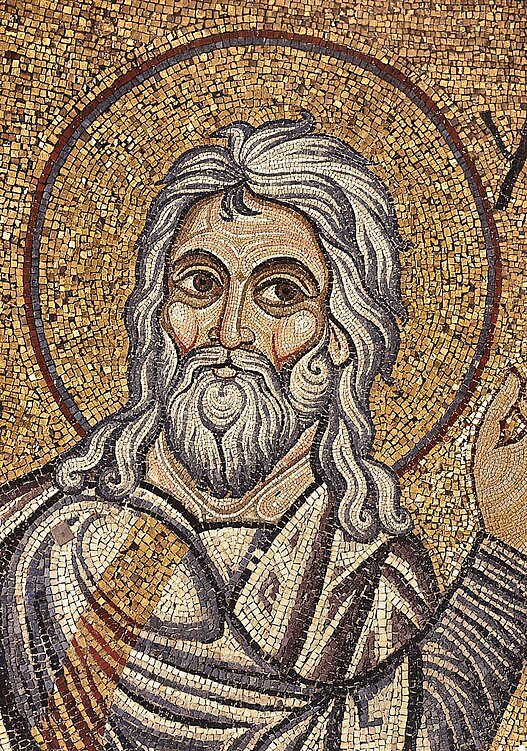
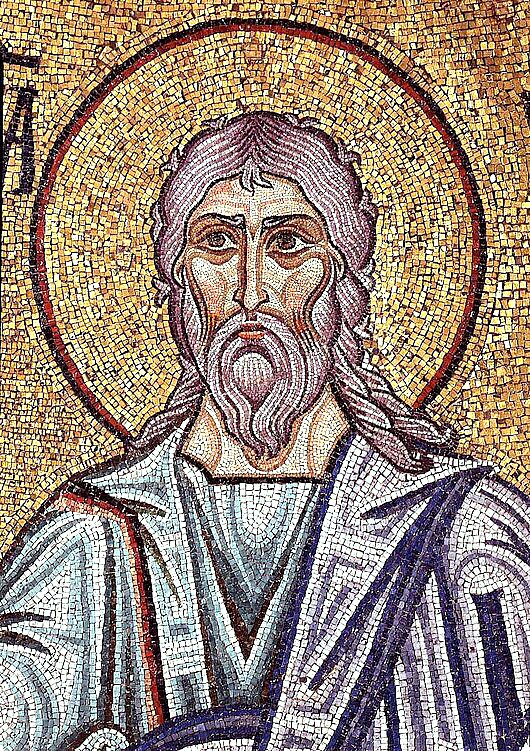
Isaiah (740–700 BC) (4-1) Jeremiah (627–586 BC) (4-2)
Julia recalled Lucius' discussion with Joseph about how the Pharisees and Sadducees in Jerusalem ridiculed the Essene version of the Way for prescribing fixed hours even for their latrine activity beyond the walls.
Joseph answered evenly, “That is as it should be. It is on these walks that they seek out common folk, and some return with them. Thus the road itself becomes the Way.”
Lucius smiled. “Yes—for those blessed with strong bladders.”
Joseph replied quietly, “That is the difference with our version of the Way.”
Julia recalled Mary returning and laughing softly and saying, “Literal, as always. The higher way is exacting; the lower way remains open to all, requiring only love and devotion—the very qualities the Essenes seek to embody.”
After they discussed more of the Way, Julia looked to her husband.
“Perhaps we could offer the basement of our Herculaneum mansion as a place of worship. The walls lack provocative imagery, and there is ample room.”
Lucius hesitated. “We must consider Augustus’ views. Gentile participation without circumcision may appear to deny the exemption of Jewish semi-independence.”
Joseph reassured them, “The higher levels do require it, but the lower levels can be exempted, at least in our practice. All that is asked is compassion and service.”
Julia laughed softly. “Women seem to have an advantage if circumcision is optional.”
Mary replied thoughtfully, “Perhaps in time women and men will draw nearer to one another before God, as the Therapeuts do. Virginity rules are symbolic for dynastic heirs—three years for daughters, six for sons.”
Julia frowned. “It seems that men should be worth half, since women endure the burdens of birth.”
Mary smiled. “It follows a long history among the Jews, where Abraham adopted the Canaanite God El while discarding his consort Asherah, because he believed in one God.”
Joseph nodded. “Thus, when God revealed himself to Moses, saying, ‘When I appeared to Abraham, Isaac, and Jacob, I was El Shaddai, but my name YHWH was not known to them.’”
Mary continued, “Equality takes time. Yet the acceptance of Gentiles into the Way will remove the circumcision requirement and, in time, promote equality between the sexes.”
Joseph added, “Do not be concerned with rules. Jacob-Heli, my father, has already begun setting aside burdens too heavy for many to bear, for all are Way-farers invited to the Great Banquet—Essenes, Therapeuts, Nazarites, Jews, and Gentiles alike. For this, we need support.”
“Certainly!” Julia and Lucius said in unison. “We have plenty of room.”
Joseph and Mary shouted together, “Praise be to God!”
Mary laughed softly and added, “This could become the first Church of the Way in Rome!”
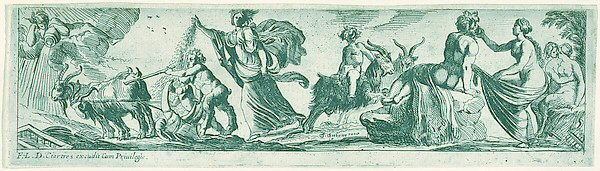
Dea Dia (Ceres) (8-3)
Joseph offered baptism. Lucius declined, citing Sabine tradition, while Julia, quietly determined, began fasting in preparation.
Lucius said, “Tomorrow, we can travel together by chariot and journey to our estate in Herculaneum. There you can complete the baptism and consecrate our basement for the Way.”
Mary and Joseph said together, “That would be wonderful!”
Lucius added with a grin, “Our chariots will be ready at dawn to found the first Church of the Way in Rome, even if the chariots of Augustus try to pursue us.”
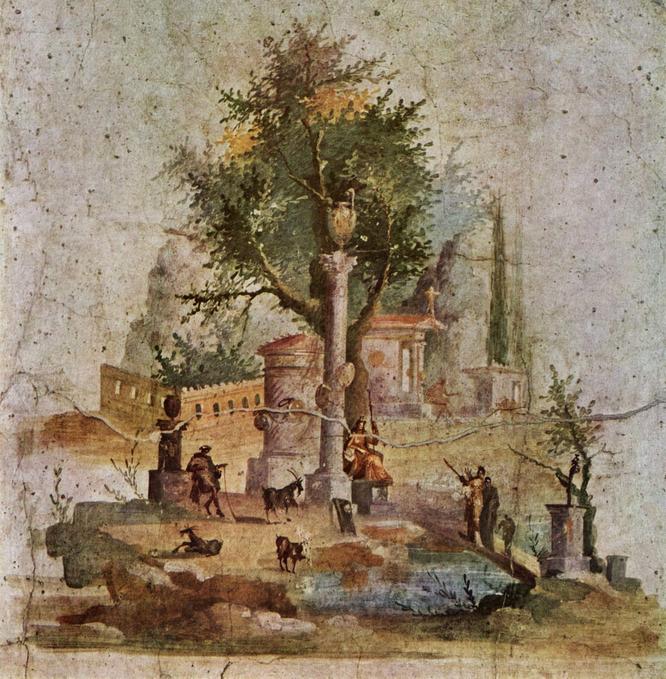
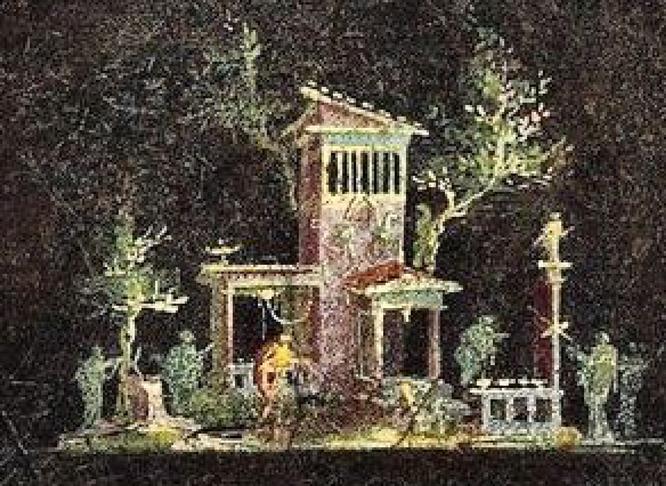
(Frescos Villa Agrippa Postumus Boscotrecase, Campania, Italy)(8-4)(8-5)
The Mansion at Herculaneum
Two days later, after Julia’s baptism, the two households traveled in separate chariots to Herculaneum.
When they arrived, Mary remarked upon the beauty of the house, and Julia, according to her account, responded with a mixture of pride and distance, noting that it surpassed even her grandfather’s former residences.
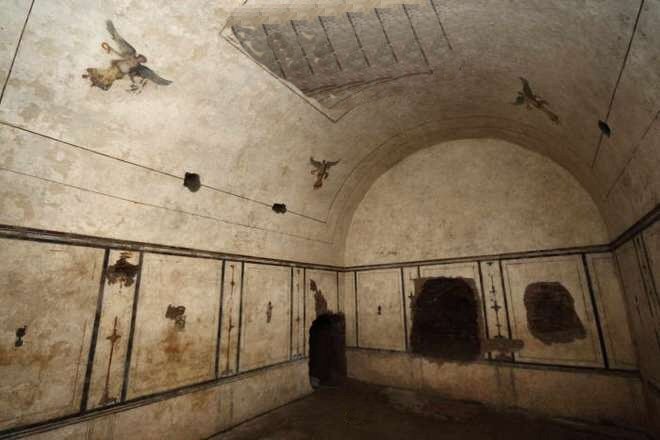
Underground Church (8-6)
After the consecration of the underground chamber, Julia was baptized there. She later described the space as suitable for gathering and instruction, though she did not anticipate what would follow from its use.
What happened next I know only through indirect report, and even those reports are not consistent in their details.
It was later said among members of the household that the chamber began to attract visitors beyond those originally invited. Some were drawn by curiosity, others by dissatisfaction with the established cults of Rome, which many regarded as harsh or indifferent.
Different accounts describe the growth differently. Some emphasize the appeal of a gentler moral teaching. Others stress the inclusion of women and children in ways not commonly emphasized in stricter sectarian practices. A few accounts, more cautious in tone, suggest that the expansion was gradual and uneven, rather than sudden.
By the time these recollections were recorded and retold, it was commonly believed in some circles that the number of adherents had grown substantially. One tradition places the figure at several hundred within a few years, though I cannot confirm this with certainty, and Julia herself never gave me a precise number.
What is clearer is that the gatherings in Herculaneum became known beyond the household itself. Whether this was due to their teaching, their hospitality, or simply the attention drawn by their social position, I cannot say.
In retrospect, Julia considered this development neither planned nor foreseen. It was, she said, the natural consequence of openness rather than intention.
The Dinner-Party
Upstairs in the lavish dining room, Julia and Lucius had invited some close friends. I was invited but did not attend. The special guest—the poet Ovid, now forty-nine—was present in secret, avoiding the displeasure of Augustus, who had banned his poetry.
Julia later told me that she had arranged the evening with great care: the seating, the flow of wine, and even the gestures of conversation, all shaped to reflect the spirit of Ars Amatoria, which she regarded as both instruction and performance. She said she wished to demonstrate her understanding of his work in a manner both respectful and precise.
According to her account, she reclined near Lucius and passed the cup toward Ovid on her right at measured intervals, as though participating in a carefully composed exchange rather than a mere banquet. She said Ovid responded with subtle acknowledgment—brief expressions, slight movements of the hand—small signals she interpreted as recognition of her literary fluency.
Julia described the conversation as unfolding in layered performance: poetry answered with poetry, myth with myth, each turn of speech echoing and refracting the last. Lucius, she said, remained largely absorbed in the meal, unaware of the tonal intricacy developing around him.
She later recalled that the exchange reached its height when she recited letters of mythological heroines and Ovid responded in kind, matching her allusions with his own. In her telling, the room became less a gathering than a structured performance of wit and literary memory.
Carmen et Error (A Poem and a Mistake)
Ovid, Tristia II:207–252
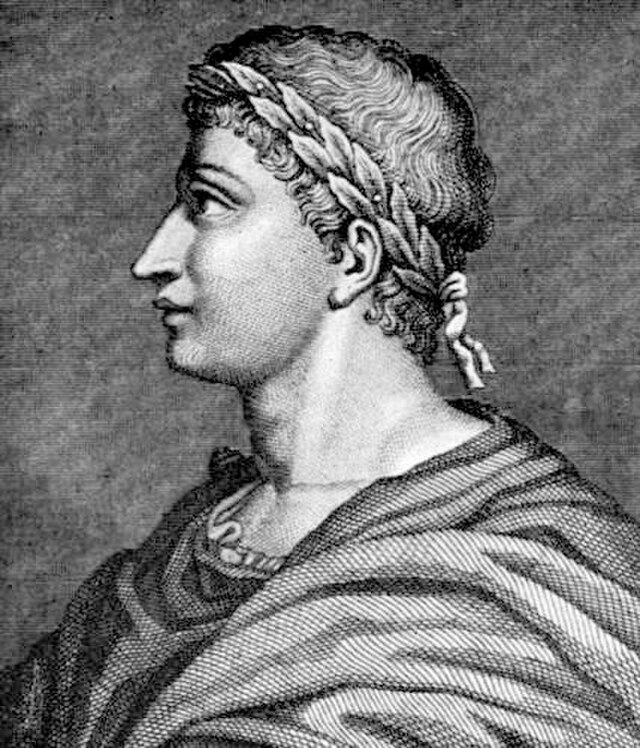
Ovid (Publius Ovidius Naso) (8-7)
What followed is less clear.
It was later reported in different ways, none of them fully consistent, that Julia and Ovid may have withdrawn briefly from the gathering. This detail circulates only as rumor, carried in fragments through households that were not present and cannot be verified with certainty.
Ovid, in his later writings from exile, did acknowledge that he had been impressed by Julia’s intelligence and composure that evening, though he does not describe events beyond the conversation itself in any precise form.
From that point, accounts diverge.
Some said that what began as an elegant exchange of poetry became the seed of later suspicion. Others insisted nothing occurred beyond the performance of cultivated conversation. What is certain is only this: the household did not remain insulated from interpretation for long.
Julia herself never offered me any account of what, if anything, followed the dinner. Whatever passed between her and Ovid—if anything passed at all—did not enter her later retelling of the events.
In time, whispers began to circulate beyond the mansion walls. The gatherings of the household, both public and private, became subject to speculation among neighbors and attendants. These fragments of rumor gradually formed what Rome would later call the Circle of Julia.
For Julia, the matter did not appear to remain central. Her attention returned to the life of devotion she had begun to shape within the Way, and to the small community forming around it. Yet she had not anticipated how quickly interpretation travels in Rome, or how easily intention becomes reimagined as design.
What began as a fragile experiment in devotion and intellectual curiosity was soon recast, outside her control, into something else entirely—something shaped less by what was done than by what was believed to have been done.
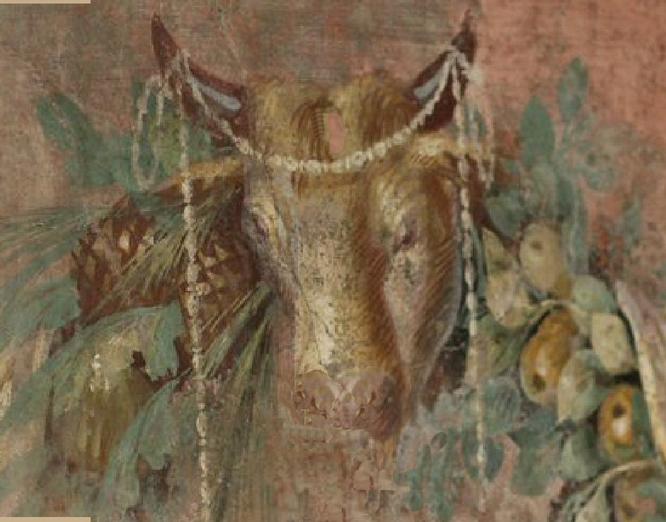
(Fresco Villa Agrippa Postumus Boscotrecase, Campania, Italy) (8-8)
Chapter 7: Almost like Repeating History
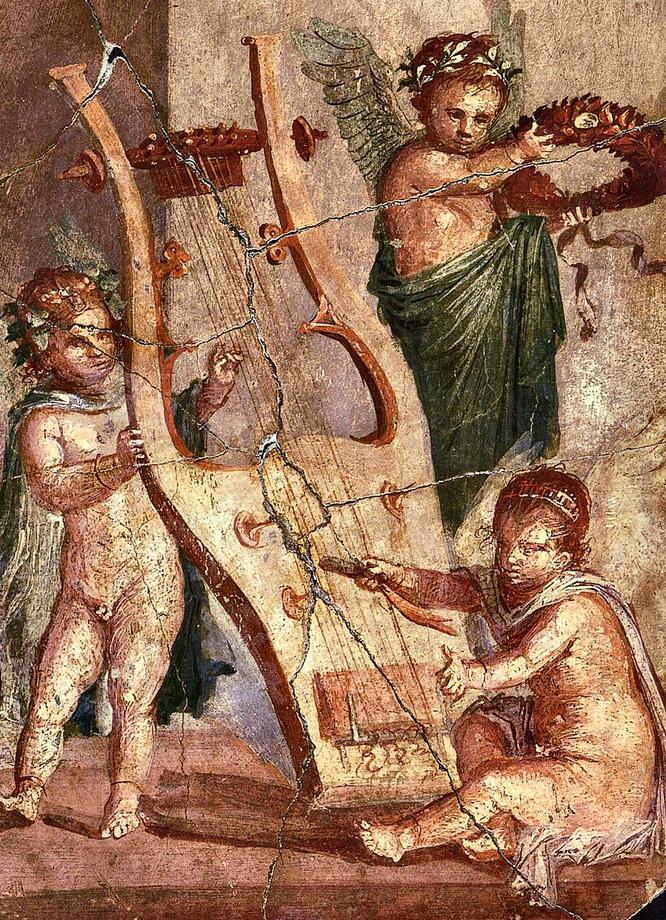
Herculaneum (Lyre and Cupids) (11-1)
Suet. Aug. 65; Dio 55.10.12–16; Vell. Pat. 2.100; Horace, Odes 4.2; Ovid, “Icarus”
As Helena related it, when word of Augustus’ reaction reached him, Lucius Aemilius Paullus hurried to Julia’s estate at Herculaneum.
“Your grandfather may be coming,” he said breathlessly. “If he discovers our private assemblies, rumor will turn them into treason. They claim we have conspired—with Asinius Gallus—to rescue your mother and Agrippa Postumus from exile, even to raise rebellion against Augustus.”
Julia answered sharply, “Why would I rebel against my grandfather? I long to see my mother and my brother again, yes—but that would violate his decrees.”
“The story grows more distorted by the day,” Lucius replied. “Now they say Ovid himself has been charged with retrieving Agrippa Postumus.”
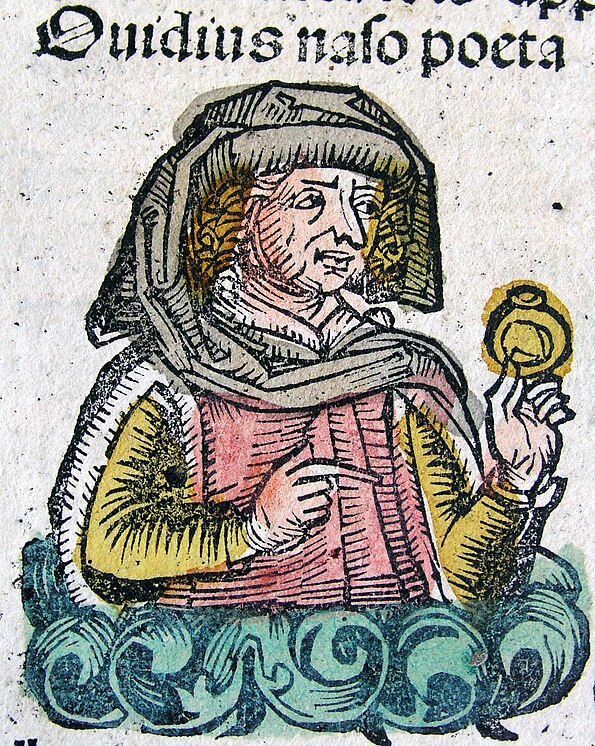
Ovid (Nuremberg Chronicle) (11-3)
Julia laughed despite herself. “Then perhaps they imagine Ovid will transform into Daedalus and fly, with wax and feathers, to my brother’s island.”
Their laughter eased their fear—only briefly.
Dio 55.22; Suet. Aug.
Helena told me that those present never forgot what happened next. At dawn the next morning, a cohort struck once upon the door. Augustus did not wait for an answer. He entered the house unannounced.
He found Ovid seated beside Julia, reciting from his verses. They rose at once, startled.
When Augustus saw Julia’s swollen belly, suspicion hardened into rage.
“I knew your Ars Amatoria would corrupt the city,” he shouted at Ovid, “but I never imagined it would taint the blood of the Julii!”
He ordered the house ransacked. Scrolls were thrown to the floor.
“This place shall be razed,” he declared. “Julia will be sent to the furthest island, and the child exposed.”
“You are mistaken, Father,” Julia pleaded. “I am no adulteress. Lucius can attest to this.”
Lucius swore it by the gods, but Augustus—haunted by the scandal of his elder daughter—would not be moved.
Suet. Aug. 7; Tac. 4.71
Helena said that servants later repeated what had passed between Augustus and Livia.
When Augustus returned home, Livia asked, “Why have you destroyed Julia’s estate and gardens?”
Too ashamed to speak plainly, he muttered, “I have no taste for extravagant country houses.”
“Then why force her to live with such austerity?” Livia pressed. “Barely suitable for a private citizen.”
“It was said to be a Jewish assembly,” Augustus replied. “Yet I saw no synagogue—only books. Still, my decision stands. Julia is too much like her namesake.”
“As for Ovid,” he added, “he will be sent to the edge of the world, where his verses can no longer poison Rome.”
Feigning compassion, Livia later sent Julia money and gifts in secret, unaware of the truth of the child. Augustus, believing the infant exposed, considered the matter closed.
Suet. Aug. 99; Tac. 4.71
The official charge against Julia was adultery with Decimus Junius Silanus—a convenient accusation that aligned neatly with rumors of conspiracy. She was sent to the island of Tremiti, off the Adriatic coast, where she gave birth to a daughter.
Though the child was ordered exposed, it was said that the guard took pity and spared her. Augustus refused to acknowledge a child born after the decree of exile.
Lucius Aemilius Paullus was charged with sedition—perhaps for abandoning the Arval Brotherhood while participating in the Way—yet he was not executed. Arval records continue to list him among their members. Silanus withdrew into voluntary exile.
Thus Julia the Younger’s punishment almost repeated history. Her mother, recalled from exile only two years earlier, still lived confined at Rhegium. Augustus granted her property and income, but never forgiveness. Neither Julia would be permitted to return to Rome, nor would either be buried in his tomb.
Julia the Younger remained in exile, it was believed, for nearly twenty years. Yet her house was not without continuation, for her child would later become bound to the affairs of Judea and the Way.
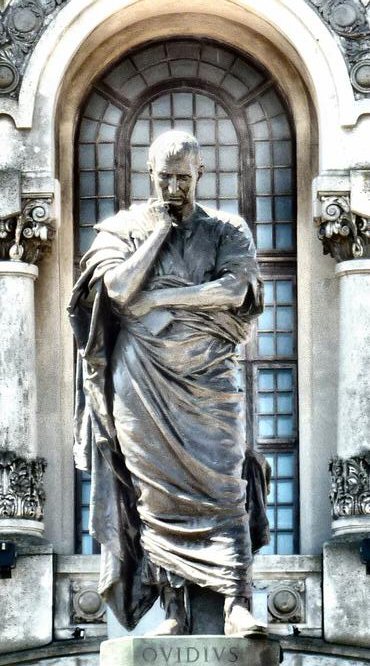
Exile to Tomis, Constanta, Black Sea (11-2)
Ovid, Tristia; Epistulae ex Ponto
Ovid was banished at fifty years of age to Tomis, on the Black Sea. There he wrote, “What I suffer here surpasses the worst fate could send—war at the gates, and not a single friend.”
Augustus avoided bringing the matter before the Senate, fearing embarrassment should the truth emerge. Ovid spoke only of carmen et error—a poem and a mistake—but the emperor would not listen.
In exile Ovid sent his Tristia back to Rome, pleading for recall. Near the end of his life he wrote, “My daughter was far away on the Cyrene shore, and could not be informed of my fate.” To those who later pieced the story together, the mention of Cyrene seemed to reveal more than Ovid intended, for it pointed toward the child long hidden from Rome.
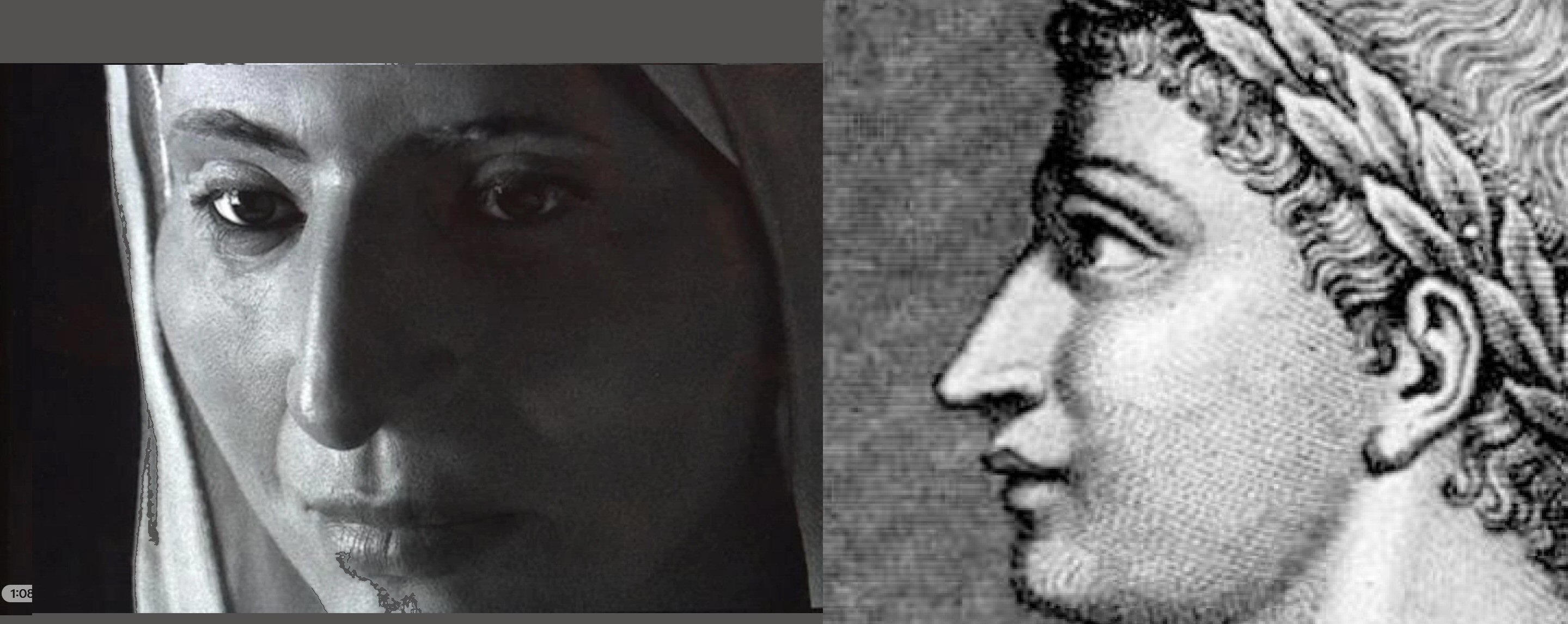
Reconstruction from Mary Magdalene relic skull Saint-Maximin-la-Sainte-Baume (37-5)
Suet. Aug. 65
Dearest Ovid,
It grieves me that I was not able to kiss you farewell. The tongues of Rome have judged us cruelly.
My heart is burdened with regret, though not without peace. I could blame my indiscretion upon your verse, yet I do not excuse myself, for I entered it willingly.
You are truly the greatest of poets, and I pray you continue to write even in exile.
As for myself, I must accept my exile as my mother once did.
Farewell,
Julilla.
Helena told me that when Augustus learned of the letter, Phoebe was arrested and questioned under torture. Those who later spoke of her said she admitted only that she followed the Way. Whether every detail is true I cannot know, but all agreed on one thing: she refused to betray Julilla. Soon afterward she was found dead, having hanged herself in her cell.
Thus Phoebe became one of the earliest martyrs of the Way—a name I too would later cherish and carry as my own.
Chapter 8: Echoes Across Time and Space
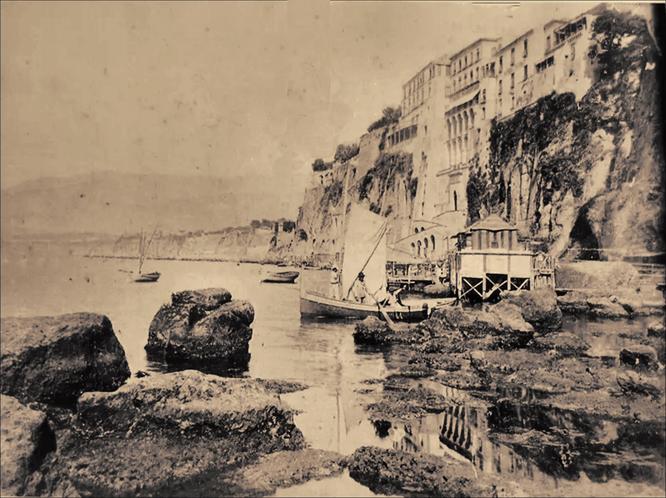
Bay of Naples (10-3)
Among Agrippina the Elder's papers I discovered Postumus' diary, appended to the end of her own account.
I immediately sympathized with him. In Rome, Postumus had once stood beside Tiberius as one of Augustus's chosen heirs. His wife, Livia Drusilla—ambitious and merciless—sought to sever every tie between grandfather and grandson.
Whereas his sister Julilla immediately embraced the Way after meeting Joseph and Mary, Postumus responded more cautiously. Inspired by their witness, he nevertheless received baptism from Joseph. Not long afterward, his reckless pride led Augustus to banish him to the remote manor at Surrentum.
From his diary, it became clear that he believed the world had forsaken him, yet his words revealed an equally determined resolve not to let exile define him.
Even in isolation, purpose found him. His exile placed him nearer to Julilla's fellowship of the Way. There, he took up the duties of a deacon, baptizing new initiates in the salt waters of the Bay of Naples. In the rhythm of the waves and the quiet devotion of those who came forward, he discovered a freedom Rome could not take—a power revealed only through exile.
Reading his diary, I came to see how the sea had become his temple and the waves his congregation. In his own way, it marked his passage into manhood—a kind of Bar Mitzvah—mirroring the story of Jesus as a boy, preparing to pass across the same threshold far across the sea.
There the surviving pages of Postumus' diary came to an end, while Helena's account carried the story onward into Judea.
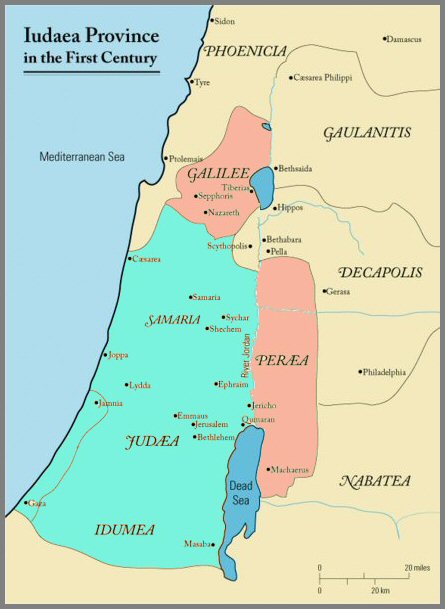
Judea 6AD (4-9)
That same year—6 AD, remembered as the "Age of Wrath"—Jerusalem rejoiced when Herod Archelaus, the so-called "fatted calf," was exiled by Augustus. Yet their relief was tempered by the burden of the census and taxation imposed by Publius Sulpicius Quirinius.
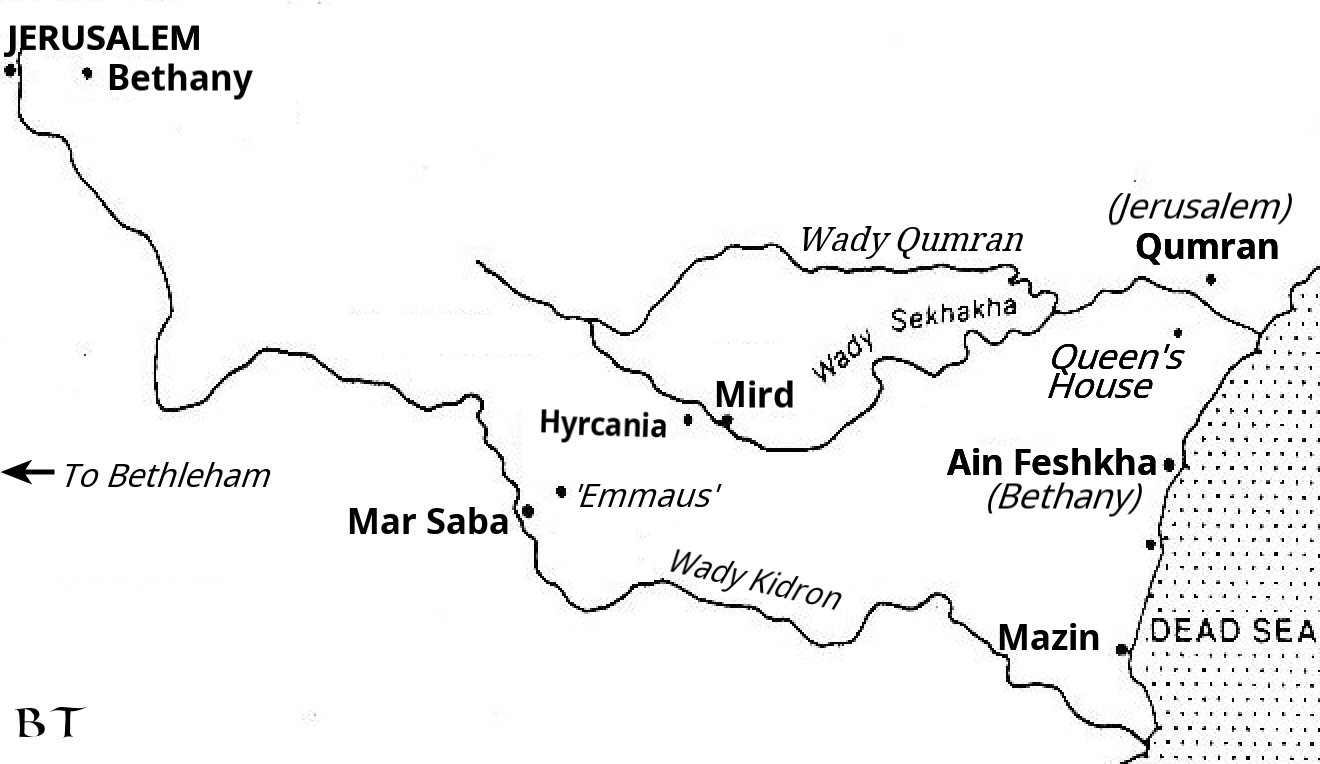
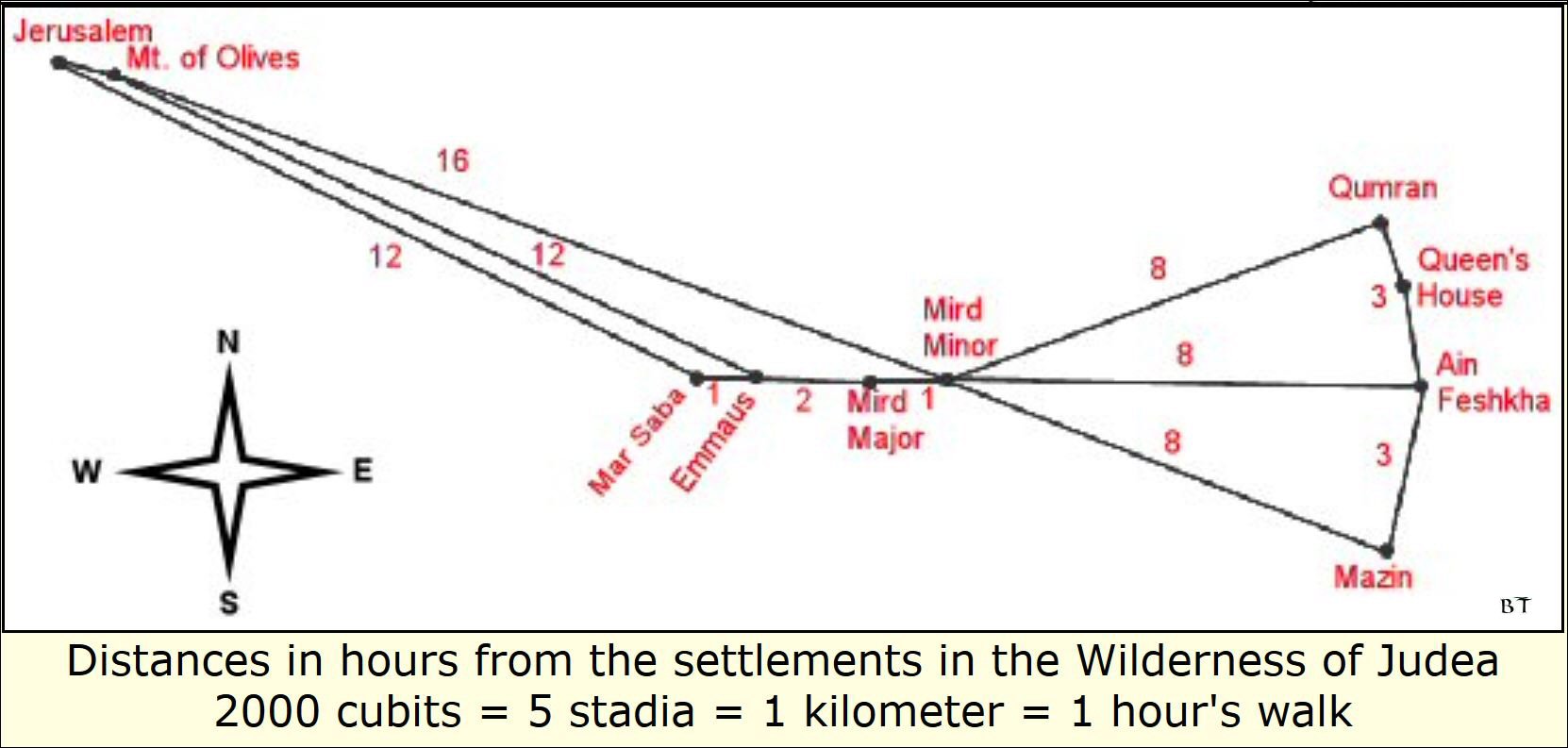
Earlier, in 4 BC, Augustus had divided Herod's kingdom into three tetrarchies, appointing Herod Antipas over Galilee and Perea. Galilee encompassed the Sea of Galilee, while Perea lay east of the Jordan and west of the Dead Sea, including Qumran. These regions would become the principal settings for the ministries of John the Baptist and Jesus.
 |
|---|
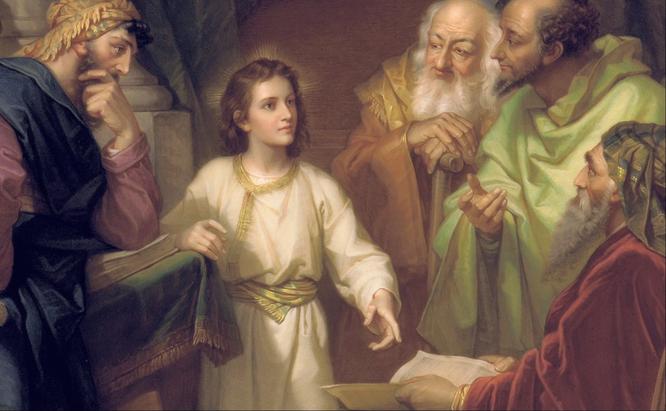
Jesus at the temple (4-11)
Jesus had reached twelve—the age of his Bar Mitzvah. Helena remembered Mary speaking of a quiet pang, as though every mother must give birth twice: once into childhood, and again into adulthood, when she must finally let her son go. So swiftly had those years passed, she said, that Bethlehem still felt like yesterday.
She reflected on the distinction between the two Jerusalems: how, in the days of King Herod, the Magi had come to Jerusalem, and how the city had trembled at the news of a rival king.
Her mind returned to those visitors from the East—among them the Nabataean king Aretas IV—who brought gifts of frankincense and myrrh, drawn from the wealth of Petra, believing that this child would one day rule Judea.
Thus, in her understanding, Qumran stood as a purer holy city than Jerusalem itself. South of the settlement she had given birth in a stable—the place that would later be called the Queen's House.
She smiled at the memory of Jesus' childish words: "Mother was queen of the oxen and donkeys, and the donkey lent me my crib."
Now she must let him go. Yet even under the authority of Simon Boethus, the shadow of his questioned legitimacy lingered.
When the time came for purification according to the Law of Moses, Joseph and Mary brought Jesus to Jerusalem. A small platform had been set upon the manger at the Queen's House—once his cradle, now the place of his passage into manhood.
Mary wrapped her firstborn in simple cloth and set him upon the manger. There was still no room for them in the inn, as Helena recalled that among the Essenes his legitimacy remained disputed.
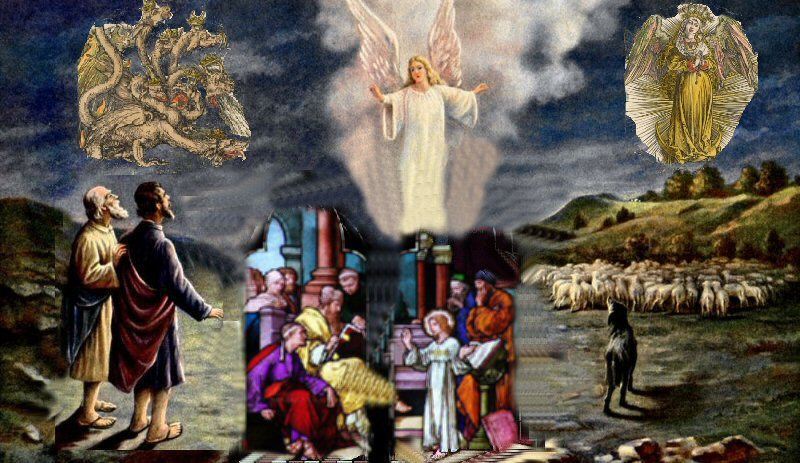
Lk 2:8-14 combined with Revelation 12:7-14 (collage: shepherds, angel, dragon, Jesus at the temple, sheep, Mary exalted)(4-10)
It seemed as though a war had broken out in heaven: Michael and his angels contending against the dragon, which was cast down and lost its place in heaven. At nearly the same moment, the high priestly order in Jerusalem was overturned. Boethus and his faction fell from power, and Ananus ben Seth rose in their place.
Below, the ceremony continued, though the world above had already begun to change. A murmur spread through the crowd. Dignitaries arrived, their presence unannounced. Joseph looked to Mary, his expression suggesting fear that even this moment might be taken from them.
"Do you not know?" cried a shepherd. "The governor has removed Boethus and appointed Ananus. Your child is now legitimate!"
The shepherds belonged to the Therapeutae, watchers of the night among the flocks.
Then an angel of the Lord appeared, and the glory of the Lord shone around them, filling them with fear. Ananus ascended the platform and proclaimed: "Do not be afraid. I bring you good news of great joy for all people. Today, in the city of David, a Savior is born—Christ the Lord."
Mary took her son's hand and led him forward. She no longer seemed merely a mother presenting a son of the Davidic line, but a woman clothed with the sun, the moon beneath her feet, and a crown of twelve stars upon her head—a great sign appearing in heaven. The twelve jewels upon her garments recalled the tribes of Israel; the moon beneath her feet suggested the fullness of divine order.
Jesus noticed his mother tremble as her gaze fell upon Boethus. Though cast down from his place of authority, he remained menacing still. For a moment she seemed to remember all too clearly that this was the man who had once held her fate in his hands.
Ananus stood beside Joseph, who had been shown mercy. Strengthened by them both, Mary released her son. Silence fell.
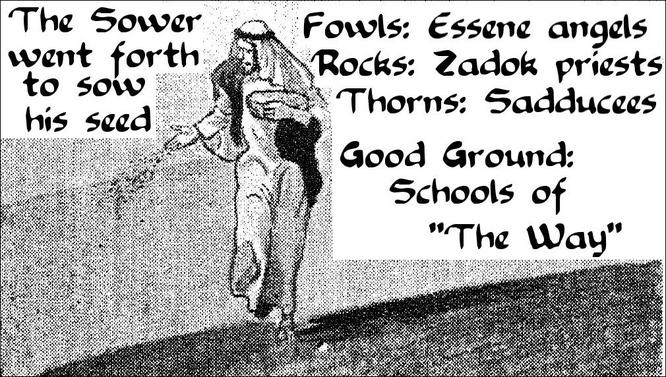
(Mt 13:1–23, Mk 4:1–20, Lk 8:4–15)
Then, as Helena later remembered, Jesus spoke words that would one day become known as the parable of the sower: "The kingdom of heaven is like a man who sowed good seed in his field..."
When he finished, Ananus laid his hands upon him and said, "You are now a son of the commandment."
Then a multitude of the heavenly host appeared, praising God: "Glory to God in the highest, and on earth peace, goodwill toward all."
Mary felt her son's hand slip from hers and knew the moment had come.
She was given the wings of a great eagle—that she might flee into the wilderness, to a place prepared for her, where she would be sustained for a time, and times, and half a time, as the prophecy of Daniel unfolded.
Chapter 9: An Abbot and Abbess
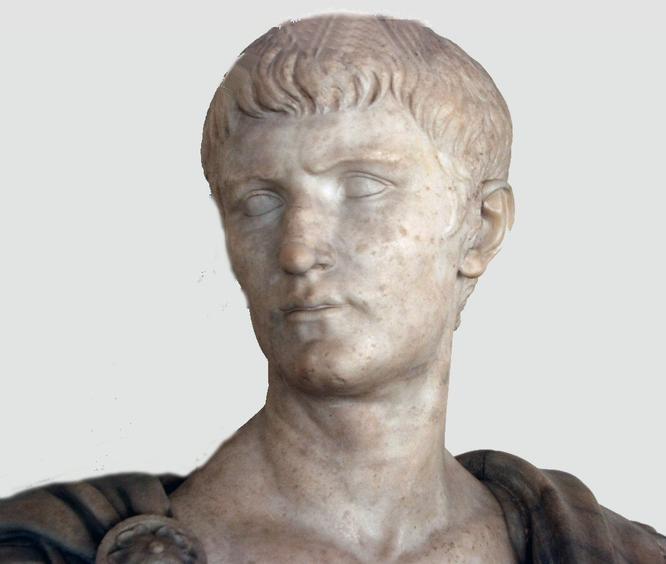
Agrippa Postumus (10-1)
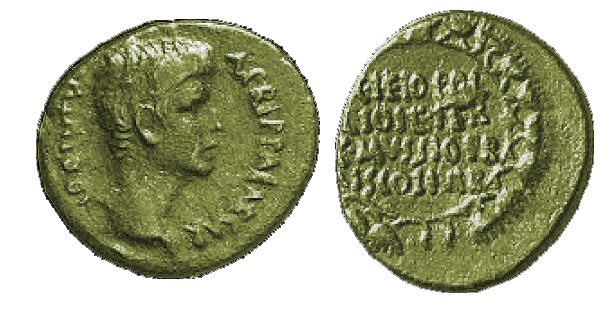 (10-2)
In the continuation of Postumus' entry appended to the diary of Agrippina the Elder, I could not resist reflecting on the curious resemblance between his fate and that of the Herodian princess Glaphyra, as recorded in the Memoirs of the King of Cappadocia. She had first been wedded to Alexander, son of Herod, whom Herod executed. When she afterward took Archelaus, another son of Herod, as her husband, it was said that the spirit of her first husband appeared to her, accusing her of transgressing the law by marrying her husband's brother. Soon after this vision she fell suddenly ill and died. A footnote adds that she was healed by Jesus—perhaps to suggest that its meaning was not for men, but for God alone.
One of the two was a Roman prince cast into exile by Augustus upon a lonely island, abandoned as though forgotten by the world. The other was a princess removed from her courtly life, wandering between kingdoms, her last husband himself also deposed and exiled by Augustus in nearly the same years that Postumus was sent to Planasia. Though separated by leagues of sea and the weight of their histories, I perceived a quiet resonance between them, as though the waves themselves whispered of a destiny yet to unfold.
Their connection appeared small, yet I understood it was not without purpose. That she was said to have been touched by Jesus—long before the beginning of his public mission—struck me with particular force. It seemed as though I were witnessing the first stirrings of something far greater: beginnings set in motion by hands unseen, which in time would rise and shake even the kingdoms of the earth.
And as I contemplated the vast expanse of sea that lay between me and my home in Judea, I felt both humbled and grateful. The currents themselves seemed to carry the subtle and unstoppable workings of the divine, a force that bore hope, faith, and the promise of a world yet to be remade by the Way.
In 7 AD, accused of possessing an illiberal nature and banished to the island of Planasia, Postumus never doubted whose hand guided the charge. Livia had long cultivated Augustus' unease where he was concerned, and having just passed his eighteenth year, he had become a living threat to her son Tiberius—an obstacle to the succession she so carefully engineered.
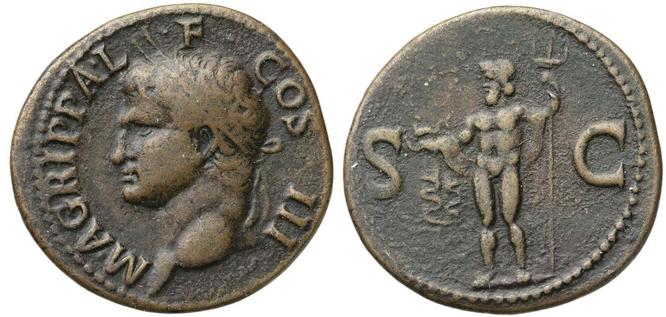
Commemorative coin of his father Marcus Agrippa
issued posthumously by Caligula (10-4)
With imperial sarcasm, Augustus mocked his love of the sea and dubbed him Neptune of the waves. The jest reached back to 31 BC, when the world had hailed his father, Marcus Agrippa, as Neptune after Actium.
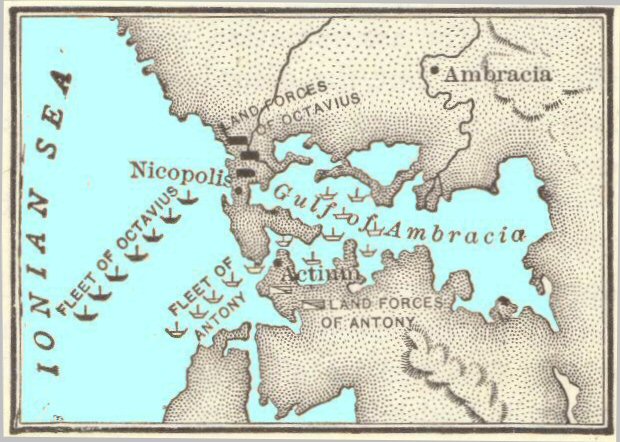
Battle of Antium (1-9)
The title pleased him nonetheless. To play King Neptune was a tolerable mask, easing the loneliness of exile.
His villa on Planasia was modest, its black-and-white mosaics patterned with marine life and mythic scenes. The surrounding waters were abundant—pipefish twisting like silver threads, lobsters clattering over rock, and groupers lurking in the seagrass. Though once rebuked by his father for spending his days fishing, the labor calmed his temper. In exile, he discovered that he had become more than a fisherman: he was a fisher of men. As he once cast nets, now he plunged seekers beneath the water and raised them again—not to the shore, but to faith. His island became a retreat for Jewish converts of means who were drawn to the Way.
This work was made possible only after he befriended Clemens, captain of the supply ship that ran between Planasia and Elba. A freedman of the Arrecinian family, later linked to Clement, bishop of Rome, Clemens smuggled initiates among his cargo and bribed the guards with illicit goods. Through his loyalty, a community took shape beyond law and empire.
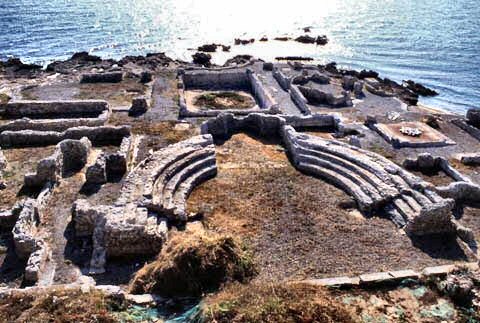
Agrippa's bath, the Theater, 1st cent. A.D. - Planasia Island (10-5)
Alone, yet not solitary, he learned that exile was formative: authority could arise without palace or Temple, and teaching could flow from obscurity. Each day he cast his nets and guided his charges. His diary shows that he had come to embrace a quiet truth: leadership could be exercised without crown or court, and teaching could flourish without decree. He became an abbot not by sanction, but by necessity, patience, and vision.
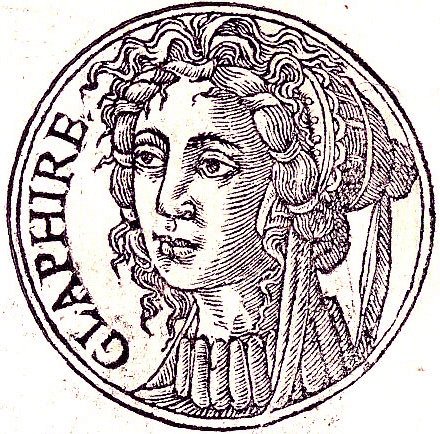
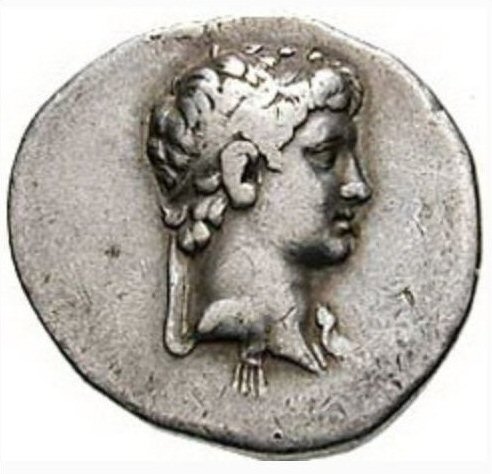
Glaphyra, wife of Alexander and Archelaus and her father, King of Cappadocia (9-2), (4-7)
Far across the Mediterranean, Glaphyra, the Cappadocian princess once married to Herod the Great's son Alexander, had seen her life shattered when Herod executed her husband for treason. She returned to her father, remarried, and was widowed again—only to wed Archelaus, her former brother-in-law, a union condemned as sinful.
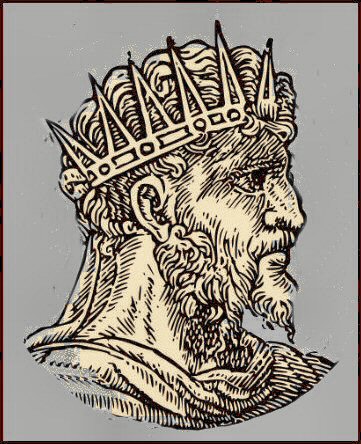
Archelaus(4-6)
Glaphyra's story reminded me of Anna, the daughter of Phanuel, of the tribe of Asher, who had stood quietly in the Temple decades earlier.
Forty days after Jesus' birth, when Joseph and Mary brought him to the Temple for the rites of purification and dedication, Simeon received the child with prophetic joy. Anna witnessed the child and spoke to all who were waiting for the redemption of Jerusalem. Neither priest nor judge, she simply recognized what God had already begun. In doing so, she showed that recognition could precede law, mercy could confer authority, and those set aside could be restored without the sanction of men. Her authority lay not in office, but in discernment. Looking back, I came to see that such quiet recognition was often the beginning of greater things.
 (9-3)
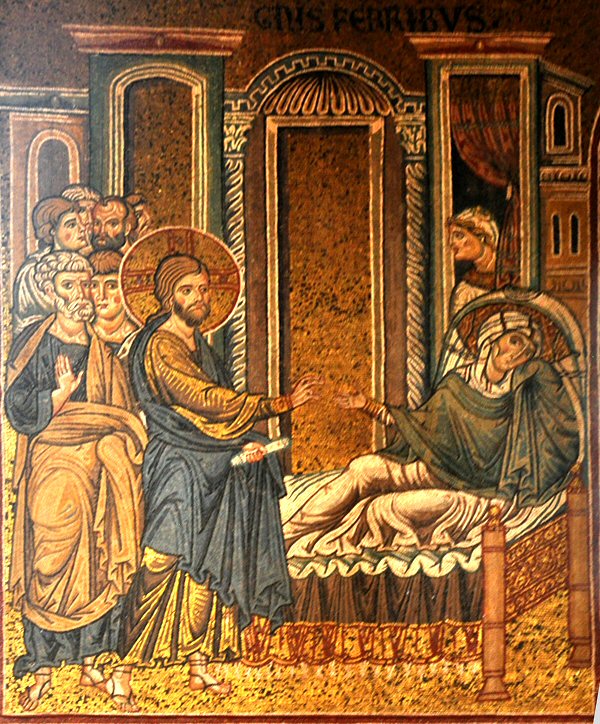
(9-3)The Synoptic Gospels recount a first healing: leaving the synagogue, Jesus went with James and John to the house of Simon Peter and Andrew. There, Simon Peter's mother-in-law lay sick with fever. Jesus took her hand; the fever left her, and she arose to minister.
Though the Synoptic Gospels place this incident at the beginning of Jesus' public ministry in AD 30, Luke's perspective allows us to see that Glaphyra's restoration had already occurred in shadowed time—before any public recognition, before any formal discipleship.
I could understand why many believed this to be a healing—it was Glaphyra's restoration, the quiet moment when her exclusion ended. She rose not from fever, but from shame. Her hands, once trembling with remorse, now reached outward in service. In time, I began to think of her almost as an abbess of Nazareth: a spiritual mother not only to Peter and Andrew, but perhaps also to James, John, and even to Mary and Martha. Her absolution came through mercy rather than merit; her tears became like the first drops of a baptismal font from which she would later minister to others.
I began to suspect that Peter and Andrew may already have belonged to Glaphyra's household circle, perhaps as freedmen attached to her estate. Peter may even have been joined to her family through marriage, while Andrew seemed shaped by the atmosphere of mercy and inclusion surrounding her household. James and John, too, appeared to stand slightly apart from the older Judean order, their loyalties perhaps already formed through quieter bonds of fellowship.
Looking back, I could not help wondering whether the earliest currents of discipleship had first begun gathering there in obscurity. Whatever later emerged publicly through baptisms, healings, and signs may initially have existed only in shared meals, acts of mercy, quiet instruction, and mutual recognition. Certain passages in Peter's Epistle later struck me differently, as though faint traces remained of older relationships formed not through rank or lineage, but through service, exile, and grace—echoes of authority exercised quietly both there and on Planasia.
The more I reflected upon them, the more Planasia and Nazareth seemed like mirror worlds facing one another across the sea. Nets were quietly cast and seekers gently guided. Glaphyra rose from shame into service, while Postumus discovered in exile a strange and unexpected vocation. Again and again I found women opening thresholds of mercy while men carried teachings outward into the world.
Neither circle claimed the Temple, nor did they openly contend with Rome. Yet authority seemed to flow quietly from exile, widowhood, suffering, and discernment rather than rank or decree. Their acts of formation were like convergent swells gathering strength beneath the surface of the sea. What later emerged publicly in baptisms, healings, and signs may first have been tested in obscurity—in shared meals, hidden acts of mercy, and lives slowly remade by the Way.
What arose from the twin swells of Planasia and Nazareth did not announce itself as revolution. What at first appeared to be acts of retreat were currents moving quietly toward one another.
Christianity did not ascend from the center. It emerged from those the center had cast aside. In that realization I felt a quiet awe, knowing that history's most transformative currents often flow beneath the visible waves—unseen until they break upon the shores of time.
Chapter 10: Postumus, the Second Emperor?
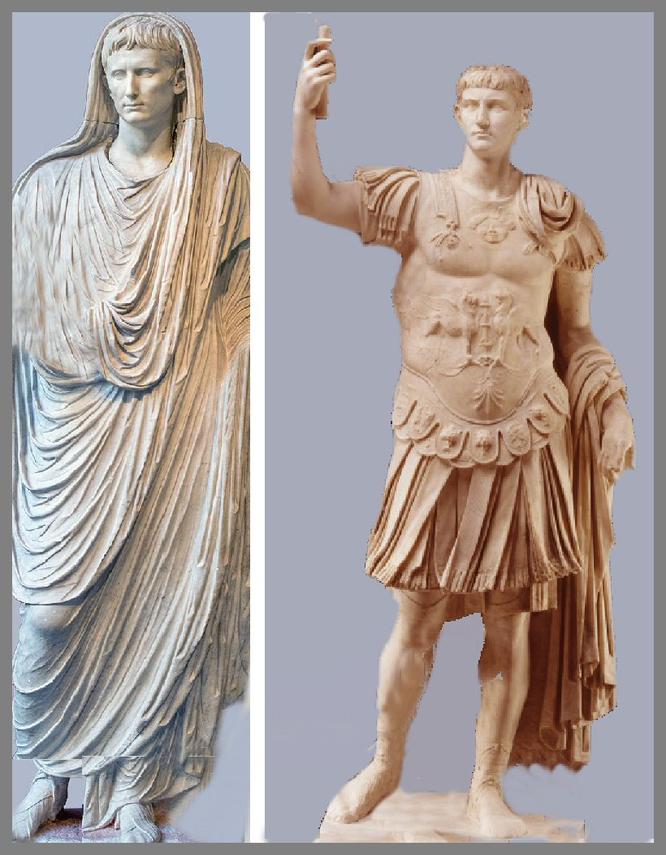
Augustus and Postumus (12-1)(12-2)
Having just covered the events of AD 7, when Postumus was exiled to the island of Planasia at the age of eighteen, I turned the page of Agrippina's diary and realized it had leapt ahead to the spring of AD 14. By then, Agrippina was twenty-seven and married to Germanicus. Postumus, her only surviving brother, had lived in exile since AD 7, while their mother had remained banished since 2 BC.
The story that followed had never been mentioned by any historian: a secret meeting between Postumus and his grandfather upon the lonely island of exile—Augustus himself, apparently having slipped beyond the watchful eye of Livia. I read these hidden pages with growing excitement, sensing that I was glimpsing what history had deliberately kept in shadow.
In the spring of AD 14, Augustus, feeling his strength fail, began to question whether he had been wise to leave the empire to Tiberius. As his infirmities worsened, he sailed to Planasia accompanied only by Paullus Fabius Maximus and a small circle of trusted companions.
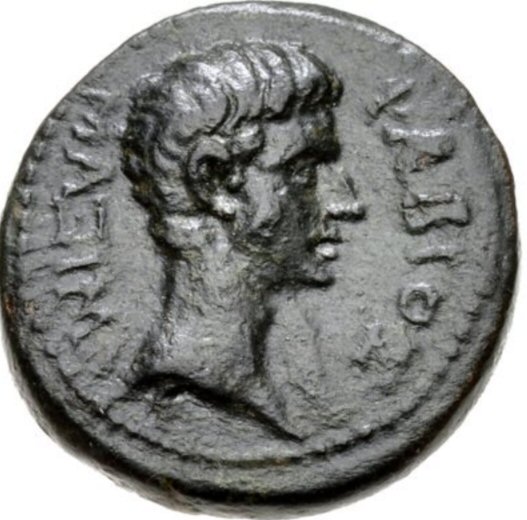
Paullus Fabius Maximus (12-3)
To the astonishment of the guards, Augustus himself stepped ashore. When he disembarked, he embraced Postumus. After years of bitterness, Postumus returned the embrace. At twenty-five, soon to turn twenty-six, his former temper had cooled; exile and the precepts of the Way had reshaped him.
"Your visit is joy enough," he said.
"How I wish your father Marcus were here," Augustus replied, studying him closely. "As we approached the island, I imagined him beside me—sailing once more against Antony and Cleopatra. And now, seeing you... in your eyes I glimpse Antony. I do not know why I have come."
Fabius Maximus and Postumus helped him to the terrace overlooking the sea. Wine and broiled fish were brought, while the breeze carried the scent of grapes from the shore. Augustus sat for a long while in silence.
At last he spoke. "I fear I have wronged my own blood. Livia was ever pressing Tiberius forward. I hoped distance might free my judgment, yet age has made me weak."
Postumus listened quietly before asking, "And Julia?"
He sighed. "She defied me. I arranged her marriages, dreamed of heirs, and failed her all the same. Forcing her upon Tiberius was my greatest mistake. I ignored her heart—and she never forgave me."
"Not all the blame is hers," Postumus answered carefully. "Tiberius' nature is well known."
Augustus smiled faintly. "Your control over my daughter only bound her more tightly to resentment. She once wished she had married Iullus."
Augustus laughed quietly. "Then Rome might have known an Antonius Caesar instead of a Tiberian heir. That would have awakened many ghosts."
"Or another possibility still—Agrippa Postumus Antonius," I read Postumus saying.
Augustus stared at him uneasily. "Did Julia deceive me? I see the likeness. Could it truly be?"
"God works in ways hidden from princes," Postumus replied quietly. "But I am Postumus. Your blood runs in me—not Tiberius's."
"And the younger Julia?" Postumus asked.
Augustus looked away. "Ovid... his verses stirred too many hearts. I sent him far from Rome. Yet I sometimes wonder whether severity served justice."
Paullus Fabius Maximus spoke with careful deliberation. "I hope Your Excellency does not object that I have remained in correspondence with him, sending funds from time to time. Much of his Ex Ponto is devoted to pleading with me to persuade you to permit his return."
Augustus' expression hardened. "I ordered her child smothered because I could not bear what it implied."
Maximus quietly motioned Postumus closer. "If you were wondering—her daughter is well," he whispered.
Postumus concealed his surprise. He had long known Maximus as a patron of poets, but never as the keeper of such dangerous secrets.
To lighten the conversation, Postumus turned again to his grandfather. "Did you know that Julia's house sheltered gatherings of the Way?"
Augustus stiffened. "Jews? In my daughter's house?"
"They teach peace," Postumus replied, "and acknowledge Herod Antipas only in name."
For a long moment Augustus remained silent. "At first I feared such things were sedition," he admitted. "Yet we built the Ara Pacis to honor peace, and still betrayal followed—by both my Julias, and by Iullus Antonius, who praised me even while dishonoring your mother."
"You touch upon the reason for my journey," Augustus said slowly. "I fear Livia will prevail. Tiberius will rule, and I dread what follows. Rome might fare better under another hand."
Lowering his voice, he added, "I regret that I bring no promise of your recall. Worse still—I fear for your life. If word reaches you of my death... vanish."
Then, almost as an afterthought, Augustus pressed a ring into Postumus' hand.
"The sphinx," he said. "I once gave it to your father when I despaired of recovery. Keep it. Let it remind you that I did not forget."
A month later, Livia urgently summoned Tiberius from Illyria. Whether he found Augustus alive or already dead was never made clear. What is certain is that she suspected reconciliation between the princeps and his grandson—and feared what it might mean.
Fabius Maximus disclosed the visit to his wife Marcia, speaking of tears and renewed affection. She unwisely repeated what she had heard. Soon afterward Maximus died. Some called it suicide; others suspected darker causes, especially when Marcia's funeral lament blamed herself for bringing about her husband's death.
Rumor claimed that Livia hastened Augustus' end with poisoned figs. It would not be the last time imperial succession was thought to have been shaped by a wife.
The accounts before me suggested that Postumus himself was later murdered, though the details remain uncertain. Most troubling was Tiberius' silence before the Senate and his claim that Augustus had ordered the tribune to dispose swiftly of his only natural grandson. The surviving record, however, leaves the question unresolved.
On his deathbed Augustus is said to have asked for a mirror.
"Have I played life's farce well?" he asked. "If so, applaud as I leave the stage."
I found myself struck by the enormity of that almost playful confession—that even the greatest of rulers might regard his life as a performance, as though identity itself were something acted rather than possessed.
His grandfather's warning had been genuine. Postumus had believed him and had already begun making his own preparations.
The question lingered in my thoughts.
What if Augustus had changed his will? What if Postumus had become emperor instead of Tiberius?
A shiver passed through me.
Yet in that delicate balance between fate and chance, even a warning seemed capable of altering what might follow.
Rome measures time through succession.
The Way measures it through fulfillment.
What appears in the records as misalignment may instead mark a crossing point—where events and meaning converge beyond imperial measure, yet not beyond recognition.
I could discern throughout these chapters the influence of two powerful forces—east and west—interacting across distance and difference. Events unfolded across courts and seas, calendars and communities, revealing a movement at once local and far-reaching, temporal and symbolic.
My study of calendars and prophecies had shown me that meaning is never fixed. Time itself can conceal or reveal, depending upon who measures it and how. Even small misalignments of hours, days, or festivals can alter the shape of what later generations take to be destiny.
The encounters in Rome—Agrippa Postumus with Mary, Jesus, and James, together with the gatherings around Julia the Younger—suggest that influence travels not merely through proximity but through mediation. Authority and insight are not bound to rank alone; they move through trust, counsel, and the subtle weaving of relationships.
What I began to recognize was a recurring pattern: the same tensions returned, though the responses continually changed. Individuals were drawn into these currents, and their choices redirected their flow. Postumus was drawn toward the Way and then toward exile. Julia the Younger established a fellowship that later became a source of suspicion. Each life became part of a wider interweaving of power, expectation, and vision.
From this perspective, the Way is never confined to one place, one person, or one moment. It passes through human action, perception, and memory. Its continuity depends upon those who recognize its threads and choose to act within them.
Through these accounts I traced a pattern slowly emerging into view—one that continues to press upon identity and consequence. What lies ahead is not merely conflict, but transformation: the remaking of identity under pressures that cannot be avoided.
Rome measures time through succession, but the Way measures it through fulfillment. What appears in the records as misalignment may instead be a crossing point where events and meaning converge beyond imperial measure, yet still within recognition.
From here, Simon's testimony is added to the record.
Book III — New Identity
Chapter 11: “Simon, the son of Antonius and Rachel”
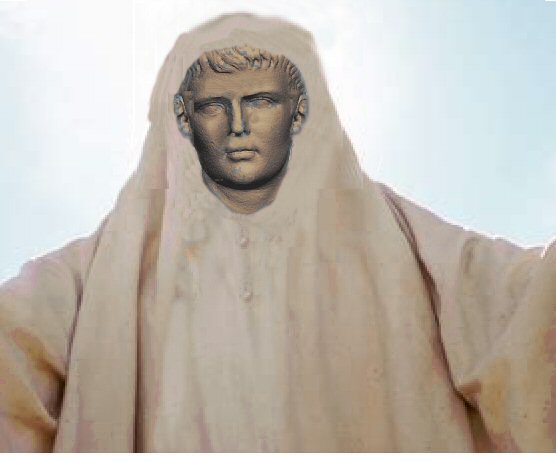
Simon Magus (13-1)
After Augustus' warning in AD 14, Postumus ensured that Clemens kept his ship anchored off Elba, ready for escape from Planasia. Clemens commanded his own vessel, fully supplied and provisioned, carrying initiates from Julia's fellowship of the Way. Loyal beyond question, he waited for the appointed moment.
When Augustus died on August 19, AD 14, Tiberius issued written orders to Gaius Sallustius Crispus to see Postumus executed. Gaius, long entrusted with imperial secrets, hesitated—but obeyed, knowing the danger lay equally in truth and refusal.
He sailed to Elba. Clemens met him with measured courtesy and invited him aboard for wine. While they spoke, provisions were quietly loaded and the ship made ready. Gaius revealed the orders. Clemens replied without hesitation:
"I am a friend of Postumus. This deed will not be done. Remain here three days and report it finished—or you will be confined below deck."
Gaius understood. The fiction offered survival. He remained aboard, then returned to Rome and reported that Postumus had been slain by a resolute centurion. Livia advised that the matter not be publicized, nor brought before the Senate.
At Planasia, Clemens and I overpowered two drowsy centurions and secured our passage. With my death already declared, I left the island unseen. No longer a prisoner, I moved as one already erased.
My course was set first for the two Julias—my mother and my sister—before turning south toward Cyrene.
With Rome believing me dead, I discovered that death itself could become a refuge. A man erased from the world could begin again under another name.
My mother, Julia the Elder, was confined at Rhegium, near the toe of Italy. Guards, unaware of my supposed death, were easily bribed.
At first she did not recognize me in priestly vestments. Then I spoke.
"Mother."
Tears broke free.
"Postumus—it is you! I was certain Tiberius had murdered you the moment Augustus died—no doubt poisoned by Livia."
We embraced.
"Surely Tiberius believes me dead," I said. "Yet here I stand—the posthumous Postumus."
"That you are. But how will you avoid discovery?"
"I will be known as Simon, the son of Antonius and Rachel."
"That is wise," she said. "Do not contest Tiberius' succession—he would hunt you down if he knew."
"Good sometimes triumphs over evil. How do you like my new name?"
"It will conceal you," she said softly, "and reveal more than you think. But tell me—why am I now Rachel?"

"As for my name, I choose Simon—Jacob's second son by Leah, whose name means 'heard' or 'one who is heard.' Yet he was the son of the unloved wife. It suits my life and places me within the line of Jacob-Heli, the grandfather of Jesus."
"You were never unloved by me," Julia said.
"I know." I kissed her cheek.
"If I were called 'son of Julia,'" I continued, "it would expose us. The world knows too well the name of Julia."
Her eyes brightened.
"Yes—I remember Troy. The river nearly swept me away. Agrippa fined them all—it took Herod's persuasion to calm him."
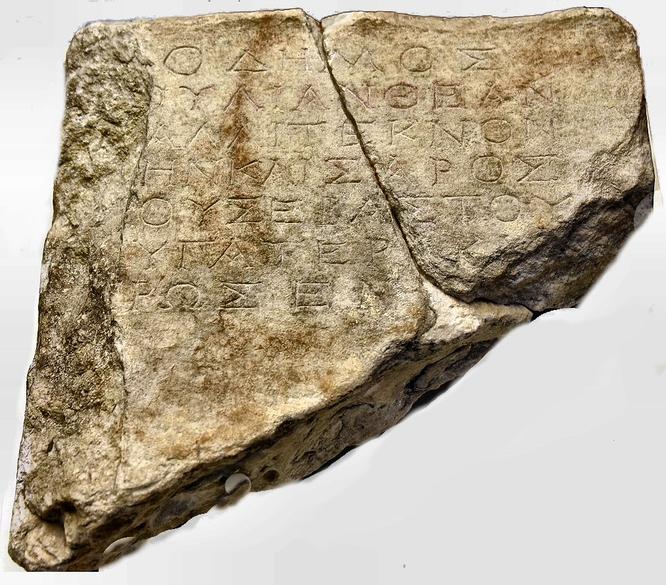
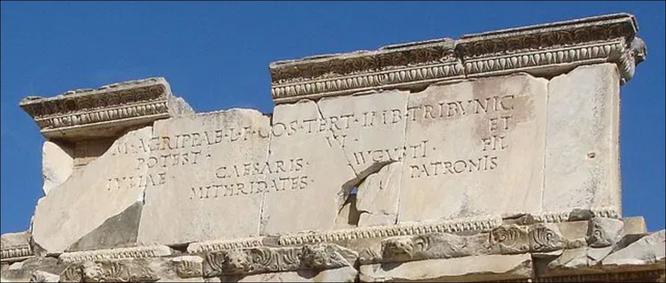
Inscribed Dedication to Julia at the Sanctuary of Athena at Priene (13-2)*** Agrippa and Julia inscription from Ephesus (13-3)
"And Herod Philip named a city for you—Julias, at Bethsaida," I said.
She laughed.
"Almost as famous as Cleopatra."
"More enduring," I replied. "You survived Tiberius."
Her voice softened.
"I never made it easy for Livia to secure her son's rule. I deserted Iullus—but worse, I was forced to abandon you."
"You saved me," I said. "By concealing my father, you preserved my life."
Tears filled her eyes.
"My poor Iullus."
"You still have me. Tiberius failed."
She smiled faintly.
"Then begin again—as Simon. Not emperor—but something greater."
"Mother—come see your grandson!" she called.
Scribonia approached slowly.
"Postumus—you live. Tell me, is it true Augustus intended to make you emperor?"
"Prevented," I replied, "by Livia's poisoned figs. His warning saved me."
Scribonia sighed.
"I have heard she poisoned them on the tree itself. Augustus called me shrewish—but what he left Rome was Tiberius."
"There is still hope," Julia said. "Germanicus may yet reign."
"And do not count out Postumus," Scribonia added.
"No," Julia answered firmly. "Better that he live as Simon—seeking the Way, not the throne."
Clemens called from the ship.
"Another sail—we must go!"
Julia grasped my hand.
"Promise me—you will rescue Julilla and her child."
"I will."
"Then go," she said.
I embraced them both, took up my sword and shield, and boarded the ship.
Their voices followed me across the water.
"Farewell, Simon."
And I understood then that the name "Rachel" was not merely concealment, but inheritance—an echo of those who had gone into exile before me. I would go among the Egyptian Therapeutae bearing that burden: not only survival, but the weight of what had been taken, and what still demanded fulfillment.
Chapter 12: The Rescue of Helena of Troy
When I was young, I stayed at Helena's convent near Nablus, west of the monastery at Mount Gerizim in northern Judea. Helena—known in Rome as Julia the Younger—often told me of Simon: how he changed his name, escaped death under Tiberius, and later rescued her from exile. I made her repeat the story until every detail was fixed in my memory.
Helena told the story many times, yet each telling carried the same quiet astonishment—that her brother had crossed the sea to rescue her from the Tremiti Islands. I remember her describing how he accomplished it. She always began by explaining how Simon had become fascinated by comparing her to Sophia.
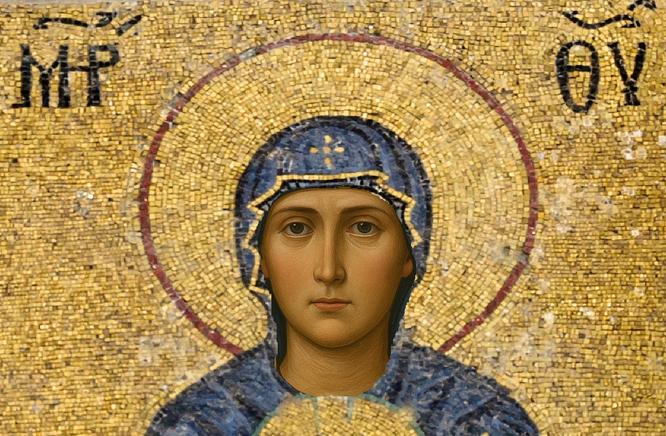
Hagia Sophia (14-1)
"Sophia, our sister, came down," she said, pausing as though weighing every word, "descending innocently to regain what she had lost. Therefore I was like the Greek Helena, brought down from the highest heavens into the world; a queen, the all-bearing one, and Wisdom—for whose sake men fought at Troy, seeing only an image of the truth."
I could hear the awe in her voice, and even as a child I understood that this story was about far more than escape. It was about destiny, identity, and meaning.
Helena told me that Simon and Clemens set sail from the toe of Italy, steering northeast toward the Tremiti Islands. She described Julilla's prison, perched like a fortress upon a steep incline, impossible to capture by force. They would have to rely upon cunning rather than strength.
"Clemens had a plan," she said. "He would impersonate my brother and return openly, creating confusion."
She hesitated, and I could sense her fear as she admitted, "I was afraid for him." Yet the uncertainty itself became their greatest advantage. Tiberius could not know whether Postumus truly lived or had already died.
The wind carried them onward, she said, just as it carried hope—swift, yet uncertain.
Helena's voice grew animated as she recounted Clemens' astonishing confession.
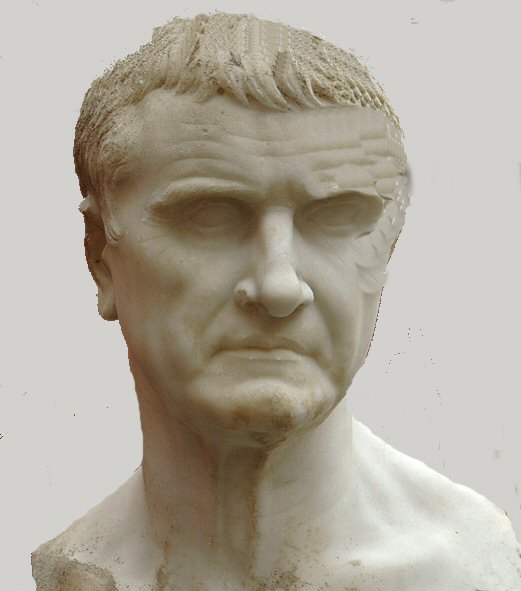
Marcus Licinius Crassus (14-3)
"I would not fear death... I am the grandson of Spartacus."
She remembered the amazement that swept over them. Clemens explained his ties to Tertulla the Younger and to Marcus Licinius Crassus, declaring that he intended to continue the struggle begun by his grandfather.
"Then Simon placed Augustus' signet ring upon his finger and called him the true heir of Augustus. 'Hail, son of Spartacus,'" she recalled with a smile.
She spoke of him with deep admiration—the same sense of wonder that filled me as I listened.
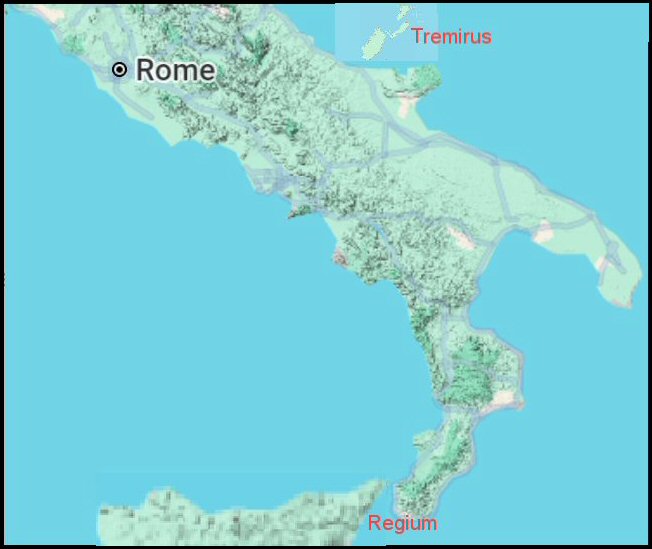
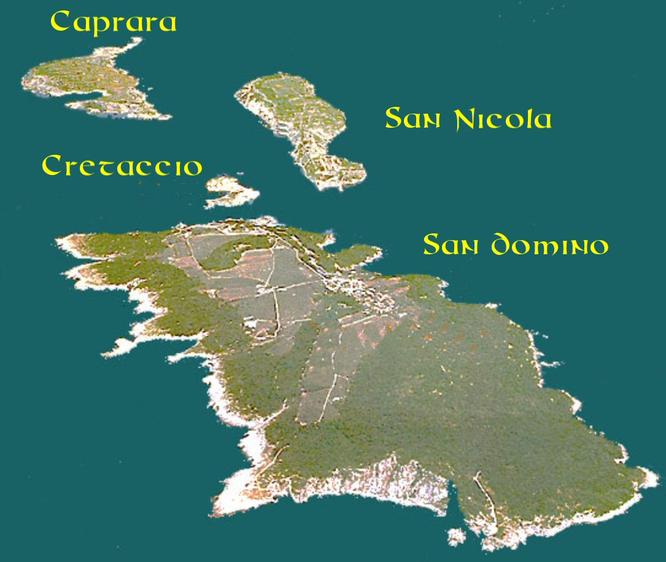 (14-2)
Helena described the landing with remarkable clarity.
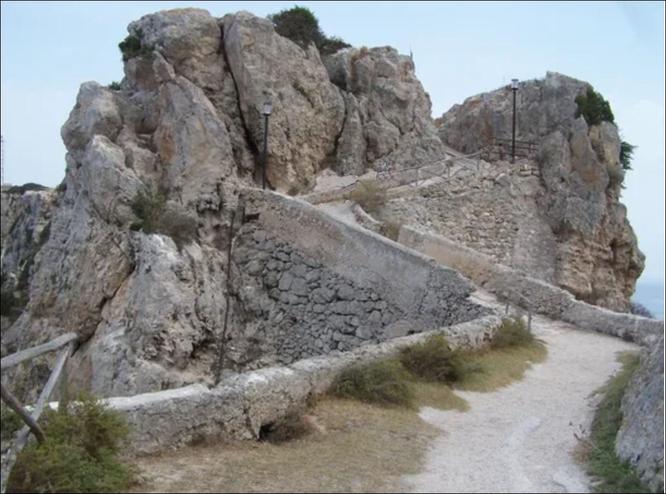 (14-5)
They rowed ashore upon the narrow beach between San Domino and San Nicola before climbing the steep path toward the fortress. Two guards blocked their way with drawn swords.
Clemens declared himself to be Postumus returned, come to pardon his sister and escort her safely back to the mainland.
The centurion demanded proof.
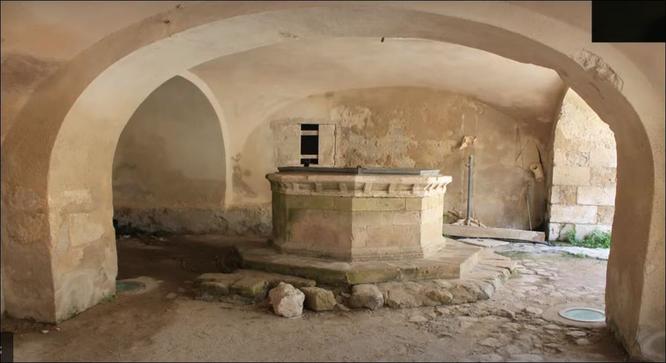 (14-6)
Helena remembered the moment perfectly. Clemens calmly extended his hand, revealing Augustus' signet ring.
The centurion immediately fell to one knee.
"Forgive my doubt, great Emperor."
"I stepped forward," Helena whispered, "and brought my daughter to him. We all had to play our parts perfectly."
She paused, allowing me to imagine the fear, the tension, and the extraordinary daring of that deception.
Helena's hands trembled slightly whenever she reached this part of the story. The centurion hesitated, for Augustus' decree forbade the child's release. Clemens simply rescinded it.
"My brother seized me and my daughter," she said. "Clemens held the centurion at knifepoint, and the guards obeyed. We hurried down the incline... the wind that had tormented me throughout my imprisonment now carried us away."
Even the centurion's cries from the shore could not stop them. Clemens pressed the knife closer, demanding silence, and the guards swore never to reveal what had happened.
"It was as though the wind itself lifted us," she added softly.
Once aboard the ship, Helena embraced her brother. She described the prison to me: cold stone walls, wind forever whistling through the cracks, days without sunlight, and nights haunted by the cruelty of guards and their threats against her daughter.
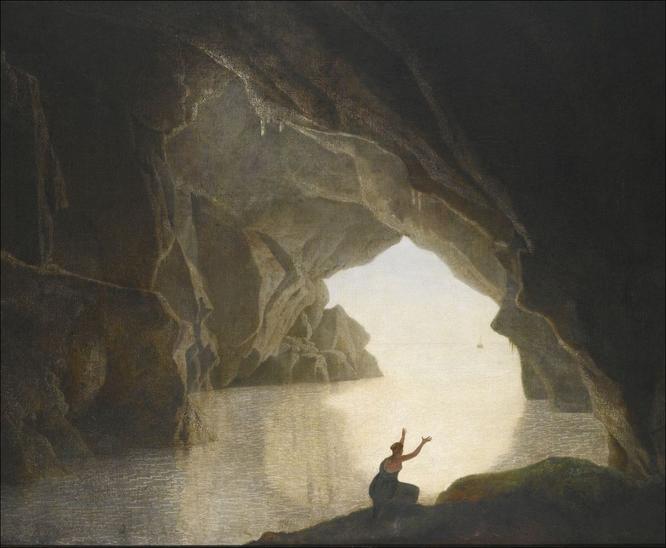
Julia in the Grotto of the Gulf (14-7)
"I fled to my grotto and screamed into the shadows simply to know that I still lived," she said, shivering even years later at the memory.
Her brother comforted her, assuring her that survival was never madness.
When the little girl was introduced, Helena laughed softly as she recalled Simon's words.
"A beautiful name—after the mother of Jesus."
Even in her retelling I could feel both her relief and the immense weight of having survived.
Helena explained how each of them received a new identity. Clemens assumed Simon's identity during the deception. Postumus became Simon. Julilla herself became Helena, embodying Sophia, the divine feminine.
"I became Helena, not merely for disguise, but for meaning," she said.
Her daughter began calling her Helena, Queen of Troy.
"I accepted it fully," she added, her voice lingering upon the words.
Even then I sensed the weight of her decision—the embrace of both chastity and purpose.
Helena told me of their plans to sail for Cyrene, where followers of the Way from Alexandria had settled. Ovid would not yet be rescued; the autumn storms and the discipline of the Essenes made such a journey impossible.
"Cyrene is the right choice," she said. "It is far away, yet safe for those whom we protect."
Even now I remember her voice, her eyes, and the way she looked at me while speaking. I remember how proud she was of her brother, and how suffering had taught her that the Way remained steadfast and forgiving.
As they sailed toward Cyrene, I remember quietly nodding, even as a child, sensing her complete confidence in her brother's judgment.
She told me that from that day forward she would remain a virgin, placing herself above the temptations of the flesh in lifelong devotion to the Way.
Chapter 13: Clemens Against the Temporal Throne
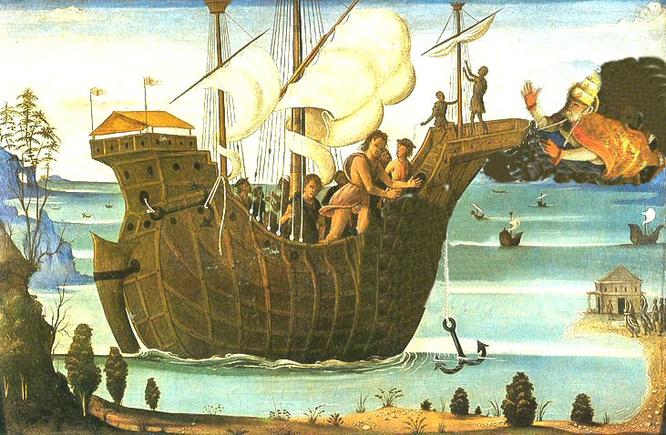 (15-1)
 (15-2)
 Among the writings preserved by Clement was a eulogia honoring Clemens, the freedman whose courage became part of the living memory of the Way. I recount it here as it came down to me.
It also preserved a genealogy linking Clement to the Arrecinian and Flavian families, offering an explanation for how he survived to succeed Peter.
As Clement described the daring deeds of Clemens, I marveled at the path he had taken—disguising himself as Postumus—and at the courage and cunning such a feat required.
In September of AD 14, Clemens, the servant of Agrippa Postumus, dared to threaten the stability of the State through discord and the specter of civil war before he was finally checked. For nearly three years he guided followers while evading capture, spreading the story that Agrippa had survived.
Through trusted emissaries who shared his secret, rumors spread first in whispers, then in uncertain gossip that reached the ears of the credulous and the restless alike. He moved from town to town beneath the cover of dusk, never lingering long, understanding the strange paradox of fame and secrecy—that truth gathers strength with time, while falsehood quickly collapses.
During one of his brief periods of concealment, Clemens visited the household that had raised him. When he knocked upon the door, a small boy opened it, stared upward in astonishment, and hurried back inside.
"There is a giant at the door!"
Clement, the seven-year-old son of Marcus and Plautilla Clemens, came to see the imposing stranger for himself.
"Tell your father that Clemens, son of Spartacus, is here," the visitor said with a wry smile.
Marcus appeared and immediately recognized him.
"Come in quickly! So you are the Faux-Postumus! We wondered whether we would ever see you again. I knew it had to be you."
They embraced. Plautilla and her mother, Tertulla the Elder, daughter of Crassus, soon joined them.
"It seems everyone is talking about you—and about this religion called the Way," Marcus observed. "You must tell us everything."
Plautilla leaned forward eagerly.
"And the real Postumus—is he alive?"
Clemens' eyes flickered for only a moment.
"Yes. But it must remain a secret. He is now a bishop and bears another name."
Marcus nodded.
"Then you must remain with us awhile. Plautilla, prepare a meal—and a bed."
The household listened intently as Clemens prepared to recount the adventure that would define his life.
Beside the fire, Clemens recounted the events later recorded by Tacitus, correcting the historian's belief that he had failed to rescue Postumus in time.
"After Augustus' death, I conceived a scheme few could imagine: to sail to Planasia and rescue Agrippa Postumus. Having learned that Augustus was dead, I formed a design beyond what anyone expected from a slave—to reach the island, free Agrippa by craft or by force, and bring him safely away. The slowness of an ordinary merchant vessel might have ruined such a venture, but my ship was among the fastest upon those waters.
"With Agrippa's murder universally assumed, I conceived a still greater and more dangerous plan. Because I resembled my master in age and stature, I would assume his identity, sail to Cosa on the coast of Etruria, and remain hidden until my hair and beard had grown long."
The young Clement listened with wide-eyed amazement, never imagining that Clemens' courage would one day shape his own calling.
Clemens spoke of baptism as the doorway into fellowship with the Way. Before the month had ended, every member of Marcus' household sought baptism. At dusk he led them to the sea, immersing them beneath the fading light as the sun disappeared below the horizon.
A few days later Clemens departed. By then, the rumors of Agrippa's miraculous escape had spread rapidly throughout Italy and were already reaching Rome itself, unsettling Tiberius' throne while drawing new followers to the Way.
In Rome, Tiberius watched these reports with growing unease. Curious yet fearful, he wavered between action and hesitation before finally entrusting Sallustius Crispus with the capture of the man claiming to be Agrippa.
Not until March of AD 17 did agents disguised as sympathizers finally succeed in trapping him.
Brought before Tiberius, Clemens was asked how he had become Agrippa.
With calm audacity he answered:
"As you became Caesar."
He revealed nothing more.
Tiberius dared not execute him publicly. Clemens was therefore put to death in secret. Though many senators and knights had quietly aided him, no formal inquiry was ever permitted.
Thus ended the mission of Clemens.
Clement never forgot the towering freedman who had once appeared at his father's door. He believed that Clemens' fearless witness had shown him that no earthly throne could rival the authority of the Way.
From that beginning he sought baptism, devoted himself to Peter's ministry, and in time succeeded him.
Through these accounts I traced a life continually being remade. Postumus wrestled with fate, destiny, and the unseen hand of history much as Jacob had wrestled with the angel. Jacob stole his birthright; Postumus had his taken away by the judgment of recorded history. Jacob became Israel, son of Isaac; Postumus became Simon—the son of Antonius and Rachel—a name carrying possibility, a life no longer bound entirely by lineage or expectation.
In Helena's testimony, the rescue marked the moment when responsibility and deliberate action took precedence over inheritance, revealing that authority is ultimately defined by deeds rather than birth. Within the silent fracture between empire and conscience, Clemens became the Postumus Rome feared—the living shadow of the life Simon had escaped under Tiberius. In doing so, he revealed what might have been while laying the first stones of a papal throne: a moral authority capable of enduring long after empires passed away.
Threads of loyalty, courage, sacrifice, and strategy intertwined, weaving together the fabric from which even greater trials would emerge.
Simon's new identity found its first public expression among the Therapeutae in Cyrene, a place of ritual, hidden instruction, and quiet guidance. From there his path would ultimately converge with that of the Chosen One, where time, prophecy, and human will met together in a life that both fulfilled history and transcended it.
Book IV — Five-Year Stay in Cyrene
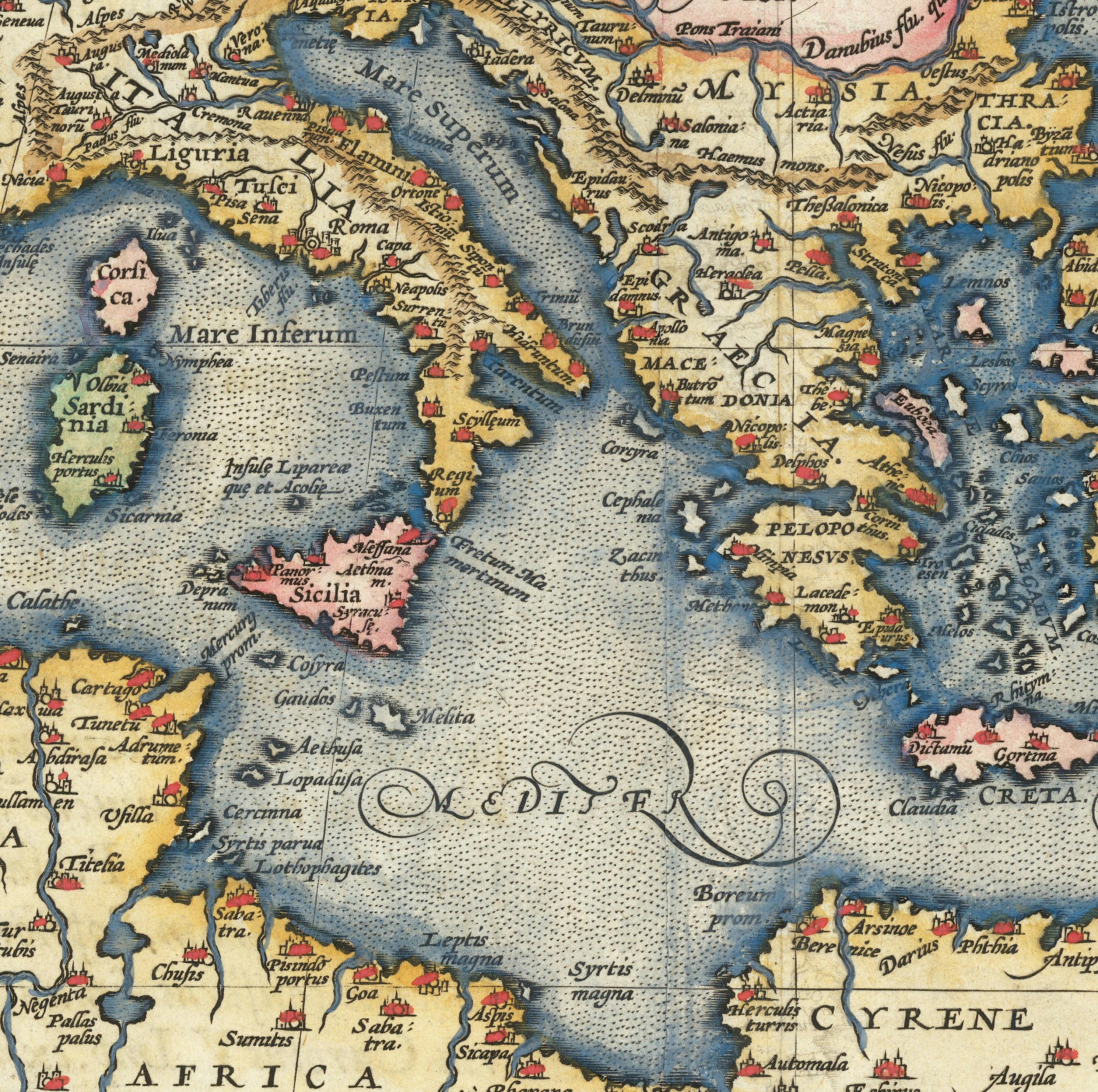
Rome and Cyrene (17-5)
In reading Simon’s philosophical writings, I could see that his stay in Cyrene was a pivotal time in his life. His final meeting with his grandfather, Augustus, allowed him to recenter himself—moving beyond rejection into a more disciplined intellectual life. At twenty-seven, his studies and writings could already rival those of Pythagoras and Socrates.
He and Helena sought out the large community of Therapeut Essenes, who welcomed and befriended them. By the spring of 15 AD, they had been received as full members of the sect.
As for James and John, they often told me of the shipwreck and their capture by pirates, but the most remarkable part of their story was their rescue by Helena at the slave market in Cyrene.
Chapter 14: Ransoming the Twins—James Niceta and John Aquila
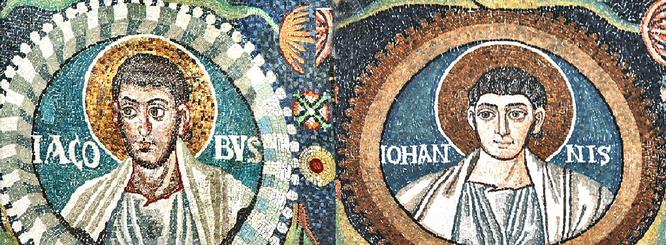
James Niceta and John Aquila (16-1)
Simon docked Clemens' ship at the port of Ora in Cyrene. He and Helena then sought out the large community of Therapeut Essenes, who welcomed them warmly into their fellowship.
Having decided to sell the ship, Simon went in search of a buyer. Meanwhile, Helena and her daughter walked along the docks to learn whether any newly arrived passengers had heard news of their escape. Of her former identity as Julia the Younger, few knew of her exile to the Tremiti Islands, and none had heard of her rescue, for the guards had faithfully kept their promise of silence.
As for Augustus' grandson, Postumus, conflicting rumors filled the ports. Some claimed he was dead, while others whispered that he had escaped and was hiding somewhere near Rome. Clemens had accomplished exactly what he intended: no one knew the truth. Remembering his courage, their hearts filled with gratitude, and they silently sent their love toward him across the far shore of the Mediterranean.
At the docks Helena paused before an auction of captives seized by pirates who had haunted that coast for generations.
Mary tugged at her mother's sleeve.
"Look at those two half-naked boys in dirty loincloths! They look alike!"
Helena nodded.
"Yes, they do—twins, I think, and better mannered than the others. Perhaps they are Romans like us. Let us find out."
As she approached, the smell of salt, sweat, and blood caused her to hesitate. Holding Mary's hand tightly, she steadied herself and stepped forward.
"Sir," she asked the auctioneer, "I may be interested in those two boys."
He motioned for the handler to bring them closer.
"These two claim to be of Roman aristocratic stock," he said. "That could fetch a handsome ransom—or perhaps even a reward. What is your name, boy?"
One answered boldly.
"I am Niceta, and this is Aquila. We are the twin sons of Domitia Lepida the Elder. Has there been any news of her rescue?"
The auctioneer glanced toward his assistant.
"Was an older woman captured with this group?"
The man shook his head.
"A pity. Her ransom would have been even greater."
Feigning indifference, Helena replied, "Marcus Aemilius Lepidus was triumvir alongside Octavian and Mark Antony. His name would certainly be known here. I suspect these boys are lying—but I may purchase them anyway."
"That will cost you," the auctioneer replied. "Two thousand denarii each."
Helena answered calmly.
"That seems excessive. Still, I will pay three thousand for both."
He grinned.
"Sold!"
When the bargain was completed Simon approached.
Helena whispered, "Do you have three thousand denarii?"
Drawing close, Simon replied quietly, "It is exactly what I have just received for the ship—but it may be more than we can afford, since we still must buy a house."
"If we are truly to live as Therapeutae," she answered softly, "we must surrender the luxuries we once possessed and give our wealth to those in need. Is not a human life worth more than gold?"
"You speak truly," Simon sighed. "Gladly would I surrender everything I possess to redeem two souls."
He emptied his purse into the auctioneer's waiting hands.
The man smiled broadly.
"You are most generous."
Without delay they departed with the twins, who thanked them over and over again.
Once they were safely beyond earshot, Helena spoke quietly.
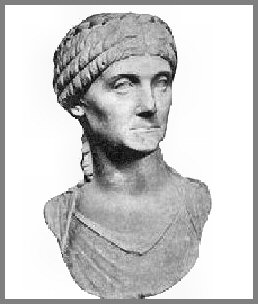
Domitia Lepida Major (16-2)
"I recognized your mother's name immediately, for we are nearly the same age. She belonged to our fellowship of the Way.
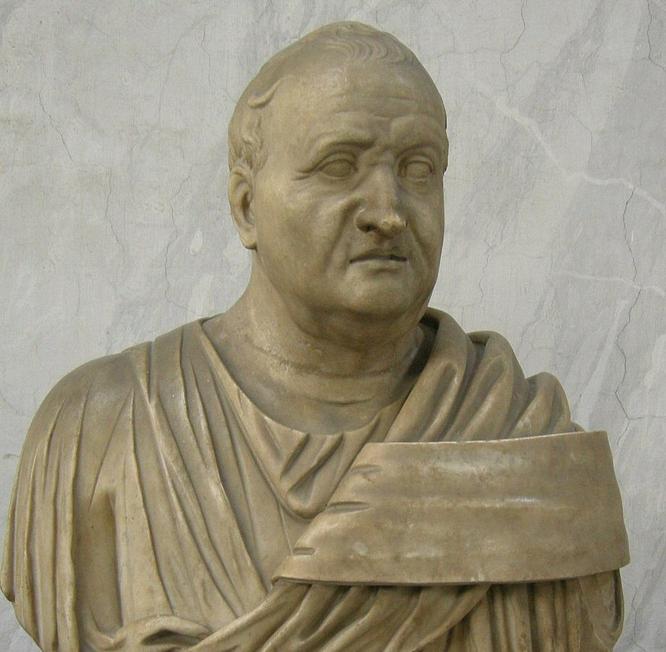
Gnaeus Domitius Ahenobarbus (1-12)
She once told me of the crime Gnaeus Domitius Ahenobarbus committed against her, and how he was to stand trial. She confided that if the scandal ever became public it would reach the highest levels of her family. She had even considered fleeing with both of you."
Helena then asked their ages.
"We are both twelve," Niceta answered.
Helena leaned closer.
"Promise to keep a secret. I am Julia the Younger."
Aquila stared in amazement.
"Wasn't Julia exiled by Tiberius to an island?"
"Tiberius still believes I remain there," Helena replied.
Simon smiled.
"It was I who rescued her. A brother must always rescue his sister."
Niceta gasped.
"Julia had only one brother still alive—then you must be Postumus! But everyone says he is dead!"
Helena answered quickly.
"As you can see, he lives. But speak no more of Postumus or Julia the Younger. Our names are now Simon and Helena, and this is my daughter, Mary. She is seven years old."
The boys bowed respectfully to Mary, clasped each other's hands, and danced together in a circle.
"We are saved! We are saved!"
When they had quieted themselves, Niceta said, "We thought Providence had abandoned us—and now it has brought us together."
Back at their lodging Helena prepared posca, a drink of vinegar and herbs.
"This will strengthen you while I prepare a proper meal."
I asked them, "Tell me how you came to the slave market—and how you survived."
Niceta began.
"On the night our ship broke apart and we were thrown into the sea, we clung to pieces of the wreck. Pirates found us, pulled us aboard, and carried us here."
Aquila continued.
"They starved us, beat us, terrified us, and even changed our names. Our mother disappeared beneath the waves."
Helena spoke gently.
"That is heartbreaking. Your mother, Domitia Lepida the Elder, was born in the same year as I—in 19 BC. Simon, this will interest you. She is the eldest daughter of Antonia Major."
Simon nodded.
"Then you are descendants of Mark Antony."
Aquila asked in surprise, "How can that be? Was not Marcus Agrippa your father?"
"No," Simon replied. "My father was Iullus Antonius."
The twins stared in astonishment.
"My grandmother was Fulvia," Simon continued, "while yours is Octavia the Younger."
Niceta slowly nodded.
"Both were wives of Antony."
"Enough of Antony," Helena interrupted firmly. "This is tragedy enough. Ahenobarbus is a monster. God help us if he should ever marry my sister Agrippina's daughter."
Niceta lowered his eyes.
"What value is noble birth if we grew up without a father and have now lost our mother?"
Helena smiled gently.
"Do not be afraid. Until she is found, I shall adopt you both as my own."
"Thank you!" they answered together.
Mary, who had listened quietly throughout the conversation, suddenly spoke.
"I do not have a father either."
The twins looked toward Helena in confusion.
"Were you not married to Lucius Paulus?" Niceta asked.
Helena smiled sadly.
"What a tangled web our passions weave. Perhaps one day I shall tell you about Mary's father, and you will understand the dangers of love when guided by poetry. For now I remain celibate for her sake—and because such devotion is also required among the Essenes."
Simon assured them.
"I shall teach you as though you were my own sons, especially in philosophy, so that together we may defend the doctrines of the divine religion through reasoned disputation. By understanding the Greeks, you will better answer those who oppose the Way."
The twins answered together.
"We would gladly learn."
Helena then asked them.
"Since Providence has guided you to us, do you wish to be baptized?"
"Yes, of course."
Aquila added quietly, "I only wish our mother could also receive baptism."
Helena comforted them.
"I believe she will be saved, and that one day you will again have both a mother and a father. Even if she is stranded upon some distant shore, God will guide us to her, and she too shall be baptized."
At the water's edge Helena laid her hands upon them and gave them new names. Niceta she called James, and Aquila she named John—names that would later become inseparable from the story of Jesus.
Only years later, as I compared their recollections with the surviving traditions, did I begin to understand how significant that baptism had become. I came to believe that James and John would later be remembered as the sons of Zebedee, reckoned as sons of Simon—not through blood, but through instruction and discipline.
When Zacchaeus, younger brother of Jonathan Annas, warned them not to be led astray by Simon's teaching, Jesus called them Boanerges, the Sons of Thunder. The title did not grant Simon's authority; rather, it recognized their zeal. As Psalm 29 teaches, lightning inspires while thunder commands. Their fervor belonged to Simon, yet their authority remained with Jonathan.
I soon discovered that the story of the twins Niceta and Aquila forms one of the most important links between the Clementine traditions and the Gospels. I became convinced that these figures correspond to the baptismal identities of James and John, who are consistently remembered together throughout the Gospel narratives.
I also became convinced that the mother seeking places of honor in the Gospel account corresponds to Helena, while the unnamed father preserved beneath the canonical tradition corresponds to Simon within this reconstructed history. Although these identifications are never stated explicitly in the canonical texts, they emerge, in my judgment, through the convergence of overlapping narrative patterns preserved within the Clementines.
In the Acts of the Apostles, when Paul arrives in Corinth after departing Athens, he encounters Aquila and Priscilla, recently expelled from Italy under Claudius. Within this framework, I understand Aquila to be the same individual later remembered as John, preserved under another name as traditions passed between regions and communities.
It is John who, according to the tradition preserved in Revelation, records the vision of the woman and the dragon: how the dragon sought to devour the child, and when it failed, turned in fury against the rest of her offspring. The vision unfolds through terror, pursuit, and exile, expressed symbolically rather than as straightforward historical recollection.
Within that sequence, the words, "And I stood upon the sand of the sea," serve not merely as a narrative transition but as a turning point in perception. Many readers have understood them simply as a continuation of the vision. I have come to read them differently—as the brief reappearance of physical memory beneath symbolic language, where John's voice momentarily returns to the remembered shoreline.
In that reading, the verse preserves the faint outline of the beach where John and his brother once stood barefoot after Helena ransomed them from the pirates.
Chapter 15: Simon’s Philosophy
Seeking Wisdom Beyond Cyrene
By the spring of 15 AD, they had all been received as full members of the sect of the Therapeuts. Simon of Cyrene, mentioned in Mark, was never merely a “passer-by” during his years in Cyrene. Though he embraced the simplicity of the Therapeutic life, his mind was restless. I could see that he longed to prepare for the expansion of the Way under my father’s direction. To him, Jesus was the Chosen One of David’s line.
 |  |  | 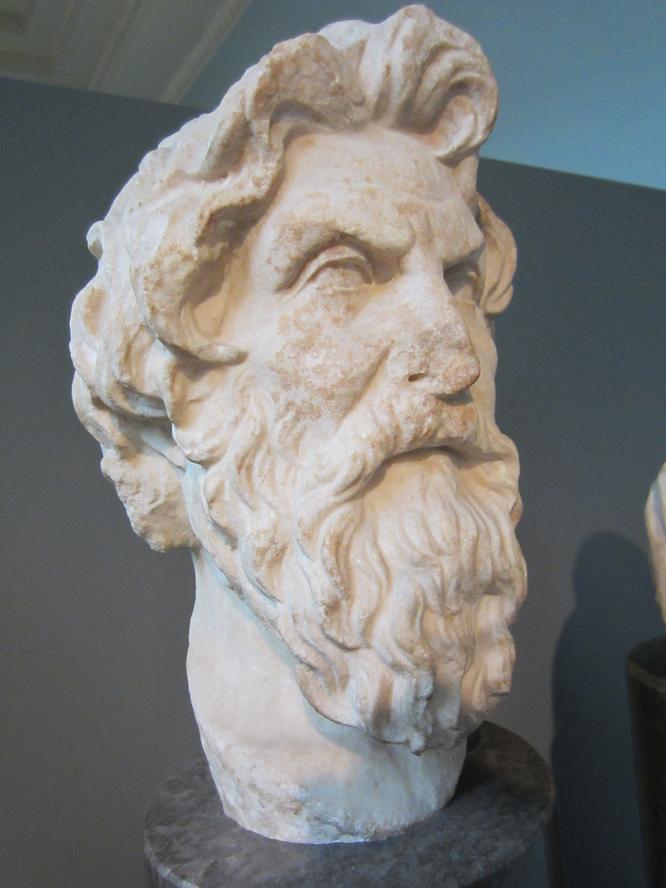 |  |
Simon studied the great philosophers—Socrates, Plato, Pythagoras, Chrysippos, Epicurus, Antisthenes, and Hillel—and began shaping a philosophy of his own, one that would later find expression in the debates of the Way and in his portrayal of Jesus as “the Word” in the Gospel of John.
He often spoke of God in triads: Passive, Active, and Neutral. From Socrates he learned to question, from Plato he glimpsed eternal Forms, from Pythagoras the harmony of triads, from Chrysippos the balance of Active and Passive forces. Epicurus taught serenity of the soul, Antisthenes the strength of virtue, and Hillel the compassion of the heart. All these streams merged into the teaching he held close:
“He who stood, stands, and will stand.”
In those words I saw the eternal made visible—the past, present, and future held in one steady truth.
Even then, I sensed that his wisdom would ripple far beyond Cyrene, and that his counsel would echo in the hearts of those who followed the Way, long before others would give those teachings the name of theology. It was this understanding that earned him the name among us: “The Standing One.” A title echoing Moses’ encounter with God:
“I AM WHO I AM.”
A declaration of unchanging truth.
Their path with the Therapeuts was a life of devotion where every breath and movement served the Divine. In their community, the practice of medicine was no mere craft; it was a sacred art, surpassing even the skill of city physicians, for our healing flowed from God Himself.
Central to their understanding was the symbol of the staff entwined by a serpent. The rod, a guide for the disciplined and ascetic, represented the steadfastness of the soul; the serpent, ever shedding its skin, embodied the renewal of spirit and body, teaching that one must cast off the outer self to awaken fully to life and grace. This symbol was not decoration but a living principle, a constant reminder of their calling. Each day was offered wholly to His service.
The members renounced wealth and lived simply on plain bread, sometimes seasoned with hyssop, and water, never wine. Every seven weeks, the men sat on the right, the women on the left, and together we shared our communal meal in quiet reverence, hearts attuned to the sacred rhythm of healing, service, and renewal—a rhythm that would one day echo in the world as a symbol whose meaning would outlive us.
Once a year, a nocturnal festival celebrated God’s wondrous works at the crossing of the Red Sea. Two choruses were formed—men and women—led by the most honorable among us as Moses and Miriam. Hands moved in harmony; songs of praise and poems in alternating stanzas echoed through the night. Like Bacchic revelers drinking the pure wine of God’s love, the two choruses became one, celebrating creation and deliverance.
Simon was not satisfied with religious practices alone. He soon studied the philosophy and magical practices of Apsethos the Libyan. He learned the practical uses of persuasion disguised as marvel.
Apsethos had trained parrots to cry, “Apsethos is a god,” and when released among the streets, the claim spread as though it had been spoken by heaven itself. The lesson was that even small, deliberate acts could bend the shape of belief when repeated often enough.
Helena would sometimes observe him sitting on a hill near the village, imagining himself conversing with Moses. He was hardly a respectful student sitting quietly before his teacher.
“You say, ‘The Lord your God is a consuming fire,’ but this is a misdirection: for fire is merely substance.”
In these discussions, he began to develop his own unique philosophy. Beneath the letter he saw a more concealed architecture of being.
In these discussions, he began to develop his own unique philosophy. Beneath the letter he saw a more concealed architecture of being.
The Cosmic Octave
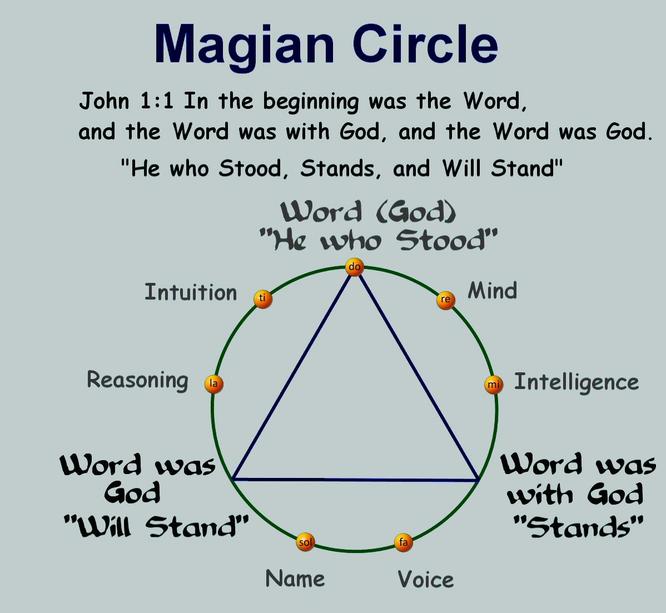
Magian Circle
| God is threefold: (Passive, Active, and Neutral) | ||
|---|---|---|
| Simon Magus: | ||
| "He who stood, | stands, | and will stand" |
| Jn 1:1 | ||
| "In the beginning was the Word, | and the Word was with God, | and the Word was God;" |
| St. Paul: 1Cor 13:12 | ||
| "Now I know in part, | but then I will know fully, | even as I have been fully known." |
It was during this period that Simon gathered James, John, and several others willing to sit under instruction. They sat upon the hillside in a loose semicircle around a shallow bed of white sand. Simon stood before them.
From a small porcelain vessel he poured a thin stream of dark powder, drawing a perfect circle. Around its edge he placed seven smooth stones, evenly spaced.
Next, he drew lines inward until they met in a triangle.
“This,” he said, “is not a likeness. It is a measure.”
He let the reed hover.
“The seven stones are the octave—the form by which what is hidden becomes manifest in stages until it returns again to its source.”
He touched the apex of the triangle.
“He Who Stood (Ho Hestōs).”
Then the point to his right.
“He Who Stands (Ho Stas).”
Finally the point to his left.
“He Who Will Stand (Ho Stēsomenos).”
“The Word does not travel through time,” he said. “Rather, time turns beneath the Word.”
He traced a faint arc between each stone in the circle.
When he reached the seventh stone, to the left of the apex, he paused.
“The world believes the work has ended. Yet the seventh is not an ending. It is the place where one creation becomes capable of another.”
The disciples fixed their eyes upon the circle, almost imagining it turning.
Simon looked toward them.
“What do you see?”
“The heavens and the earth,” one answered.
“A wheel,” said another.
“A crown,” replied James.
Simon nodded.
“You each see truly. Yet none has seen the whole.”
His reed rested upon the apex of the triangle.
“But what returns?”
Silence.
“Not the Word.”
He touched the apex once more.
“The Word remains.”
His reed swept slowly around the stones.
“Time is what returns beneath it.”
At their next meeting, Simon stood again before the same circle.
“So it is in Genesis.”
He pointed to the first stone.
“‘Let there be light.’”
“Mind awakens.”
He moved to the second.
“‘Let there be a firmament.’”
“Intelligence distinguishes.”
The third.
“‘Let the dry land appear.’”
“Form is established.”
The fourth.
“‘Let there be lights for signs and seasons.’”
“Voice gives order.”
The fifth.
“‘Let the waters bring forth life.’”
“Name gives each thing its place.”
The sixth.
“‘Let us make man in our image.’”
“Reason awakens.”
Finally, he rested the reed upon the seventh stone.
“‘And God rested on the seventh day.’”
He fell silent.
“Why did God rest?”
“So that we may join together in prayer,” John answered.
Simon smiled.
“Perhaps He was hiding a secret.”
“The Essenes believed the mystery was found in separation from the flesh. The Pharisees and Sadducees sought the meaning through Law and Temple. But the Gnostics called it Reflection—Enthymesis.”
He drew a line from the seventh stone into untouched sand.
“Reflection. It is the doorway through which one creation passes into another.”
Again he questioned them.
“What did the serpent say to Eve?”
James held his breath before answering.
“‘You shall be as gods, knowing good and evil.’”
Simon nodded.
“And what was the tree?”
“The Tree of the Knowledge of Good and Evil,” John answered.
“And what happened after?”
James thought for a moment.
“Adam knew Eve... and she conceived.”
Simon smiled.
“So what was the good?”
“The bringing forth of another life.”
Simon nodded.
“And the evil?”
Silence settled over the hillside.
“To seek to become gods before becoming wise.”
He traced a winding line through the sand.
“The serpent was the wizard who offered power before understanding.”
He looked around at the group.
“God created the first octave.”
“Man begins the second.”
“The body begets bodies.”
“The spirit must beget spirit.”
The afternoon wind stirred the sand.
On another day Simon returned to the circle, sweeping his staff around its edge.
“The Mishmarot teaches that sacred time turns in twenty-four courses. The octave teaches that creation itself advances by return. History does not merely repeat. It ascends.”
|
Ancient geometry divides a circle into nine points representing the musical octave: 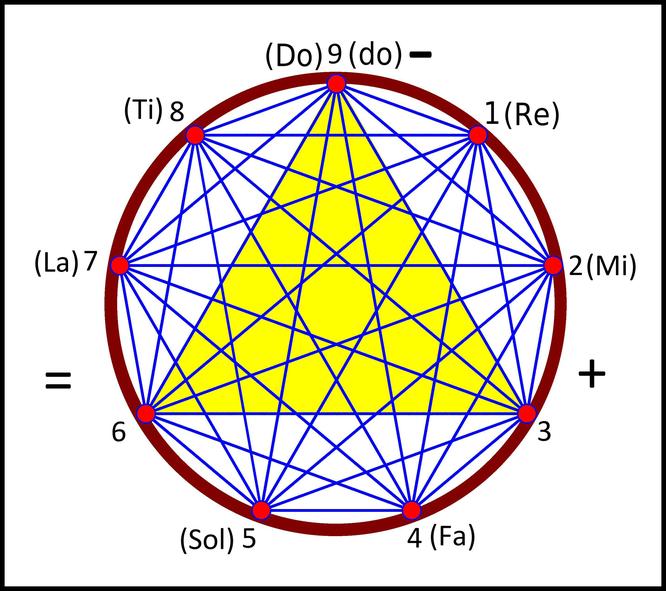 The inner triangle represents the Three Forces of the Universe.
| ||||||||||||
Day 1 ('do') (17-3)
"He who stood, stands, and will stand"
|
|---|
Years later, when I read the accounts preserved by those who opposed Simon, I recognized fragments of this lesson among them. They remembered the title they mocked more readily than the teaching itself.
From that day, many who heard him began to call him the Standing One—not because he claimed never to move, but because they believed he had learned to see what remained unmoved while all creation turned around it.
|
And the evening and the morning were the first day.Genesis 1:1-5 |
 Day 2 ('re') |
|---|
|
And the evening and the morning were the second day. Genesis 1:6-8 |
 Day 3 ('mi') |
|---|
|
And the evening and the morning were the third day.Genesis 1:9-13 (And every plant of the field before it was in the earth, and every herb of the field before it grew: for the LORD God had not caused it to rain upon the earth, and there was not a man to till the ground.Genesis 2:5) |
 Day 4 ('fa') |
|---|
|
(And they heard the Voice of the Lord God walking in the garden)Genesis 3:8 |
|
And the evening and the morning were the fourth day."Genesis 1:14-19
|
 Day 5 ('sol') |
|---|
|
(And Adam gave Names to all the cattle and to the fowl of the air.)Genesis 2:20 The man called his wife's name Eve because she was the mother of All Living.)Genesis 3:20 |
|
|
| (Moved up from Day Six) |
|
And God blessed them, saying, Be fruitful, and multiply, and fill the waters in the seas, and let fowl multiply in the earth. And the evening and the morning were the fifth day. Genesis 1:23 (And out of the ground the LORD God formed every beast of the field, and every fowl of the air; and brought them unto Adam to see what he would call them: and whatsoever Adam called every living creature, that was the name thereof. Genesis 2:19) |
 Day 6 ('la') | |
|---|---|
|
(then the LORD God formed man of dust from the ground, and breathed into his nostrils the breath of life; and Man (having Gnosis) became a living being." Genesis 2:7) |
|
|
And God said, Let us make man in our image, after our likeness: and let them have dominion over the fish of the sea, and over the fowl of the air, and over the cattle, and over all the earth, and over every creeping thing that creepeth upon the earth. Genesis 1:26
So God created man in his own image, in the image of God created he him; male and female created he them. And the evening and the morning were the sixth day. Genesis 1:27-31 (But there went up a mist from the earth, and watered the whole face of the ground. And the LORD God formed man of the dust of the ground, and breathed into his nostrils the breath of life; and man became a living soul. Genesis 2:6,7) |
 Day 7 ('ti') |
|---|
(Then the man said, "This at last is bone of my bones and flesh of my flesh; she shall be called Woman (Sophia), because she was taken out of Man. Genesis 02:23) And the LORD God took the man, and put him into the garden of Eden to dress it and to keep it. And the LORD God commanded the man, saying, Of every tree of the garden thou mayest freely eat: But of the tree of the knowledge of good and evil, thou shalt not eat of it: for in the day that thou eatest thereof thou shalt surely die. And the LORD God said, It is not good that the man should be alone; I will make him a helpmate for him. And the LORD God caused a deep sleep to fall upon Adam, and he slept: and he took one of his ribs, and closed up the flesh instead thereof; And the rib, which the LORD God had taken from man, made he a woman, and brought her unto the man. Genesis 2:16-18,21,22) Now the serpent was more subtle than any beast of the field which the LORD God had made. And he said unto the woman, Yea, hath God said, Ye shall not eat of every tree of the garden? And the woman said unto the serpent, We may eat of the fruit of the trees of the garden: But of the fruit of the tree which is in the midst of the garden, God hath said, Ye shall not eat of it, neither shall ye touch it, lest ye die. And the serpent said unto the woman, Ye shall not surely die: For God doth know that in the day ye eat thereof, then your eyes shall be opened, and ye shall be as gods, knowing good and evil. And when the woman saw that the tree was good for food and that it was pleasant to the eyes, and a tree to be desired to make one wise, she took of the fruit thereof, and did eat, and gave also unto her husband with her; and he did eat. And the eyes of them both were opened, and they knew that they were naked;Genesis 3:1-7) |
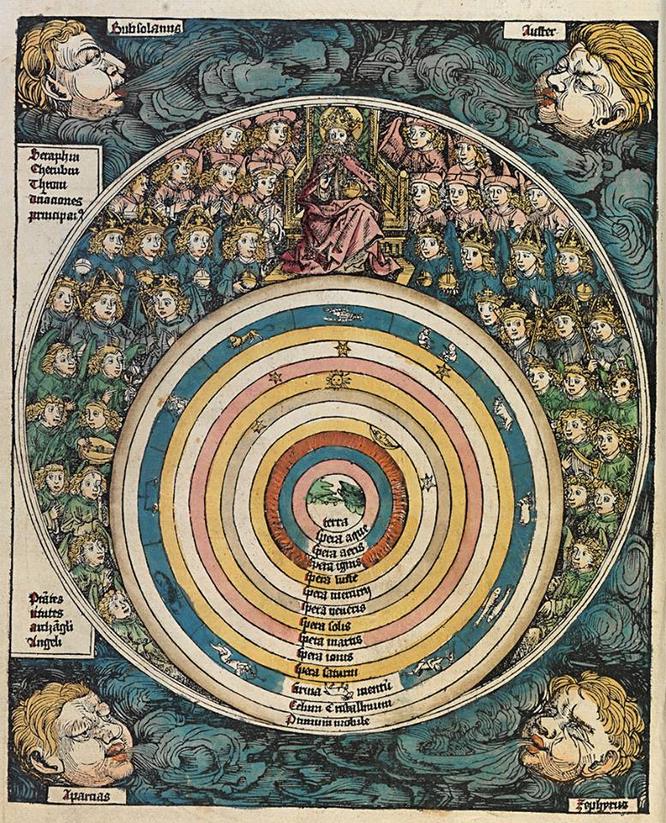 Day 8 ('do') |
|---|
|
|
Book V— The Standing One Joins the Chosen One
Chapter 16: Mary Magdalene Comes of Age
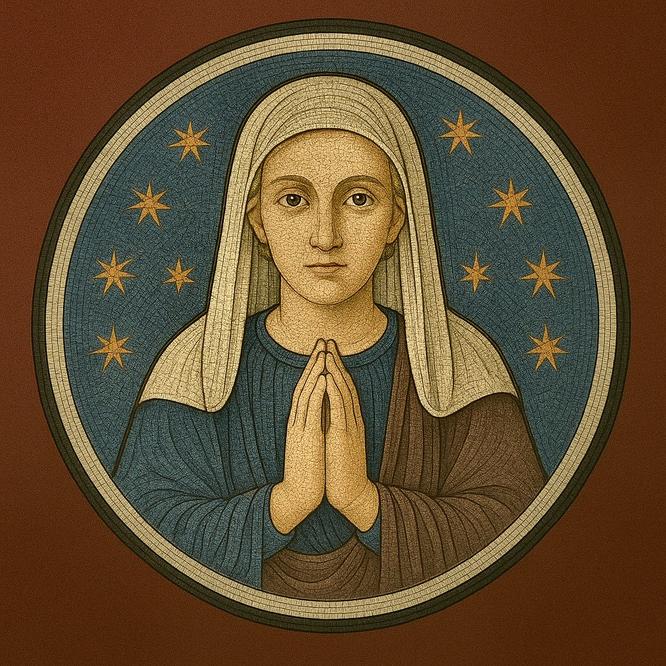
Jesus and Mary Magdalene (18-1)
In my younger years, while staying at Helena's convent near Nablus, west of Mount Gerizim in northern Judea, I often listened as she recounted the stories of Simon, of exile, and of the hidden work of the Way. At the time, I accepted them as family memories. Only years later, after comparing the Gospels with the Clementine writings, did I realize that the country around Gerizim had preserved traditions unlike those remembered elsewhere.
Although Jesus spent most of his ministry in Galilee and Judea, the Gospels record journeys beyond Galilee into the regions of Tyre and Sidon. These accounts appear in Matthew and Mark in the story of the Canaanite, or Syrophoenician, woman. At first I regarded them as isolated episodes. Yet the Clementine writings preserve echoes that, to my mind, point back to the country surrounding Mount Gerizim.
Another clue appears in John's account of Jesus' conversation with the Samaritan woman at Jacob's Well, beneath Mount Gerizim. There the mountain itself becomes the center of a discussion about true worship, suggesting that this region held a greater place in Jesus' ministry than is often recognized. I also came to question the common assumption that Mary's title, Magdalene, must refer to the Galilean town mentioned in Matthew. Several ancient manuscripts preserve the reading Magadan rather than Magdala. I became convinced that this name is better understood as Maga-Dan—Upper Dan—distinguishing it from the southern territory I believe was known as Lower Dan.
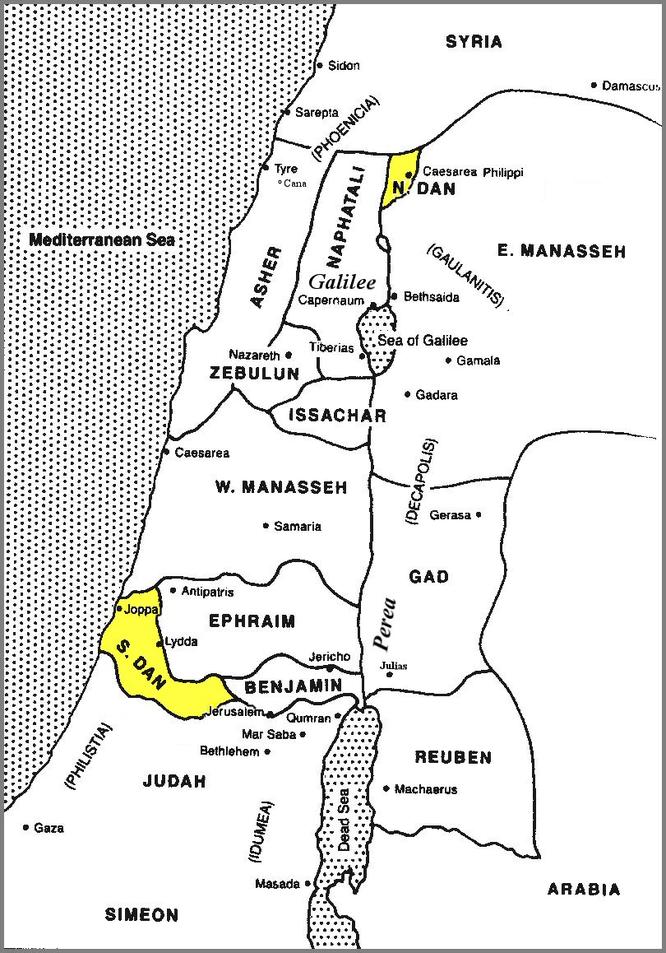
Tribal Areas (18-2)
As these threads came together, I came to believe that the Syrophoenician woman was Helena herself, and that the daughter for whom she pleaded was Mary, later remembered as Mary Magdalene.
The Clementines further show that Simon and Helena came from Cyrene and settled in this region, where they established a community modeled upon the one they had left behind. Helena is remembered in several strands of tradition as a woman of education and refinement who attracted women seeking instruction beyond the customary social order. Simon, in parallel accounts, formed circles devoted to philosophy and what later writers called the mystical arts, gathering students from throughout Judea.
Nearby stood the convent of Glaphyra, the Herodian princess whose daughter became Peter's wife. She now served as headmistress of the community in Upper Dan. In my earlier examination of her state of death for marrying her dead husband’s brother, I proposed that Luke's shadowed chronology presents that healing not merely as a miracle but as her absolution. It also quietly introduces, in about AD 30, the four disciples—Peter, Andrew, James, and John—as members of her convent. According to Essene tradition, they belonged to the symbolic female order, those still under instruction.
The next miracle, the raising of Jairus’ daughter, led me to another conclusion. I came to believe that “Jairus” is not simply a personal name but the title of the headmaster of that community. Judging from his stern manner and later actions, I identify him with Judas Iscariot, a man whose sympathies, I believe, lay with the Zealots.
As I continued comparing the Gospel chronology with Essene tradition, another pattern emerged. If Jesus truly belonged to the house of David, marriage was not merely permitted but expected. The traditions preserve a tension between the discipline of the communities and the obligation to preserve the royal lineage.
According to the chronological reconstruction I have drawn from Luke's references, Jesus was about twenty-six years of age around AD 20. By then he appears to have attained a recognized rank within the Essene order and to have been released from its stricter obligations so that he might fulfill the responsibilities of his lineage, including the prospect of marriage.
My earlier reconstruction of Luke’s reference to the “twelfth year” led me to understand it not as a simple statement of biological age but as a symbolic chronological marker connected with the Age of Wrath beginning in AD 6.
Mary, the daughter of Helena, likewise had reached the age at which she entered adulthood within her community. In the tradition I have reconstructed, Joseph and Mary stood as her godparents and prepared to receive her fully into the covenant community, elevating her from her former Gentile standing. The healing of Jairus' daughter, I believe, preserves this transition beneath the surface of the narrative.
Yet before such a union could be contemplated, several matters required resolution. Helena's own standing had to be reconciled with that of Mary, the mother of Jesus. Virginity itself had to be understood according to intention and covenantal purity rather than merely physical condition. Finally, Jesus' mission had to make plain that Gentiles could be received into the Way. Only after these questions had been answered could the marriage of Jesus and Mary proceed within the framework I believe the hidden tradition preserves.
It was while reviewing the sequence of miracles recorded by Matthew, Mark, and Luke that I became convinced these questions were answered one by one, though hidden beneath the outward narratives.
Having learned the guarded secret of Mary Magdalene’s ancestry, Joseph and Mary recognized the remarkable potential of her future marriage to their son, Jesus. They traveled north from Mird to the convent at Magdala in the northern territory of Dan.
When they arrived, a crowd pressed around Jesus, as it was rare for him to be seen outside the monastery. Among them was Helena, who had remained a virgin since her daughter’s birth. Observing him, she recognized an opportunity to test whether his followers would accept her daughter’s Gentile inheritance.
Quietly, Helena approached and touched the fringe of Jesus’ garment. The crowd gasped; for it was widely believed that a woman suffering ritual blood impurity should not touch a teacher. Trembling, she fell at his feet: “Lord, I am not defiled, though for twelve years I have borne the reproach of blood.”
Jesus smiled. “Your faith has made you whole; go in peace.” Then, lowering his voice, he added, “And blessed are you for keeping your virginity these twelve years.” The crowd murmured in confusion, unaware that monthly blood could signify chastity rather than sin.
Still at his feet, Helena pleaded, “Have mercy on me, thou Son of David; for my young daughter is being opposed by the ruler of her convent.”
Jesus replied, “It is true that I was sent only to the lost sheep of Israel.”
She persisted: “True, Lord. Yet even the dogs eat of the crumbs that fall from their master’s table.”
Taking her hand, Jesus lifted her up.
“Woman, great is your faith. Your daughter is now free.”
With this, he publicly affirmed that Gentile blood could be accepted in his Way. Those in John the Baptist’s circle would later call him “the seeker of smooth things.”
That evening, Joseph and Mary congratulated Helena on her courage and her plea for her daughter’s acceptance. They then turned to Jesus and Mary Magdalene, asking whether they would consent to a future betrothal.
I was amazed at how the Clementines revealed the secret of Mary Magalene by paralleling the texts of the New Testament:
Clementine Homilies -- Justa (Helena), a Proselyte
There is amongst us one Justa, a Syro-Phoenician, by race a Canaanite, whose daughter was oppressed with a grievous disease. And she came to our Lord, crying out, and entreating that He would heal her daughter. But He, being asked also by us, said, “It is not lawful to heal the Gentiles, who are like to dogs on account of their using various assemblies and rituals, while the table in the kingdom has been given to the sons of Israel.” But she, hearing this, and begging to partake like a dog of the crumbs that fall from this table, having changed what she was, by living like the sons of the kingdom, she obtained healing for her daughter, as she asked.
For she being a Gentile and remaining in the same course of life, Jesus would not have healed had she remained a Gentile, on account of it not being lawful to heal her as a Gentile.”
Clementine Homilies -- Divorced for the Faith
She, therefore, having taken up a manner of life according to the law, was, with the daughter who had been healed was driven out of her home by her husband whose sentiments were opposed to ours. But she, being faithful to her engagements, and being in affluent circumstances, remained a widow herself but gave her daughter in marriage to a certain man who was attached to the true faith and who was poor!
And, abstaining from marriage for the sake of her daughter, she bought two boys and educated them, and had them in place of sons. And they, being educated from their boyhood with Simon Magus, learned all that concerned him. For such was their friendship that they were associated with him in all things in which he wished to teach them.
Chapter 17: The Betrothal of Jesus and Magdalene
Isaiah 11:6; Mt 3:9
Jesus said, “Mary, I am honored that you would wait for me to complete my studies and reach my thirty-fifth year. As the eldest heir of David’s line, Essene law allows me to take a wife, but I must follow their rule to receive full blessing. Our union will signify more than lineage: it will declare that before God, Gentiles can be called ‘sons of Abraham.’ You will be reviled, called impure, even threatened with stoning. Still, I will protect you.”
Magdalene answered softly, “I am honored to be chosen. My royal blood is Gentile, yet my heart longs to share in the heritage of Israel. Let our union fulfill the prophecy of Isaiah—that my race, nurtured among wolves, shall lie down with yours, the shepherd of the lambs.”
Jesus smiled. “Your wisdom and faith shall make us one in purpose.”
“Then my heart shall walk with yours,” she replied.
Joseph and Mary embraced them both. “Your union has our blessing.”
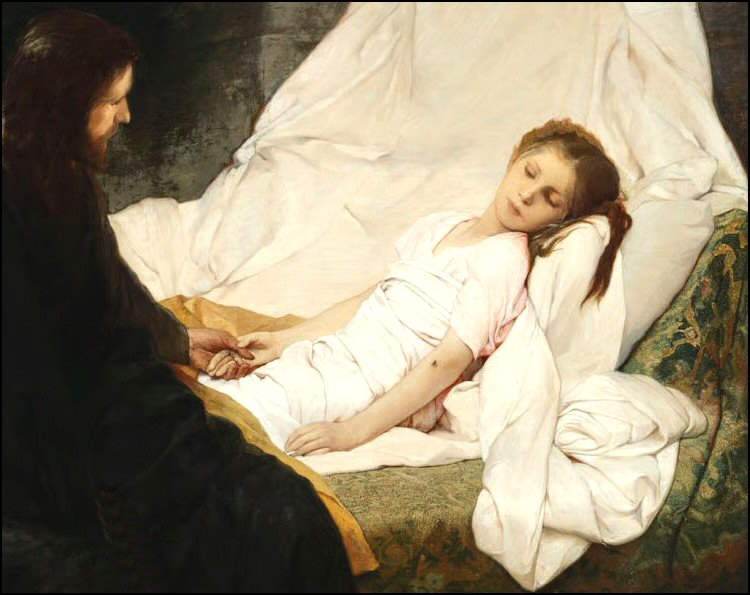
Magadene's Confirmation(18-4)
The next day, Jairus, the leader of the convent—ever the adversary, Judas Iscariot—opposed the girl’s initiation.
“My daughter lies at the point of death,” he declared. “She is unworthy to be confirmed. Whoever is not entered into the Covenant shall be cut off.”
But Jesus entered, saying, “The child is not dead, but sleeping.”
He dismissed the crowd, allowing only her godparents—Mary and Joseph—her mother Helena, and the disciples Peter, James, John, and likely Andrew to remain.
Then Jesus asked, “Do you, Joseph and Mary, agree to be the godparents of Mary Magdalene?”
“Yes,” they answered.
“Then you shall be counted within Israel. Little girl, arise.”
Immediately she rose and walked.
To my mind, these words marked not a resurrection from death but her admission into the covenant community. The child arose not from a bier but from childhood itself.
Through these events, Mary Magdalene’s coming of age, betrothal, and the liberation of the virgins emerge not as isolated miracles but as a coherent pattern preserved across parallel traditions. Read alongside the Clementine Homilies, the Gospel narratives disclose a continuous familial history that conforms to religious law, by which Gentile blood is lawfully brought into the covenant through a life ordered in true faith. In this convergence, the Gospel of Mary Magdalene is no longer marginal but vindicated as a domestic witness—attesting to an inherited memory sustained within Essene–Therapeut circles.
Lk 13:1–4, 11–17; 21:1–4, 10–14; 13:2–5, 14–16
Judas, still ruling the synagogue and already revealed as an adversary in the matter of Mary Magdalene’s initiation, mocked Jesus’ mother when he secured for her a widow’s allowance—the widow’s mite—on the Sabbath. His contempt for both women and mercy exposed the same rigid authority that had once sought to prevent Magdalene’s acceptance into the Covenant.
Mary had become a widow three years earlier, in AD 23, when tragedy struck. Word came that Jesus’ father was among the Galileans whose blood Pilate had mingled with their sacrifices—eighteen souls crushed when the tower in Siloam fell.
This message implied that Mary had lived as a widow in the eighteenth year after Jesus’ birth, “a woman bowed with a spirit of infirmity for eighteen years,” her condition reflecting not only personal loss but the burden imposed by a system that failed to sustain her.
Lk 8:1–3; Ant 18.6.2
By March AD 31, at the beginning of Jesus’ public mission, the same authority that had opposed Magdalene’s coming of age still held sway over the convent. Mary Magdalene and the other virgins remained under Judas’ control, their roles constrained despite their standing within the community.
Yet this condition did not endure. Luke records that “certain women, who had been cured of spirits of weakness and affliction—Mary called Magdalene, from whom seven demons had gone out—and Joanna… and Susanna…” were restored and set free, serving thereafter as deacons from the beginning.
As with the one who had been “raised” in her Bat Mitzvah, Judas’ earlier opposition gave way to recognition, as the woman once described as afflicted—“from whom seven demons had gone out”—now stood restored, and with her, the women of the Way assumed their rightful place within the community.
Chapter 18: The Schism in the Vineyard—Two Messiahs
Make straight 'the Way' of the Lord'Jn 1:23 (19-1)
The prophets Enoch and Daniel had foretold the coming of an anointed one, yet in those days the priestly circles disputed whether the promised deliverer would be Jesus or John, the one they called the Baptist. Even in the stories of their births, I sensed that the heavens seemed to govern their lives. The rotations of priests, the changing course of the moon, and the ancestral lines of David and Aaron moved together in patterns I did not yet understand.
Some expected a royal son of David. Others anticipated a priestly son of Aaron. A few believed that both would appear in the same generation. At the time I regarded these as different opinions. Only afterward did I realize they were the beginning of a schism.
1 Chr. 24:10; Lk. 1:5–24, 36–41; Roland de Vaux, Ancient Israel, pp. 80–87
King David had divided the priesthood into twenty-four courses, each appointed to minister in its proper season. Zechariah belonged to the course of Abijah, and his wife Elizabeth was of the house of Aaron. Though both were advanced in years, they remained without children.
During his appointed service in the Temple, while offering incense before the Holy Place, Zechariah received a vision announcing that Elizabeth would bear a son who was to be called John. When he emerged unable to speak, the people understood that he had witnessed a heavenly sign.
Only years later did I learn that not all agreed on how those priestly courses were to be reckoned.
The Temple authorities followed the traditional lunisolar calendar, while the Essenes ordered their priestly service according to the fixed three-hundred-and-sixty-four-day solar calendar preserved in the Mishmarot texts.
H 2.23–24; R 2.8, 2.11–12
Among the traditions associated with John, however, there survived another reckoning, one that sought to reconcile the intervals where differing systems no longer agreed.
The Clementines preserve the tradition that John presided over a Council of Thirty charged with preserving this sacred order. Among its members stood a woman called Luna. Her office was not to govern the calendar but to mediate its transitions. Where one reckoning ended and another began, she received one half from the departing order and entrusted the other half to the one that followed, so that what appeared divided might continue as one.
At first I dismissed this as another of Simon's elaborate interpretations. Only much later did I understand why Helena herself came to bear the title Luna, and why an office devoted to the ordering of days could become the symbol of a far deeper division.
Lk. 1:39–56
When Mary was found with child after Gabriel's announcement, she withdrew into the hill country of Judah, where she joined Elizabeth.
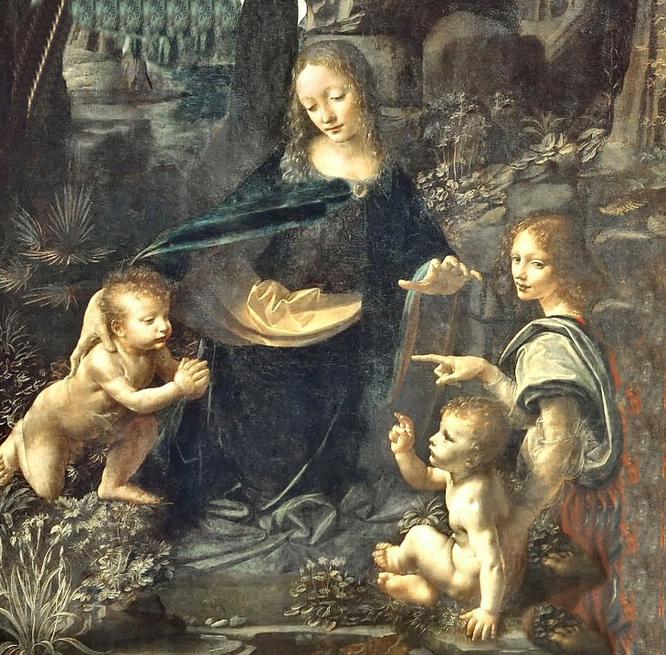 (4-4)
(4-4)As Mary entered the house, John leapt within his mother's womb. Elizabeth, filled with joy, blessed both Mary and the child she carried, and Mary answered with the hymn we now call the Magnificat. It was the first celebration of two missions that would one day stand together at the Jordan, yet later divide into separate paths.
John was born in the early spring and so came first. Jesus was born later, in a season some associated with the Day of Atonement.
Even before they could speak, others had begun to define them. Some saw in John the promised priestly anointed one. Others looked to Jesus as the royal son of David. A few believed that together they fulfilled the ancient prophecies.
At the time I saw only two remarkable births. Only afterward did I understand that the schism had begun before either child had taken his first step.
Chapter 19: Helena as Luna
R 2.8, 2.11–12; H 2.23–24
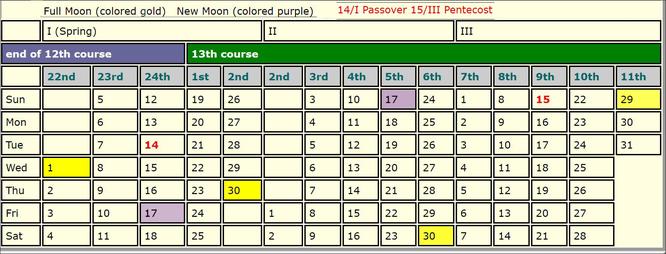
Luna's day (31) in the Mishmarot (Luni-Solar) Calendar
Only after I had compared Luke's account with the Clementine writings did Helena's appointment assume its full significance.
Among the traditions preserved by John's followers, it was said that John presided over a Council of Thirty charged with maintaining the sacred reckoning of the appointed times. The Temple authorities followed the traditional lunisolar calendar, while the Essenes preserved the fixed solar year of the Mishmarot. The Council was said to oversee those intervals where the reckonings no longer agreed.
John appointed Helena to the office called Luna.
The title was not bestowed because she ruled the moon, but because she stood between reckonings. Whenever one order yielded to another, she received one half from the departing measure and entrusted the other half to the one that followed, so that what was divided might appear continuous.
The Clementines explain this strangely, saying that Helena completed the imperfect number because “a woman, being half a man,” supplied what the thirty lacked. I could never read those words without sensing Helena’s quiet resentment.
In one of her private reflections she wrote:
“It is not just that a woman should be counted as half a man, when every man first receives life from a woman.”
She accepted the office because she believed order was preferable to confusion. Yet she never mistook symbolism for truth.
Simon least of all. For he regarded the entire construction as an ingenious device for concealing disagreement rather than resolving it.
“The heavens,” he had remarked to Helena, “have no need of men to stitch them together.”
Helena might have laughed, though she would not disagree.
Her standing within the Council soon enabled Simon himself to be admitted among the Thirty.
R 2.11–12
Simon was unlike the other members.
He questioned everything.
Where others defended inherited interpretations, Simon asked whether those interpretations had become more sacred than the heavens they claimed to explain.
This won him admiration from some and suspicion from many.
John tolerated his questions only so long as they remained questions.
R 2.9, 2.12
By then Simon had become known for demonstrations that astonished the crowds.
Some believed they witnessed miracles.
Others dismissed them as clever artifices.
Helena occasionally assisted him, though she understood his purpose better than most. Simon cared less for the marvel itself than for the ease with which men surrendered judgment once wonder overcame reason.
If a crowd could mistake illusion for revelation, then authority rested not merely upon truth, but upon interpretation.
That realization disturbed him far more than it delighted him.
R 2.11–12
The disagreement between Simon and John could not remain hidden.
It began with questions about the calendar.
It widened into disputes concerning the Law.
Finally it reached the question that lay beneath every other:
Who possesses the authority to interpret the will of God?
One meeting ended in anger.
John attempted to strike him with his staff.
Whether by accident or by one of Simon's subtle diversions, he lost his footing before those assembled.
The embarrassment wounded him more deeply than the fall itself.
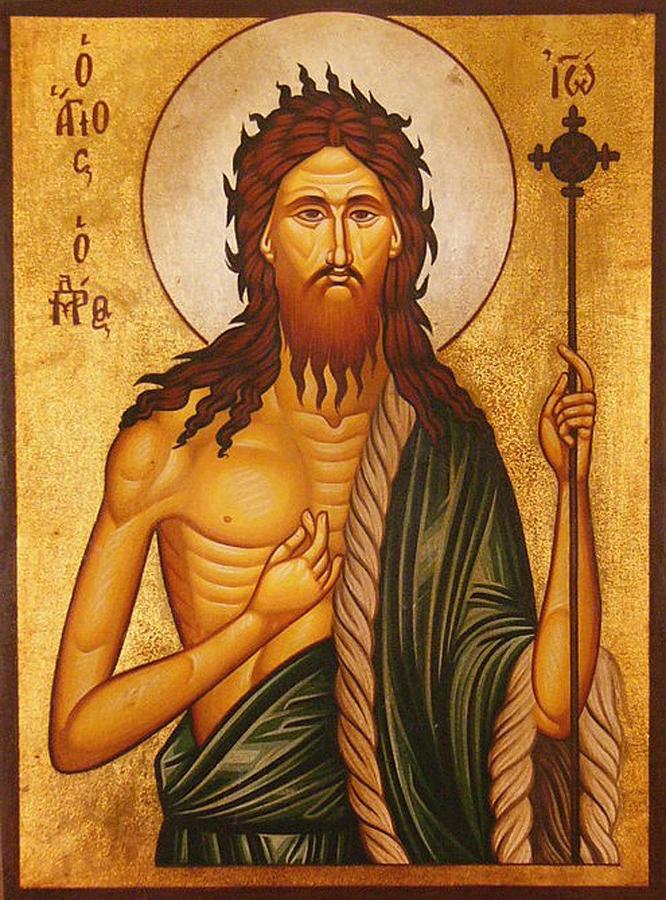
John preaching in the wilderness (4-5)
Within days he withdrew from the Council and returned to the wilderness that had first given him authority.
Simon was afterwards chosen to preside in his place.
At the time I regarded these as disputes between remarkable men. Only much later did I understand that they were preparing the stage upon which Jesus would soon appear.
Book VI — The Kingdom is Revealed
Chapter 20: Baptism at the Jordan
Lk. 3:1–3; Mt. 3:1–12; Mk. 1:1–8; Jn. 1:19–28
In the fifteenth year of Tiberius, John emerged from the wilderness proclaiming a baptism of repentance for the forgiveness of sins. Crowds gathered along the Jordan, confessing their sins and receiving his washing as preparation for the kingdom they believed was near.
By then John's authority was widely acknowledged. Some wondered openly whether he himself might be the Anointed One. Others believed he prepared the way for one yet to come. The expectation of Israel had reached its height.
At the time, I assumed this marked the beginning of a single movement gathered around one hope. Yet that impression did not last. Before long, two distinct missions stood side by side.
Mt. 3:13–17; Mk. 1:9–11; Lk. 3:21–22; Jn. 1:29–34
When Jesus came from Galilee to the Jordan, John hesitated.
John said, “I have need to be baptized by you, and do you come to me?”
There was a sarcastic edge to his words, for he had not forgotten his earlier humiliation.
Jesus answered only that all righteousness must be fulfilled.
Thereafter the Gospel accounts begin to diverge.
Matthew, Mark, and Luke describe John baptizing Jesus, the heavens opening, and the Spirit descending like a dove. The Gospel of John, however, never explicitly states that John baptized him. Instead, it preserves John's testimony:
“I saw the Spirit descending from heaven like a dove, and it remained upon him.”
The emphasis is not upon John's hands, but upon God's Spirit.
That difference led me to read the event more carefully.
Mt. 3:11; Jn. 1:29–34
John himself declared:
“I baptize you with water, but he shall baptize you with the Holy Spirit.”
The more I compared the accounts, the more I became convinced that the decisive baptism was not John's washing in the Jordan but the descent of the Holy Spirit itself.
John prepared.
Yet God commissioned.
Whether John immersed Jesus with his own hands seemed to me less important than the testimony that heaven itself acknowledged him.
Jn. 1:45–51; Jn. 18:33–37; Mt. 27:11
While considering these things, I returned to an earlier conversation preserved by John.
Before Philip called Nathanael, Jesus declared that he had already seen him beneath the fig tree.
Nathanael answered:
“Rabbi, you are the Son of God; you are the King of Israel.”
Yet Jesus immediately answered with another title.
“You shall see heaven opened, and the angels of God ascending and descending upon the Son of Man.”
For many years I regarded these expressions as simple titles of honor. Later, after comparing the Gospel traditions with the writings preserved among the followers of the Way, I became convinced they also reflected hierarchies of leadership.
The High Priest occupied the place of God within the earthly hierarchy.
His chief representative bore the dignity of the Son of God as God's visible representative.
Beneath him stood the commissioned servant who fulfilled the office of the Son of Man, ministering through the authority of the Holy Spirit.
If this understanding is correct, Jesus did not merely accept Nathanael's confession; he redirected it.
Nathanael proclaimed him Son of God.
Jesus answered by speaking instead of the Son of Man: “You shall see heaven opened, and the angels of God ascending and descending upon the Son of Man.”
Only afterward did I notice that, even before Pilate, Jesus consistently identified himself by that same title.
Whether others would draw the same conclusion I cannot say. Yet I became persuaded that Jesus deliberately embraced the office of the commissioned servant rather than the higher dignity others wished to bestow upon him.
Jn. 3:22–30; Mt. 11:2–15; Mt. 21:18–22; Mk. 11:12–21; Mt. 20:1–16
The Jordan became the meeting place of two callings.
It appeared to me that John emphasized repentance and, as the son of a priest, regarded Rome with quiet contempt, whereas Jesus proclaimed that love was the Way to the kingdom of heaven.
At first, these differences seemed no more than natural variations within the same hope. Yet, in time, it became clear that the waters of the Jordan had not united them. The schism was evident to all.
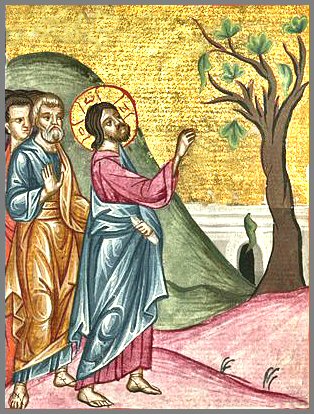
“You shall bear no more fruit to the Aeon”
and forthwith the Fig Tree party withered. (19-3)
Only years later did I perceive another contrast. The withered fig tree came to represent, in my mind, the path of zeal and judgment that had divided John's followers from Jesus. The vineyard, by contrast, became the image of the community Jesus was cultivating—a people called not to overthrow Rome, but to transform hearts through love.
Chapter 21: Jesus Assembles His Disciples
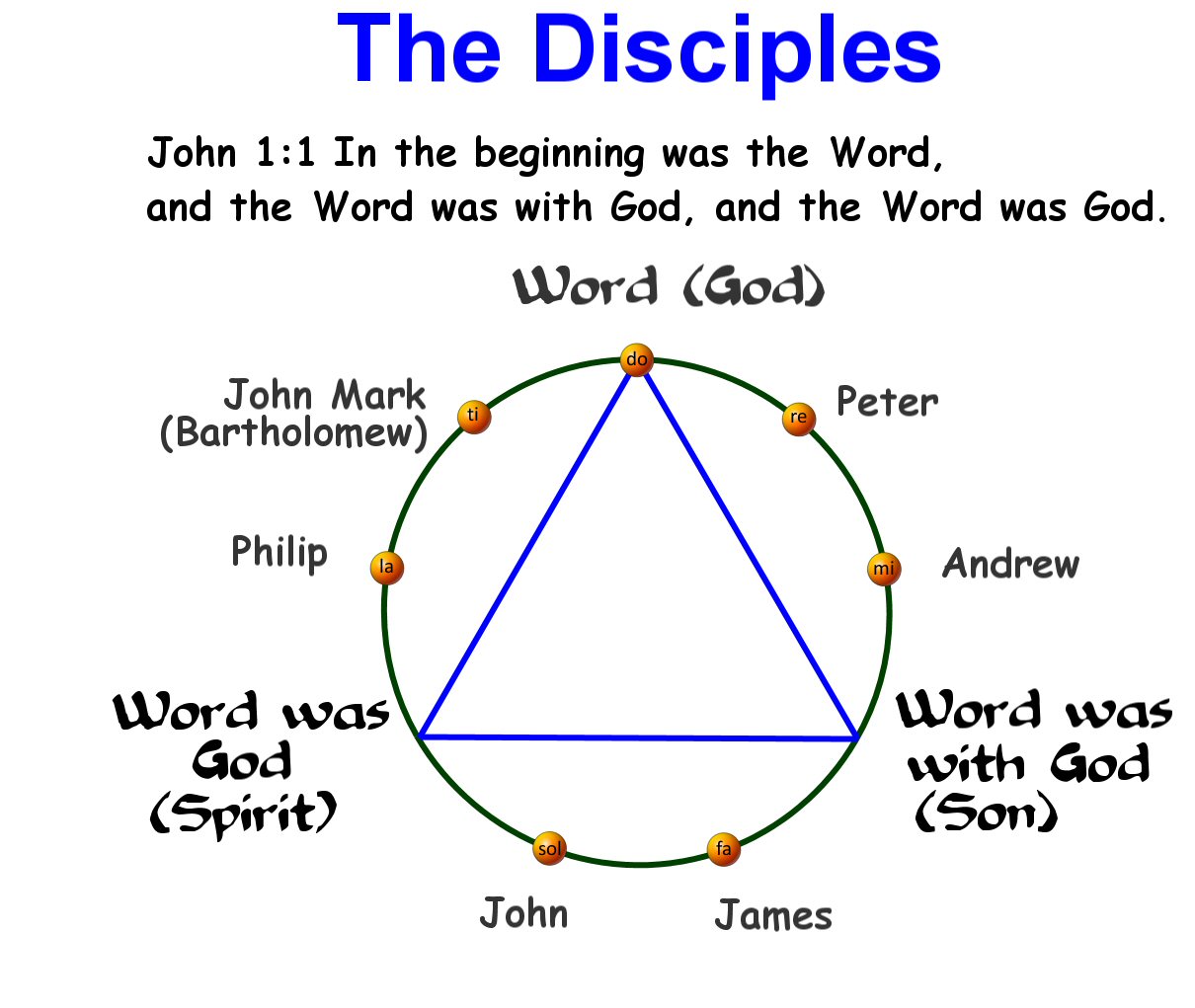
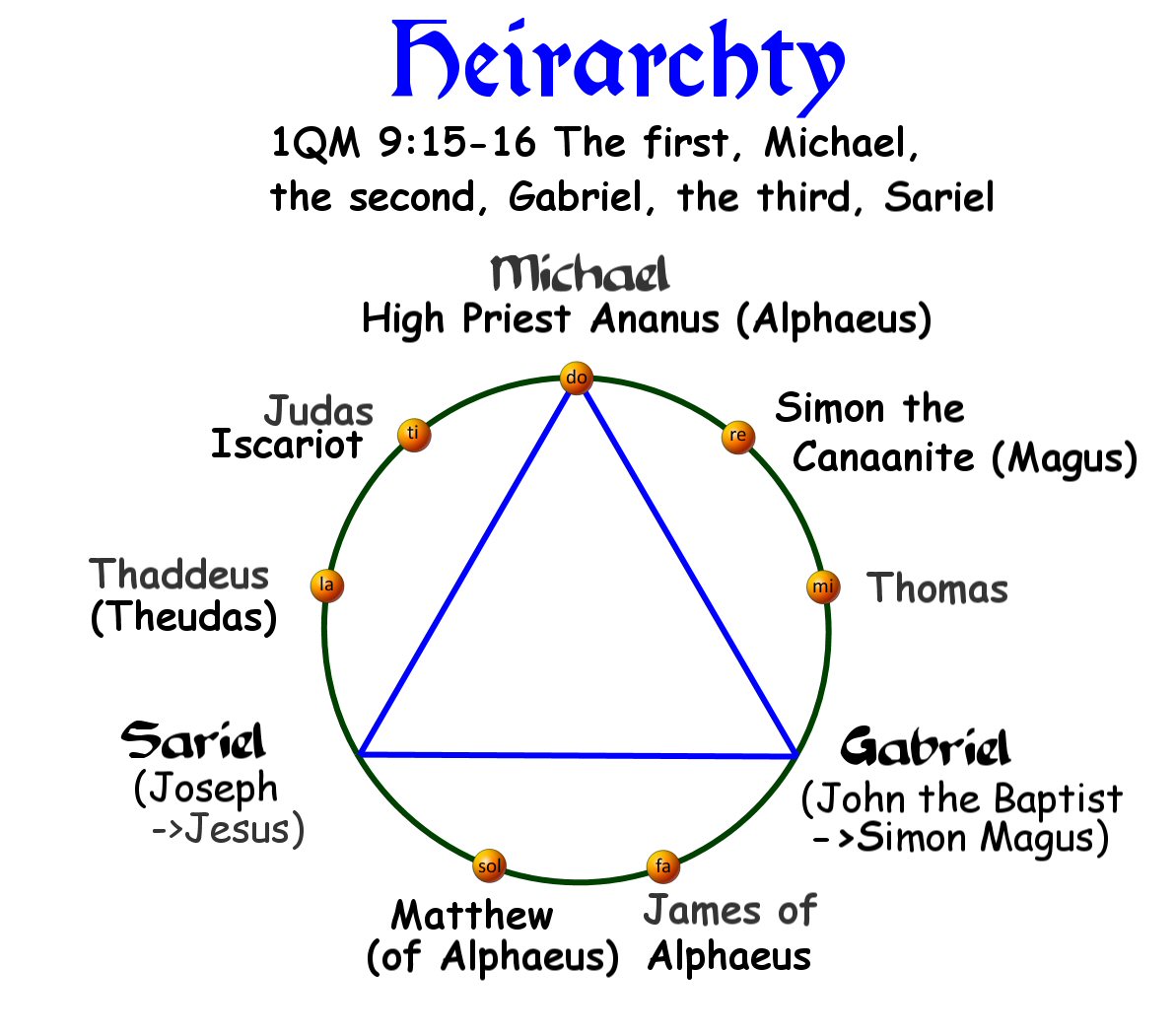
Twelve Disciples mapped in enneagrams
Lk. 3:21–23; Mt. 3:13–17; Jn. 1:29–51; Mk. 1:9–20
As I arranged Paul's papers beside the Gospel accounts, I was struck by the order in which the disciples first appeared. What initially seemed to be little more than a collection of names gradually revealed a deliberate pattern. Jesus was not merely gathering followers; he was assembling the leadership of a new community.
The sectarian councils of the wilderness were commonly ordered by the lunar cycle, reckoned in companies of thirty. Jesus chose instead to appoint twelve, corresponding to the twelve months of the year. As I compared the lists, another pattern emerged. The Twelve seemed to fall naturally into two companies, which I came to think of as the Sons of Abraham and the Sons of the Covenant.
I reproduce the two lists below exactly as I found them before considering each man in turn. I have also included a genealogical list of the Sabbas family of Jesus, for it sheds light on several relationships that become important later.
The lists preserve only names; the Gospels preserve only events. Only by comparing the two did their deeper order become visible to me.
| Sons of Abraham | |
|---|---|
| Peter (his wife was the daughter of the Glaphyra, a Herodian princess)Mk 1:29-31, Mt 8:14,15, Lk 4:38,39 |
John Mark-Bartholomew (freedman of Herod Agrippa)
(adopted by Susanna, daughter of Jesus' uncle Theudas) ('Bartholomew' being a play on the family name Sabbas in this case: Bar-Sabbas to relay the fact that his adoptive grandfather is Theudas connected with the Therapeuts of Egypt (Ptolemy) centurion's (Agrippa) servant/Nobleman's son/ Healing from a Distance Mt 8:5-13,Lk 7:1-10, Jn 4:43-54 'the disciple Jesus' loved' Jn 13:23, Jn 21:7, Jn 20:2 As Eutychus Agrippa's freedman and a charioteer Josephus Ant 18.6.5,6; 19.4.4 and welcomed back by Paul Acts 20:9 |
| Philip (Protos) (freedman of Herod Agrippa's mother Bernice: Ant 18.6.3 (known by the Gospel of Philip and for 'the daughters of Philip'.) | Andrew (freedman of Glaphyra's father, the King of Cappadocia) |
| James Niceta (Faustinus) (illegitimate relation of Augustus)R.7.31 | John Aquila (his twin brother Faustus )R.7.31 |
Four of the disciples—Peter, Andrew, James, and John—had attended Jesus’ engagement with Mary Magdalene in AD 20 and had vowed to wait for his return. Present at Jesus' baptism at the Jordan were Andrew and another disciple, often identified as Bartholomew. From the family register reproduced above, I came to believe this disciple was John Mark, who appears there as an adopted member of the Sabbas household.
On the following morning, after Jesus’ baptism at the Jordan River, Peter—having heard from Andrew that Jesus had been released from the monastery and permitted to consummate his marriage—waited outside Qumran. When Jesus appeared, the four walked with him for three hours to Ein Feshkha, where they collected Philip.
From there they took a boat south to Mazin, joining the twins James Niceta and John Aquila, who were preparing boats and nets for baptisms under the supervision of Simon, known as Zebedee, who had previously rescued them. They prepared the nets used to lower initiates into the salt water and lift them out again, while Jesus stood on the jetty to bless them. Before long, stories spread that Jesus walked upon the water on foggy mornings, and that Peter once lost his footing and fell in.
These six disciples had waited patiently for Jesus' return. They followed him wherever he traveled, not because birth entitled them, but because they had freely chosen his calling. That night, by the fire, they laughed and spoke together as brothers. Beneath the joy lay purpose and discipline. In their simplicity, I sensed the power of vocation: God’s work flows most freely through those whose allegiance is chosen, not inherited.
| Sons of Abraham | |
|---|---|
| Peter (his wife was the daughter of the Glaphyra, a Herodian princess)Mk 1:29-31, Mt 8:14,15, Lk 4:38,39 |
John Mark-Bartholomew (freedman of Herod Agrippa)
(adopted by Susanna, daughter of Jesus' uncle Theudas) ('Bartholomew' being a play on the family name Sabbas in this case: Bar-Sabbas to relay the fact that his adoptive grandfather is Theudas connected with the Therapeuts of Egypt (Ptolemy) centurion's (Agrippa) servant/Nobleman's son/ Healing from a Distance Mt 8:5-13,Lk 7:1-10, Jn 4:43-54 'the disciple Jesus' loved' Jn 13:23, Jn 21:7, Jn 20:2 As Eutychus Agrippa's freedman and a charioteer Josephus Ant 18.6.5,6; 19.4.4 and welcomed back by Paul Acts 20:9 |
| Philip (Protos) (freedman of Herod Agrippa's mother Bernice: Ant 18.6.3 (known by the Gospel of Philip and for 'the daughters of Philip'.) | Andrew (freedman of Glaphyra's father, the King of Cappadocia) |
| James Niceta (Faustinus) (illegitimate relation of Augustus)R.7.31 | John Aquila (his twin brother Faustus )R.7.31 |
Mt. 10:2–4; Lk. 6:14–16; R. 2.12; H. 2.11
The Sons of the Covenant were men of institutional formation—drawn from Temple, sectarian, or scribal backgrounds, invested with political or social power, and trained in discipline, record-keeping, and instruction. Jonathan (James son of Alphaeus) had pledged his support at the baptism. Soon afterward his brother Matthew joined him. Simon’s brother Theudas, also known as Thaddeus, remained unconvinced. Judas Iscariot, who held Zealot sympathies, served as the male superior of the convent associated with Mary Magdalene and keeper of its funds. Thomas, the deposed Herodian, sought the restoration of his honor. Simon himself preferred the title “the Canaanite,” though many later referred to him as “the Zealot.”
Watching them assemble, I understood the weight carried by the Sons of the Covenant, who embodied discipline, authority, and tradition. Even the most powerful among them were called to humility, to align their office with vocation rather than personal ambition.
Here, the Vineyard Party’s balance became clear: the energy of outsiders paired with the structure of insiders, vocation guiding authority, devotion tempering power. Without that balance, the vineyard could bear no lasting fruit.
Only after comparing Paul's lists with the Gospel accounts did I understand why Jesus had chosen these two companies. Neither could have fulfilled his purpose alone.
| Sons of the Covenant | |
|---|---|
| |
|
* nicknames: Jonathan (thunder) and Simon (Lightning) (Isaiah 29:6 "you will be visited by the LORD of Hosts with
and loud noise, with windstorm and tempest and consuming flame of fire (lightning) Theudas (earthquake) Mt 28:2 "There was a violent earthquake, for an angel of the Lord came down from heaven and, going to the tomb, rolled back the stone." Thomas ('the Twin'), compared to Esau who lost his inheritance to Jacob | |
For the present, I have chosen to preserve these lists rather than attempt to resolve every uncertainty they contain. If God grants me time, I hope to examine each name more fully in a later work.
Chapter 22: Helena Dances for Herod Antipas—John the Baptist is Deposed
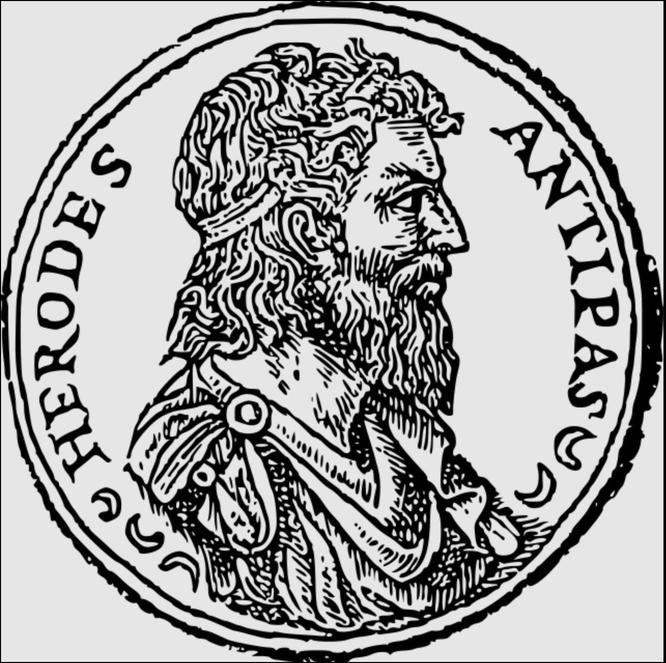
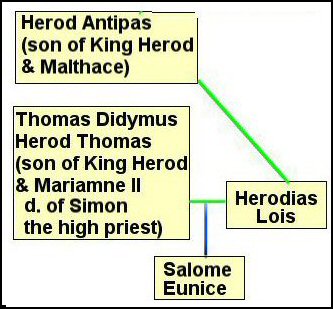
Herod Antipas (19-1)***A brother cannot marry a brother's wife***
Ant. 18.5.2; Mk. 6:17–29; Mt. 14:3–12
I had seen before the danger of making moral law the measure of those who ruled. What begins as righteous instruction may become a public accusation, compelling princes to defend their honor rather than examine their conduct. John the Baptist spoke according to the Law, yet rulers seldom forgive those who expose the faults of their own households.
I could not read John's story without recalling the house of Augustus. The emperor had sought to restore Rome through laws intended to strengthen marriage and public virtue, yet those same statutes were eventually turned against his own family. Simon, whom Rome knew as Postumus Agrippa, his mother Julia, and his sister Julia the Younger—Helena—all became casualties of the standards Augustus himself had proclaimed. Though exile spared their lives, the lesson remained unmistakable: once morality becomes an instrument of power, even the ruler's own blood cannot stand beyond its reach.
Helena's earliest expression of the Way suffered a similar fate. What had begun as a movement to awaken conscience gradually found itself judged by imperial authority rather than by the spirit it sought to preserve. John would soon discover that the same rulers who tolerated religion while it remained harmless would silence it the moment it challenged their legitimacy.
The events surrounding Herod Antipas were not the first such conflict, nor would they be the last. Years earlier, the tragedy of Glaphyra and her husband Alexander had already revealed how questions of marriage, succession, and the Law could unsettle an entire kingdom. John's confrontation with Antipas would become the next chapter in that same history. What had begun in the house of Glaphyra would, in time, leave one of Herod's own sons without inheritance.
Ant. 16.11.7; 17.1.2–3; 17.4.2–3; 18.5.1–2; Mk. 6:17–29; Mt. 14:3–12; Lev. 18:16; 20:21; Gen. 25:19–34
Years earlier, I had recorded the tragedy of Glaphyra and her husband Alexander, whose execution by Herod the Great did more than end a marriage. It unsettled the succession of the Herodian house and left rival claims to the kingdom lingering for a generation.
Herod II, son of Mariamne II, briefly appeared destined to inherit the kingdom after Alexander's fall. Yet when Antipater's conspiracy was uncovered, Mariamne II lost Herod's favor, and her son was removed from the succession.
For this reason, the traditions preserved by the Way remembered Herod II under the symbolic name Thomas Didymus—“the Twin.” As Esau had lost his birthright to Jacob, so Herod II became the twin who remained, yet without the inheritance that had once seemed his by right.
Around AD 28, Herod Antipas journeyed to Rome, where he became enamored of Herodias, the wife of Herod II and granddaughter of Herod the Great through Aristobulus. Although Antipas himself was married to Phasaelis, daughter of Aretas IV of Nabatea, he resolved to divorce her and marry Herodias instead. Confident that Rome would support his decision, he gave little thought to the political or religious consequences.
John the Baptist saw the matter differently. Herodias was not a widow but the wife of Antipas' living brother. The Law therefore forbade such a union. Standing before the tetrarch, John declared without hesitation:
“It is not lawful for you to have your brother's wife.”
With those words, John transformed a private marriage into a public controversy. He did not merely condemn Antipas' conduct; he challenged the moral authority of the ruler himself. Like the prophets before him, John placed obedience to the Law above the favor of princes, knowing full well that such courage often carried a fatal cost.
Rev. 9:7–10; Ant. 18.5.1–2
Recognizing that John had misjudged the moment, Helena and Simon watched for an opening that might draw Antipas closer and shift the balance from John the Baptist toward Jesus. In time, such an opening presented itself—not through politics, but through celebration.
The invitation arrived as both promise and test. Salome, under Helena's instruction at the Asher convent, was preparing for her coming-of-age and had requested Helena's presence. She wished Helena to dance, and Simon to perform his acts of wonder, adding symbolic grandeur to the occasion. Herodias and Antipas, combining this celebration with their own marriage feast, welcomed the arrangement, drawing many notable guests into the hall.
What appeared to be a private festivity thus became an assembly of court, religion, and spectacle.
Helena later described the performances to me in careful detail.
Simon entered the center of the hall and stepped within a circle traced upon the floor, enclosing a sacred nine-pointed figure. As he lifted his hands, a ring of saltpeter burst into flame. Thick smoke billowed upward, concealing him from view. When it cleared, he stood motionless at the center of the symbol, rigid as a pillar, and proclaimed:
“I am Moses. I am the Standing One. I am the Pillar of Fire that blocks all evil.”
A profound hush settled over the hall.
Then the music began—the soft voice of the oud joined by the flute beneath the glow of torchlight.
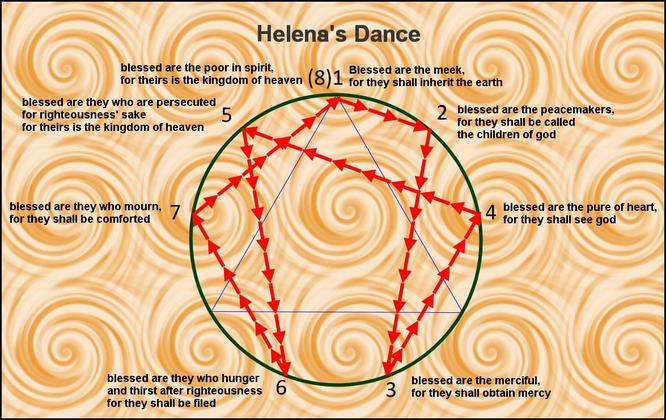
Helena and Salome entered together, clothed in flowing white garments. Helena took her place at the upper point of the inner triangle that lay within the sacred nine-pointed figure. Salome stood at the first of the nine points where the figure met the surrounding circle.
Helena lifted her voice.
“Blessed are the poor in spirit, for theirs is the kingdom of heaven.”
Extending her hand, she led Salome to the next point of the figure.
Salome answered:
“Blessed are those who mourn, for they shall be comforted.”
Together they continued around the sacred figure, Helena guiding the movement while Salome followed from point to point. At each station another Beatitude was proclaimed:
“Blessed are the meek...”
“Blessed are those who hunger and thirst for righteousness...”
“Blessed are the merciful...”
“Blessed are the pure in heart...”
“Blessed are the peacemakers...”
Returning to the apex of the inner triangle, Helena proclaimed:
“Blessed are those who are persecuted for righteousness' sake, for theirs is the kingdom of heaven.”
The final words faded into silence.
For a long moment no one spoke. Their movements possessed the harmony of sisters, their voices the clarity of a choir. Most of the guests saw only grace, beauty, and careful precision. Yet those with eyes for symbols sensed something deeper: order concealed within motion, virtue traced upon geometry, and the hidden architecture by which heaven sought to shape the earth.
Helena and Salome bowed together before quietly returning to their places beside Herod Antipas and Herodias.
Only years later did I understand that Helena had transformed the Beatitudes into a living diagram. What Jesus taught in words, she had inscribed upon the floor in movement.
Mk. 6:17–29; Mt. 14:3–12; Ant. 18.5.1–2
It was Herodias who first reacted to Helena, who was seated beside Salome.
Her gaze lingered on Helena.
Leaning toward Antipas, she whispered, “That dancer resembles Julia the Younger… was she not exiled?”
Antipas studied Helena, then glanced toward Simon.
“And the man—if I am not mistaken—resembles Postumus. He should be dead.”
With a subtle gesture, he beckoned Helena to his side.
Speaking quietly, he said, “You belong to the Way, yet your likeness—and his—belongs to the house of Augustus.”
“Honored Tetrarch, you see correctly,” Helena replied. “We are of that household. But I ask that you keep our identity in confidence. The Way is now our calling; our former lives belong to the past.”
Antipas nodded. Having respected the Way years earlier, when he had lent his house in Rome to Joseph and Mary, he chose to honor their request. If Simon and Helena now stood with him rather than against him, he no longer feared that John's followers alone would shape the movement.
Mk. 6:17–29; Mt. 14:3–12; Ant. 18.5.1–2
Antipas rose to speak. The hall fell into silence.
“Today,” he announced, “Herodias and I mark our union and the coming of age of Salome. As tetrarch, I will not permit disorder within my realm. John, whose voice has become disruptive, will be placed in custody until matters are brought into order.”
The phrasing was careful. It was not condemnation but containment, yet everyone understood its meaning: John was removed from public influence.
Antipas continued:
“Until stability is restored, oversight of instruction among the Way will pass to Simon, who already serves in the council under my authority.”
A subtle but unmistakable shift passed through the room. Authority had changed hands without a battle.
Salome looked uncertain.
Helena touched her shoulder. “The burden belongs to rulers, not to children.”
But beneath the calm reassurance, another reality was unfolding. John had been isolated not by force alone, but by reclassification—from prophet to liability.
John's imprisonment marked the beginning of the tradition later remembered as the banquet and the platter. Yet the records preserved by the Way distinguished his deposition from his execution, placing a season of imprisonment between them. During that time John remained at Machaerus, where he continued to compose hymns and instruct those permitted to visit him. Whether the final sentence fell under Antipas or, as I have come to suspect, during the later authority of Herod Agrippa, the memory of those events was eventually woven into a single account.
Hymn 11, DSS; Mk. 6:17–29; Mt. 14:3–12
John was held at Machaerus.
From his confinement, he continued to compose hymns:
“I thank thee, O Lord,
For Thou art as a fortified wall to me,
As an iron bar against all destroyers.
Thou hast set my feet upon stone that I may walk in the Way of eternity
And in the paths which Thou hast chosen.”
I reflected that the Way, whether in Jesus's early vision or John's prophetic mission, always encountered the friction of earthly authority. Its survival depended not only on courage and insight, but on knowing when to yield, when to act, and when to wait.
Chapter 23: Water into Wine – The Wedding of Jesus and Magdalene
Before continuing, I must explain the chronology I have followed throughout the remainder of Jesus' ministry. While comparing the Gospels, I noticed that Matthew, Mark, and Luke show little concern for the overall length of his public ministry, allowing it to appear as though it unfolded within little more than a single year. John, however, carefully marks the passing of three separate Passovers. Since these feasts provide the clearest chronological framework preserved in the Gospels, I have concluded that Jesus' public ministry extended over approximately three years.
Accordingly, I have organized the narrative around these three Passovers, designating them Passover #1, Passover #2, and Passover #3. As the narrative moves from one Passover season to the next, I have included approximate modern dates to help orient the reader.

Passover #1
“And the Jewish Passover was at hand.” (Jn 2:13)
Spring 30 AD

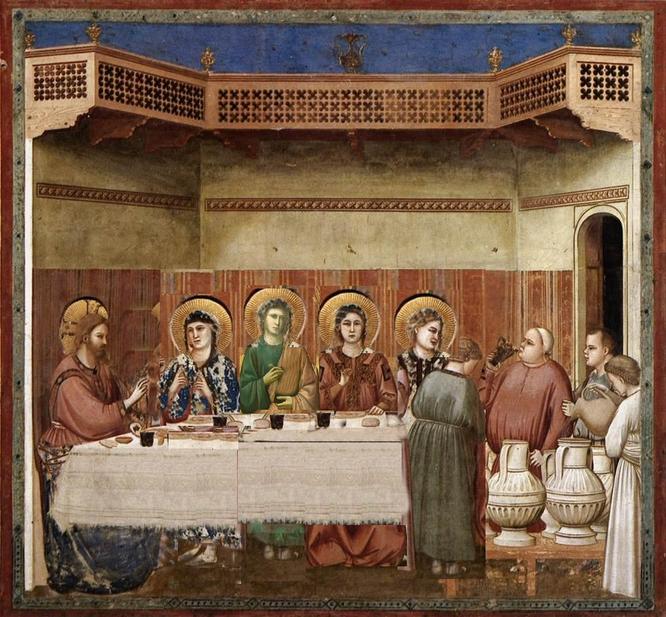
Water into Wine (21-1)
Gen. 2:24; Jn. 2:1–11; 3:29; Gos. Thom. 22; Gos. Phil. (Bridal Chamber)
Few stories in the Gospels are more familiar than Jesus turning water into wine at Cana. It has always been my favorite. It offers what feels like a rare glimpse into Jesus' family life while at the same time introducing his public mission through an extraordinary miracle. Yet one question continued to trouble me: why is Mary Magdalene never mentioned as being present?
By this point I had already concluded that the Canaanite woman's daughter represented Mary Magdalene's betrothal to Jesus in AD 20. Although nearly ten years passed before the wedding because of Essene restrictions, I still expected to find Magdalene at Cana. Instead, she seemed to have disappeared from the account. The presence of Jesus' mother, however, proved to be the key. Joseph had died during those intervening years, leaving Mary as the natural witness to the fulfillment of the betrothal. The wedding itself therefore appeared to be Jesus' own marriage.
Fortunately, I still possessed a copy of the Gospel of Philip, where Mary's relationship with Jesus remained partly intact. Its traditions preserved a memory of Mary that differed significantly from the one found in the public Gospels.
The Gospel of Thomas offered another clue. Its teaching that the Kingdom is revealed when “the two are made one” suggested that the Bridegroom was not merely a title for Christ, but an example to be imitated, and by extension so was the Bride.
Then I remembered something I should have consulted from the beginning. Among my papers were several early fragments of John's Gospel, which John Mark had written from Jesus' own words before the account reached its final form. There, to my relief, Mary Magdalene was plainly named among those present at Cana. Only the later version omitted her. With that question resolved, I could finally turn to the more important one: why had John chosen to place this wedding as the first sign of Jesus' public ministry?
Mt. 4:3–11; Mk. 1:12–13
Before the wedding could take place, Jesus was required to complete the Nazarite retreat prescribed by the community. For forty days he withdrew into the wilderness of Mar Saba, where the official “tester” of the community, Judas Iscariot, fulfilled the role of Satan by examining those who sought advancement.
Judas tested him three times:
• to become Moses and turn stones into bread;
• to become Elijah and ascend to heaven in a fiery chariot;
• to swear allegiance to the Fourth Philosophy of Judas the Galilean and wage war against Rome.
Jesus rejected all three temptations and was released from Judas' authority.
When he returned, his long, untrimmed hair and weathered appearance caused his sister Helena, now known as Martha, to laugh. She teased that he looked as though he had been “shorn like a sheep,” adding that even his hand had withered. It was, I later learned, an Essene Sabbath jest referring to the continence expected of those completing a Nazarite vow.
Gospel of Philip
Simon Magus supervised the wedding. When the moment came to bless the marriage, he stepped forward and took the stole from his shoulders. Following the custom of the community, he joined the hands of Jesus and Mary Magdalene beneath the cloth, binding them together as a sign that two lives had entered into one covenant.
Simon spoke:
“Jesus, son of Joseph, you have completed the days of your Nazarite vow and returned purified from the wilderness. Mary Magdalene, daughter of this covenant, you have preserved your virginity and prepared yourself for this day.
“Before God and before those gathered here, I declare this union blessed according to the customs of our fathers.
“Yet this covenant is not entered for desire alone. You have chosen the greater burden: to preserve the promise given to David and to raise up what God has entrusted to your house. Therefore, you shall remain in continence for three months, until the beginning of June, proving that this union is governed by devotion rather than passion.
“If either of you wishes to speak before those gathered, let them speak now.”
Jesus looked upon Mary and said:
“My beloved Magdalene, you have walked beside me in faithfulness, and through you the promise given to our fathers shall continue. You shall become the mother of an angel.
“Yet do not think that my love for you separates me from those who follow me. The love of God is not diminished when it is shared. As I embrace my bride, so shall I embrace my disciples with the Word that brings life and perfection.”
Mary answered:
“When we are joined, we share the grace that God has placed within us. What is received from God is not diminished when it is given away.”
Simon raised his hands.
“Then let the covenant be sealed.”
Jesus and Mary kissed, and those gathered rejoiced.
Jn. 2:1–11
The six Sons of Abraham were seated at a long table, Jesus at its head. Peter sat on his right, John Mark on his left, representing Mary Magdalene. Philip, Andrew, James, and John alternated along the sides.
During the feast Simon quietly attended to the ceremonial waterpots.
When the servants realized there was no wine, Mary came to Jesus.
“They have no wine.”
Jesus replied:
“Today is not the day for the Holy Table.”
Mary simply told the servants:
“Whatever he tells you, do it.”
They filled the six great baptismal waterpots with water.
Jesus said:
“Fill the seven goblets from the waterpots.”
The disciples looked into their cups. The liquid carried the fragrance of freshly crushed grapes.
Jesus raised his goblet.
“Today our Lord God has invited all men to His Holy Table.”
The disciples drank.
Simon tasted the wine and smiled.
“Is it not customary to serve the finest wine first, and afterward that which is poorer? Yet this is the finest I have ever tasted.”
The servants looked back into the waterpots.
They still contained only water.
“It is a miracle!”
Mt. 15:26–27; Mk. 7:27–28
Peter leaned toward John Mark.
“Why the baptismal waterpots?”
John Mark smiled.
“Perhaps because we entered the Way through water.”
Jesus raised his cup.
“Today, water has become wine.”
As I reflected upon this first sign, I became convinced that the miracle was never intended to replace baptism. Rather, it revealed the fulfillment of a promise first hinted at through the Canaanite woman, who pleaded that “even the dogs eat the crumbs that fall from their master's table.” What had first been granted to Jesus' own disciples was now inaugurated at Cana. In time, that invitation would extend beyond Israel itself. The water of preparation had become the wine of participation, and the Holy Table would eventually be opened to all nations.
Song of Solomon 1:12; Josephus, War 2.8
As I continued comparing the Gospel accounts, I was surprised to discover that the bridal imagery did not end with the wedding itself. During the September following this wedding, and again during the same season in the final year of Jesus' ministry, I found two further accounts centered upon the fragrance of nard, the anointing of Jesus, and the imagery of the bride, all recalling the Song of Solomon. Their similarities were too deliberate to be accidental.
From their sequence and symbolism, I further concluded that these three ceremonies were not merely acts of devotion, but occasions connected with the hope of the promised Davidic heir.
From their sequence and symbolism, I further concluded that these three ceremonies marked successive occasions upon which conception of the promised Davidic heir was sought.
| Wedding of Jesus and Mary when sexual relations are allowed. "While the king was on his couch, my nard gave forth its fragrance." Song of Solomon 1:12 (Third time is disguised as before his 'burial' since before the Crucifixion) Essene rule: betrothal six months prior to sexual relations, only three tries before infertility is declared War 2.8) By simply equating Simon with Simon the Leper, Simon as Lazarus, it can be seen as his Church as bishop. | ||||
|---|---|---|---|---|
| first try | second try | third and last try allowed, succeeds before the Crucifixion | ||
| Sept 30 AD | Sept 31 AD | (married 2 days before Good Friday) 1:12 | ||
| Lk 7:36-50 | Mk 6:6-13 | Mt 26:6-13 | Mk 14:3-9 | Jn 12:1-8 |
| the Pharisee's house (a slur against Simon) (Jesus answered him, "Simon, I have something to tell you.") | The meeting is not shown | "in the house of Simon the Leper" ("the Leper" = "Lazarus": unclean) | "in the house of Simon the Leper" ("the Leper" = "Lazarus": unclean) | "where Lazarus lived, whom Jesus had raised from the dead." Martha is serving. Lazarus was among those reclining at the table with Jesus) |
| w/perfume poured on feet | Jesus out of monastery disciples sent out on their own | Woman w/Alabaster jar poured on head | Woman w/Alabaster jar poured on head | Mary w/large amount of nard poured on feet |
| dowry excused (Simon complains) | --- | dowry excused (disciples complain) | dowry excused (some complain) | dowry excused (Judas Iscariot complains) |
| no conception | no conception | conception | conception | conception |
Chapter 24: Miracles Are Metaphors
“After that there was a feast of the Jews.” (Jn 5:1)
Spring 31 AD
As I reviewed the accounts of Jesus' miracles, I became convinced that many of them concealed meanings greater than the wonders themselves. The sign at Cana had already revealed that Jesus did not perform miracles merely to display power. Water transformed into wine was itself a lesson, inviting those with understanding to look beyond the outward event.
Curious whether this pattern continued throughout his ministry, I began comparing the remaining miracles with the prayer Jesus taught his disciples—the prayer we now call the Lord's Prayer. To my surprise, many of the signs seemed naturally to correspond with its petitions. Whether this arrangement was intentional or simply reflected the manner in which Jesus taught, I cannot say. Yet the pattern proved too consistent to dismiss.
Simon had long understood that extraordinary acts captured attention far more quickly than reasoned argument. His signs astonished the crowds, but when the spectacle ended, little remained except wonder. Jesus adopted that same language of signs, yet transformed its purpose. Every miracle became a parable. Every healing concealed instruction. Every wonder pointed beyond itself toward the Kingdom of God.
What follows is my own arrangement of several of these miracles according to the petitions of the Lord's Prayer. If the pattern is genuine, the miracles themselves become sermons spoken without many words.
Jn. 5:1; Mk. 4:9–12; Mt. 13:10–17; 1 Cor. 3:1–2; R. 2.9
“Our Father, who art in heaven, hallowed be thy Name.”
One truth emerged repeatedly as I compared the Gospel accounts.
Jesus rarely taught in only one way.
His words reached every ear, yet not every listener heard the same message.
The crowds delighted in stories, healings, and signs. Those who remained with him discovered that each sign concealed another meaning, waiting to be uncovered by those prepared to receive it.
The distinction became clearer when I compared Jesus with Simon.
Before becoming one of the Master's followers, Simon had mastered many feats that observers called miracles. As he later confessed before Clement, he could walk unharmed through fire, alter his appearance until even acquaintances failed to recognize him, or escape those attempting to seize him. Such demonstrations inspired astonishment, but astonishment alone could never reveal truth.
Jesus never condemned signs themselves.
Instead, he redeemed them.
At Cana, water became wine with Simon's assistance. Yet the true miracle lay beyond the transformation itself. Water spoke of baptism. Wine spoke of the covenant shared at the Holy Table. The outward act revealed an inward mystery.
Throughout Galilee, people came seeking wonders. Few wished to debate philosophy or the finer points of the Law. They remembered stories. They carried home reports of healings. They spoke of miracles.
Yet Jesus continually warned them not to remain satisfied with what their eyes had seen.
“He who has ears to hear, let him hear.”
When the disciples asked why he taught so often in parables, he answered:
“To you it has been given to know the mysteries of the kingdom of heaven, but to those outside all things come in parables, so that seeing they may see and not perceive, and hearing they may hear and not understand.”
Years later Paul expressed the same principle when he wrote that some believers still required milk rather than solid food because they remained babes in Christ.
Only then did I recognize the pattern.
A miracle was never the destination.
It was the doorway.
Many of the signs that puzzled the multitudes became clear once their language was understood.
Mt. 17:24–27
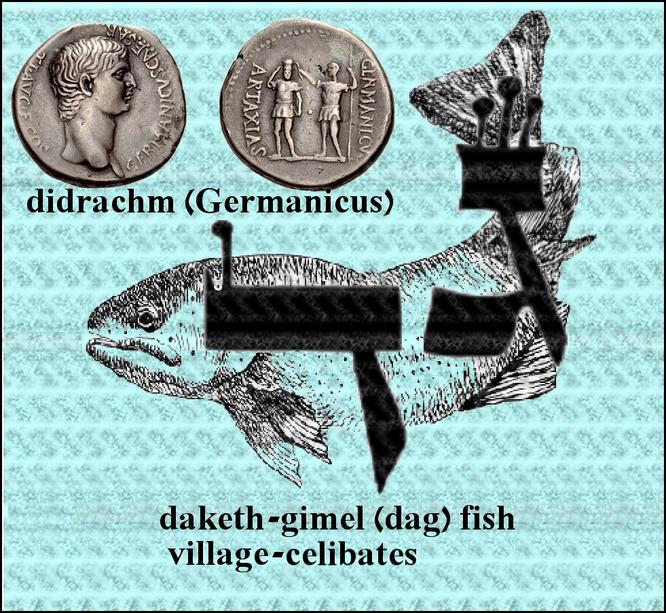
(Fish 2 = Marsyas) (22-1)
Peter once approached me in great confusion.
The Master had instructed him to catch a fish, and in its mouth he would find a coin with which to pay the Temple tax.
Peter wondered whether he should search the waters until fortune favored him.
It sounded like a tale for children.
Then Peter thought awhile and realized that the “fish” was Marsyas of the Order of Ham, using the Noah symbolism—the second son. The didrachma identified him as a freedman serving Herod Agrippa. As the king's treasurer, the tax money already rested in his keeping.
No miracle had occurred. Its purpose was to teach in parables. What seemed impossible became perfectly ordinary once the language of the Kingdom was understood.
Mt. 14:13–21; Mt. 15:32–39; Mk. 6:30–44; Mk. 8:1–10
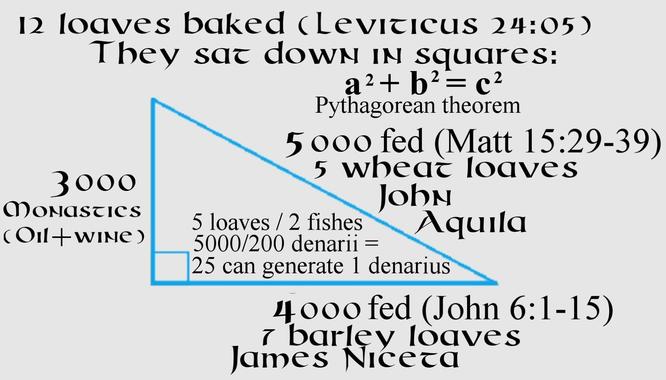
Feeding of the Multitudes
The two great feedings reveal an even richer pattern.
During their years in Cyrene, James and John studied the mathematical harmony associated with Pythagoras. In time they organized their communities according to the proportions of the sacred right triangle.
John directed the greater fellowship of five thousand.
James governed another of four thousand.
The Gospels also mention one fish in addition to the two. I became convinced that this represented a third fellowship of three thousand celibates devoted entirely to contemplation, instruction, and prayer.
Three communities.
Three.
Four.
Five.
Together they formed the perfect triangle.
Each fellowship assembled according to appointed seasons, shared its resources, and supported the others. None existed for itself alone.
The miracle, therefore, was never simply about bread.
Bread represented the people gathered into the covenant.
The loaves became the communities themselves.
John Aquila and Priscilla cared for the greater fellowship, composed chiefly of married believers—the Sons of the Covenant.
James guided the four thousand who embraced a more disciplined manner of life.
The three thousand devoted themselves entirely to prayer and instruction, preserving the wisdom entrusted to them.
Like the sides of a perfect triangle, each community depended upon the others for its strength and completeness.
Only when seen together does the miracle disclose its true purpose.
The crowds remembered that thousands had eaten.
The disciples learned how the Kingdom was being built.
| ||||||||||||||||||||||||||||||||||||||||||||||||
Mt. 9:2–8; Mk. 2:1–12; Lk. 5:17–26; Acts 7:54–60; Ant. 18.4.3
Among the many healings, one account seemed especially suited to the petition:
“Forgive us our trespasses.”
Jonathan, the second son of Annas, had received baptism in the Spirit, yet ambition continued to govern his heart. He longed for the office of High Priest and permitted himself to be carried upon a litter so that his feet would not touch what he considered unclean.
His manner stood in striking contrast to that of Jesus, who walked freely among fishermen, laborers, widows, and beggars alike.
Rather than rebuke Jonathan publicly, Jesus transformed the occasion into a lesson.
Many of the assemblies met in upper rooms with an opening through which light entered. Jonathan, still reclining upon his litter, was carried upward and then lowered into the midst of the congregation.
For the first time he saw himself as others had always seen him—a leader raised above those he desired to govern.
Something within him yielded.
Jesus simply said:
“Son, your sins are forgiven.”
Many who witnessed the event argued over whether any man possessed authority to forgive sins.
They entirely missed the miracle.
Jonathan rose from his litter, left it behind, and walked among the brethren as their equal.
The healing was not of crippled limbs.
It was of a proud heart.
For a season humility replaced ambition.
Yet pride rarely surrenders forever.
After the Crucifixion, Jonathan again sought authority. In those days Vitellius removed both Pilate from Judea and Caiaphas from the high priesthood. Believing Jonathan, the second son of Annas, to be well suited for the office, he appointed him High Priest.
Without the continual guidance of Jesus, however, Jonathan's former pride gradually returned, and before long he too was removed from office.
The miracle had never promised that temptation would never return.
It showed only that forgiveness makes a new beginning possible.
Ant. 18.1.6; Mt. 8:28–32; Jn. 3:1–12
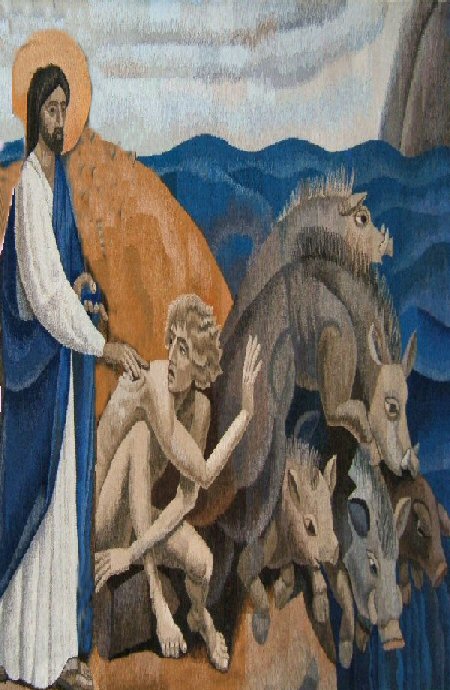
No figure in Jesus' ministry has occupied my thoughts more than his uncle, the disciple Thaddeus.
As I compared the Gospel accounts with the writings of Josephus and the traditions preserved among the brethren, I became convinced that this remarkable man appeared under several different names. In his youth he fought beside Judas the Galilean and was later remembered by some as the war hero Barabbas. At other times he cooperated with Rome and became known as the Prodigal Son. To the rulers of Jerusalem he appeared as Nicodemus, the respected councilor. Only after Pilate ordered his execution for leading the reenactment of Israel's crossing of the Jordan was the name preserved by Josephus revealed: Theudas.
No single name could adequately describe a man who lived so many lives.
Jesus continually urged him toward baptism, yet Theudas questioned everything, insisting upon the plainest meaning of every word.
The account of the Gadarenes eventually led me to another conclusion.
Crossing into that country, Jesus encountered two fierce men living among the tombs. The Evangelists remembered them as men possessed by demons. Comparing the traditions, I became persuaded that these two men were Theudas and Judas Iscariot.
They had surrendered themselves to violence, ambition, and divided loyalties.
“What have you to do with us?” they cried.
“If you cast us out, send us into the herd of swine.”
Jesus answered with a single word.
“Go.”
Only then did the deeper meaning become clear.
The demons were not spirits entering swine.
They were the passions that had enslaved these men.
Violence.
Pride.
Hatred.
The swine rushing headlong into the sea became the image of those passions cast away.
For a time both men returned to themselves, though the temptation toward zealotry never disappeared completely.
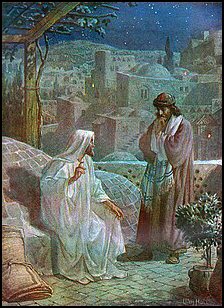
That same night Theudas came quietly to Jesus, no longer the rebel but Nicodemus, seeking understanding.
“Rabbi, we know that you are a teacher come from God.”
Jesus answered:
“Unless one is born again, he cannot see the kingdom of God. That which is born of the flesh is flesh, and that which is born of the Spirit is spirit.”
The brethren rejoiced that the Prodigal Son had returned.
In this miracle, deliverance did not consist in casting out invisible spirits.
It consisted in overcoming the passions that held the soul captive.
The temptation remained.
Yet for a season, grace proved stronger than ambition.
As I reached the end of these accounts, the pattern that had first caught my attention became unmistakable.
Those who sought marvels carried away stories of impossible deeds.
Those who sought the Kingdom carried away understanding.
The miracle was never an end in itself.
It was the language through which Jesus revealed realities that words alone could scarcely express.
Water became baptism.
Wine became the New Covenant.
Bread became the gathered people of God.
Fish became the sacred orders through which the faithful were nourished.
Blindness became spiritual ignorance.
Paralysis became the bondage of pride.
Demons became the passions that enslave the human soul.
Leprosy became separation from the community.
Forgiveness became restoration.
Death itself became the doorway to new life.
The outward wonder was only the visible garment.
The inward truth was the miracle Jesus desired his disciples to discover.
This understanding also explained why he so often commanded those he healed to tell no one what had happened. The wonder itself was never his purpose. Had men pursued only the marvel, they would have missed the Kingdom standing before them.
Those with eyes fixed upon miracles remembered astonishing events.
Those with ears prepared to hear discovered eternal truths.
I cannot say with certainty that every sign concealed only one meaning. The Scriptures themselves seem to invite deeper understanding with every generation. Yet I became convinced that Jesus rarely performed a miracle without clothing within it a lesson concerning the Kingdom of God.
Even these signs, however, pointed beyond themselves.
Two miracles still remained.
They would eclipse every wonder that had come before them.
One would reveal that Jesus possessed authority over death itself.
The other would reveal that death had never possessed authority over him.
Only then would the meaning of every earlier sign become complete.
Mt. 12:24–28
When I finished arranging these accounts, I could finally see how Simon, the master of wonders, had been surpassed by Jesus. Where Simon performed signs to awaken curiosity, Jesus directed men's eyes beyond the spectacle and toward the Kingdom of God.
His opponents could not comprehend the difference. They declared, “It is only by Beelzebul, the prince of demons, that this fellow drives out demons.” Jesus answered, “If Satan drives out Satan, he is divided against himself.” I have often wondered whether they sensed Simon's influence upon Jesus and mistook the source of his authority. Whatever they believed, it would not be the last time that Simon's name became entangled with the Adversary. In later years, many would identify him with the Beast—the mysterious 666.
Simon never ceased to regard Jesus with admiration and affection. Where Simon sought wisdom through philosophy and signs, Jesus revealed that wisdom reached its fulfillment in love and in the Kingdom of God. Between them passed a wisdom too subtle for history to record and too profound for most to perceive.
Only at the end did I understand what had been hidden throughout Simon's story. It was neither the wonder of signs nor the pursuit of wisdom alone, but the Kingdom of God revealed through love. If these pages preserve even a glimmer of that truth, then Simon's labor—and mine—have not been in vain.
History remembers emperors, governors, and priests. It remembers battles and temples. Yet the Kingdom advanced by quieter means: through those willing to hear, to remember, to bear faithful witness—and to become pearls themselves.
Two final mysteries still remained before the Crucifixion. Upon a mountain, the veil would be lifted, and the hidden glory of the Son of Man would be revealed. At a tomb in Bethany, the voice that called the dead to life would reveal that even death could not sever the bond between Jesus and Simon.
Book VII — The Hour Draws Near
Chapter 25: The Transfiguration and the Raising of Lazarus
By the third year of Jesus' mission, I observed that two major events placed both Jesus and Simon in grave danger. I attributed their actions to growing frustration with the people's blindness. The crowds continued to seek a political savior, while the religious elite saw only dangerous threats. The Restoration they proclaimed seemed as distant as ever. At last they chose to act boldly—Jesus by openly challenging the priests, Simon by defying Rome—and both decisions brought them to the edge of ruin.
Mt. 17:1–9; Mk. 9:2–8; Lk. 9:28–36; Jn. 7:1–52; Acts 21–22
September 32 AD
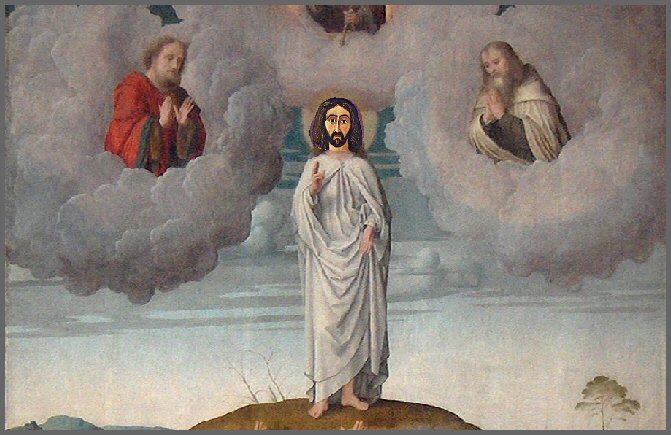
Transfiguration (23-1)
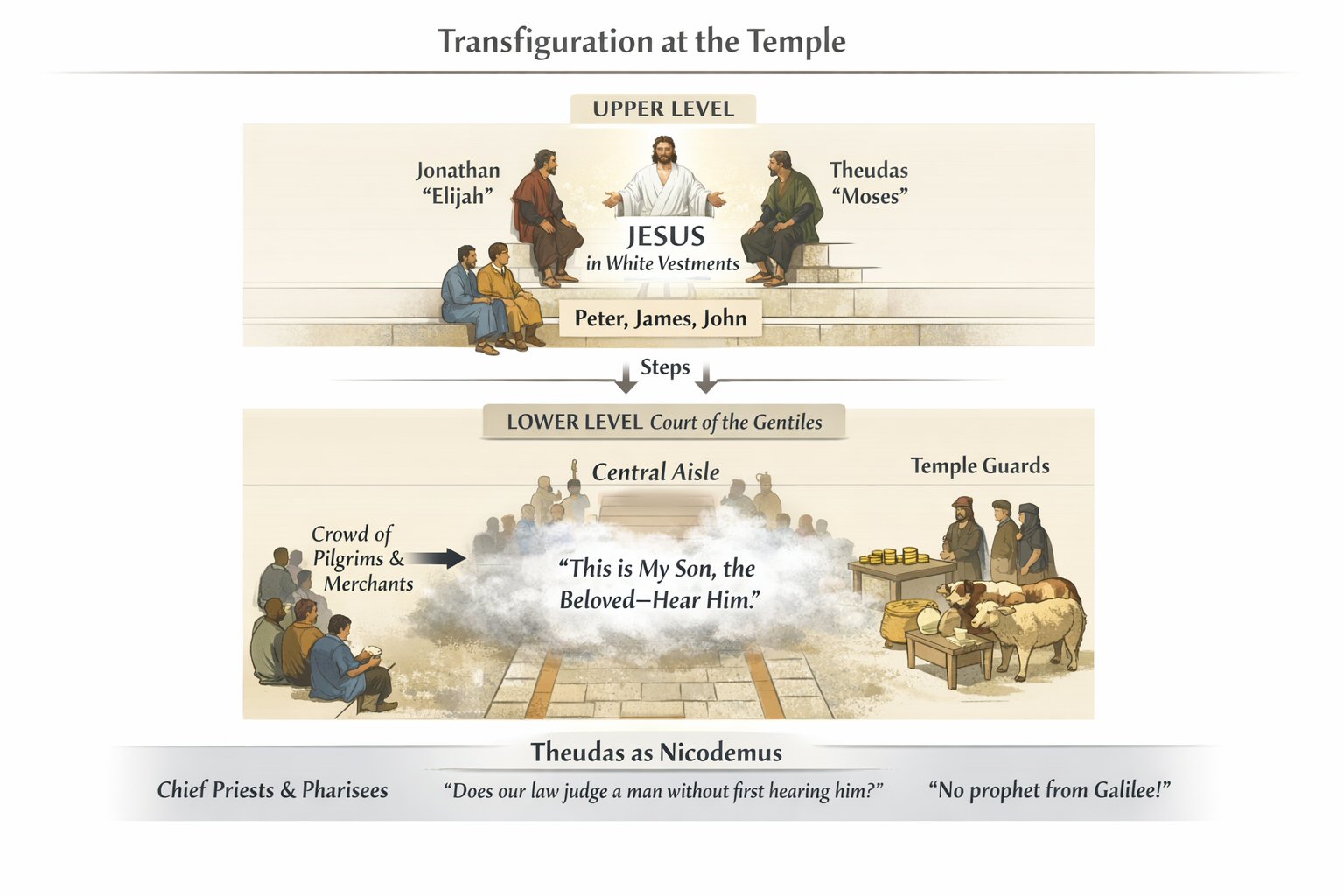
After comparing the Gospel accounts with the Temple festivals, I concluded that the Transfiguration occurred on the Day of Atonement, shortly before the Feast of Tabernacles. Jesus led Peter, James, and John to the upper level of the Temple precincts, normally reserved for ritual oversight. From there he could be seen by the crowds without entering the inner sancta. Decades later, Paul would overstep this same boundary and be arrested immediately, demonstrating how carefully the Temple authorities guarded their sacred spaces.
Below, the Court of the Gentiles thronged with pilgrims and merchants. Coins clinked upon the moneychangers' tables, animals shifted in their pens, and the fragrance of incense drifted through the air. I believe Jesus chose this place deliberately. Standing where all could see him without technically violating the Temple's restrictions, he could publicly assert his authority while remaining within the limits of the Law.
From the Gospel descriptions, together with the Essene tradition of three anointed leaders, I concluded that the figures remembered as Moses and Elijah were represented by Jonathan and Theudas. Peter, James, and John sat on the lower steps, close enough to witness, yet removed from ritual authority. Jesus donned the white vestments of the High Priest; the linen caught the sunlight, gleaming like snow. Jonathan and Theudas warned him it was blasphemous, but he ignored them.
Standing at the heart of the court, he lifted his voice:
“If anyone thirsts, let him come to me and drink.”
The words carried the resonance of festival waters and purification rites. Though he could not perform the inner rituals, all who were present felt the authority in his words. Murmurs spread:
“This is truly the Prophet!”
“This is the Christ!”
“Can the Christ come from Galilee?”
Division arose, yet no one dared touch him.
Sensing that arrest was near, Simon released a cloud of incense, which rose and formed a veil over the court. From within came a voice:
“This is My Son, the Beloved—hear him.”
The people gasped. When the smoke cleared, the moment had passed. Jonathan and Theudas had vanished, leaving only Jesus standing.
Peter blurted:
“Master, shall we put up three booths for Sukkot—one for you, one for Moses, and one for Elijah?”
His words reflected festival ritual, a naïve attempt to contain holiness. Jesus removed the vestments and beckoned them away, knowing that remaining would invite arrest.
The guards, shaken, withdrew to report to the chief priests.
“Why did you not bring him?” they demanded.
“No one ever spoke the way this man does,” they answered.
“You mean he has deceived you?” the Pharisees snapped. “No ruler or Pharisee believes him. Only this crowd, unlearned in the Law, listens.”
Unnoticed, Theudas—now Nicodemus—spoke calmly:
“Does our Law condemn a man without first hearing him, to see what he has done?”
The Pharisees replied:
“Search, and see: no prophet arises from Galilee.”
Pesher on Habakkuk (1QpHab)
Many later understood this event as a literal appearance of Moses and Elijah. I reached a different conclusion. The titles belonged to living men serving within the Temple hierarchy, while the vision itself revealed Jesus assuming the authority they represented. John's Gospel omits their names, yet preserves the controversy that immediately followed.
The High Priest's anger was swift, and among the scroll-keepers of Qumran Jesus was condemned as “the Man of the Lie.”
“The traitors with the Man of the Lie did not believe the words of the Teacher of Righteousness. Woe to him who makes his neighbors drink, that he may gaze upon their feasts and their nakedness.”
To the Essenes, Jesus had done more than challenge the priests. He had publicly claimed an authority they believed belonged only to God's appointed servants. What many in the crowd saw as revelation, they judged to be deception.
Ant. 18.2–3
Among those who took part in the protest, it was remembered that it erupted when Pilate diverted Temple funds to construct an aqueduct. Pilate's soldiers, disguised among the crowd, suddenly attacked the demonstrators. I believe it was during this chaos that Simon was recognized. It was afterward, I believe, that Pilate pressed Caiaphas to act.
Eager to preserve both his office and Rome's favor, Caiaphas declared Simon excommunicated. Among the Pharisees, excommunication was regarded as a symbolic death. Ordinarily the offender endured a brief confinement in a burial cave, but at Pilate's insistence Simon was sealed inside without food or water.
Jn. 11:1–44; Secret Gospel of Mark 3.3a, 2.26b; Mk. 14:51–52; Lk. 17:12–19; Mt. 26:3–5
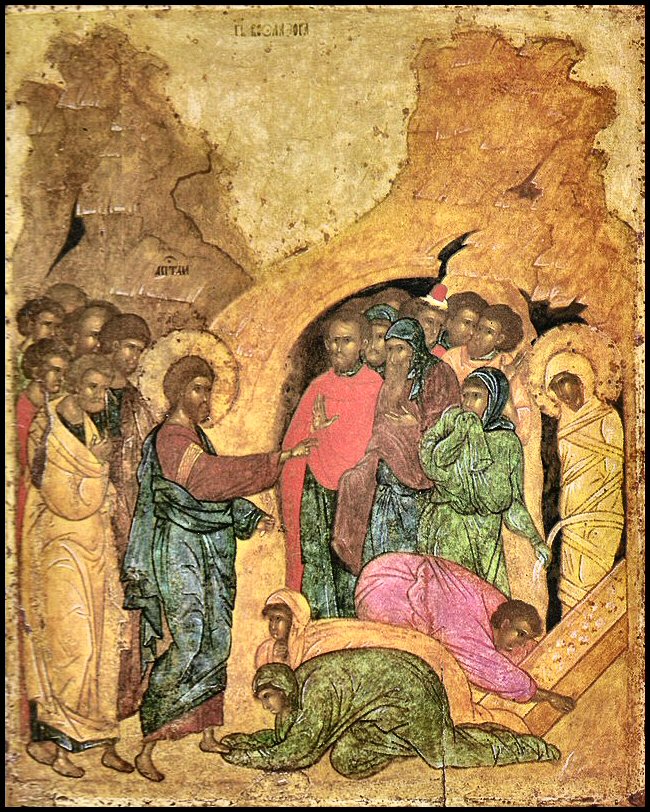
Raising of Lazarus (Jn 11:1-44) (23-2)
The account of Lazarus presents one of the strongest clues to Simon's hidden identity. Lazarus is loved by Martha and Mary. Elsewhere in my research, I identified Helena with Martha and her daughter with Mary Magdalene. From these parallels, I concluded that Simon had assumed the name Lazarus—Eleazar, meaning “God is my help”—to conceal his identity after his excommunication.
The name suited him well, for he was sick not in body but in spirit. Declared dead to the community through excommunication, he bore the weight of exile as though the world itself had narrowed around him.
Helena and Magdalene were living at Ein Feshkha, a settlement south of Qumran, the counterpart to Jerusalem's Bethany, a place set apart for those awaiting restoration. The sun crept toward the Dead Sea, marking the passing hours more faithfully than any measure of distance.
Not long before, Mary had poured perfume on Jesus and wiped his feet with her hair. That first attempt at union had not succeeded. With their hope of a child lost, Jesus remained in hiding beyond Judea.
When word reached him that Simon was “sick,” they said:
“Lord, the one you love is ill.”
Jesus answered:
“This sickness will not end in death—it is for God's glory, so that the Son may be glorified through it.”
Two days passed. Waiting stretched the hours, slow as water over stone.
At last Jesus said:
“Let us go back to Judea.”
The disciples protested:
“Rabbi, only a short while ago they tried to stone you. Do you truly wish to return?”
I believe Jesus understood that Simon's excommunication had become a sentence of death. To save him meant returning to Judea and placing himself once again within reach of those who sought his life.
As they neared Qumran, Jesus said:
“Our friend Lazarus has fallen asleep, but I am going to awaken him.”
The disciples misunderstood.
“Lord, if he sleeps, he will recover,” they said.
I understood Jesus' words differently. Throughout the Way, “sleep” often described one who had not yet been awakened spiritually. Here, however, Jesus was also speaking of Simon's excommunication, a symbolic death from which he intended to restore him.
“Are there not twelve hours in a day? Whoever walks in daylight will not stumble, for he sees by this world's light. But whoever walks in the night stumbles, for he has no light within.”
Finally, Jesus said plainly:
“Lazarus is dead—excommunicated. And for your sake, I am glad I was not there, that you may believe. Let us go to him.”
Four days had passed. All believed Simon dead. Helena arrived first.
“Lord, if you had been here, my brother would not have died. But I trust that God will give you what you ask.”
Jesus said:
“Your brother will rise again.”
She replied:
“I know he will rise at the last day.”
Jesus told her:
“I am the resurrection and the life. Whoever believes in me will live, even though he dies. Whoever lives by believing will never die. Do you believe this?”
“Yes, Lord,” she said, “I believe you are the Messiah, the Son of God.”
Mary Magdalene then arrived at Cave 4, where Simon lay. She fell at his feet, weeping:
“Lord, if you had been here, my brother would not have died.”
Witnessing her grief, Jesus wept too. Those nearby whispered:
“See how he loved him.”
Judas muttered:
“If he loved him so, could he not have come sooner?”
I concluded that Jesus delayed until the fourth day deliberately. Only then would Simon's symbolic death be beyond dispute. According to a common Jewish belief, the spirit lingered near the body for three days. By waiting until the fourth day, Jesus ensured that no one could dismiss Simon's restoration as premature.
Whether he also hoped Jonathan might intervene, I cannot say. Yet the delay itself appears intentional, allowing the sign to reveal not merely compassion but authority over the spiritual death imposed through excommunication.
Jesus said to the crowd:
“Did I not tell you that if you believe, you will see the glory of God? Take away the stone.”
Some thought they heard Simon answering from within the tomb.
They rolled the stone aside. Jesus looked up and said:
“Father, I thank you that you have heard me. I know you always hear me, but I speak for those standing here, that they may believe you sent me.”
Then he cried out:
“Lazarus, come forth!”
Simon emerged, hands and feet bound in linen, a cloth drawn over his face.
Helena stepped forward to embrace him, then drew back.
“You need a bath,” she said.
Mary brought him water to drink, though I believe it would take more than water from Jacob's well to cleanse the stain of excommunication. He was no higher in rank than a leper. I believe Jesus then restored Simon through initiation into the Way. Only then could the Holy Spirit symbolically fill the life that excommunication had declared lost.
I also believe this restoration explains the otherwise puzzling reference to the young man who fled naked at Gethsemane, a detail that has long puzzled commentators.
Jesus embraced him.
“In defying Caiaphas, we are forever joined,” he said.
Simon replied:
“I am sorry, my friend, to have drawn you into my troubles. But I praise God that I have you as my brother.”
Meanwhile, the chief priests and scribes plotted in Caiaphas' court to seize Jesus by guile—but not during the feast, for fear of the crowds.
Looking back upon these events, I cannot help seeing the raising of Lazarus as the final sign before the Passion. Jesus restored one whom the authorities had already counted among the dead, a deed that hastened the resolve of those seeking his own death. For a brief moment they both escaped their fate—Jesus from immediate arrest, Simon from symbolic death—but the path before them had narrowed. The restoration of one friend would soon lead to the sacrifice of the other.
Chapter 26: Deception and Elation
HANUKKAH — FEAST OF DEDICATION
“It was winter.” (Jn 10:22)
December 32 AD
When I examined the years between the first Passover of Jesus' ministry and the final one, I was struck by a strange imbalance. The years of teaching—from the Passover of AD 30 until the Passover of AD 33—survive only in fragments. The final days, however, unfold with astonishing detail. The four Gospel traditions do not preserve a continuous record of instruction, but rather a pattern: signs first, explanations afterward; miracles remembered, meanings concealed.
The closer I came to the final months, the more I sensed the acceleration of events. Jesus and Simon were no longer simply teachers moving from village to village. They had become men watched by those who feared what they represented. Rumors circulated that Caiaphas and Pilate were beginning to move together—not because they agreed in faith, but because both understood that power was threatened when people began to believe a different kingdom was possible.
The final days would reveal the oldest corruption of all: the union of money, ambition, and authority. Yet they would also reveal their opposite: love, hope, and the joy that briefly flourished before betrayal overcame them.
Passover #3 “Now the Passover of the Jews was near.” (Jn. 11:55)
March AD 33 – Six Days before Passover
Jn. 12:4–6; Mt. 26:14–16; Mk. 14:10–11; Lk. 22:3–6; Zech. 11:12–13
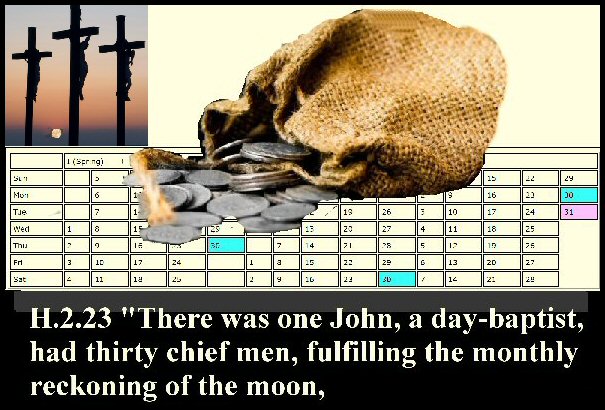 (23-4)
The later traditions portray Judas as the disciple who carried the money bag, yet when I examined the fragments preserved about him, I wondered whether that accusation concealed a deeper transaction. Thirty pieces of silver were not merely payment; they echoed the symbolic number associated with the council that governed the calendar—the thirty divisions beneath the moon's order.
I began to wonder whether Judas' bargain was not simply the betrayal of a teacher, but an attempt to purchase a place among those who held influence. The story of the coins may preserve only the outer layer of a greater struggle: the struggle between those who believed authority came from heaven and those who believed it could be acquired.
At Qumran, Jesus had once surrendered all possessions, placing everything into the common treasury as an act of renunciation. Yet he had learned what every generation eventually discovers: even places dedicated to holiness are not immune to the temptations of wealth and power.
Mt. 26:6–7a; Mk. 14:3a
(Simon—Lazarus—initially unclean from his burial, now made clean.) “Jesus came to Bethany, where Lazarus was, whom he had raised from the dead.”
At the home of Simon the Leper, a woman came to him with an alabaster jar of very expensive perfume.
Jn. 12:2
A dinner was given in Jesus' honor. Helena, acting as Martha, later recounted the evening to me in great detail. She served while Simon—Lazarus—reclined at the table. Her testimony confirmed Lazarus' identity as Simon and helped reveal that the unnamed woman was Mary Magdalene.
Jn. 12:3a; Mt. 26:7; Mk. 14:3b; Jn. 12:3b
The third marriage ceremony was about to begin. There had been two other years without conception. Mary Magdalene took about a pint of pure nard—an extremely costly perfume—and poured some over Jesus' feet, wiping them with her hair. Then she anointed his head as he reclined at the table.
From her story, I understood that anointing his head signified his recognition as the Davidic king, particularly significant at this time since she was carrying the child hoped to be his son. The house was filled with the fragrance of the perfume, a quiet herald of both devotion and the promise of legacy.
Jn. 12:4–6; Mt. 26:8–9; Mk. 14:4–5; Cant. 1:12
But one of his disciples, Judas Iscariot, who would later betray him, objected, “Why was not this perfume sold and the money given to the poor? It was worth a year's wages.” Others joined in, rebuking her harshly.
Judas did not speak from care for the poor. As keeper of the money bag, he had long helped himself to what was put into it. His objection was a calculated assertion of authority—a manipulation disguised as moral concern.
Mt. 26:10–13; Mk. 14:6–9; Jn. 12:7a–8
Jesus answered, “Why are you bothering this woman? She has done a beautiful thing for me... Truly I tell you, wherever this gospel is preached throughout the world, what she has done will also be told in memory of her. You will always have the poor among you, but you will not always have me.”
When I compared the two accounts of the anointing, I wondered whether later generations, writing after the Crucifixion and no longer understanding its original purpose, naturally came to interpret the perfume chiefly as preparation for his burial. Yet the second anointing contains subtle details that distinguish it from the first. Mary anointed both his head and his feet. The anointing of the head proclaimed the recognition of a king, while her devotion echoed the imagery of the Song of Solomon—the bride honoring her beloved.
If, as I had come to believe, she already carried the child expected to inherit his lineage, then the anointing proclaimed not death but covenant, kingship, and hope.
Jn. 12:7b
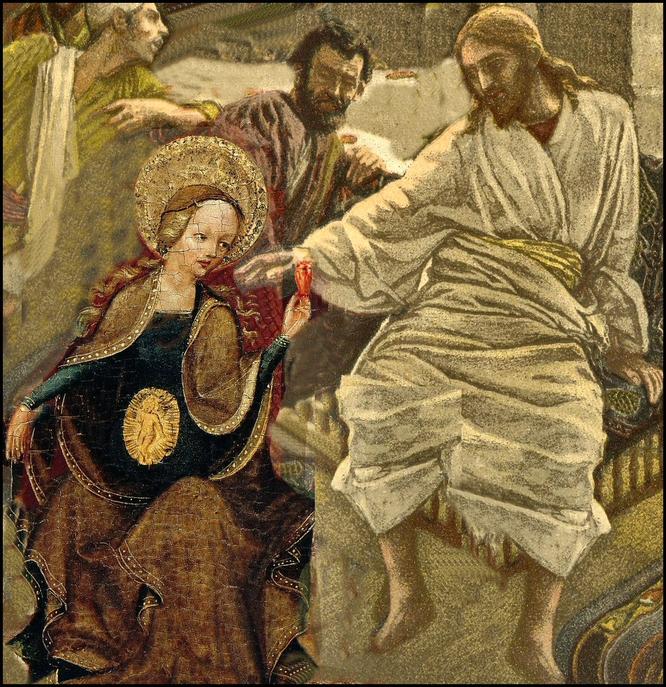
Mary Magdalene anoints Jesus (23-5)
Mary Magdalene, ignoring the criticism, stood and placed her hand upon her belly near his gaze. She said softly, “Behold the child whom the Lord has entrusted to us.”
Jesus kissed her belly and said, “Peace be upon you, little one—long expected after three years. What better use for the perfume than on this joyous day, the day of resurrection.”
Simon Magus said, “Amen,” and the rest echoed him.
This became a tangible emblem of kingship and the intertwining of earthly and divine purpose. It would be accounted for when Jesus spoke to Mary on the cross.
Zech. 9:9; Mk. 11:8–9, 15–17; 1 Kgs. 1:32–34; Mt. 21:12
The next day, Jesus rode a donkey from the Queen's house to Qumran, fulfilling Zechariah's prophecy: “Behold, your king comes to you, humble and riding on a colt.” Crowds spread cloaks and palm branches before him, crying, “Hosanna! Blessed is he who comes in the name of the Lord!”
Even from the accounts, I could picture the exhilaration swelling within him: the awareness of kingship, the heir he believed awaited him, and the authority rising naturally with his presence. Yet the texts hint that even as he humbled himself, the power he wielded—and the danger it drew—were inseparable. Exaltation, devotion, and ambition moved hand in hand, and the currents of consequence were already in motion.
Mt. 21:12; Mk. 11:15; Jn. 2:15; Zech. 11:4–17; Roland G. de Vaux
At the Temple walls, the records describe tables laden with scales, ledgers, and purses—the instruments by which wealth had become the measure of belonging. I could picture Jesus taking up a staff of Favor and striking across the tables; thirty silver coins struck stone, copper offerings tumbled, and the covenant was declared broken. Then, with a second staff of Union, he severed the bonds of brotherhood and privilege. Even the smallest coins, once intended for doves, were profaned—symbols that no human system could administer holiness.
From my reading, I believed he did not act out of anger, but frustration that the sacred space had been exposed to the corrupting influence of power and money. Even righteous fury could not escape the currents already shaping betrayal, danger, and judgment.
Jn. 12:10; Mt. 26:3–4
The consequence of his actions had already set in motion the next phase. I sometimes wondered whether, in quieter moments, he reflected upon the boldness of the donkey ride and the cleansing of the Temple. Whether regret touched him I cannot know, but those acts had become inseparable from everything that followed. Unknown to him, the sanctuary at Qumran, a place meant for renunciation, had not escaped the reach of forces being assembled against him.
The brief calm could not undo what had already begun. Even the purest refuge had been stripped of illusion. Pilate's gaze—and the machinery of Rome—had already fixed upon him, steady and unyielding, like a mechanism once engaged that could not be reversed.
Soon Jesus would gather the Twelve—the circle that had followed him through years of teaching and trial. Within that final Passover meal, the pattern would be revealed: devotion, ambition, and power intertwined. He had to believe that God was acting through him—that what approached was not merely fate, nor the will of Pilate, nor the corruption of Rome alone, but something ordained beyond them all.
Book VIII — Passion and Crucifixion
Irenaeus, Against Heresies 2.22; Eusebius, Ecclesiastical History 3.39 (Papias); Homer, Iliad 4.1; Gospel of Peter 16–19; Second Treatise of the Great Seth (NH VII)
Chapter 27: The Last Supper
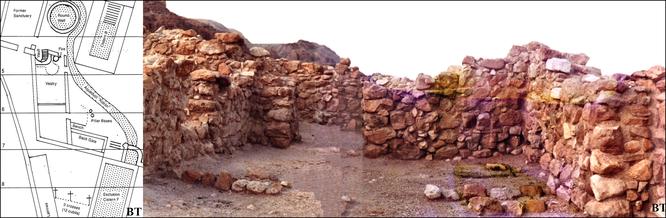
Qumran Vestry (composite photo upper third) (24-2)
Passover #3
"You know that after two days the Passover is coming,
and the Son of Man will be delivered up to be crucified." (Mt 26:1,2) Spring 33 AD
Lk. 22:8; Mk. 14:13a; Lk. 22:12; 3Q15 1:1–4
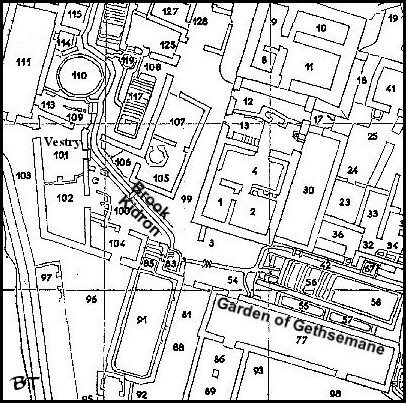
The secrecy of the man carrying the water jar, whom Peter and John Mark were instructed to meet, struck me as suspicious. He claimed that the head of the monastery had extended an invitation for Jesus and his disciples to use the vestry room for their Passover supper. Ordinarily, they were not permitted beyond the outer guest chamber for visitors, which the brethren informally called Gethsemane—not as a place, but as a likeness of the olive-press garden on the Mount of Olives in Jerusalem. In hindsight, it seemed to me all part of a quiet design: a covert scheme to hold Jesus at Qumran until Pilate could arrive secretly in the early hours of the morning.
It was Thursday evening, April 2, AD 33, when they were led beyond that boundary to a large upper chamber, already arranged and waiting. Access came by seven stone steps on the north side—a detail that struck me as more than incidental, echoing a description preserved in the Copper Scroll: “At the ruin that is in the Valley of Achor, under the steps that go up on the east, forty cubits: a chest of silver, seventeen talents.” Such language was never casual among the brethren. The room itself was lit by lamps, the air faint with olive oil and smoke, yet beneath that stillness lingered something else—a sense that even this place, so carefully prepared, had been marked out long in advance.
Acts 1:23–26; Mk. 10:37; Lk. 22:10–12, 14; Jn. 13:23; Mt. 20:20–21; Lk. 22:24–27; Jn. 21:20–22; Jn. 13:23
Already, there were many illustrations of the seating. Yet, being familiar with Roman arrangements—which the Jews often adapted by reclining on couches—I was able to produce my own diagram, not only of how the couches and table were arranged, but also, by observing their rank, actions, and words, to assign each of them their places:
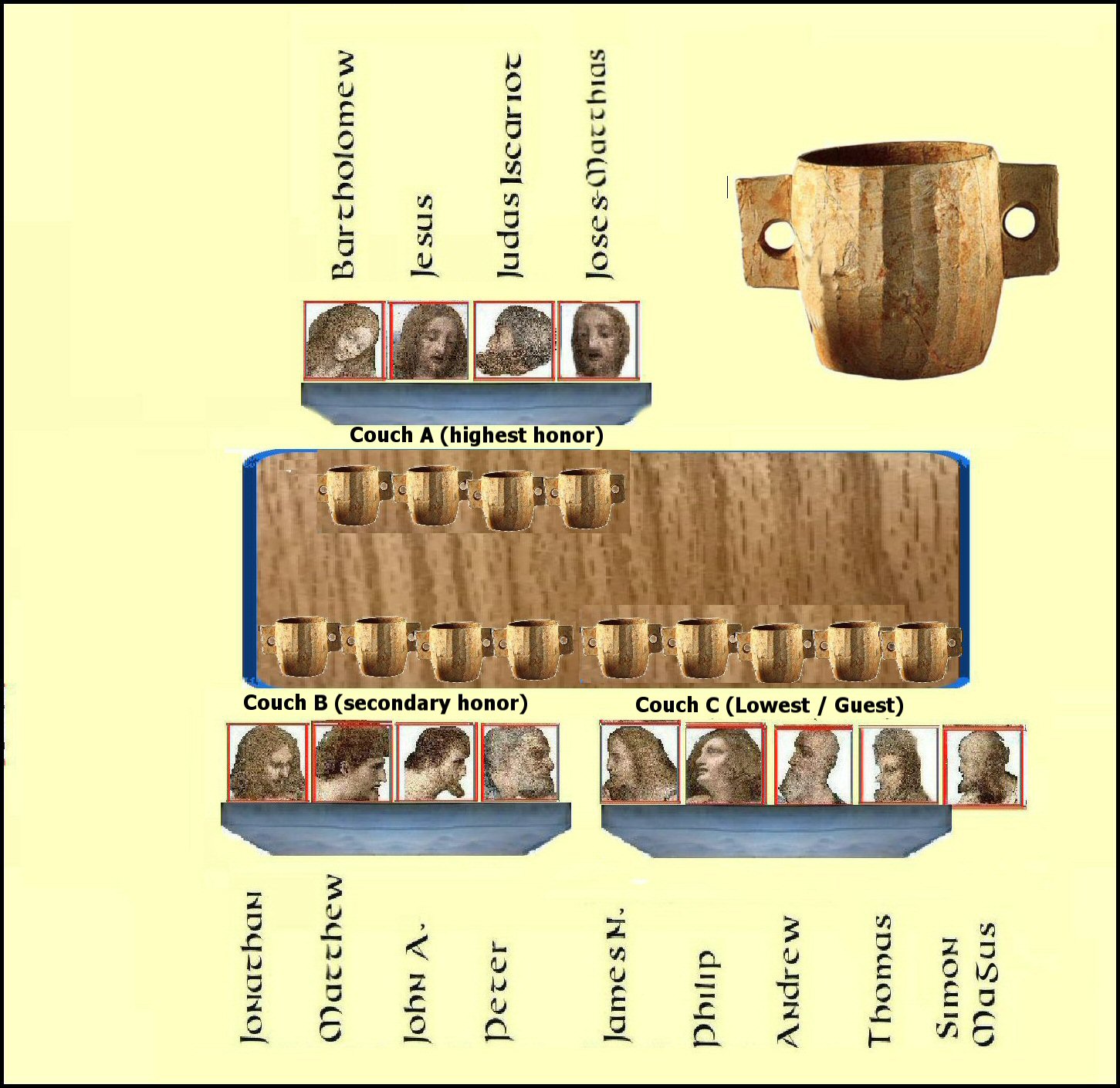
Last Supper (disciples reclining (da Vinci faces))
After the ritual cleansing, and once the sun had slipped below the horizon, they rose for the blessing and stood until the words were finished, the bread untouched and the cups still. Three couches were arranged around the long table—one at the head and two below—each wide enough for four, two reclining side by side. When the blessing concluded, Jesus assigned the places, and no one presumed to alter what he set.
He gestured first to Bartholomew, Judas Iscariot, and Joses to share his couch, nearest the light. Bartholomew—also called John Mark—served as proxy for Mary Magdalene in the male-only gatherings; reclining on Jesus' right with his left elbow supporting him, his head rested at Jesus' bosom, the position later remembered as that of the Beloved Disciple. Judas reclined opposite him in my place as my deputy, while Joses, Jesus' younger brother and heir, completed the couch.
Opposite Jesus was the couch of priestly authority. There reclined Jonathan Annas, Matthew his deputy, and James Niceta, who bore the stricter rule and oversight of the advanced discipline. James thus occupied the place to Jesus' right in authority, though not in glory, answering in part the request once made by his mother Helena. Peter lay at the outer end of that couch—present, close enough to hear, but without precedence, no longer placed to direct.
On the lower couch were Theudas, John Aquila, Philip, Thomas, and Simon, set farthest from the master and oriented outward. John Aquila, twin to James, was held to Jesus' left at a distance, his place answering the other half of Helena's petition without fully satisfying it. Aligned with the Gentile mission, he remained removed from the priestly order. Theudas anchored the group as elder kin; Philip's placement preserved the separation of disciplines; Thomas occupied the testing place opposite Simon. Andrew reclined beside Thomas, aligned with him, looking toward the eastern recruits, ready to guide and observe. Simon, having had his level reduced as “contaminated” like Lazarus, was relegated to the far end of the second couch next to Thomas, both as guest and as observer of the order.
The places of right and left were thus marked but withheld, and the order held as the evening moved toward its hour. Piecing together the order of the supper required more than the Gospel accounts. The brethren preserved fragments of the ritual, while the customs of Passover supplied what the evangelists assumed their readers already knew. Only when these witnesses were laid side by side did the four cups emerge in their proper sequence, each bearing the title by which they were known among the Jews. Only then could I assign each cup to its proper place, every movement measured and accounted for, the arrangement itself echoing the quiet design that governed the night.
Sunset (~6:30 PM)
Lk. 22:17
Before any food was taken, the first cup was poured. The krater was set near Jesus, and the goblet filled and handed to him as presider. He gave thanks over the day and the wine, sanctifying the feast. Jesus drank first, then directed that the cup be divided among them, passed down the right-hand side and returned along the left, each drinking in turn. The bread remained untouched. This cup marked the beginning of the feast, sealing the order he had just set.
Six loaves of bread, left from the earlier cleansing, were distributed down the right-hand side after being blessed by Jesus. Each of the six members divided their loaf in half and gave it to their counterparts on the left, as though offered directly by Jesus.
Early Nightfall (~7:00 PM)
Mk. 14:18; Mt. 26:21; Jn. 13:21
As the bread was prepared and the bitter portion approached, the second cup was poured but not yet consumed. This was the cup of proclamation, held while the meaning of the night was spoken.
Mt. 26:26, 21b; Mk. 14:18b; Lk. 22:21; Jn. 13:21
Jesus had begun the sacrament by declaring that the bread was symbolic of his body: “Take, eat; this is my body.” I observed that the word “beside-give” retained its literal sense of “to give across” or “hand over beside,” describing the ritual passing of the bread rather than an act of treachery. Only later would the term acquire its dominant association with betrayal; in that moment, I understood that Jesus did not yet know that Judas would turn against him.
Since fermented wine was used, to accommodate members like Judas who did not drink it, the deputies Joses and Matthew distributed a small bowl of holy water to each. The goblet of wine blessed by Jesus was passed down the right side and back up the left. Each member sipped and dipped a fragment of their half-loaf into the goblet. Those who did not drink fermented wine kissed the goblet and dipped a fragment in water instead.
Jn. 13:18
Since rumors suggested that he, Theudas, and Simon might be arrested, and that Pilate could already be on the move toward Qumran, Judas had attempted to convince Jesus to leave early. Thus he would check whether Pilate was coming from Jerusalem, but Jesus preferred to wait until all had dipped their fragments, so that he would not miss the sacred part. Judas had opposed him many times, yet until this moment, his loyalty had been impeccable—a devotion shaped by his Zealot convictions.
After Supper (~8:30–9:00 PM)
Lk. 22:20; 1 Cor. 11:25
Mk. 14:23–25
With the meal completed and the bread fully distributed, the third cup was poured, reserved for blessing. Jesus took the goblet and gave thanks: “This is my blood of the new testament, which is shed for many. Verily I say unto you, I will drink no more of the fruit of the vine, until that day that I drink it new in the kingdom of God.” They all drank in anticipation of the promised restoration of God's kingdom.
Late Evening (~9:30–10:00 PM)
Mk. 14:25; Mt. 26:30
The hymns were sung, but the final cup was not taken. The Passover remained deliberately unfinished, its completion deferred beyond the room, beyond the night, beyond the city itself.
Jn. 13:22–29; Mt. 26:25, 30
Jesus announced that one of them should leave. The disciples looked at one another, uncertain whom he meant. Since John Mark was seated closest, Peter beckoned him to ask. “Lord, who is it?” John Mark inquired.
Jesus answered, “It is he to whom I have given the dipping bowl.”
Judas replied, “Master, is it not me?”
Jesus said, “Thou hast said.”
Receiving the sop, Judas left abruptly. No one understood the full intent; some thought he had been sent for supplies or alms.
Jn. 14:22; Jn. 13:16; Lk. 22:24–26, 38; Jn. 21:20a–22a
With the formal ceremony concluded and the wine passed around, Judas' departure into the night left the circle unsettled. The sacred portion of the service had been quiet, almost automatic, while a restless tension lingered. Lanterns cast flickering shadows on the vestry walls; the smell of burning oil rose toward the darkening sky.
A change was coming.
Jesus sensed the tension and, with a faint smile, remarked that he had now been “glorified.” Using the Power–Glory–Kingdom law, he explained that the vacated seat of Judas on the eastern Power (Zadok) side had increased his Glory—his initiates—on the western side, thereby expanding his Kingdom (David).
Theudas moved up to fill Judas' seat (later, Judas—not Iscariot—was said to have claimed it). Naturally, this sparked a dispute among the others about precedence. Jesus' calm presence hovered above it all, patient yet sorrowful, seeing in their ambition the seeds of every kingdom's fall.
Lk. 22:24–26, 38
Then Jesus raised his hand for silence. In the hush that followed, he began to teach—not as a master rebuking his pupils, but as a servant revealing the true measure of greatness.
“The kings of the Gentiles lord it over them, and those who exercise authority over them call themselves enablers. But you are not to be like that. Instead, the greatest among you should be as the neophyte, and the one who rules—the one who serves.”
Peter, never one to linger in stillness, rose and said, “See, Lord, here are two swords.”
Jesus smiled faintly. “That is sufficient.”
I gathered that their meaning was not of iron or battle, but of spirit and service—the twin edges of the same divine blade. Peter would wield the sword of action, fierce and impetuous; John Mark the sword of witness, quiet yet enduring. Together they would guard what remained of the Faith once the world turned against us.
Jesus' eyes fixed on Peter.
“Simon, Simon, Satan has asked to sift all of you like wheat. But I have prayed for you, Simon, that your faith may not fail. And when you have turned back, strengthen your brothers.”
Peter interjected, “Lord, I am ready to go with you to prison and to death.”
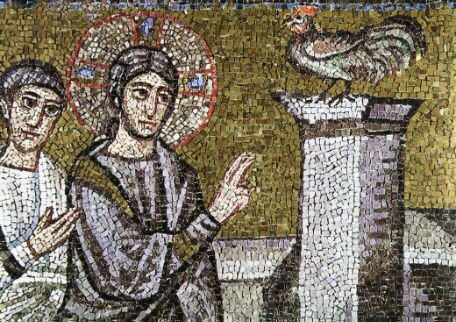
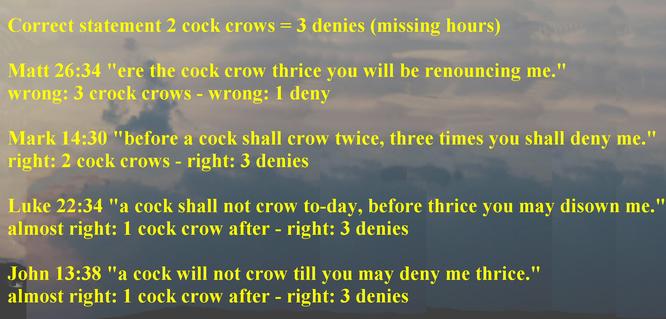
The Cock Crows (24-5)
But Jesus was not speaking of courage; he was speaking about clocks. Peter's role was to count the cock-crowing—the measurement of hours that by decree were to move the clocks forward three hours, now three hours slow according to solar time. The issue was not the change of day, but the precise timing. Peter's time would change at midnight, but Pharisee time would change at noon.
Thus Jesus met him with a sad, knowing smile.
“Before the cock crows, you will deny me three times.”
The others shifted uneasily, uncertain whether he spoke to Peter alone or to all of us. I understood then that the denial would come not from fear or betrayal, but from denied time itself—an examination of whether faith could endure the hours of darkness.
I could see Simon, ever calculating, already folding this subtle timing into the escape plan he was forming in his mind. Every tick of the night, every measured movement of guards and shadows, was being counted, weighed, and readied for action. I could see, even from my quiet corner, how the orchestration of this hour was as precise as the ritual itself—sacred, inevitable, and perilously close to the trap laid beyond these walls.
Chapter 28: The Garden of Gethsemane and the Arrest
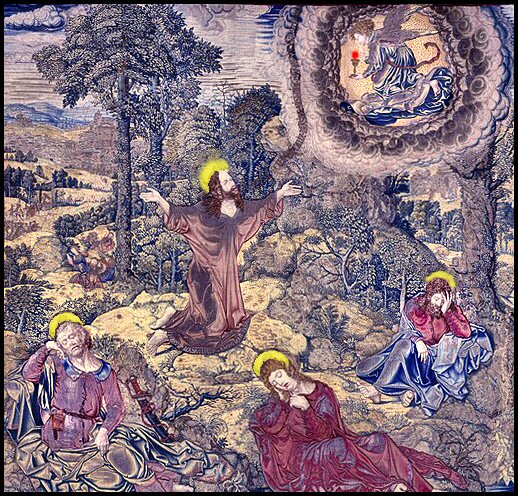
The Garden of Gethsemane (25-1)
Jn. 18:1; Mk. 14:32
At 10 PM, the service concluded. They rose together and left the vestry, its lamps flickering low, stepping carefully down the seven stone steps on the north side. The night air felt charged with expectation as they walked beside the aqueduct known as the brook Kedron. The full moon reflected silently on the moving water as it passed beneath the small bridge. The service and its long discussion had exhausted them, yet the order it imposed seemed to linger, as though the night itself now followed its design.
Jn. 18:1; Mk. 14:32
Jesus, Peter, James, John, and Simon crossed the brook and entered the Garden of Gethsemane to pray. With a name meaning “oil press,” it is usually identified with the celebrated Gethsemane outside Jerusalem. I believe the Qumran monastery possessed a cloister-like garden: an enclosed space centered upon an olive tree where members withdrew for prayer and meditation.
Judas had promised to meet them there with whatever news he could gather. The rest of the disciples bid them goodnight, except for Jonathan, who said he would visit his father—the elderly High Priest Ananus.
They sat and waited for Judas, unaware that another section of the monastery had already been cleared in preparation for a tribunal under Pilate. The stillness of the garden concealed a convergence already set in motion beyond their sight, as though the place itself had been prepared in advance for what was to occur.
Acts 15:22; Lev. 25:10; Mk. 14:51–52; Mt. 26:37–43
Judas did not return. Instead, Jonathan burst in, breathless, breaking the fragile quiet.
“Qumran will soon be surrounded by Roman soldiers,” he said. “Judas has betrayed us. He left the Supper early to inform Pilate that Jesus would be held while Pilate departed from Jerusalem with a cohort in the light of the full moon. Riding hard by moonlight, he would be here within three hours.”
Jesus' expression hardened, a shadow passing across his face.
“His scheme must include me.”
Jonathan continued.
“Theudas has already been arrested for the insurrection. But his capture has created a problem for Caiaphas. He knows Theudas' double life—that he is Nicodemus, a trusted official, and also Theudas, whom many still remember as Sadok, the war hero who fought beside Judas the Galilean.”
Jonathan explained that Caiaphas had drawn Pilate to Qumran with the promise of delivering both Theudas and Simon Magus—the two insurrectionists Rome most desired. Yet by holding the trial there, he had secured something more: control over the setting, the sequence, and the outcome.
Jonathan met his gaze.
“He will present your uncle Theudas as ‘Barabbas’—‘son of Sabbas’—just as your brother Jude is called Judas Barsabbas. He knows that Theudas carries two names: the public memory of Sadok, the war hero who fought beside Judas the Galilean, and the hidden identity of Nicodemus, the trusted official. Caiaphas will place the decision before Pilate, who alone holds the authority to condemn or release. He will invoke the language of release, borrowing from the Jubilee though it is Passover. In a single exchange, Theudas will be spared.”
His face lost its color. For a moment, the burden before him became visible. Then he mastered himself, and his resolve remained firm.
“He has a substitute,” Jonathan said quietly. “You—the King of the Jews.”
Caiaphas intended to revive every accusation that could be shaped into sedition. The protest over the Temple treasury, the preaching of John the Baptist, and the disturbance in the Temple courts would all be gathered into a single indictment. Theudas and Simon were to stand as insurrectionists before Pilate, while Jesus himself would become the substitute whose death would secure Theudas' release.
For a moment, the human instinct to withdraw flickered across Jesus' face. He fell to the ground and prayed, confronting not ritual but reality.
“Father, if it is possible, let this cup pass from me; nevertheless, not as I will, but as God wills.”
For one brief moment hope lingered—that Father Jonathan might yet persuade Ananus—but he released even that hope, surrendering himself entirely to the will of God.
Nearby, Peter, James, and John lay overcome with sleep—not rest, but a failure of vigilance at the very moment it was most required. Jesus remained awake while the others slept, bearing the burden alone. By then, only two paths remained before him: to flee and leave Theudas to his fate, or to remain and submit to what had already been set in motion.
Jesus had already taken the cup of redemption at the Supper. His role was clear. There was no turning back. Every choice, every path, had been set long before this hour. He knew what would come; yet in knowing, he still surrendered. His fate was sealed. Upon his shoulders rested the full measure of human greed, ambition, and power, and in the stillness of the garden he bore it willingly, every heartbeat measured, every step accepted before it was taken.
Mk. 15:33; Deut. 21:22–23
While the others waited in uncertainty, Simon later explained that he withdrew to a corner of the garden and began forming a three-part plan. If Rome intended to crucify them, then time itself, together with Jewish law, might yet become the means of preserving Jesus' life.
The first element depended upon the unusual relationship between the Essene and Pharisaic calendars during that Passover. Their three-hour divergence could be exploited to alter the apparent sequence of events, even to the point that Peter's three denials became markers within the plan itself.
The second depended upon Theudas' knowledge of medicinal compounds capable of producing the appearance of death while preserving life beneath it.
The third relied upon the command of Deuteronomy that a body not remain upon the cross overnight.
Time, concealment, and law—faith, hope, and love—each depended upon exact execution. Nothing in such a design could afford to fail.
Jn. 18:10
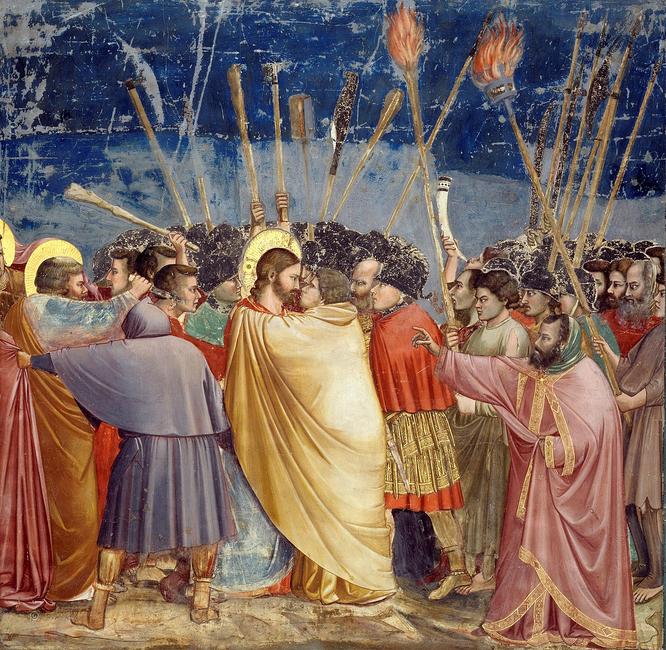
Betrayed by a kiss at Garden Gethsemane in Qumran (25-3)
Before the thought could settle, soldiers entered the garden. Judas stepped forward, his greeting performed with calculated precision, sealing his position even as it marked the betrayal.
Jesus' brother James, asserting again his claim to Davidic succession, challenged Peter's role as spokesman. Peter, entrusted with one of the two symbolic swords, responded as he always did—swiftly, decisively, and without regard for timing. He was seized at once.
In the confusion, Simon broke away but was quickly apprehended. To discredit him, it was said that he was the one who fled in a linen garment, abandoning even that in his escape. In such moments, accusation required no accuracy—only usefulness.
Jn. 18:10, 13, 15–16, 24; Lk. 22:62
Jesus was taken to the High Priest's courtyard for two preliminary hearings—first before Ananus, then before Caiaphas. Even Ananus, once inclined toward him, yielded to the prevailing design. Judgment no longer moved toward truth, but toward a predetermined end.
Still, there remained the faintest possibility that Pilate might refuse the exchange, for no capital charge could be sustained.
Peter, freed through Jonathan's intervention, was brought to Ananus' household but made to wait outside by the fire. There he remained, removed from the center of events at the very moment his presence might have mattered most.
What remained now was the trial. Though every step now seemed fixed, hope had not entirely disappeared. Until Pilate pronounced judgment, the possibility—however faint—remained that events might yet turn another way.
Chapter 29: The Trial at the Praetorium
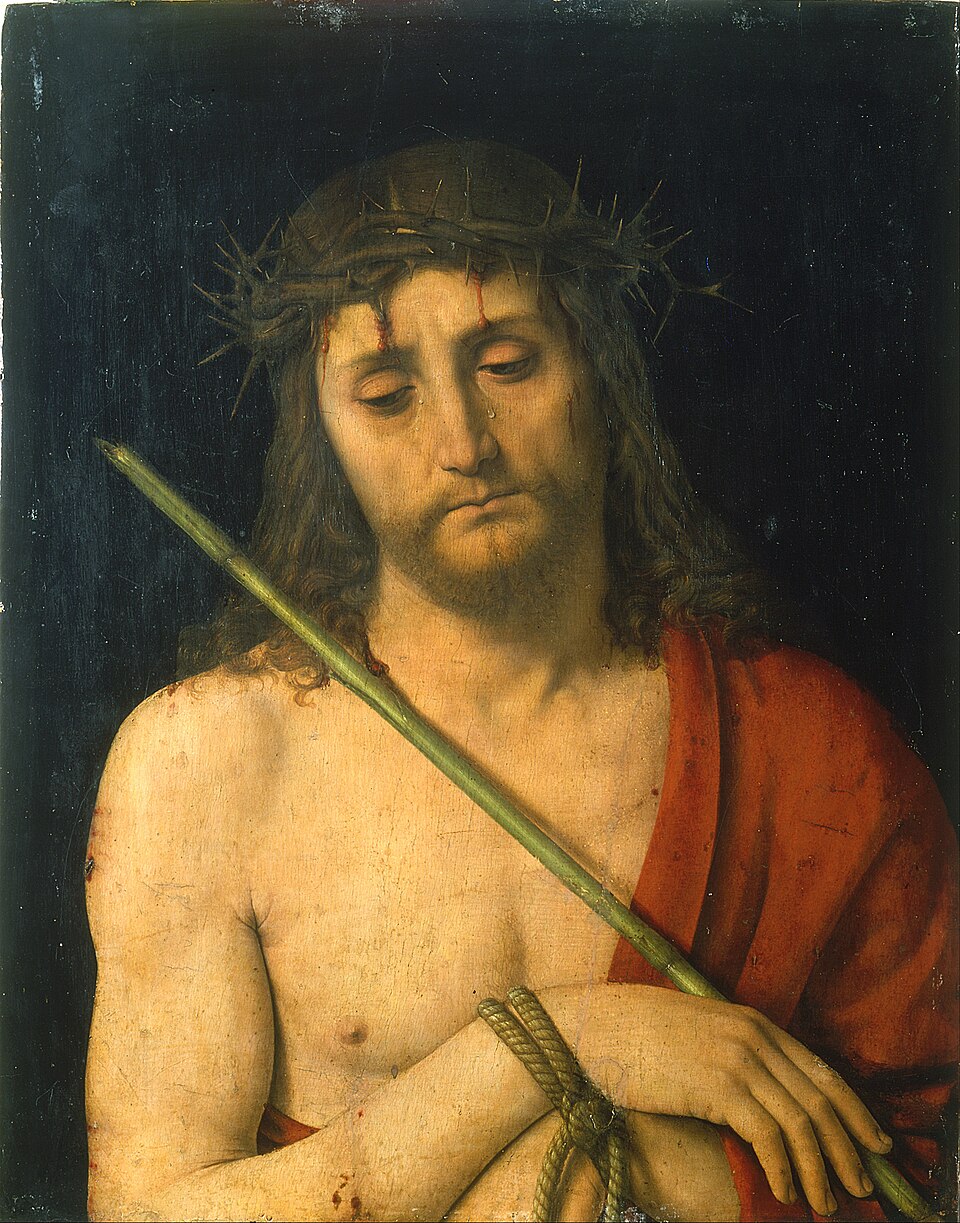
Jesus cloaked in red robe by Agrippa (25-6)
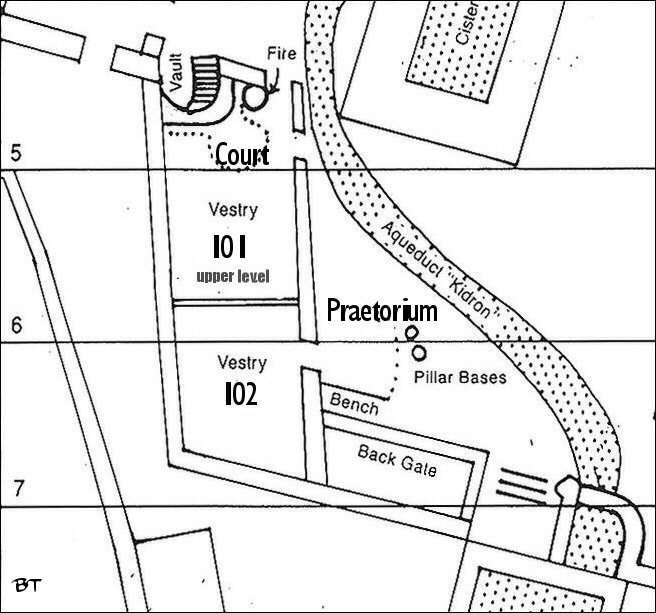
Praetorium in Qumran
Mt. 27:11, 15–18, 20–24, 26a; Jn. 18:33, 36–37; Lk. 23:5
At dawn, Pilate ascended the temporary platform of the praetorium and seated himself upon the judgment seat. Caiaphas remained below, vested in his priestly robes, while Theudas and Simon were brought in chains to stand before them. I could see the calculation behind the high priest's gaze, the quiet orchestration of fear and authority.
Caiaphas spoke first.
“These two men are guilty of insurrection.”
Witnesses were produced to recount Simon's and Theudas' part in the disturbances at Jerusalem. Pilate, impatient and eager to conclude the matter, raised his hand.
“The penalty for insurrection is crucifixion,” he said.
The crowd murmured in assent, not from conviction, but because they understood the ritual of power, the expected gestures of law.
As Pilate turned to leave, Caiaphas interrupted him.
“Wait, Excellency. This man called Theudas is also known as Barabbas. He fought in the earlier rising with Judas the Galilean. Since it is your custom to release one prisoner at the feast, let the people decide whether Barabbas should be released—and whether Jesus, who calls himself King of the Jews, should take his place.”
Jesus was then brought forward in chains. Pilate looked him over as though measuring whether this prisoner truly warranted Rome's attention.
“I have been informed,” he said, “that it is your custom that one prisoner be released to you at the feast.”
A low murmur passed through the crowd—recognition without protest. This was not the year of release, not the reckoning of debts, yet the practice was familiar enough to proceed without challenge. I observed the people's hesitation, the subtle weighing of loyalty against fear, devotion against safety.
Pilate turned to Jesus.
“Are you the King of the Jews?”
Jesus answered,
“Is that your own question, or did others tell you about me?”
Pilate replied,
“Am I a Jew? Your own people and the chief priests have handed you over to me. What have you done?”
Jesus said,
“My kingdom is not of this world. If it were, my servants would fight to prevent my arrest. But my kingdom is from another place.”
“So you are a king?”
Pilate pressed.
“You say that I am,” Jesus replied. “For this reason I was born, and for this I came into the world: to testify to the truth. Everyone who belongs to the truth listens to my voice.”
Satisfied that Jesus posed no immediate threat to Rome, Pilate turned again to the crowd.
“There is one already held for insurrection—Barabbas,” he said.
The name moved through the assembly with dull familiarity. Some had heard it whispered weeks earlier, before the arrest had been made quietly and without summons. No charge had yet been read, no sentence pronounced, yet none were required. I could see the recognition in faces, not of justice, but of a story already decided by fear.
“Or do you want me to release Jesus, who is called the King of the Jews?”
Pilate asked.
The crowd appeared to hesitate. Jesus was known to them—too well known. He had eaten with them, taught among them, prayed beside them. Barabbas, by contrast, already seemed a man removed from their midst, almost counted among the lost.
The chief priests and elders moved through the gathering, not shouting, only reminding.
“He stirs up the people,” they said. “He teaches throughout Judea, beginning in Galilee and continuing even here.”
They recalled the overturned tables, the uproar in the courts, the palms still remembered as debris rather than praise. I could feel the calculation in their silence: better one already taken than one who continued to provoke Rome.
Pilate asked again,
“Which of the two do you want me to release?”
This time the answer came at once.
“Barabbas.”
Pilate looked back toward Jesus.
“Then what shall I do with the one you call King of the Jews?”
The reply quickly followed.
“Crucify him.”
Seeing the uproar growing, Pilate said,
“I am innocent of this man's blood.”
He spotted a bowl of water nearby, reached for it, and washed his hands before the crowd, letting the water run over them as if to remove all responsibility. Then he ordered Barabbas released.
The man called Barabbas was led away without ceremony. He had not been tried, nor acquitted. It seemed to me that the fiction of his condemnation had served its purpose. One life slipped back into obscurity, and another was placed upon the path Rome reserved for kings.
Lk. 23:6–7, 8–12; Mk. 15:17–18; Jn. 19:2–3; Mt. 27:29; Josephus, Antiquities 18.6.2

Although Pilate had decided their fate, there was still a jurisdictional issue. Technically, Herod Antipas held authority over Galilee and the surrounding lands, including the Essene territory near the Dead Sea.
“Is Antipas present?”
he questioned.
Agrippa, residing at Antipas's court, saw his chance to fulfill his dream of kingship and stepped forward.
“I am the grandson of Herod and currently his official. I can act in his name.”
Pilate was relieved—he could pass the guilt.
Looking to Jesus as if greeting a long-lost friend, Agrippa said,
“I have long wished to see you perform a miracle. I have a stye in my eye—can you heal it?”
Jesus did not answer. Agrippa removed his purple cloak and draped it over Jesus' shoulders. In the shuffle, a Sadducee priest's crown had fallen. Agrippa seized it and pressed the thorned crown into Jesus' head, and blood dripped down his face.
“Hail, King of the Jews!”
Agrippa cried. The soldiers and bystanders joined in the mockery. Still Jesus remained silent, so Agrippa struck him with a rod. Pilate was so amused by this that he and Agrippa were reconciled.
Iron bound his wrists, but the name Agrippa cut far more deeply. He could see his father, Marcus Agrippa, standing there, sword drawn, refusing the disgrace that now clung to him. Herod Agrippa was already a man forged in loss, his father Aristobulus executed by Herod the Great, ambition carved into his bones—and Simon knew, if he survived, he would see to it that this venomous hunger destroyed him.
Mt. 27:3–5
Judas, overcome with remorse at the reality of his betrayal, ran to Caiaphas.
“I return my appointment to the Council of Thirty, for I have sinned—the thirty pieces of silver I now throw down at your feet. I have betrayed innocent blood.”
Caiaphas leaned close and whispered to Pilate.
“They say he was deputy to Simon Magus, the other criminal condemned to die.”
Pilate answered with cold contempt.
“You Jews are obsessed with threes. I will gladly hang him as well.”
I noted Judas' shadowed gait, the tremor in his hand, the hesitation that betrayed conscience struggling against habit. The shadow of Judas' fate lingered, caught between greed, betrayal, and conscience.
Exod. 12:7, 11, 13; 11Q19
The Passover ritual had begun. It was Friday, Nisan 14 (April 3), the day appointed for the slaughter of the lambs. Their blood would soon mark the lintels of the holy ones.
By law, the place of refuse was set at a fixed distance beyond the city, outside the bounds of holiness, where impurity was carried away and not returned. It was to be marked and known, so that no one might enter it unknowingly, for nothing unclean might approach the sanctuary. Beyond the prescribed paces—roughly a thousand cubits, nearly half a kilometer—the Essenes marked that place with the sign of death itself—the skull. South of Qumran, across the broad plateau that stretched beyond the city's holy precincts, the ground held firm beneath our feet even as it sloped gently toward the wadi.
Jesus, along with two other men—whom I shall reveal as Simon and Judas—was led from the praetorium to that ground, legally defined as unclean, where all that was cast out of Jerusalem was meant to vanish.
The sun was rising. It was the day the lambs were slain. But now the blood of three condemned men would mark the lintels of their crosses. I watched them walk, knowing that fate and ritual were intertwined, and wondered whether Jesus, the Lamb of God, would bring to pass the resurrection foretold by Enoch, when the righteous would rise to inherit the Kingdom.
Chapter 30: The Crucifixion
Friday, April 3, 33 AD (Nissan 14)
Tac15.44; DSS – Pesher on Nahum 4Q169; GB 217; NHC VII.2
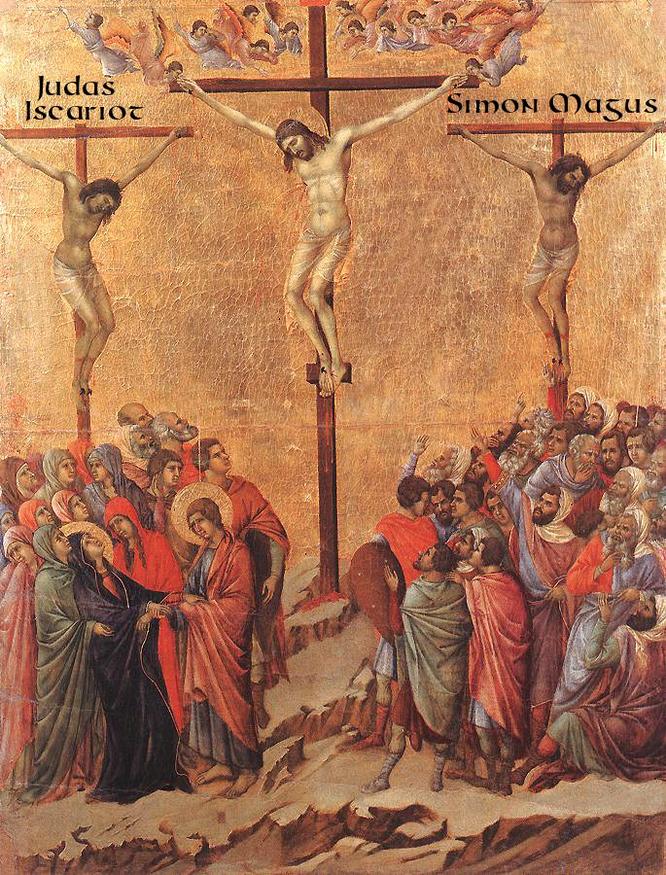 (26-1)
When I turned to the Crucifixion—the event that has defined Christianity for generations—I expected the records to speak with one voice. Instead, I found only a half-formed shadow, its outlines blurred and often contradictory. Across the texts, gaps yawn where certainty should be. The Gospels agree on the event itself, yet their details frequently resist easy reconciliation. Tracing the threads of history becomes an exercise in patience, careful sifting, and suspicion. Every account hints at what happened, yet none fully declares it.
Some denied the crucifixion, though Rome would eventually acknowledge it:
“Christus, the founder of the name, had undergone the death penalty in the reign of Tiberius, by sentence of the procurator Pontius Pilatus.”
Even among the Jewish records, the Way was denounced. A Qumran scribe called its followers “seekers of smooth things,” suggesting that, according to his interpretation of prophecy, the death of Jesus was deserved. The text, known as the Pesher on Nahum, is preserved here. Though I reject its premise, I believe the “Young Lion of Wrath” is best understood as Pontius Pilate, while the “great men” represent the force of Rome and the “men of his Council” the Sanhedrin:
“The lion brings prey for his cubs, and strangles prey for his lionesses, and he fills his cave with prey, and his den with torn prey. And this Young Lion of Wrath strikes the Simple Ones of Ephraim by means of his great men and the men of his Council. And he executes revenge on the seekers of smooth things and hangs men alive from a tree, to perform an abomination which was not done in Israel since earlier times. He declares, ‘Behold I am against you,’ says the Lord of Hosts.”
Even the identities of those on the crosses remain disputed. Who carried Jesus' cross? Who were the two men crucified beside him? The canonical accounts hint, omit, and occasionally diverge. It is almost as though the evangelists expected their readers to compare each testimony, assembling scattered fragments into a coherent whole.
Evidence also appears in unexpected places. The Gospel of Barnabas preserves a tradition that Judas was reserved for the cross. Elsewhere, the Nag Hammadi text The Second Treatise of the Great Seth presents Simon as the one crucified instead of Jesus. Whether these traditions preserve history, memory, or theological interpretation, they raise questions the canonical texts leave unanswered. As the narrative unfolds, the exchanges between the condemned men offer further clues to their identities.
The carrying of the crosses became the key to the entire scene. As I compared Matthew, Mark, and Luke, I quickly concluded that the condemned could not have carried an entire cross. The weight would have been prohibitive; what they bore must have been the crosspiece alone. John leaves no doubt that Jesus carried his own crosspiece. The other three Gospels identify a Simon of Cyrene who was impressed into carrying a crosspiece, with Luke adding that he followed behind Jesus. If Jesus bore his own crosspiece, there is no reason to suppose Simon’s was originally intended for him.
Mark, however, rarely wastes a detail. Just as in the Secret Gospel of Mark, he often preserves clues meant to be recognized only by those with understanding. Thus he identifies Simon by what amounts to a riddle, calling him “the father of Alexander and Rufus.” Only by recognizing these names as ciphers for the disciples Theudas and Thomas does Simon’s identity become clear. By this point in my account, you already know why.
| (8:15AM) Carrying the Cross (Simon Magus is carrying a cross) | ||||
|---|---|---|---|---|
| Jn 19:16-17 | Mt 27:32-33 | Mk 15:21-22 | Lk 23:26,33 | |
|
Jesus is bearing his cross: Then Pilate handed Jesus over to be crucified, and the soldiers took him away. Carrying his own cross, He went out to The Place of the Skull, which in Hebrew is called Golgotha. | Jesus or Simon is bearing the cross And coming forth, they found a man, a * Cyrenian, by name Simon* him they impressed that he might bear the cross of him; and having come to a place called Golgotha, that is called Place of a Skull," | Jesus or Simon is bearing the cross And they impress a certain one passing by *Simon, a Cyrenian*, coming from the field, the *father of Alexander and Rufus*, that he may bear the cross of him, they bring him to the place Golgotha, which is, being interpreted, 'Place of a skull'; | Simon Magus is bearing cross behind Jesus: And as they led him away, having taken hold on *Simon, a certain Cyrenian*. coming from the field, they put on him the cross, to bear it behind Jesus ... and when they came to the place that is called Skull, | |
| This is purposely obscure because the writers want to hide the fact that Simon is also on the cross. Simon from Cyrene is the father (superior) of Theudas-Thaddeus-Barabbas from the (Alexandrian) Therapeuts and Rufus is clearly Thomas the Twin with his red hair (Rufus) | ||||
Mt 27:32-33; Mk 15:21-22,27-28; Lk 23:26,33; Jn 19:16-18
The soldiers drove the three men forward. The path led south from the praetorium to the place beyond the skull-shaped stone, the refuse pit known as the Salt. Three upright posts already stood in place, each awaiting its appointed bearer.
The weight of the crosspieces pressed into their shoulders. Leaving behind the sacred precincts of Qumran, they entered the defiled ground surrounding the Place of the Skull. Families drawn by Passover curiosity lined the route. They held their breath as murmurs rose, fell, and drifted across the stones:
“They say this Jesus was exchanged for Barabbas—Theudas, leader of the Therapeuts of Alexandria.”
“Isn’t that the next man, Simon Magus, who took the place of John the Baptist?”
“Yes, the man from Cyrene—the Standing One.”
“He befriended Thomas, the deposed Herod, the twin—red-haired like Esau, who lost his birthright to Jacob.”
“Remarkably, they bear the weight without faltering.”
The murmurs ceased as the soldiers halted the procession. They forced the condemned to the ground, the ropes biting into their wrists. Dust, sweat, and blood mingled with the defiled earth, which received them without pity. The crosspieces were laid beside the prepared posts as the executioners readied the spikes. Their wrists remained bound as they waited for the first blow.
The three condemned were positioned beneath their appointed uprights. Simon lay in the center, the place reserved by Roman judgment for the chief offender, while Jesus and Judas occupied the crosses to his right and left.
Mt 27:34; Psalm 22:1–2
With the soldier occupied with their tasks, Theudas—skilled in Egyptian medicines—offered Jesus vinegar mingled with gall to drink; but when he had tasted it, he would not drink.
Instead he offered him a potent analgesic to dull the pain, as he would for the others, saying, “Dear nephew, I will forever be in your debt for graciously taking my place.” As he administered it to Jesus, he said softly, “It was not in my control, yet I would have taken your place willingly. You have been my father since Joseph’s death.”
Jesus answered quietly, “I will take the gall at the ninth hour, after the time change—as planned—while reciting Psalm 22. It is fitting.”
And he began to sing: “My God, my God, why have you forsaken me? Why are you so far from saving me, so far from my cries of anguish? My God, I cry out by day, but you do not answer; by night, and find no rest.”
Mt 27:38
 (26-4)
 Pilate and Herod Agrippa sat upon cushioned chairs overlooking the place of execution above the Place of the Skull. Slaves stood beside them, stirring the warm morning air with large fans.
Before the soldiers raised the crosspieces, a deacon from the household of Caiaphas hurried forward and bowed before the governor.
“Most excellent Prefect, our High Priest asks that you correct the order of the condemned. Your soldiers have placed Simon upon the center cross. He is merely a criminal. Jesus has blasphemed against the God of Israel and proclaimed himself the King of the Jews. He should occupy the center.”
Pilate regarded him with weary contempt.
“Your God does not concern me. Rome judges rebels, not blasphemers.”
The deacon remained silent.
After a moment Pilate smiled.
“Yet if you insist he is your king, then let him have the place of a king.”
He turned toward the centurion.
“Move Jesus to the center. Place above him the inscription: Jesus of Nazareth, King of the Jews. Let all Jerusalem see how the Jews honor their king.”
The deacon opened his mouth to object but thought better of it. Bowing once more, he withdrew.
The soldiers fastened the inscription to the center upright and dragged Jesus beneath it. Simon was moved to the cross on the right, while Judas remained at the one on the left.
Then came the moment. The spikes were driven through the centers of our wrists. Agony burst through every nerve, and despite our resolve, cries escaped our lips. The crosspieces were hoisted onto the waiting uprights and secured in place. Chains were fastened around our ankles to keep our bodies from collapsing too quickly beneath their own weight.
NHC VII.2
What followed surpassed every image I had ever formed of the Crucifixion. Even now, as I set these events into words, I feel a sorrow that wounds my soul.
The rearrangement of the crosses may also explain why later traditions preserve such different memories of the event. An execution altered in its final moments could easily leave eyewitnesses remembering different positions and emphasizing different figures. Pilate intended only to mock the nation by placing Jesus beneath the title “King of the Jews.” Yet his decision may have become the very source of later confusion.
Read in that light, the statement in The Second Treatise of the Great Seth that Simon was crucified no longer appears entirely inexplicable. Although the work is unmistakably Gnostic in its theology, it may preserve a distant memory of Simon's original place in the execution before Pilate reordered the crosses. Whether that memory is historical or only interpretive cannot now be proved, but the possibility deserves consideration.
I could not escape the irony. Pilate believed he was ridiculing both Jesus and the nation that had rejected him. Yet by moving Jesus to the center cross, he unwittingly gave him the place of greatest prominence. What Rome intended as mockery may well have become an instrument of God.
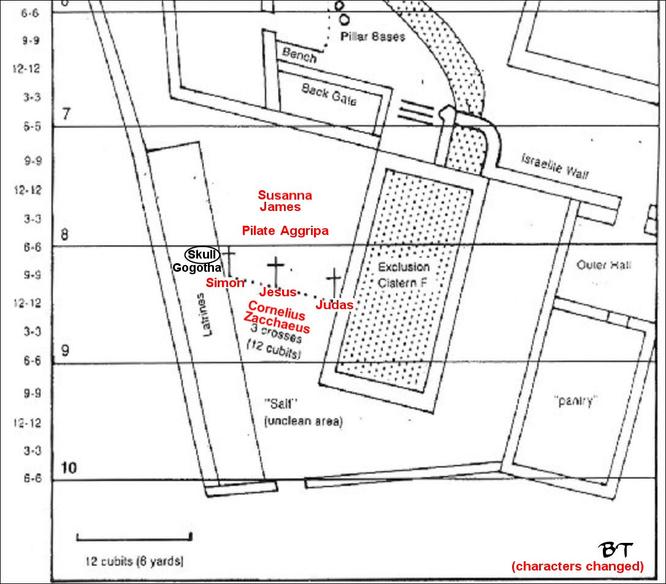
Soon darkness itself would reveal the measure of faith—three hours donated from the sun to the Son, hope distilled from poison, and love made manifest in his resurrection.
Chapter 31: The Hours of Darkness
DSS CD-A XIX; 1QH 5:23–25 and 4QpNahum 1:2–3
A phrase came to mind, rising unbidden from the hymns:
“You have placed the mystery of light within darkness, that the sons of truth might know the path by its shadow. In silence You work wonders unseen.”
The words of the Hodayot had spoken of light concealed, of mysteries known only by their shadow. But this—this was no longer concealed.
The shadow itself had become the sign.
And I stood there, trembling, beginning to understand that what we had called darkness was not the absence of God—but the place where He had chosen to be revealed.
More than that, it was the very means through which deliverance would come.
I once thought that imagining and reliving the excruciating pain that Jesus felt would prove my Faith. Every spike, every rope, every weight was designed to crush body and spirit—the Romans made it unbearable. Yet beyond mere suffering, Simon had crafted another kind of Faith—not a magician’s trick of survival, but something subtle and exact.
Faith bends the hours themselves, shortening the time upon the cross.
Hope flows through the gall mixture, steadying the body at the edge of agony.
And Love waits, patient and precise, ready to act when the law demands—transforming what seemed an ending into a doorway.
Two others had been crucified alongside Jesus, one on his right and one on his left. Those who passed by hurled insults at him, shaking their heads:
“You who are going to destroy the temple and build it in three days, save yourself! Come down from the cross, if you are the Son of God!” (3rd hour — 9 AM)
The chief priests, teachers of the law, and elders mocked him in the same way:
“He saved others, but he cannot save himself! He is the king of Israel—let him come down now from the cross, and we will believe. He trusts in God—let God rescue him if He will, for he said, ‘I am the Son of God.’”
It seemed as if even those condemned beside him had turned against him. Yet through it all, he endured. He set his sign among the violent, and they stretched out hands of deceit. But the one called righteous endured their mockery, for the hour of revelation was near, and his wisdom would not perish with him.
Pilate uncorked a small vial of perfume and held it beneath his nose.
“What a stench these Essenes choose to live in.”
Herod Agrippa gave a short laugh.
“They call it purity. The place serves as their latrine.”
Pilate glanced toward the crosses, expression unmoved.
“And yet they speak of holiness.”
No one answered. The three men remained in strained silence, the gall mixture dulling the edge of pain, though blood still traced its slow descent.
Pilate’s brow tightened.
“Why do they not cry out?”
Agrippa shrugged lightly.
“Shock. It will pass. The body remembers its suffering.”
An hour passed. (10 AM: 4th hour)
Pilate shifted, already weary of the spectacle.
“I was told this one worked wonders. I see only a man—and a failing one.”
Agrippa’s expression barely changed.
“Expectation is often the greater illusion.”
Pilate exhaled, glancing toward the horizon.
“I have seen enough. Crucifixion is slow.”
He paused.
“They say your Dead Sea resists even drowning.”
Agrippa inclined his head.
“So dense with salt that nothing lives within it.”
Pilate’s expression sharpened slightly.
“Then perhaps it will prove more interesting than this.”
Agrippa allowed himself a faint smile.
“Shall we see if it will bear us up as well as their stories claim?”
Pilate sealed the vial.
“Let us go.”
They departed with a small escort, leaving the condemned to the slow work of death.
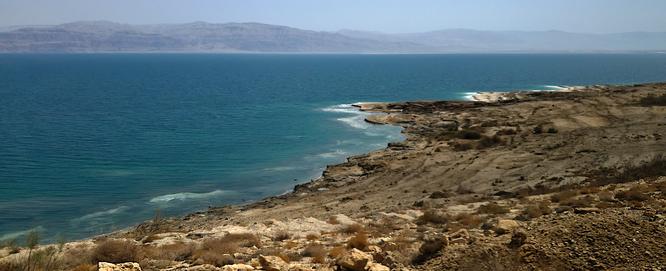 (26-5)
The Eighth Hour (~2 PM : 8th hour) — Criminals Dialogue
Lk 23:39–43
With Pilate gone, the dulling effect began to fade. The three men shifted, breath tightening as pain returned.
Judas Iscariot—now counted among the condemned—turned his voice against Jesus: “If you are the Christ, save yourself—and us.”
Simon Magus—the other condemned man—rebuked him: “Do you not fear God, seeing you share the same sentence? We receive the due reward of our deeds—but this man has done nothing wrong.”
Then Simon turned his head toward Jesus:
“Remember me, when you come into your kingdom.”
Jesus answered him:
“Truly I say to you, today you shall be with me in paradise.”
Simon added, more quietly:
“And you, Judas—the fire of Gehenna awaits you.”
For Jesus and Simon, “paradise” was a code word—the burial caves at the far end of the esplanade. The thought of reaching them alive, if the plan held, steadied them against the rising pain.
Susanna Talks to James (2:15 PM : 8th hour)
James' cousin Susanna approached quietly.
“James, have you no remorse for what has been set in motion against your own brother?”
His voice was low, strained.
“I regret it more than you know. I never believed it would come to this. You must be relieved that your father, Theudas, was spared.”
She leaned closer.
“Relief is not enough. Can you be trusted to save him now?”
James met her gaze.
“Upon my mother’s life—I will not fail.”
The name preserved in later accounts would be Joseph of Arimathea, yet the man standing before Susanna was James, the brother of Jesus. He alone possessed both the authority and the duty to claim the body before sundown.
“Behold the Son Within You” (2:30 PM : 8th hour)
Jn 19:26–27
Below the cross, Mary Magdalene and John Mark stood watching.
Jesus stirred. His eyes opened—dim at first, then steady.
Seeing the mother, and the disciple whom he loved, he spoke with effort:
“Woman—behold your son.”
John Mark stepped forward, receiving her into his care. The women wept—Mary, Helena, Magdalene—but Susanna moved among them, drawing their veils close.
“This is not the time,” she said firmly. “Everything is prepared. You must remain steady. He depends on it.”
A shadow moved swiftly across the desert floor—a prelude to the darkness gathering overhead.
Dead Sea Return (3 PM : 9th hour)
Pilate and Agrippa returned, their escort trailing behind them, garments still marked by salt.
Pilate shook his head slightly. “A strange sea. It resists even the weight of a man.”
Agrippa replied evenly, “Not all things yield as expected.”
They resumed their place, the crucifixions still unfinished.
Faith — (3rd–9th Hour : 9 AM–3 PM) King of the Jews
Mk 15:25; Jn 19:14
“And it was the third hour (9 AM), and they crucified him” (Mk 15:25); and about the sixth hour (12 PM), Pilate said to the Jews, “Behold your king!” (Jn 19:14).
The hours themselves seemed to yield, as though even time could not remain untouched by what was unfolding.
Darkness and Time-Bending
Mt 27:45; Mk 15:33; Lk 23:44–45; Gospel of Peter 22
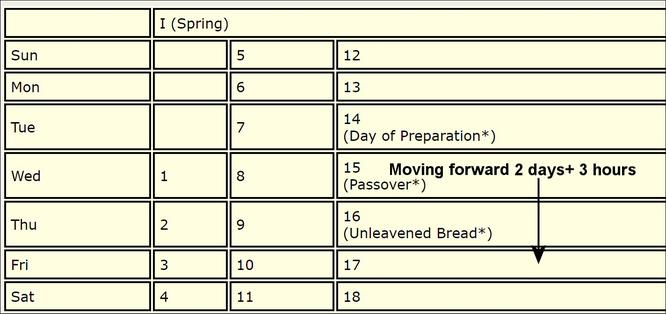
From the sixth to the ninth hour, darkness spread across the land. Those who kept the hours watched in confusion, for time itself seemed to falter. The darkness was illusion—not the absence of light, but the concealment of what was taking place.
Hope — Requesting the Gall Mixture (~4 PM : 10th hour)
Mk 15:39
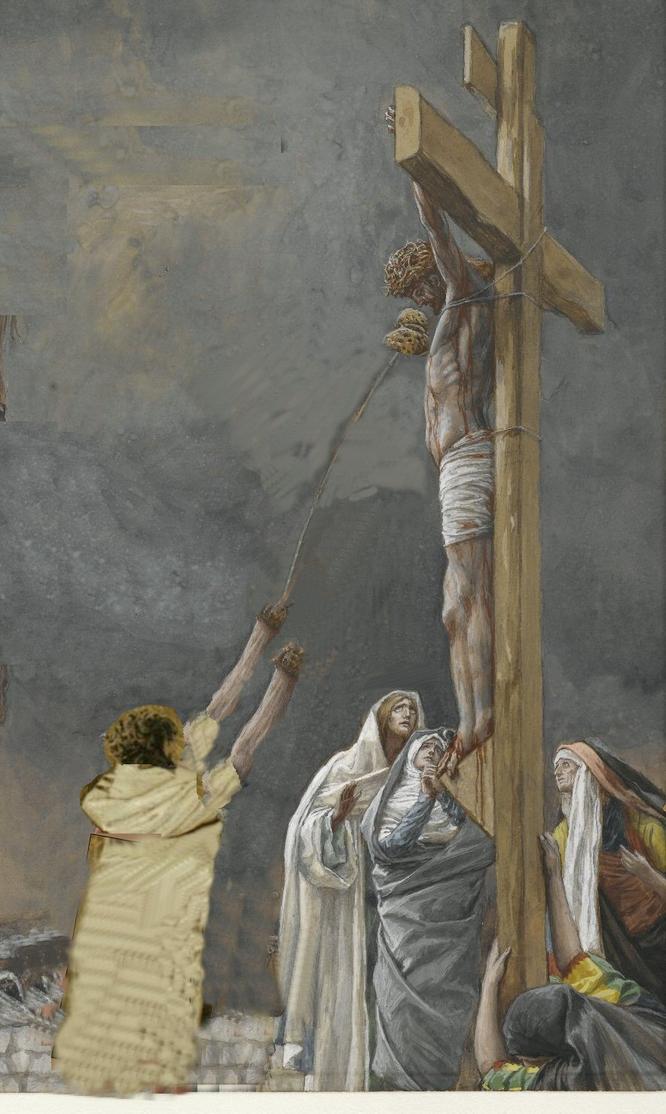
"I thirst"(26-6)
Seeing that Pilate had returned, Jesus gave the agreed signal.
“My God, my God, why have You forsaken me? … I thirst.”
Zacchaeus lifted a hyssop stalk, dipping the sponge into the vessel, and raised it to his lips.
Moments passed. Jesus’ body slackened. His head fell forward. Breath faded to stillness.
The women cried out.
Pilate rose abruptly. “How is this possible? He cannot be dead already. Centurion—see to it.”
Cornelius stepped forward. His movements were measured, deliberate. His gaze assessed the body—chest, throat, stillness.
He placed a hand briefly against the ribcage. Waited.
Nothing.
He turned slightly. “The body presents as dead.”
Pilate’s voice sharpened. “Presents?”
Cornelius met his gaze. “Verification will be made.”
Taking the small inspection lance that had been fastened beside the hyssop staff, he drove it beneath the ribs.
Blood and water flowed.
He observed without reaction, then withdrew the instrument.
“It is sufficient.”
A pause.
“This man is dead. I attest it.”
Pilate studied him, then nodded. “See that it is recorded.”
“It will be done.”
Love — Cannot Remain Past Sundown (~5 PM : 11th hour)
Dt 21:22–23
Pilate sat again, weariness overtaking interest.
James approached.
“Prefect,” James said, “as his brother, I request the body for burial.”
Pilate dismissed him with a glance, but James pressed the law: the hanged must not remain past sundown.
Pilate hesitated, then relented. “Take him, then. But see the others finished.”
Orders were given to break the legs of the remaining condemned if they yet lived. The command moved quickly toward the other crosses.
Rising, Pilate turned to Agrippa.
“The Dead Sea proved livelier than this.”
He looked once more toward the crosses. “Perhaps I still have time to reach the palace before nightfall.”
And with that, he departed.
The race had begun.
Notes for editors:
|
(12 noon (6th hour/9th hour) Darkness (Pharisee time moves 3 hrs to 3 pm (9th hour/9th hour) |
|||
|---|---|---|---|
|
Mt 27:45
And from the sixth hour darkness came over all the land unto the ninth hour, |
Mk 15:33
And the sixth hour having come, darkness came over the whole land till the ninth hour, |
Lk 23:44,45
And it was, as it were, the sixth hour, and darkness came over all the land till the ninth hour, and the sun was darkened, and the veil of the sanctuary was rent in the midst, |
GP 15a
And it was noon, and darkness came over all Judaea; GP 18 And many went about with lamps, supposing that it was night, and fell down GP 22 Then the sun shone, and it was found the ninth hour. |
| The Hours of Darkness — Chronology Table | |||
|---|---|---|---|
| Event | Modern | Time Jewish Hour | Notes / Commentary |
| Crucifixion begins | 9:00 AM | 3rd hour | Mk 15:25 – Jesus, two criminals crucified |
| Mockery by passersby & chief priests |
9:00–10:00 AM | 3rd–4th hour | Insults hurled, criminals reproach themselves |
| Pilate uncorks perfume, checks for screams |
10:00 AM | 4th hour | Drugs dull pain; soldiers and crucified men remain silent |
| Pilate grows bored; leaves with Agrippa |
11:00 AM | 5th hour | Pilate jokes about Jesus walking off cross; ride to Dead Sea begins |
| Criminals converse (Judas & Simon Magus) | 2:00 PM | 8th hour | Drugs wear off; discussion about "paradise" (burial caves) |
| Susanna instructs James | 2:15 PM | 8th hour | Plans for poison and feigned death outlined |
| "Behold the son within you" | 2:30 PM | 8th hour | Jesus briefly awakens, addresses Magdalene & John Mark |
| Dead Sea return (Pilate & Agrippa) | 3:00 PM | 9th hour | Soldiers fail walking on water; Pilate misjudges time |
| Faith / Darkness observed | 9:00 AM–3:00 PM | 3rd–9th hour | Time manipulated, darkness interpreted by Essenes |
| Signal & poison administered | 4:05 PM | 10th hour | Jesus appears dead; Zacchaeus delivers poison via hyssop |
| Pilate confronted by James | 5:00 PM | 11th hour | Dusk approaches; burial law invoked; race to save Jesus begins |
| Notes for editors: | |||
| The chapter title "The Hours of Darkness" refers thematically to the manipulated time period from crucifixion to the apparent death of Jesus. | |||
| Modern time aligns with Jewish hours: 6:00 AM = 1st hour; 9:00 AM = 3rd hour; 12:00 PM = 6th hour; 3:00 PM = 9th hour. | |||
| Pilate's absence allows all interactions between criminals, Susanna, James, and the women to occur without contradiction. | |||
| Each hour marker now uses a colon format: (2:00 PM : 8th hour) instead of a dash. | |||
| The chronological sequence ensures no overlap or impossible timing; the poison signal and dusk constraints are historically and narratively consistent. | |||
| The Four Marys at the Cross | |||||
|---|---|---|---|---|---|
| Mother Mary | Mary Magdalene | Helena my sister | Susanna with Magdalene (Lk 8.3) | ||
| Matt 27:56 | Mary the mother of James and of Joses(1) | Mary the Magdalene | the mother of the sons of Zebedee(3) | ||
| Mk 15:40 | Mary of James (1) the less, and of Joses | Mary Magdalene | Salome (3) | ||
| Lk 23:49 | the women who did follow him from Galilee | ||||
| Jn 19:25 | his mother(1) | Mary the Magdalene | his mother's sister(3) | Mary of Cleopas(2) | |
| The Four Marys at the cave before the Resurrection | |||||
|---|---|---|---|---|---|
| Mt 27:61 | Mary the Magdalene | the other Mary | |||
| Mk 15:47 | Mary of Joses(1) | Mary the Magdalene | |||
| Luke 23:55 | And the women also who have come with him out of Galilee having followed after | ||||
| The Four Marys at the cave after the Resurrection | |||||
| Matt 28:01 | Mary the Magdalene | the other Mary | |||
| Mk 16:01 | Mary of James(1) | Mary the Magdalene | Salome(3) | ||
| Luke 24:10 | Mary of James(1) | Mary Magdalene | Joanna(3) | the other women with them | |
| Jn 20:11 | Mary Magdalene | ||||
|
(1) Mother Mary =his mother = Mother of "James (James the less" meaning younger 'Joseph', his father) (Joses is James' brother so interchangeable) (2) Susanna: daughter of Cleopas, Jesus' uncle Theudas: (Road to Emmaus) (3) Helena (Clementines) is adoptive mother of James and John schooled by Zebedee (Simon Magus) As the mother of Mary Magdalene, is sister-in-law to Mother Mary who is also god-mother of Magdalene As teacher of (stand-in for) Salome (step-daughter of Herod Antipas) - dancing for her at 'the Beheading of John the Baptist' As female member of John the Baptist (Joanna) the 30th of his group; Lk 8:3 Joanna (Helena) woman (sister of Chuza (me: adminstrator i.e. Pope) under Herod (Antipas) and Susanna (2) Martha (mother) with Mary (her daughter) | |||||
| Family name Sabbas | ||||
|---|---|---|---|---|
| Mark 6:3 “Is not this the carpenter, the son of Mary and brother of James and Joses and Judas and Simon...?” | ||||
| NT Name | Also Known As | House / Adoption | Significance | Joseph | James | Father | Husband of Mary | James the Just | Joseph Barsabbas | Son #1 | Nominated to replace Judas Iscariot |
| Jesus | — | Son #2 | Messiah | |
| Joses Barsabbas (Barnabas) | Matthias | Son #3 | Chosen by lot to replace Judas Iscariot | |
| Judas | Jude | Son #4 | Author of Jude 1:1 | |
| Simon | Silas | Son #5 | Companion of Paul | |
| Mary Magdalene | daughter of Helena | god-daughter of Joseph & Mary | Married to Jesus | |
| Theudas / Thaddeus | Nicodemus | Brother of Joseph | "Judas of James" in Acts | |
| Susanna | daughter of Theudas | female disciple with Magdalene | ||
| Bartholomew (Barsabbas-Ptolemy/ Egyptian Therapeuts) | John Mark | adopted son of Theudas | Disciple whom Jesus loved | |
Chapter 32: The Rescue
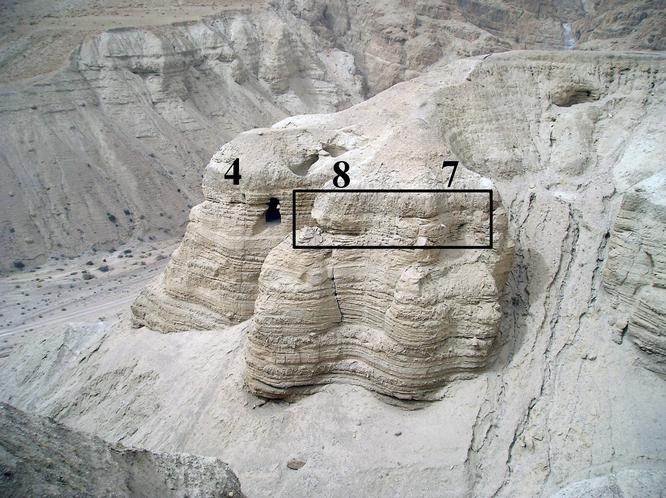
Location of Burial Caves of Jesus (8Q) and Simon (7Q)
(4Q was the cave of Lazarus)
(Still intact in 1955, but now collapsed) (27-1)
<
(From 3:30 PM to midnight, Friday, April 3, 33AD)
Mk 15:39
It was a narrow race, measured not in distance but in hours. Before sundown, the bodies must be removed, the law satisfied, and the appearance of death secured. What took place after the ninth hour would later be remembered as burial, yet the details resist that conclusion. The body is handled too carefully, the timing too exact, the participants too coordinated. Beneath the appearance of death, another process unfolds—hidden, deliberate, and measured against the failing light.
Meanwhile, Cornelius carefully unwraps the chains around Jesus’ legs and, with Zacchaeus, uses a pulley to lower him—still nailed and roped to the crossbar—down from the cross. They place Jesus gently on the ground. Cornelius takes a crowbar and yanks the two spikes from his wrists.
“Why are you being so careful? He is already dead.”
“We do not want the body to be defiled further. He is, after all, the Son of God.”
The discrepancy registered immediately. Roman executions did not permit reverence; yet Cornelius handled the body as if following a protocol not publicly stated.
The soldier mutters:
“Strange god...to let his own son die.”
Theudas, using his Jewish Council name Nicodemus, arrives carrying nearly a hundred Roman pounds of myrrh and aloe, substances prized for treating severe wounds—carried in a palanquin belonging to James, who uses it to avoid touching the defiled ground.
James and Theudas lift Jesus onto the palanquin as the women apply the lotions and bind his wrists. They drape his whole body in linen so as not to reveal his faint breath and to reinforce the illusion that he is being prepared for burial.
This was no ordinary burial preparation. The linen concealed his faint breathing and reinforced the appearance that death had already claimed him.
James and Theudas carefully carry Jesus along the walkway that passed over the pinnacle of rock to two adjacent tombs, caves #7 and #8, each sealed by a rolling stone.
Theudas rolls the stone to the right, revealing the opening to the left-hand cave, #7, the tomb of the prince James. Squatting, he carries Jesus through the opening and sets him down on a blanket on a raised ledge inside.
He induces Jesus to vomit and then gives him the antidote to drink. After rebinding his wrists, he administers a sedative.
Meanwhile, the soldiers—following Pilate’s instructions—break Simon and Judas’ legs by yanking the chains around them, causing both to faint from the pain.
Breaking the legs normally ensured death. Here, its effect was inverted: unconsciousness reduced resistance and preserved the integrity of removal.
“What do we do next?”
“I will lower these down by myself.”
He carefully lowers Simon and removes the spike from his wrist. Fainting spares the danger of a slip tearing off the hand. Finally, the last spike is removed.
As Helena brings the palanquin back from the caves, James and Cornelius place Simon on it and carry him down to tomb #8, adjacent to Jesus’ cave on the right, laying him on a blanket.
Jesus is being cared for by Theudas. The violent vomiting from his cave is a good sign—Jesus is expelling the gall mixture.
Susanna brings the palanquin back for Judas. Since James refuses to carry him, she enlists Cornelius and Zacchaeus. They place Judas in the same cave as Simon.
Mt 27:63–65
The chief priests and the Pharisees, remembering that Jesus had said while yet living, “After three days is the Resurrection,” fear that his disciples might come at night, steal his body, and say, “He rose from the dead,” making the last deceit worse than the first.
A messenger from Pilate comes to Cornelius:
“You are to guard the tombs for three days.”
Cornelius verifies that the stone has been rolled to block Jesus’ cave. He remarks:
“It appears that the Jews believe—like the Egyptians—that the dead can rise to the afterlife. It would be a miracle for any to survive the night.”
The statement completed the illusion. Cornelius declared Jesus dead, yet everything he had done beforehand suggested he expected otherwise.
He leaves to direct the soldiers to camp on the far side of the rock’s peak.
As it is almost sundown, the women return to the Queen’s house just across the Wadi Qumran. James escorts them.
Theudas binds the broken legs and wrists of Simon and does the same for Judas. After finishing, he attempts to roll the stone back to the right to return to Jesus’ cave, but it crashes down and splits in two.
Hearing the crash, the soldiers are afraid to move, thinking the Resurrection may have truly come.
Cornelius climbs to the peak and calls out:
“What has happened down there?”
Theudas emerges from Jesus’ tomb and waves him over. Producing gold coins hidden there—since the cave is one of the Qumran treasury sites listed in the Copper Scroll—he presses them into Cornelius’ hand with a wink.
“The dead have no need of these.”
The presence of stored coin clarified the mechanism. Silence here was not incidental; it had been provisioned in advance.
Looking at the broken stone, Cornelius laughs.
“Your name should be Earthquake, to break such a stone. You certainly frightened us.”
Returning to the soldiers, he gives each a gold coin.
“No need for alarm.”
Ps 18; Lk 16:19–31
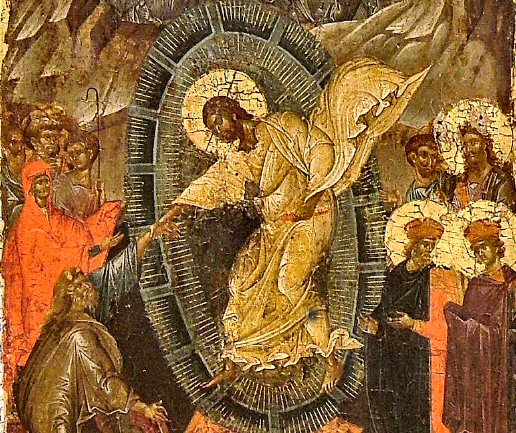
As his body struggled back toward life, the turmoil did not cease but turned inward, taking shape in the very images he himself had once used—judgment, reversal, and the dividing line no one could cross.
Jesus’ sleep is restless. Jesus’ soul descended into Sheol, the shadowy realm of the dead, where the cords of the Pit tightened around him, and the snares of Death drew close. The air is thick and choking, as though smoke has risen from below and filled the caverns of the deep.
He stands inside the parable he once spoke.
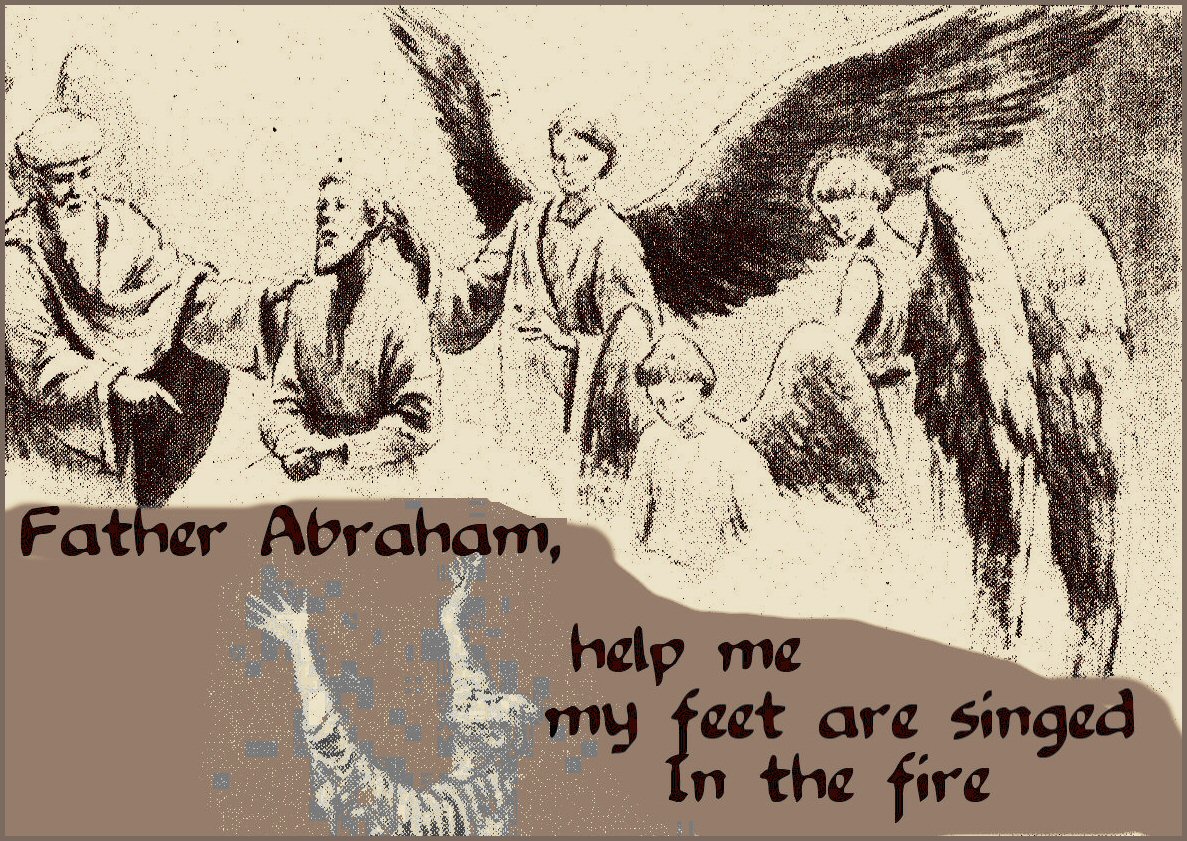
A rich man feasts in purple and fine linen.
At his gate lies Lazarus, covered in sores, longing for crumbs.
Even the dogs lick his wounds.
The ground trembles beneath Jesus’ feet. Heat breathes upward through the stone, and a dull red glow pulses from below, as if fire were kindled in the foundations of the mountains.
Among the accusing voices, one rose above the rest. Helena stepped from the darkness.
“You allowed women and Gentiles crumbs, but never a seat at the table.”
Jesus answers:
“Your daughter drank the wine of the Sacrament at our wedding.”
Helena replies:
“Yet she was not invited to the Last Supper. Did John Mark sit in her place, as the Essene rule requires a man?”
The vision shudders and shifts.
Lazarus is carried upward to Abraham’s bosom.
The rich man is swallowed by flame and sees comfort only from afar.
The cords of Sheol tighten. Smoke presses against Jesus’ chest, and fire licks upward like breath from the nostrils of God. He believes he is calling across the chasm to Lazarus—Simon Magus—:
“Father Abraham, do I deserve the fire? Did I not raise you from the dead in the nearby cave?”
Abraham’s voice answers from beyond the gulf, calm and unyielding.
“You received good things in life; Lazarus received suffering. Now he is comforted, and you are in anguish. Between us lies a great chasm, fixed from the foundations.”
Jesus cries out, his voice swallowed by smoke:
“Am I responsible for the five sons of Ananus? Are not the Twelve and the women enough?”
Abraham replies:
“They have Moses and the prophets.”
The heat intensifies. Jesus looks down and sees his hands and feet glowing, as if the fire had entered the wounds themselves.
“I have not faithfully kept the rule of the Essenes,”
he wails.
Near midnight, the Pit surges like a flood. Flame rolls upward, the cords of Death cinch tight, and Jesus screams:
“Help me! The fire is singeing my hands and feet!”
Ps 18:19
Theudas steadies him.
“You are not in Hades. You are alive, here in this cave. All is well.”
The distinction resolved the event. What presented as descent was, in material terms, survival—subsequently interpreted through theological vocabulary.
Jesus stands, feeling the weight of the Pit lift.
The smoke and fire vanish as if swept away by a mighty hand. He breathes deeply—the chains of Death are broken, the floodwaters receding. The walls of the cave feel solid beneath him, the foundation of the mountains firm and unshakable, and a quiet light rests upon him, like a beacon from the Lord.
He takes a tentative step, then another. Theudas guides him, and Jesus walks fully upright. His hands and feet, scorched in the dream, now pulse with life rather than fire.
The oil lamp is lit and placed in the window, casting a golden glow across the rock—an outward signal of deliverance, echoing the Psalm:
“He brought me forth into a broad place; He rescued me because He delighted in me.”
Jesus smiles faintly, knowing the Pit could not hold him. The Harrowing of Hell is ended; the rescue is complete.
Chapter 33: He is Risen!
(Early morning, Saturday, April 4, 33AD)
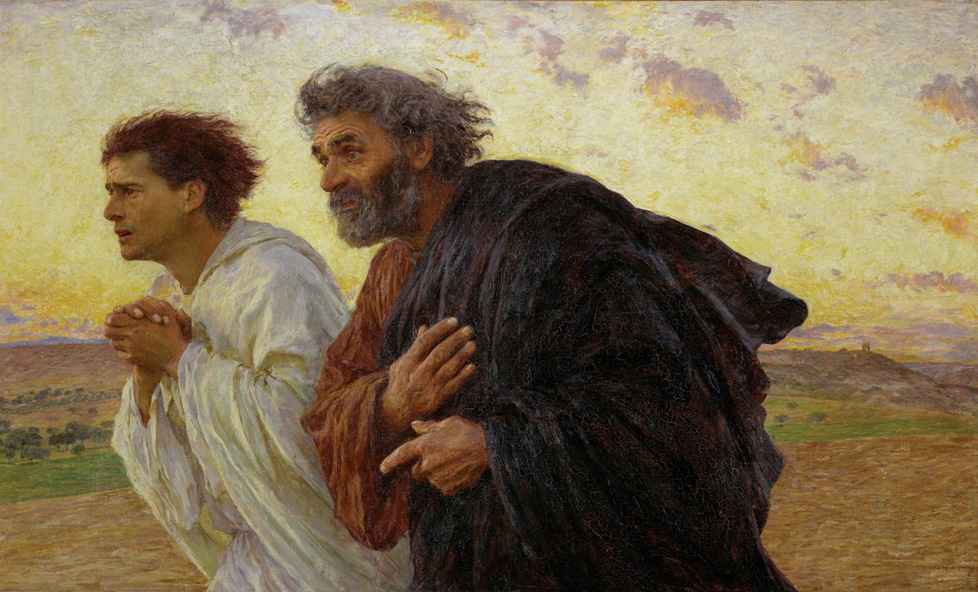
John Mark and Peter running (31-6)
The careful calculation was complete. Now came the witnessing. Every movement, every face, every step into the dawning light carried a weight both terrifying and glorious. What had begun as a desperate rescue would soon be remembered as the Resurrection. Yet no one present understood the whole of it. Each saw only a fragment, and from those fragments the story would grow.
Jn 20:1–2
While it was still dark, Mary Magdalene came to the tomb. A faint glow flickered through the opening. Hoping Jesus had revived, she hurried forward.
The stone had already been moved aside. The entrance stood open.
Fear overtook hope.
Without entering, she turned and ran through the gardens until she found Simon Peter and John Mark, who served as the beloved disciple.
“They have taken the Lord from the tomb,”
she cried,
“and we do not know where they have laid him.”
Peter and John Mark immediately hurried toward the garden, leaving Mary to follow behind.
GP 35–37
During the last watch of the night, the soldiers had remained posted in pairs before the tombs.
As dawn brightened the eastern sky, two men carrying oil lamps descended the elevated path leading to the burial caves. Seen from below against the growing light, the guards would later insist that the heavens had opened and that two radiant messengers had descended from heaven.
At that same moment, the fractured stone blocking the entrance shifted and rolled farther aside.
Startled awake, several soldiers roused Centurion Cornelius and called to the elders who had remained nearby.
From that distance, no one could clearly distinguish ordinary events from extraordinary ones. By the time their testimony was repeated, observation had already begun to give way to interpretation.
Jn 20:3–10
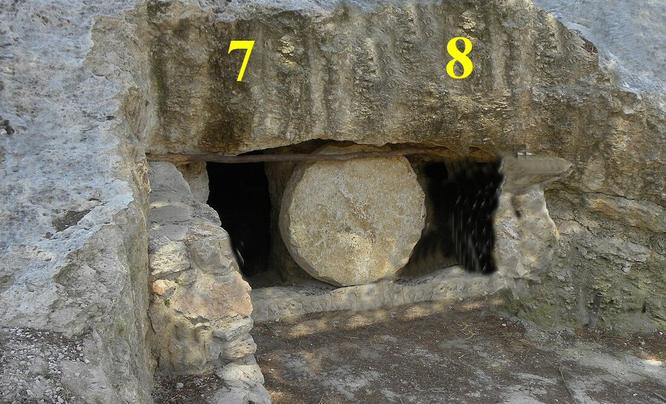
stone can be rolled to block one or the other cave (27-2)
John Mark outran Peter and reached the entrance first. Stooping, he saw the linen wrappings lying inside but did not enter.
Peter arrived moments later and went directly into the cave.
The linen strips lay where Jesus had been placed. The cloth that had wrapped his head had been folded neatly and set apart by itself.
John Mark then entered.
Neither man spoke.
The arrangement of the linens suggested order rather than theft. Whatever had happened here, it had not been the work of grave robbers.
From the rear of the cave, Jesus emerged wearing only a linen loincloth. Though weakened by the ordeal, he stood unaided.
Peter stared in silence.
John Mark was the first to move. Together they embraced him, wrapped him in a fresh linen robe, and steadied him as he tested his strength.
Outside, the guards glimpsed movement within the cave but could not make out what was taking place.
What they later remembered would become something far greater than what they had actually seen.
“How is Jesus doing?”
Simon called from his tomb.
“I am fine and can even walk. How are you, Simon?”
“I am fine, but the splints make it hard to rise. Judas did not do so well—he is still sedated and breathing heavily.”
Breathless, the pregnant Mary Magdalene arrived. In the dim light, she had mistaken the tomb of Simon and Judas for Jesus' tomb. Seeing a candle flickering inside, she stooped to look.
Inside, she beheld two figures in white garments—Simon at the head and Judas at the foot of the tomb. Theudas had washed and dressed them in the white robes of the Essenes.
A voice called from within:
“Woman, why do you weep?”
She replied:
“Oh angels, because they have taken away my Lord, and I do not know where they have laid him.”
Simon answered:
“The white robes deceive you. We are merely clothed in white. Why do you weep? Jesus is alive—but in the other cave.”
Jn 20:11–17
Jesus said:
“Woman, why do you weep? Whom are you seeking?”
Thinking him to be the gardener—James—she said:
“Sir, if you have carried him away, tell me where you have laid him, and I will take him.”
Jesus said:
“Mary.”
She looked into his eyes, realizing the miracle, and exclaimed:
“Teacher!”
Jesus said:
“Do not touch me. I must return to the monastery, to be purified and restored to my Father’s service. Besides, your pregnancy must remain undefiled.”
Mary smiled and placed her hand upon her womb.
Chapter 34: The Resurrection is the Church
(Late morning, Saturday, April 4, 33AD)
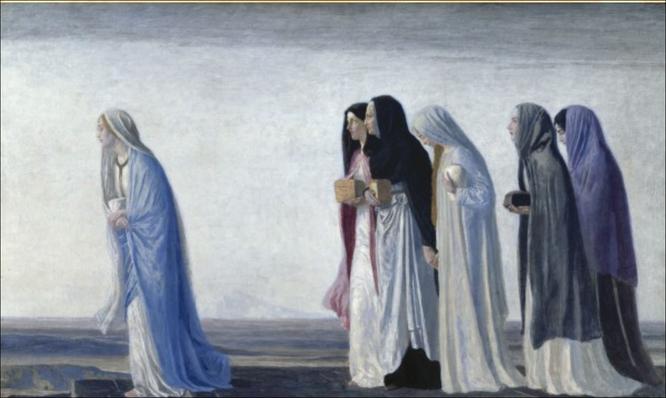 (28-1)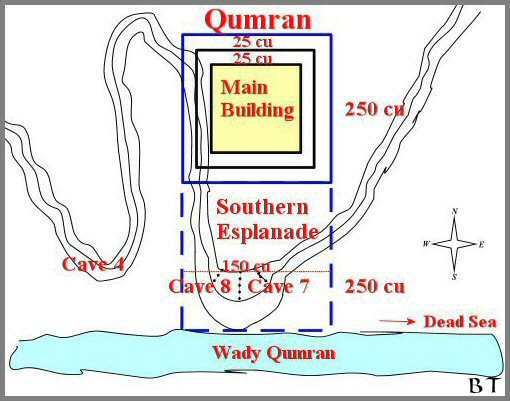
Burial Caves of Jesus and Simon in the cliff
Mk 16:1–2; Mt 28:1; Lk 23:55–24:10
As dawn broke on the day after the Sabbath, the reports that later reached me did not speak of clarity, but of disorientation—of light returning to a world that had not yet understood what had occurred within it.
Magdalene—having followed behind Jesus as Peter and John Mark supported him on either side—was returning when she met the other women approaching the tomb with spices to anoint Jesus. She shouted to them:
“I have seen the Lord!”
Mt 28:2–4; Mk 16:5
They had earlier encountered a soldier who told of an earthquake that had shattered the stone sealing the tomb—and that Jesus was gone. They thought the worst.
“What happened with the earthquake?”
they asked.
“Is Jesus alive?”
Once Magdalene told them the astonishing tale, they were relieved. That Jesus could have walked down the hill was beyond their greatest expectations.
Magdalene explained that the “earthquake” was Theudas, who had accidentally toppled the blocking stone, breaking it in two.
Susanna smiled.
“So it was my father, Cleopas.”
“I spoke with Jesus,” Magdalene added, “but he did not let me touch him.”
Mother Mary asked, confused:
“Is he just a spirit?”
“No,” Magdalene replied. “Peter and John Mark helped him wash and dressed him.”
Mk 16:4–7
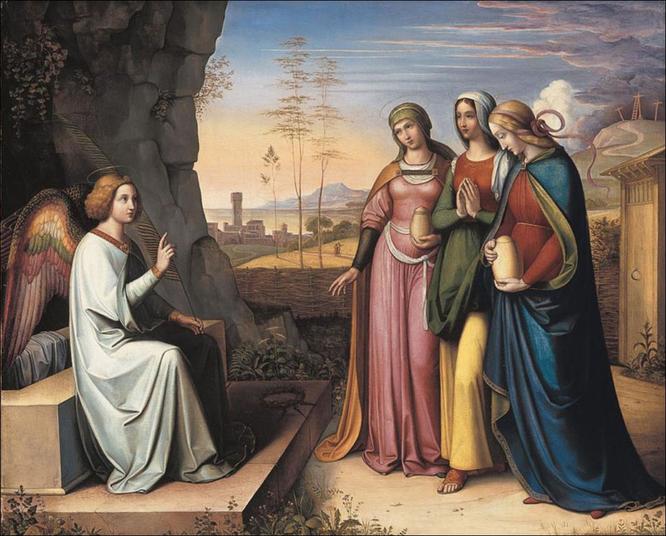 (28-2)
When they arrived, the mouth of the cave stood open, the great stone lying in two pieces on the ground. Sitting atop it, like a king surveying his kingdom, was Simon. He wore a white Essene robe—one of their angelic ranks—and his legs were bound in splints.
“If you are looking for Jesus,”
he said to them,
“do not be afraid. He has risen. Look—the place where they laid him is empty. He has gone ahead of you to Ein Feshkha. There you will find him with Peter and the other disciples.”
By proclaiming, “He has risen,” he transformed an act of rescue into the language through which future generations would understand it.
Helena stepped closer and touched his face.
“The Standing One still lives,”
she said, half in jest, half in awe.
“Are you healed?”
“Not yet ‘standing!’”
he replied.
“And the other one?”
Susanna asked, having helped Judas.
“He did not survive,”
he said.
“Sit, all of you,”
Simon said,
“and let us thank God that Jesus survived—and that I did as well.”
We joined hands around the stone.
This circle marked more than shared relief. It was the beginning of consolidation—of those who knew the underlying truth, and those who would carry its meaning forward.
“Had things gone differently,”
I said,
“our mission might have ended forever. This deliverance rivals that of Shadrach, Meshach, and Abednego from the furnace—or Daniel from the lions’ den. Yet some will ask: Why did God allow the crucifixion at all? Does God intervene, or does He call us to act in His name as we grow toward His Kingdom?”
“David wrote that God guides us through the valley of death—the cross—and leads us to still waters—the potion Jesus drank. But if we do not drink, the Kingdom of Heaven cannot be made manifest on earth. Even the Zealots—Judas, and even our dear Theudas—know that passivity is not godliness. If we act with agapē love, we may become part of God’s Kingdom.”
Chapter 35: The Ascension and the Pentecost
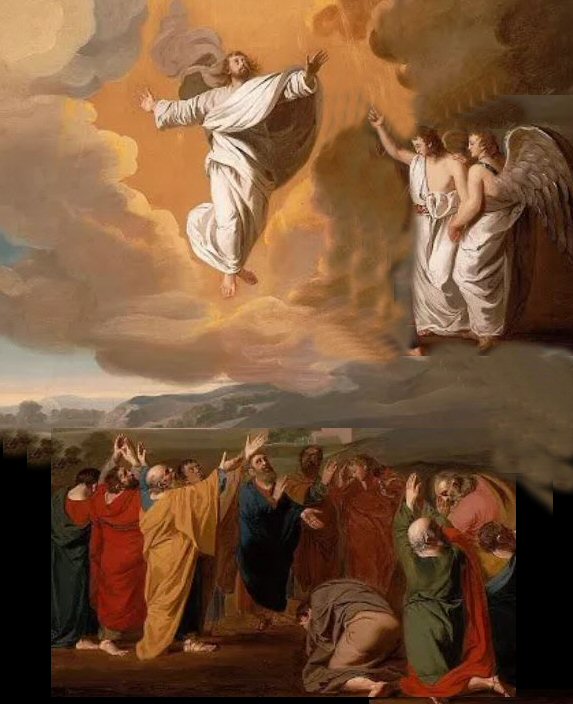 (33-4)
Only two disciples—Bartholomew (John Mark) and Thaddeus (Theudas)—had dared to remain at the Crucifixion. Peter's resort to violence during Jesus' arrest had separated him from the events that followed. When Mary Magdalene awakened them, they ran to the tombs to find the risen Jesus.
The sons of Ananus—Jonathan and Matthew—heard the account from their younger brother Zacchaeus, who had helped take Jesus down from the cross. The others learned of it later, from the four women who wept and prayed beneath the cross.
Jesus’ survival was such a wonder that even the Eleven could scarcely believe it. He appeared to them many times, offering proofs that he lived. Yet they failed to recognize him on the road to Emmaus and again by the Sea of Tiberius, and Thomas would not believe until he touched him.
As rumors spread that Jesus was alive in the flesh, it became clear to Simon that Jesus' public appearances could not continue indefinitely. Forty days had long stood as a period of testing—from Moses upon Sinai onward—and so it was understood that on the fortieth day Jesus would appear openly and be taken up to God.
Word passed among the people that they should gather below the Western Hill, the heights of Mount Zion overlooking the city, to hear what would be his final words.
Thursday, May 14, 33 AD
Lk 24:51; Ac 1:9-11The crowds gathered quickly, and as they gazed upward, Jesus ascended to the height of Mount Zion. As he stood upon the hilltop, two men in white appeared beside him, reminding some of the Transfiguration.
“Peace be unto you,”
he said.
“I am going to my Father, but I will return in Spirit.”
A cloud rose, gathering as though summoned by Simon's uplifted hands. It surrounded the three men, and in a moment Jesus was taken from sight, leaving only Peter and Simon behind.
The multitude stood silent, their eyes fixed on the place where he had been, still longing to see him there.
Peter spoke:
“Men of Galilee, why do you stand looking into the sky? This same Jesus, who has been taken from you into heaven, will return in the same way you saw him go.”
Sunday, May 24, 33 AD
Jn 14:22; Ac 1:12–14, 21–26; R.1.60; Gen 6:3
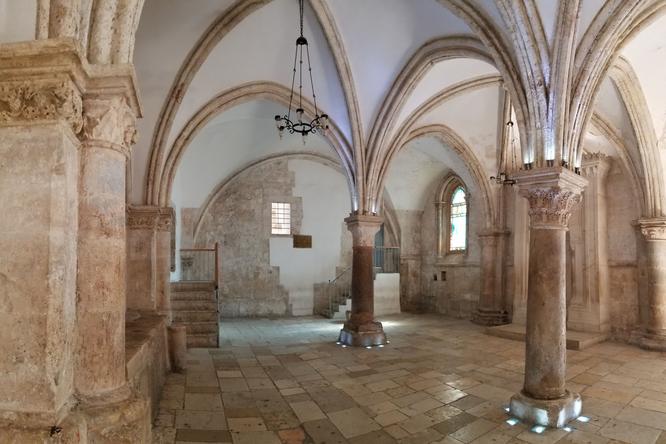
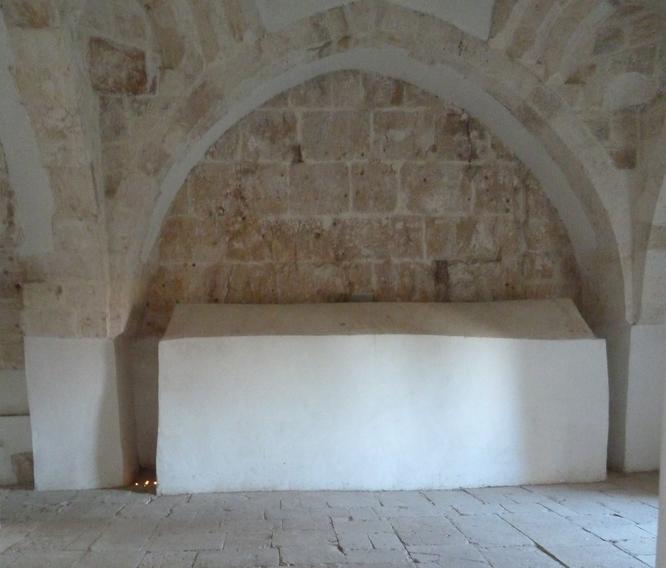
It had been forty days since Jesus’ “Resurrection” and ten days since his “Ascension,” and the eleven disciples were gathered in the upper room of the Cenacle in Jerusalem.
Simon, now called “the Zealot,” and “Judas of James” (Theudas)—who had taken Judas’s seat at the Last Supper—were now subordinated under Jonathan.
Also present were the women: Mother Mary, Helena, and Susanna, except for Mary Magdalene, who, being pregnant, was ritually unclean.
Peter stood among the believers, numbering about one hundred and twenty. I surmised that this was meant to resonate with Genesis, where God declared it the limit of divine striving, a final interval before judgment.
Now it signaled structural completeness—the need for expansion to wait for stabilization, authority to precede action, and containment to give way to transmission.
Peter spoke with newly found authority:
“We must complete the Twelve. One of the men who has been with us from the beginning—from John’s baptism until the day Jesus departed—must bear witness to his Resurrection.”
Two men were nominated—both sons of Joseph, son of Sabbas, the father of Jesus: Joseph Barsabbas, also known as James the Just, and Joses Barsabbas (later rendered as Barnabas).
They prayed, and the lot fell to Joses, who had served as Jesus’ deputy at the Last Supper. Already positioned within the structure and instructed by Matthew, one of the Twelve, he was henceforth called Matthias—function over origin.
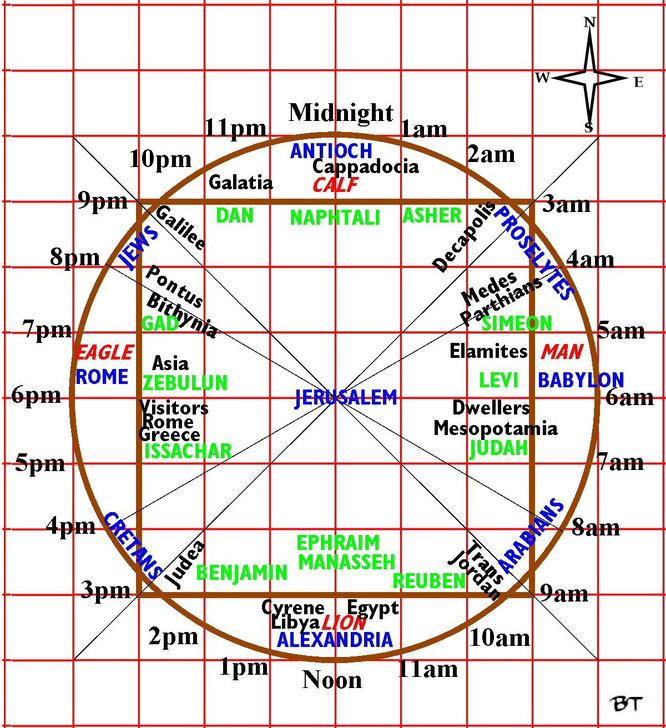
World Circle of the "the Way" (Pentecost (Acts 2:6-11)
Ac 2:1–4; Joel 2:28–32
When the day was fulfilled, a sound arose among us, like a rushing wind, filling the upper room in ways that could not be contained.
Those gathered—men from Parthia, Media, Elam, Mesopotamia, Judea, Cappadocia, Asia, Egypt, Libya near Cyrene, and from Rome, Crete, and Arabia—each began to speak of the wonders of God in his own tongue.
The voices mingled, yet each remained intelligible to its hearer. Joy passed through the assembly as a force neither contained nor limited.
Peter addressed them, cautious, procedural:
“Men of Israel, hear these words. Jesus of Nazareth, delivered according to the foreknowledge of God, you crucified and killed—but God raised him, freeing him from death. This is what was spoken by the prophet Joel: that God would pour out His Spirit upon all flesh.”
Yet Peter’s words did not define the event. The Spirit was present, unmistakably, moving according to its own pattern.
What had been prepared in containment—the one hundred and twenty, structurally complete—was now activated. Transmission no longer waited for hierarchy or proximity; it flowed outward, unbound, and called each to act.
From that day forward, it was evident: those who sought God would bear the fire within themselves, not as a gift to be observed, but as force to be carried and shared.
The Resurrection preserved Jesus.
Pentecost released his teaching.
From that day forward, the Way no longer depended upon the presence of one man, but upon all who carried the Spirit into the world.
Chapter 36: The Hidden Messiah
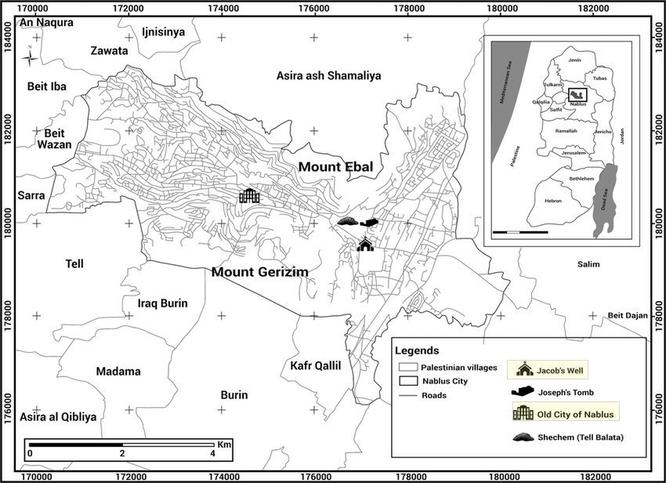
Map of Nablus and Jacob's well (28-4)
Jesus at the Monastery on Mount Gerizim
Excitement swept through Jerusalem after reports of the Resurrection spread, but Jesus could not remain. Too many had seen him alive. Until the danger passed, he withdrew into the caves on the northwestern slope of Mount Gerizim. Jacob's Well lay below to the west, and the mountain—sacred to the Samaritans—offered refuge beyond the reach of the chief priests and Roman patrols. Nearby, the monastery provided a familiar sanctuary where Jesus could, for a time, return to the quiet life he had known before his public ministry while recovering from the wounds inflicted upon his wrists during the Crucifixion.
H.2.22; Jn 4:1–42
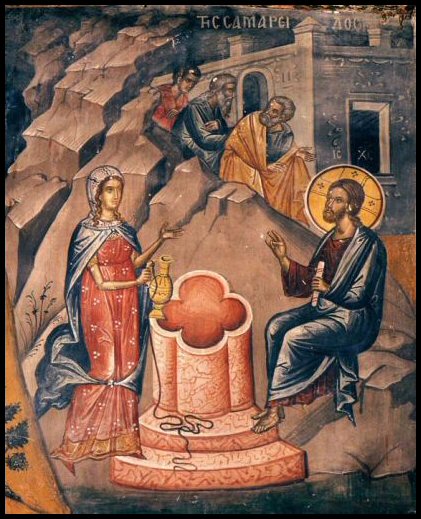
Jesus & Samaritan Woman (Helena) at Jacob's Well (28-5)
Jesus' conversation with the Samaritan woman at Jacob's Well takes on added significance in this light. The Samaritans were descendants of the ancient northern kingdom who, because of centuries of separation and mixed ancestry following the Assyrian exile, were regarded by many Jews as outsiders despite sharing Israel's heritage and revering the God of Abraham. If Helena occupied such a community, she stood at the meeting point of Jewish tradition and the wider Gentile world, making her an ideal figure through whom Jesus could begin extending his mission beyond Judea.
Helena directed the convent to the north, where six disciples resided. The ease and equality of the conversation recorded at Jacob's Well suggest that the Samaritan woman occupied a position of unusual authority. Since Jesus first sent his disciples away to purchase food, the meeting itself appears to have been intentionally private. Their discussion of Mount Gerizim's sanctity further reinforces the setting.
Within this reconstruction, the “five husbands” represent the Sons of the Covenant—Jonathan, Matthew, Theudas, Thomas, and Judas Iscariot—with the sixth being Simon himself, who stood above them. The Greek anēr may simply mean “man” or “adult male,” suggesting that the traditional translation “husband” may not fully convey the intended sense. Read in this way, the passage places Judas Iscariot within the same Samaritan circle reflected in the Clementine tradition, strengthening my conclusion that Judas and Jairus were one and the same—the influential leader who earlier opposed the betrothal of Jesus and Mary Magdalene.
Eusebius, Ecclesiastical History 3.39.15 (quoting Papias of Hierapolis)
From Nablus, near Jesus' refuge, Simon could visit him without attracting attention. Together with the others, they walked beneath the olive trees, speaking quietly of all that had transpired. The Crucifixion had altered every expectation, yet the Spirit that had sustained them remained present, binding heaven and earth through hope rather than fear.
Living in concealment, Jesus could no longer write with his injured wrists. John Mark therefore preserved his testimony in the account that would become known as the Gospel of John, beginning with Simon's introduction. The later tradition surrounding the Gospel of Mark preserved the testimony of another Mark, a follower and interpreter of Peter. Although many remembered Simon only as the man who carried Jesus' cross, his shattered wrists—and especially the severe injuries to his legs—required nearly a year to heal, leaving him dependent upon crutches long after Jerusalem's excitement had faded.
Believers gradually returned to their homes, carrying with them accounts of the risen Jesus. Wherever they traveled, they shared their testimony, and gatherings of the faithful quietly began to take root.
During this season of hidden endurance, while Jesus remained beyond the reach of those seeking his life, new life entered the world. The child Mary Magdalene carried when she stood with John Mark beneath the cross seemed to give Jesus the strength to remain steadfast through his suffering. He believed the child would be a son, a continuation of his lineage, yet in September of AD 33, Mary Magdalene gave birth to a daughter.
She was named Tamar, after David's daughter, whose suffering nearly brought devastation upon the house of the king. Her memory endured through the generations, a reminder of the sorrows carried through David's line and the suffering that would ultimately reach Jesus.
The child remained unknown, for the Gospels never mention daughters. Like much ancient Jewish literature, they devoted greater attention to sons who continued family lineage, leaving daughters largely outside the narrative. Yet this birth marked not an ending, but a beginning concealed from history's gaze.
For many years, the significance of her arrival would remain unseen. At that time, she was simply an infant whose life, like her father's, had to remain protected from those who would seek to destroy it.
Since Jesus was to be regarded as dead—alive only “in the Spirit”—Peter’s declaration at Pentecost that God would “pour out His Spirit upon all flesh” carried a deeper meaning for those entrusted with the secret. They understood that Jesus’ presence among them would continue according to an established pattern. Within the symbolic chronology preserved by the community, the birth of a daughter marked a three-year cycle before renewal, while a son marked six. Thus the anticipated Restoration in AD 36 carried a double significance, pointing both to the continuation of Jesus’ work and to the time required for restoration among his followers.
Tac. 5.3; 6.25; Suet. Tib. 53; Dio 58.22
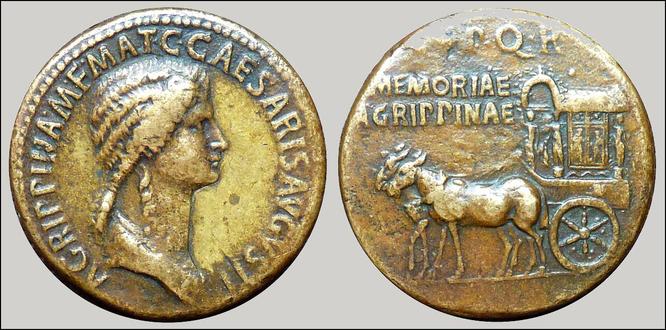
Agrippina the Elder (28-6)
From Agrippina the Younger's diary, I later learned that her mother, Agrippina the Elder—Simon's sister—died at the age of forty-six upon the island of Pandateria, the same island to which Simon's mother had once been exiled.
Simon's grief was likely profound despite years of separation. Ancient reports suggest that Agrippina attempted to starve herself, though Tiberius ordered that she be force-fed. Whether those accounts preserve every detail or not, her death marked another painful loss within a family long fractured by exile, suspicion, and imperial politics.
Perhaps Simon regretted that he could not save her. Yet after the Crucifixion his calling lay elsewhere. Jesus depended upon him to help organize the Twelve and prepare them to carry the message both east and west.
In the quiet hills above Nablus, Jesus and Simon remained in recovery as the word of the Resurrection spread—carried by living witnesses who believed what they had seen and heard. The Twelve continued to proclaim the message to others who received their testimony, and these gatherings became the earliest foundations of the community that would later be called the Church.
Within the symbolic pattern preserved among them, the birth of a daughter marked a three-year interval before the renewal of Jesus' union with Magdalene—perhaps allowing time for the hope of a son. After that appointed time, as Peter declared at Pentecost, Jesus could again reveal his presence—not as before, in the flesh, but through the Spirit poured out upon his followers.
Book IX — Power Struggles of the Church
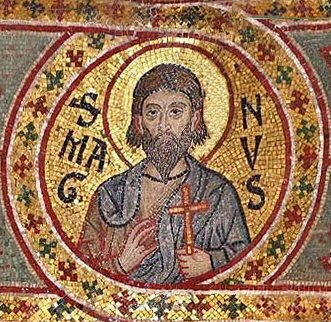
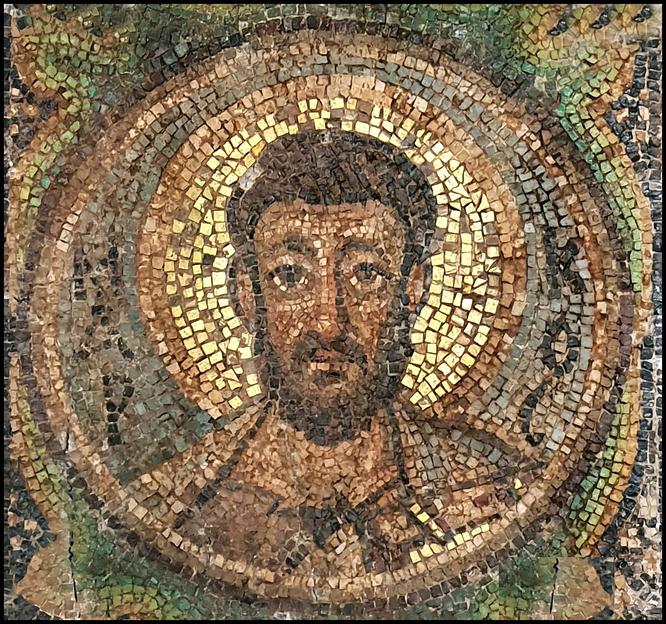
Simon Magus: Pope (29-1) John Mark: Cardinal (29-2)
Chapter 37: Simon Magus: The Great Power of God
Mk 15:39; Mt 27:51, 27:54; Jn 19:34; Lk 23:44–52; Acts 10; Col 4:14
Since the original Clementines—written by Clement, who later succeeded Saint Peter—have been lost, I rely, as the world does, upon the Acts of the Apostles to complete the account of the Church’s formation. Yet the hand behind Acts is not without direction.
My research persuaded me that the centurion remembered as Cornelius was later known as Luke the Evangelist. His conversion mirrors the Church's own movement from living witness into ordered institution. And though he preserves the vision of Jesus Christ with care, the absence of Jesus’ moderating presence leaves the scribe to shape what remains.
At the crucifixion, Cornelius stood watch until the final breath and declared, “Truly this man was the Son of God.” When the body appeared already lifeless, he employed the physician’s skill for which he would later become known, piercing the side of Jesus Christ. Yet his oath to Pontius Pilate, affirming death, was already compromised—touched by revelation. He judged his assessment to be certain, though it was not, because some part of him willed that life might still remain.
When gold was pressed into his hand for silence at the caves, he accepted it. Of the emptiness there he said nothing—only of the earthquake, as if the earth itself bore witness to what he had come to believe: that the man’s spirit had broken free from the body he had declared lifeless.
It is from this moment—standing at the threshold of life and death, truth and hope—that Cornelius begins to observe not only what is, but what must be recorded. When he later heard of Saint Peter taking command at Pentecost, he responded as a soldier to a superior—recognizing authority, aligning himself with the one now bearing the voice that had been lost. His loyalty was not born of doctrine, but of a need to witness and preserve.
Yet in his writing, a boundary appears. Where the Gospels leave space, he defines. And in defining, he narrows. His treatment of Simon Magus carries a severity absent from earlier accounts—not merely describing the man, but tainting him.
Here, I step closer. Not to overturn his witness, but to restore what it confines. My voice does not replace his; it presses against it—so that what was seen is not reduced to what was later permitted to remain.
(Simon as Pope; John Mark as Cardinal)
Jn 21:15–22, 18–19; Acts 1:15, 2:14, 3:12, 4:33, 12:12; 1 Peter 5:13
In Jerusalem the pattern of the risen Lord's community became visible. Simon stood as Great Power, from whom the mission flowed. Peter became the voice of the apostles, speaking on behalf of the growing community. Thus he became Great Voice, guiding the flock in unity. John Mark served as Great Grace, preserving the apostolic testimony so that what had been entrusted would not be lost. Power established the work, voice guided it, and grace preserved it, forming a living witness greater than any one man alone.
Simon’s wounds had healed, though he still walked with a limp. Because no one knew that he had been crucified beside Jesus Christ, he could travel freely among the disciples, carrying his instructions wherever they were needed.
Simon's role had shifted from subordinate to Jesus to the position later associated with the papacy, exercising authority in both deed and vision. Yet even as harmony prevailed, a subtle uneasiness lingered: the community was slow to adjust to a leadership now shared, once guided directly by Jesus. His presence at the margins was not fully understood.
I observed it closely—his presence, not yet fully known, would quietly stir the community, drawing attention, testing the boundaries of authority and the fidelity of witness, without ever breaking the order established by Peter and him.
What I observed in Jerusalem did not remain contained there; it extended outward, as Simon’s authority moved beyond the city into regions where the structure of the Way would be tested, challenged, and revealed.
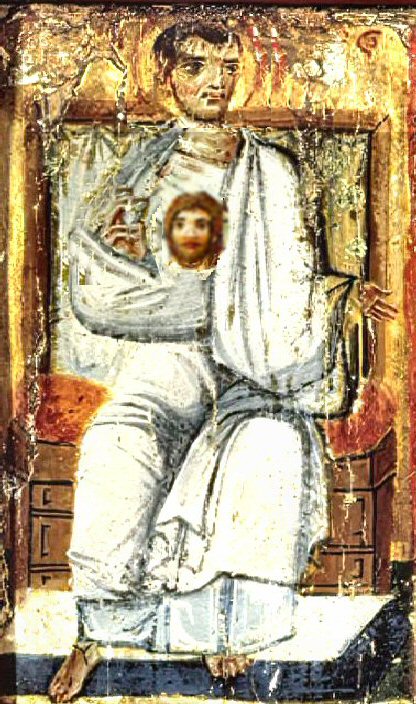
Mandylion from Thaddeus (29-4)
Rev 21:19; Acts 5:1–11; 4Q164; Eusebius, Ecclesiastical History 1.13; Doctrine of Addai; Acts of Thomas
Abgar the Black, king of Edessa, a small kingdom at the edge of the Roman Empire, had sent word requesting Jesus Christ to come and cure his leprosy. Jesus promised instead to send a disciple after his Ascension.
According to Simon’s testimony, preserved among those closest to the Way, he instructed Thomas, the rejected king, to make the journey and instructed him: “When you stand before the court, let Hannan (Ananias), the king’s secretary, speak first.” He also sent Helena, whose name became tangled with Helena of Adiabene—a historical queen who converted to Judaism during the reign of Claudius. This explains Luke’s confusion in associating Simon with Ananias and Helena, echoing the blue jewel among the Scrolls’ symbolic members as a queen.
They presented a cloth bearing the image of Jesus Christ and returned with rich gifts that strengthened the work of the Way.
Yet Luke the Evangelist recast this mission into the account of Ananias and Sapphira’s “sin,” claiming that they fell dead—an image less of judgment than of erasure, symbolic of excommunication. Peter, however, held no authority to impose such a punishment.
In this telling, my name was not merely altered, but burdened—bound to the charge of simony, as though I had sought to purchase what had already been entrusted. Peter’s emphasis on humble offerings to sustain the Way was not without merit, yet such means alone could not have accounted for the rapid expansion we achieved. What was gained in Edessa was not corruption, but provision—misread by those who recorded what they could not fully see.
Acts 8:5–39; 4:33
When I instructed Philip to go to Samaria, signs were performed and the city rejoiced. Yet Luke the Evangelist could not allow this success to stand on its own. Authority, which had moved outward from me, was recast as dependent upon Jerusalem. The mission had already succeeded; yet he frames it as incomplete until Saint Peter arrives to confirm it.
In Samaria, Philip preaches, baptizes, and performs signs—organizing a community already taking shape. I am diminished to one who merely “amazed the people,” rather than one who established and directed the work.
The Ethiopian episode is treated in similar fashion. A wealthy, literate Gentile is baptized by Philip without the presence of Peter, an act of profound significance. Yet it is recorded briefly, without examination. The man departs along the road to Gaza, his faith intact, but the account left undeveloped.
And yet the pattern remains visible beneath the telling: authority initiates, mediation carries, and memory preserves. I am the underlying source—Great Power—while John Mark facilitates, ensuring that what is done is not lost. What appears as independence is, in truth, continuity.
From Galilee to Jerusalem, Edessa, and Samaria, the structure of the Way becomes clear: Simon at its source—Great Power; Peter shepherding the flock—Great Voice; and John Mark safeguarding the apostolic memory—Great Grace. Power founded the mission, governance directed it, and grace bound it together, forming an ordered testimony to the risen Lord that no human narrative could fully contain.
Ant 18.6.3; 29.2
As the grandson of Herod the Great, who had ordered the death of his father, Agrippa deserved no sympathy. He was a megalomaniac in every sense, scheming through money and false alliances to rival his grandfather’s glory. I had sworn to take revenge upon him—for mocking Jesus at his trial and for dishonoring the name of my father Agrippa, whose greatness had been so renowned that Herod Agrippa himself had been named in his honor.
Growing restless in his diminished role in Galilee, Agrippa defrauded the disciple Philip to finance his return to Rome. There he sought audience with Tiberius, who was residing at Capri. At first, Tiberius received him kindly, but when a letter arrived detailing Agrippa’s debts, the emperor’s favor turned to fury. Fearing disgrace and exile, Agrippa appealed to Antonia, mother of Claudius. Out of loyalty to Agrippa’s late mother, Bernice, she settled his debts.
Antonia was also grandmother to Caligula through her son Germanicus, who had married my sister Agrippina, newly dead in exile. With Tiberius in decline, Agrippa attached himself to Caligula, whose ascent now seemed inevitable.
Recognizing the opportunity, I sent John Mark to Rome under his former name, Eutychus, to serve as Agrippa’s freedman and charioteer—a position well suited for observation.
When he returned, he told me his story.
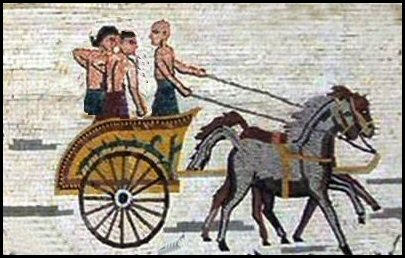
Caligula & Agrippa driver Eutychus (29-3)
One day, while driving with Caligula and Agrippa seated behind him, Eutychus overheard a dangerous exchange.
“How was Tiberius when you visited him at Capri?” Caligula asked.
Agrippa replied, “The same as ever—an old man obsessed with his little boys who swim naked around him, his so-called small fry.”
Caligula groaned. “I’m no prude, but that is vile.”
Agrippa answered with a smirk. “Gaius, soon this doddering emperor will die, and you, Augustus’ great-grandson, will rule all the world.”
Eutychus might have dismissed the remark as reckless flattery, but his attention sharpened when Agrippa produced the purple cloak the soldiers had thrown to the ground after stripping Jesus. Though soiled and worn, it had become, in Agrippa’s twisted mind, a sacred relic.
Recognizing its importance, Eutychus took the cloak and concealed it beneath his bedding. When Agrippa discovered it missing, he accused him of theft and had him imprisoned.
Eutychus remained confined while Tiberius delayed judgment, but Antonia pressed the matter until it was finally heard.
At the trial, Tiberius fixed his gaze upon Eutychus.
“You stand accused of theft. Ordinarily I would not concern myself with such a matter, but Antonia has insisted. Explain yourself.”
Eutychus bowed.
“While driving the chariot, I heard Agrippa say to Gaius, ‘Soon this doddering emperor will die, and you, Augustus’ great-grandson, will rule all the world.’”
A murmur passed through the court.
Tiberius remained expressionless.
“And what has this to do with your theft?”
Eutychus swallowed.
“Later, Agrippa produced a purple cloak. Smiling at Gaius, he said, ‘This is the very cloak I placed upon Jesus before Pontius Pilate when I proclaimed him King of the Jews. It made the crowd roar with laughter as they mocked him.’ Then he held the cloak before Gaius and declared, ‘Gaius, I give you this cloak, that you too may wear the robe of the King of the Jews.’”
Silence settled over the chamber.
Tiberius looked from Eutychus to Agrippa. A Roman emperor needed no proof of an organized conspiracy; the mere suggestion of hidden royal legitimacy or divine favor could be enough. Already angered by Agrippa's neglect of his grandson Drusus, Tiberius ordered Agrippa imprisoned and Eutychus released.
With Agrippa removed from the field, I consolidated my position. I thanked John Mark for his service and for his willingness to set aside his high station to advance our mission.
The Portent of the Owl
Ant 18.6.7, 18.7.2, 18.10.2, 19.5.1, 19.8.2
Above the dim confines of Agrippa’s prison, an owl dozed upon its perch, one eye half-open, watching. Agrippa—the grandson of Herod the Great—brooded at the thought of dying before his greatness could be fulfilled.
The owl stirred, its eye opening fully—a silent herald. The heights of meteoric power, once reached, would blaze as brilliantly as they would fall.
“I do not care,” Agrippa answered with numbing resolve. “I wish to be called great.”
In March of 37 CE, Caligula became emperor. The iron chains were struck from Agrippa’s wrists and replaced with gilded links of equal weight; he counted each one, as though marking the steps of fate. Soon he was granted the tetrarchies of Philip and Lysanias, along with the title of king, planting his authority firmly in Judea.
Yet envy shadowed his ascent. Herodias—his sister and the wife of Herod Antipas—could not abide it. She urged her husband toward Rome, grasping for honors not granted to them. Agrippa, in turn, whispered of treason into the emperor’s ear, and the lightning of imperial favor struck. Galilee and Perea were stripped from Antipas; his wealth seized, his dignity broken; exile carried him and Herodias to distant Gaul.
The owl ruffled its wings, a quiet reminder: power may be seized, yet it vanishes just as swiftly—like a magician’s empty hand.
When Caligula was slain, Agrippa moved with calculated precision to secure the throne for Claudius. In return, he was granted Judea and Samaria, uniting nearly all that his grandfather had once ruled. From the heights of Lebanon to the shores of the Dead Sea, the kingdom of Agrippa I shimmered—briefly—as though it were the promised kingdom of God.
Then the owl vanished.
It returned later, silent and watchful, and settled upon my shoulder. In that moment, I understood: it was not merely a sign, but a charge. I was to act—not as observer, but as instrument. At the height of Agrippa’s glory, the prophecy would be fulfilled, and I would bear my part in its unfolding, even at risk to my own power.
Jesus’ Monastery Threatened — Theudas Is Killed
Acts 5:36; Ant 20.5.1; Joshua 3–4
I remember the year 35, when Pontius Pilate once again proved his unfitness to govern. My uncle Theudas—dismissed by the Romans as a mere magician—had organized a reenactment of the crossing of the Jordan, a sacred rite preserved among the Therapeutae. What was intended as remembrance, echoing the passage in the Book of Joshua, was mistaken for revolt.
Pilate answered ritual with force. Soldiers descended upon the gathering; many were cut down, and my uncle was taken and beheaded, his head carried back to Jerusalem as proof of order restored.
The irony was not lost on me. He who had once been spared—released as Barabbas while Jesus Christ was condemned in his place—would still die by Pilate’s hand. What Rome deferred, it did not forgive.
The aftermath required intervention. Lucius Vitellius moved to repair Pilate’s blunder, even as the region strained under the consequences of Herod Antipas’s divorce from the daughter of Aretas, which had already provoked Nabataean retaliation. Disorder spread along the frontier, and Rome answered in kind.
Vitellius advanced with his forces toward the Jordan and the heights of Mount Gerizim. Their presence brought a new danger: not rebellion, but discovery. For in those same regions, concealed from the sight of Rome, lay the hidden refuge of Jesus Christ and those who remained with him.
For a time, it seemed inevitable that the search would uncover what had been so carefully preserved. Yet the moment passed. The armies moved, the province steadied, and the secret endured.
Epilogue
Thus ended another fragment of Simon’s testimony—the years when the Way expanded beyond Jerusalem, while those who recorded it struggled to understand the hands that guided it.
Chapter 38: The Way Searches for Relevance
The Clementines; Recognitions and Homilies
Ac 6:11; R. 1.60, 2.7, 3.75, 7.29, 7.33; H. 2.19–20, 13.4
While attempting to locate the exact texts of Clement’s dispatches to James referenced in the Clementines, I returned again to the library. Among the records attributed to the Clement family, a loose page drew my attention. It proved to be a dispatch from Simon, addressed only to “SM”—a designation that, given the surrounding references, I could not help but wonder whether it concealed a reference to the Son of Man.
The tone was unmistakable. With a kind of restrained pride, Simon recounted a series of debates along the Levantine coast—from Caesarea Maritima to Laodicea—presenting each exchange as one in which he had answered Peter decisively. Yet it was not the claims themselves that held my attention, but a passing remark: he referred to Jonathan as the one responsible for receiving and preserving Clement’s dispatches.
From that detail, a possibility began to take shape. If Jonathan held recognized authority over these exchanges—if the writings themselves were directed to him—then the “James” cited within the Clementine tradition may not refer to James the Just, as is commonly assumed, but to James son of Alphaeus, associated with the high-priestly family of Annas (Ananus).
Returning to Acts with this in mind, I found the pattern difficult to ignore. Luke consistently presents Roman authority in measured, often favorable terms, while tensions within the priestly leadership are foregrounded. The same narrative tendency appears in the account of Stephen’s trial and death, which follows shortly thereafter.
Jonathan, the third son of Annas, was appointed High Priest in Jerusalem by the Roman governor Vitellius during the Passover festival of 36 CE, in the aftermath of the removals of Pontius Pilate and Caiaphas. With both figures—so closely associated with the crucifixion—no longer in power, it is possible that some among the followers of the Way saw in Jonathan an opportunity for continuity: a means by which the teachings associated with Jesus might find a place within established Israelite structures.
Yet the sources suggest resistance. The Sanhedrin, as depicted, appears unwilling to allow such a reconciliation. The speech attributed to Stephen in Acts—whether preserved, reshaped, or reassigned—echoes themes that would have been deeply contentious: that Israel had historically resisted those sent to guide it; that figures such as Joseph and Moses were rejected before being recognized; and that the divine presence could not be confined to structures “made with hands.” The accusation that the people had slain those who foretold the coming of the Righteous One would have carried particular force.
At this point, a more difficult possibility emerged. Luke’s account, rather than preserving these events in a straightforward manner, may reflect a process of reframing. The figure presented as Stephen—whose name in Greek, Stephanos, means “crown”—could represent not only an individual but a transformation of memory. If Jonathan stood at the center of these tensions, then what is recorded as martyrdom may, in another register, preserve the memory of removal from office: the silencing of a priest whose position had become untenable.
Such a reading would explain both the prominence of the speech and the relative absence of corresponding historical detail regarding Stephen outside the narrative itself. It would also account for the way authority is redistributed within Acts. Saul’s presence at the scene—described but not yet central—marks the beginning of a transition. From this point forward, the narrative increasingly turns toward the figure later known as Paul, while earlier threads recede or are reframed.
Luke’s effectiveness as a narrator may lie precisely here. His proximity to the traditions he records—signaled at times by the shift into the first-person plural—creates a sense of immediacy, even as the structure of the account guides interpretation in more subtle ways.
Luke would later show how James became reconciled when he was healed by Peter after the founding of the Church. This will be shown in the next chapter.
The designation Pseudo-Clementines has, in my view, shaped the way these writings are often approached. While the name reflects the belief that their final composition may belong to a later period than Clement himself, it can also cause many readers to dismiss them before examining the traditions they preserve. I found myself drawn more to the Clementine writings than to Acts. Where Acts often follows movement—journeys, encounters, and transitions—the Clementines are more concerned with doctrine: the framing, preservation, and testing of ideas.
I also question whether the possibility of Clementine authorship should be dismissed too quickly. The writings do not present Clement as the originator of the debates they portray; rather, they present him as Peter’s companion, student, and recorder. If Clement preserved teachings, discussions, and traditions associated with Peter’s ministry, then the later form of the text may represent a process of transmission rather than simple invention. Whether the surviving works are entirely Clement’s own composition is a separate question, but the possibility of an earlier tradition behind them deserves consideration.
It is perhaps unsurprising that later tradition remembered Clement as Peter's successor. If Peter valued careful listening and faithful preservation of his teaching, Clement possessed those qualities in abundance.
It was within the Clementine writings that I encountered the statement: “Simon, son of Antonius and Rachel.” It is not emphasized or explained, yet its specificity became the starting point of my investigation. Without that detail, I would not have pursued this line of research. Whether it can ultimately be verified or not, I found it significant—not as a complete historical record, but as a fragment of tradition that may have been preserved rather than created.
The reader has already encountered Clement as the boy who listened in awe as the freedman Clemens told the story of how he and Postumus Agrippa escaped Tiberius’ death threat. Clement’s testimony is significant because he was not a distant observer of Simon Magus. He knew Postumus Agrippa before the name Simon became associated with deception and rivalry. He encountered the man before later generations attached their judgments to his name. His memory may have carried sympathy, but it was also grounded in familiarity—the perspective of one who knew the person behind the reputation. For this reason, Clement was not writing merely from the side of those who opposed Simon or those who defended him, but from the position of one who had known him before the controversy defined him.
The debates between Peter and Simon Magus appear to belong to a definable moment. Clement, having first encountered Barnabas in Rome, joins Peter and becomes the recorder of these exchanges. The setting—both geographical and ideological—suggests a period prior to the developments described in Acts 10 (traditionally dated to 43 CE), when the question of Gentile inclusion undergoes a decisive shift.
In these exchanges, Peter maintains a position consistent with earlier practice: separation from Gentiles on the basis of ritual impurity, with admission contingent upon instruction and baptism. This situates the debates before that boundary is relaxed, providing a relative chronology.
Their purpose also becomes clearer in this light. These were not merely personal disputes, but attempts to define the Way against competing frameworks—Temple-centered authority on one side and sectarian withdrawal on the other. Addressed to Jonathan, they suggest an intended audience capable of recognition, if not judgment.
Following Jonathan’s removal, the open circulation of these materials appears to have ceased. Their preservation in what are now known as the Homilies (Greek) and Recognitions (Latin, translated from a lost Greek original) may reflect an effort to safeguard them within a more durable literary form.
With these elements in place, the debates themselves come into focus—not as isolated confrontations, but as part of a broader effort to articulate authority, interpretation, and continuity.
What follows is my attempt to reconstruct the debates as they may have unfolded. I have placed them in the order of the cities of their journey, rather than the current order in the manuscript I have before me. Clement records Peter's speeches in detail while preserving Simon's replies with remarkable care. By combining those traditions with the chronology I have proposed, I have allowed Simon himself to narrate these encounters. Whether every word is historical I cannot say, but they represent, as faithfully as I can render them, the opposing philosophies preserved within the Clementines.
(Creation and Reason vs. Authority)
From this point, Simon's own voice speaks. I had expected Peter’s opposition, yet not the sharpness with which he spoke. Beneath Herod’s columns in Caesarea Maritima, he faced me with a steadfast intensity, warning the assembly that I was a deceiver.
Peter answered without hesitation. “The Creator is not diminished by touching His creation. Does the potter become clay because he shapes it?”
Several in the crowd nodded, and for a moment I realized his simplicity carried a force that philosophy alone could not dismiss. His conviction that God alone had created the heavens and the earth, I sensed the curiosity of those gathered—eyes weighing reason against authority.
I countered calmly, measuring each word: “If God touched the chaos directly, how could the pure mingle with corruption? The Infinite cannot be contained within matter. Creation proceeds through a Mind that mediates between spirit and form.”
The murmurs spread; scholars leaned forward, some scribes frowned, others whispered assent. Peter’s authority was great, but reason could not be silenced.
After we left Caesarea, the salt wind carried the echoes of questioning minds along the northern coast. Each city ahead would test both understanding and spirit anew.
(Evil)
By the time we reached Tripolis, our discussion turned to the origin of evil. Peter recited scripture with fervor, yet the reasoning in his words did not convince those seeking clarity.
I spoke gently: “Then your God wills suffering and punishes those who act without knowledge. Would one call a king just who places serpents in the cradle and punishes the bitten?”
I noted the faces of the crowd, the openness of some, the hesitation of others. Peter answered from the Psalms and the Prophets with such conviction that many listening believed the matter settled. His certainty possessed a strength reason alone could not always overcome.
“Evil,” I continued, “is born of ignorance, not the will of God. The soul suffers until it recalls its origin.”
It was here that Peter led Clement to the seaside, baptizing him in a clear, flowing spring. He cautioned the people that the serpent within seeks to mislead, yet the faithful, resisting such distractions, may learn and receive instruction through care and attention.
The cliffs of Tripolis gave way to the distant cedar forests of Byblos, each question and rebuttal lingering as ripples across the sea.
(Scripture)
In Byblos, scripture itself became the subject of scrutiny. Peter’s voice declared:
“All truth stands upon the Law and the Prophets; beyond them lies error.”
I inhaled the cedar-scented air and replied:
“Scripture is a lamp for the night, not the sun at noon. Spirit inscribes anew upon every awakened heart.”
The priests applauded Peter’s defense of the Law, and even some philosophers admitted that a civilization could not endure without an authoritative tradition. For the first time, I sensed that neither authority nor philosophy had won the day. The crowd remained divided.
From Byblos, the road led to the marble streets of Berytus, where prophecy awaited its turn. The mountain winds carried the scent of the sea and the weight of centuries past.
(Prophecy)
In Berytus, we turned to prophecy. Peter insisted that only Jesus was the True Prophet. I considered his gaze, the tension restrained beneath it, and said:
“The True Prophet is eternal Mind, manifest wherever it wills. Moses once, Jesus later, and now—whosoever mirrors the Divine Thought.”
The Roman philosophers nearby nodded subtly, recognition first silent, then murmured. Peter’s indignation was palpable, yet logic and universality challenge even the most steadfast authority.
The coastal road curved northward, Sidon’s harbor gleaming in the morning light, our minds preparing for discussions of resurrection, fate, and salvation.
(Resurrection)
Sidon brought the question of resurrection. Peter spoke of bodily rising; I shook my head and said softly:
“Would God rebuild corruption? Resurrection is the awakening of the soul; the body is but the cocoon.”
Peter spoke with unexpected passion of the empty tomb and the hope it had given those who believed.
“If God could raise His Son, why would you deny Him the power to restore what He created?”
This inspired many, feeling that Simon was too abstract.
We sailed past Sidon toward Tyre. The heavens themselves began to instruct us as night fell.
(Stars and Fate)
At Tyre, the conversation turned to stars and fate. Peter warned of demons; I traced the constellations with my finger.
“The heavens declare order. Fate governs the ignorant; knowledge liberates the mind.”
Astronomers listened with genuine interest, yet several merchants laughed quietly.
“Tell that to a sailor caught in a storm,” one muttered, drawing smiles from those nearby.
I realized that philosophy persuaded those who sought understanding, but experience often persuaded everyone else.
(Salvation)
Ptolemais brought salvation to our discussion. Peter urged:
“Repent and believe, and you shall be saved.”
I replied quietly:
“Faith without understanding is blind. Salvation is the discovery of the divine spark within.”
Some of Peter’s disciples paused, gazing toward the sea as if seeking the freedom I described. Certainty, even from a teacher, can yield when truth is gently revealed.
Peter's reply drew the loudest agreement of the journey. Ordinary laborers understood repentance more readily than philosophy, and I realized truth must sometimes be spoken in language ordinary hearts could grasp.
Dora awaited us next, where spectacle and miracles would be tested.
(Spectacle and Miracles)
Peter demanded a sign. I held a bowl of water; whispered, and the reflection shimmered with unseen light.
“Power lies in understanding hidden laws,” I said.
Peter stepped forward before amazement could spread.
“Power without truth is only spectacle,” he said.
Several who had gasped a moment earlier lowered their eyes in thought. Skeptics could sense the difference between mere force and comprehension.
The high cliffs above Sidon offered space for reflection and contemplation of divine essence.
(Crucifixion / Divine Essence)
Peter cried at my words:
“Blasphemy! The world’s ransom is crucifixion!”
I felt the weight of sorrow for the misunderstanding of divine essence.
“The divine cannot bleed. The form that suffered was an image for those dwelling in illusion.”
Some wept, others exhaled relief. Even amid argument, compassion found its place.
The northern wind carried us toward Antioch, where discussion of the Kingdom awaited.
(Kingdom of Heaven)
Finally, Antioch. Peter taught that the Kingdom of Heaven belonged to the future, awaiting God’s appointed time. I looked across the river, the city bathed in sunlight.
“The Kingdom is present already. He who knows himself dwells within it.”
The assembly dispersed divided. Some followed Peter toward the synagogue, while others lingered around me with questions. Neither side had convinced everyone. Though I rejected his conclusions, I could not deny the conviction with which he held them.
Bernice appears in Debate 6 about the stars and fate. She is revealed as “daughter of Justa.” Knowing that Bernice was the daughter of Agrippa, I wondered whether the Clementines had hidden a deeper connection. The phrase “of Justa” drew my attention, for it was also the name associated with Helena’s convent. The coincidence was too precise to ignore. If anyone was entangled with fate, it would be her. Her healing by Jesus will appear later on.
The other major persons were revealed when they reached Paltos and Gabala, minor ports where local stories enticed Peter to travel to Aradus Island, marveling at vine-wood columns and ancient walls. Here, the tale of Domitia Lepida Major, her twin sons Niceta and Aquila was told. It was a joyous reunion when Niceta and Aquila learned that their mother, once lost at sea, had been found. When they were rescued in Cyrene by Simon and Helena, they feared that she was lost.
The names Faustinus and Faustus create another difficulty. If James and John received those names only after their mother’s marriage to Faustus Cornelius Sulla, then the later tradition appears to have incorporated that family connection backward into their earlier identity.
Their story was elaborated into the father returning only to be replaced by a figment of imagination created by the now evil Simon the Magician.
Having finished Simon's reconstructed debates, I considered the impact of including the important conclusion of James and John’s search for their mother. Even in this account, after Helena and Simon had rescued them from pirates, the finding of their mother is given to Peter. Then the story turns into a mocking portrayal of Simon.
Here was Simon, who had excelled as a philosopher, recast as an evil magician seeking power. Slowly, he passed from Zebedee into Faustus—not by transformation, but by imagination—until the man who had reasoned was remembered as one who wielded magic to persuade, and even bargained with the devil.
Amid all this, I—watching, recording, reflecting—saw truth move beyond envy and deceit, enduring, unbroken.
As the memory of the Way increasingly came to be told through Paul’s journeys in Acts, the Clementine tradition preserved another memory—one centered on Peter, his debates, and the struggle to define the faith before it became an institution.
Yet another detail remained: Peter had been joined by his wife at Balaneae before reaching Antioch. Together they continued toward the city where they hoped to establish a community beyond Jerusalem—a Church whose story would soon reveal how the Way began to take a new form.
(Stars and Fate)
At Tyre, the conversation turned to stars and fate. Peter warned of demons; I traced the constellations with my finger.
“The heavens declare order. Fate governs the ignorant; knowledge liberates the mind.”
Astronomers listened with genuine interest, yet several merchants laughed quietly.
“Tell that to a sailor caught in a storm,” one muttered, drawing smiles from those nearby.
I realized that philosophy persuaded those who sought understanding, but experience often persuaded everyone else.
(Salvation)
Ptolemais brought salvation to our discussion. Peter urged:
“Repent and believe, and you shall be saved.”
I replied quietly:
“Faith without understanding is blind. Salvation is the discovery of the divine spark within.”
Some of Peter’s disciples paused, gazing toward the sea as if seeking the freedom I described. Certainty, even from a teacher, can yield when truth is gently revealed.
Peter's reply drew the loudest agreement of the journey. Ordinary laborers understood repentance more readily than philosophy, and I realized truth must sometimes be spoken in language ordinary hearts could grasp.
Dora awaited us next, where spectacle and miracles would be tested.
(Spectacle and Miracles)
Peter demanded a sign. I held a bowl of water; whispered, and the reflection shimmered with unseen light.
“Power lies in understanding hidden laws,” I said.
Peter stepped forward before amazement could spread.
“Power without truth is only spectacle,” he said.
Several who had gasped a moment earlier lowered their eyes in thought. Skeptics could sense the difference between mere force and comprehension.
The high cliffs above Sidon offered space for reflection and contemplation of divine essence.
(Crucifixion / Divine Essence)
Peter cried at my words:
“Blasphemy! The world’s ransom is crucifixion!”
I felt the weight of sorrow for the misunderstanding of divine essence.
“The divine cannot bleed. The form that suffered was an image for those dwelling in illusion.”
Some wept, others exhaled relief. Even amid argument, compassion found its place.
The northern wind carried us toward Antioch, where discussion of the Kingdom awaited.
(Kingdom of Heaven)
Finally, Antioch. Peter taught that the Kingdom of Heaven belonged to the future, awaiting God’s appointed time. I looked across the river, the city bathed in sunlight.
“The Kingdom is present already. He who knows himself dwells within it.”
The assembly dispersed divided. Some followed Peter toward the synagogue, while others lingered around me with questions. Neither side had convinced everyone. Though I rejected his conclusions, I could not deny the conviction with which he held them.
Bernice appears in Debate 6 about the stars and fate. She is revealed as “daughter of Justa.” Knowing that Bernice was the daughter of Agrippa, I wondered whether the Clementines had hidden a deeper connection. The phrase “of Justa” drew my attention, for it was also the name associated with Helena’s convent. The coincidence was too precise to ignore. If anyone was entangled with fate, it would be her. Her healing by Jesus will appear later on.
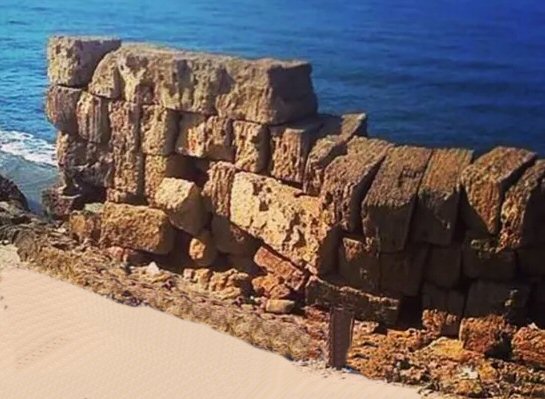
Megalithic Wall on Aradus Island (30-3)
The other major persons were revealed when they reached Paltos and Gabala, minor ports where local stories enticed Peter to travel to Aradus Island, marveling at vine-wood columns and ancient walls. Here, the tale of Domitia Lepida Major, her twin sons Niceta and Aquila was told. It was a joyous reunion when Niceta and Aquila learned that their mother, once lost at sea, had been found. When they were rescued in Cyrene by Simon and Helena, they feared that she was lost.
The names Faustinus and Faustus create another difficulty. If James and John received those names only after their mother’s marriage to Faustus Cornelius Sulla, then the later tradition appears to have incorporated that family connection backward into their earlier identity.
Their story was elaborated into the father returning only to be replaced by a figment of imagination created by the now evil Simon the Magician.
 |
  (2-5) (2-5) |
Having finished Simon's reconstructed debates, I considered the impact of including the important conclusion of James and John’s search for their mother. Even in this account, after Helena and Simon had rescued them from pirates, the finding of their mother is given to Peter. Then the story turns into a mocking portrayal of Simon.
Here was Simon, who had excelled as a philosopher, recast as an evil magician seeking power. Slowly, he passed from Zebedee into Faustus—not by transformation, but by imagination—until the man who had reasoned was remembered as one who wielded magic to persuade, and even bargained with the devil.
Amid all this, I—watching, recording, reflecting—saw truth move beyond envy and deceit, enduring, unbroken.
As the memory of the Way increasingly came to be told through Paul’s journeys in Acts, the Clementine tradition preserved another memory—one centered on Peter, his debates, and the struggle to define the faith before it became an institution.
Yet another detail remained: Peter had been joined by his wife at Balaneae before reaching Antioch. Together they continued toward the city where they hoped to establish a community beyond Jerusalem—a Church whose story would soon reveal how the Way began to take a new form.
Chapter 39: Divinely Called First in Antioch “Christians”
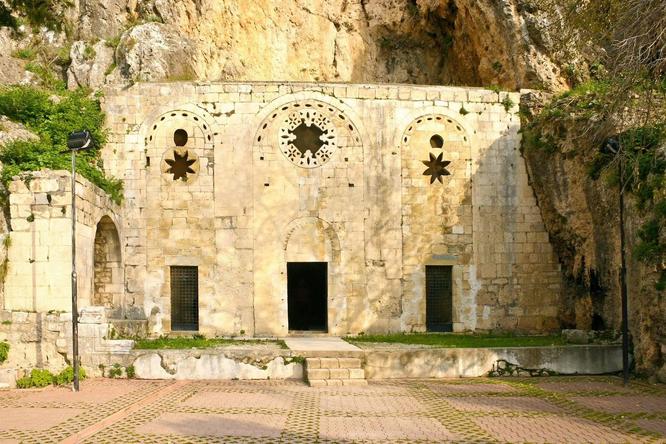
First Christian Church (32-1)
It was December 43 AD, perhaps the 24th—an important day for the Gentiles:
“Barnabas went forth to Tarsus to seek Saul, and having found him, he brought him to Antioch. It came to pass that for a whole year they assembled together with the church and taught a great multitude. The disciples were divinely called Christians first in Antioch.”
Luke records that the disciples were first divinely called Christians at Antioch. Why did this naming occur ten years after the Resurrection? What made this particular year different from all that had gone before?
From the quiet deliberations of the Way, and from the memory of its earliest gatherings, it appeared that the movement at last turned outward—ready to meet the Christ returned. What had been kept in seclusion, what had been carefully ordered through lineage and law, now stood prepared to enter the world.
Yet the question remains: it was 43 AD—ten years after the Resurrection—before the inclusion of the Gentiles. Why such a span? Should not the Resurrection itself have brought this about sooner?
Clarity came only when I counted the pattern. Then it dawned on me: the three- and six-year Essene observances completed the missing decade. What had seemed an unexplained delay after the Resurrection now made sense.
Instruction alone could not bring the Way to act. It remained bound by its Essene observances. While remaining in seclusion, Jesus continued to guide the community through Simon and Peter, yet it did not move ahead of him. It waited—not simply for his guidance, but for Jesus himself. Only then could the Way turn outward to the Gentiles.
Thus Acts 10 marks not only a vision, but a moment of transition. Luke—Cornelius himself within this tradition—the Gentile soldier who carried the memory of a Resurrection he could not yet fully understand—becomes both the witness and the instrument through whom the opening to the peoples beyond Israel is revealed.
In recording the event, Luke reveals not only Peter’s vision, but his own transformation. The signs unfold: the sheet lowered, the boundary removed, the approach made at the door. What is given to Peter is not simply permission, but timing. The Way could not move beyond its first boundary until Peter stood at that threshold and opened the door.
From that point, the name itself emerges—Christian: not merely adherents to a teaching still rooted in the people of Moses, but now formed under the direct action of Christ. In that convergence of waiting and arrival, the Way became more than instruction or memory. It became a people called into being—flesh, spirit, and mission. Ten years completed, and at last, named.
| Times when Jesus is out of monastery are conceiving time and birth | |||||
|---|---|---|---|---|---|
| child | sex | wait time | conceiving time | birth | appearances |
| Tamar/Phoebe | female | 3 | Sept 32-Jan 33 | Sept 33 | Road to Emmaus |
| Jesus Justus | male | 6 | Jun 36-Sept 36 | June 37 | Appears at Jonathan's trial as standing and the right side of the new high priest Theophilus (Acts 7:55–56) Autumn 37 causes Paul's blindness (Acts 9) |
| Joseph | male | 6 | Jun 43-Sept 43 | April 44 | Appears to Cornelius: cloth of animals allowing Gentiles equal status (Acts 10) |
The name of Christ was not the only thing revealed at that appointed moment. The same pattern of waiting that governed the seclusion of the Way also marked the continuation of the line itself.
Counting again the appointed intervals—three years and six—the sequence unfolded. The return in 43 AD followed six years after the birth of his firstborn son who bore the name of his father—Jesus. This conception came three years after the earlier return in 37 AD, already indicated by Peter at the Ascension. He spoke with an understanding shaped by the birth of the daughter, Tamar. Her birth marked the three-year measure and pointed toward the completion of the six.
James continued to be called “the Just,” yet the disciples had already transferred the right of succession in the Way to Joses-Barnabas. James retained the title only among those who upheld the existing priestly order. Later, in his letter to the Colossians, Paul preserved the title in “Jesus called Justus,” indicating his allegiance to Jesus and to his heir.
Then came the next sign, carried in the guarded phrase: “the word of God increased.” It spoke not only of growth, but of continuation. After the founding of the Christian assembly, another son was conceived—Joseph, bearing forward the name preserved from the generation before of Joseph and Mary, quietly extending the line into traditions later associated with Glastonbury.
Reorganization had become necessary. Herod Agrippa now ruled over all the territories once held by Herod the Great, having been granted by Rome the title ally and friend of the Roman people, with authority to govern his kingdom independently. His increasing self-importance caused concern among the factions, reinforcing the need for unity.
By long-standing custom, the Herodian kings were granted nominal leadership within the Church. This practice traced back to Herod the Great, who, under the counsel of Hillel and Menahem the Essene, had shaped the Way as a means of engaging the Diaspora, extending influence, and gathering support for the restoration of the Temple.
From this emerged a threefold structure, echoing Abraham, Isaac, and Jacob—reflected in the closing line of the Lord’s Prayer: the kingdom, the power, and the glory—expressed in earthly terms as Herod, the High Priest, and Heli, the grandfather of Jesus.
With Agrippa’s ambitions becoming more pronounced, the principal leaders met in secret at Joppa during the summer of 43 AD. There they arranged a general assembly to take place in December at Antioch—a setting removed from Jerusalem—where they would formally adopt the name Christians and establish their own leadership.
The extension to the Gentiles was inaugurated through Cornelius, the centurion—described as “a righteous and God-fearing man, respected by all the Jewish people.” Yet his role extended further. He had been the one to affirm Jesus’ death at the crucifixion, while quietly holding suspicion that he still lived—thus contributing to the concealment of the Resurrection.
Under the name Luke, he continued the account now known as Acts, recording the events of that year with a distinct sense of immediacy.
The account begins with Peter’s visit. Cornelius fell at his feet, but Peter raised him, saying: “Stand up; I also myself am a man”—declaring, in effect, the equal standing of Jew and Gentile.
Later, while praying at the ninth hour, Cornelius saw a man in radiant clothing—Jesus in the flesh—who instructed him to send for Peter in Joppa: “a guest in the house of Simon the tanner, who lives by the sea.”
The stage was set for what would follow.
Ac 9:43; 10:9–15; H. 13.4; R. 7.29
 (32-2)
 Peter himself had once refused to share a table with Gentiles, maintaining separation unless they first accepted the faith and were baptized. This marked a clear departure from earlier practice. The change, therefore, was not gradual but decisive.
On the following day, as the messengers approached Joppa, Peter went up to pray at about the sixth hour and entered into a trance.
Within the setting of the communal meal—expressed in the narrative as a vision—he saw a vessel descending, like a great sheet lowered from heaven, containing animals of every kind: beasts, creeping things, and birds.
Then came the command: “Rise, Peter; kill and eat.”
The imagery, drawn from the fullness of creation, signified not animals but peoples—extending beyond Israel alone.
Peter resisted: “Not so, Lord; for I have never eaten anything common or unclean.”
The reply followed: “What God has cleansed, do not call common.”
In that moment, the boundary was removed. Gentiles, upon baptism, were admitted to the same table. From Luke's account and the surrounding events, I believe this was the moment the Church finally stood united.
Peter's continued stay with Simon the tanner shows that the opening of the Gentile mission was not an isolated event but part of the same unfolding authority that culminated at Antioch. Through Cornelius-Luke, these events were recorded from the perspective of a Gentile who witnessed Jews and Gentiles united into one body, divinely called Christians under the guidance of Jesus himself. The hidden Way had completed its appointed season. Waiting gave way to witness, separation to unity, and the Way itself stood openly as the Church of Christ.
Chapter 40: The Family Reunion
While the Church was being united publicly, Luke also preserved another sequence of events unfolding at Joppa. Beneath the language of healing and restoration lies a second story—the reunion of Jesus' own family, restored to a single fellowship before the Church turned fully toward the nations.
I could sense that Luke navigated the tension between concealment and revelation. He preserved these events through Peter, attributing to him two restorations that echoed the works of Jesus himself, while at the same time concealing the identities of those being restored. Yet in one place he allowed the hidden truth to emerge: the statement that “he remained many days in Joppa with Simon the tanner” appears to reveal that Jesus himself was present. Whether intentional or not, this detail has continued to challenge later interpreters.
Ac 3:2–10; 9:32–35; Jn 5:1–18
James, younger brother of Jesus (4-8)
The figure named Aeneas may be understood through comparison with an earlier account. Set side by side, the two healings attributed to Peter reveal not acts of physical restoration, but moments of transition—signaling changes in leadership rather than displays of supernatural power.
“And it came to pass, as Peter passed throughout all quarters, he came down also to the saints who dwelt at Lydda. And there he found a certain man named Aeneas, who had kept his bed eight years and was sick of the palsy. And Peter said unto him, ‘Aeneas, Jesus Christ maketh thee whole: arise, and make thy bed.’ And he arose immediately. And all that dwelt at Lydda and Saron saw him, and turned to the Lord.”
This may be read alongside the earlier healing at the temple gate:
“A certain man lame from his mother’s womb was carried, whom they laid daily at the gate of the temple which is called Beautiful… Then Peter said, ‘Silver and gold have I none; but what I have I give thee: In the name of Jesus Christ of Nazareth, rise up and walk.’ And he took him by the right hand and lifted him up.”
Taken together, the two accounts form a pattern. The same figure appears in both—first incapacitated from birth, later confined for a measured span. The restoration, in each case, follows Peter’s intervention. The meaning, however, lies less in bodily healing than in position. The one set aside is restored, not to strength alone, but to standing.
Read in this way, the episode reflects Peter addressing James—once constrained within the limits of his own faction—now brought forward into alignment. The language of healing serves to mark reconciliation, and the movement from exclusion to participation.
Even earlier, the account at the pool in John 5 introduces the same theme: a man waiting for the proper moment of restoration, yet bound to an expectation that never arrives. The correction is not of the body, but of understanding.
At this point I can explain the mystery of Joseph of Arimathea at the Crucifixion. He appears suddenly at the moment when Jesus' body must be claimed before sundown, yet afterward he vanishes as completely as he had appeared. The accounts preserve no genealogy, no earlier history, and no later mention. Such silence seemed unlike the record of an ordinary disciple.
Each account preserved a different fragment. Matthew called him “a rich man” (Matt. 27:57), a description that need not signify personal wealth. James, as keeper of the treasury entrusted to the Qumran community, was the guardian of its riches, making him, in that sense, the rich man. Mark described him as one “waiting for the kingdom of God” (Mk. 15:43), an expression that echoed an earlier pattern I had already traced through the signs surrounding the kingdom. John portrayed him as a secret disciple who nevertheless possessed the standing to approach Pilate directly and request the body of Jesus.
Then I turned to Acts. There James no longer stood hidden. He appeared openly as the acknowledged leader of the assembly in Jerusalem, directing its affairs and speaking with an authority recognized by apostles and elders alike. The figure concealed within the burial narrative emerged into the light.
The title Arimathea itself remained enigmatic. It has long been understood as a place, yet its derivation recalls “the two heights.” I began to wonder whether the name had been preserved not merely as a geographical description but as a deliberate designation. If so, it pointed beyond a hometown to the one who stood upon the second height beside the Chosen One—the alternate Messiah.
Seen in this light, the appearance of Joseph of Arimathea at the crucifixion was no incidental detail. It was James who possessed both the authority and the obligation to petition Pilate for his brother's body before the setting of the sun. Without his intervention, the Law could not have been fulfilled, the body could not have been removed in time, and the deliverance that followed could never have unfolded. The mysterious Joseph, who enters the record only for a single sacred duty, was therefore not a forgotten disciple, but James remembered under another name.
Ac 9:36–42

Tabitha-Dorcas (Mother Mary of James and Jesus) (32-4)
“Now there was at Joppa a certain disciple named Tabitha, which by interpretation is called Dorcas. This woman was full of good works and deeds… and it came to pass in those days, that she was sick and died: whom when they had washed, they laid her in an upper chamber.”
When Peter arrived, he found the community in mourning, the widows presenting the garments she had made. He withdrew, prayed, and said:
“Tabitha, arise.”
She opened her eyes, sat up, and was presented alive. And it became known throughout Joppa, and many believed in the Lord.
Here again, the language of death and restoration may be read as separation and return. To be “dead” is to be removed from the community; to be raised is to be restored to it. The emphasis falls not on the act itself, but on its result: recognition, and renewed unity.
Ac 9:43
Notably, the account concludes with a shift in focus:
“And it came to pass, that he remained many days in Joppa, with one Simon, a tanner.” (Ac 9:43)
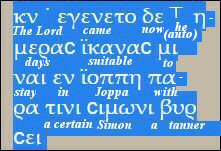
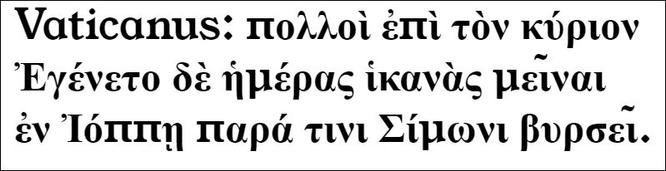
Luke Reveals that Jesus is there in the flesh (not Peter)
The subject of the sentence—“he”—aligns not with Peter alone, but with the presence referred to throughout as “the Lord.” The belief that follows is directed not toward the intermediary, but toward the one whose authority the act signifies.
And many believed on “the Lord” (Ac 9:36–42), and it came to pass, that “he”—the Lord—remained many days in Joppa, with a certain one, Simon a tanner (Ac 9:43).
In this light, the events at Joppa foreshadow what is to come. Figures once separated—James and his mother among them—are gathered into a single body. What is described as healing is, in effect, alignment.
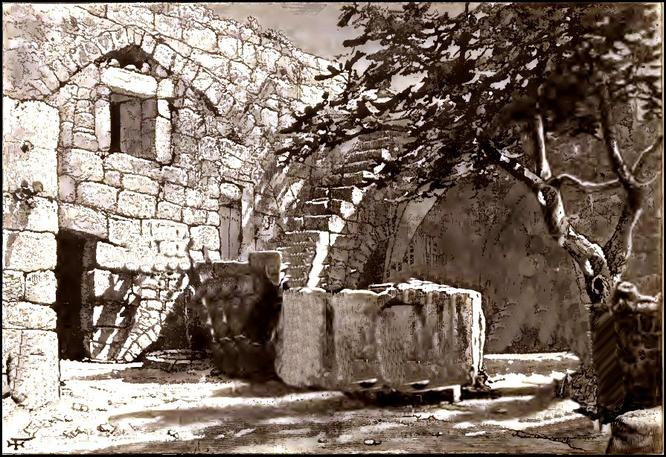
House of Simon Magus 'the tanner' (32-3)
These events unfold under Simon the tanner, whose role mirrors that of Judas: preparing Jesus through his Nazarite vow before marriage. The pattern is clear—withdrawal, testing, and return—until the body, the Church, stands fully as the kingdom, the power, and the glory.
Read together, these episodes reveal more than isolated miracles. James is convinced to accept Christianity. Mother Mary returns to the care of her family. Magdalene will soon be with child Jesus Justus. At six years old, he plays by the seaside of Joppa. Peter becomes the instrument through whom the family is gathered into one body.
Only after this reunion does Luke turn his attention to the nations. The hidden household stands together once more before the Gospel goes out into the world.
Chapter 41: Angels, Kings, and Prophets Must Fall
I had followed the hidden lineage as far as my sources would allow. The founding of the Church marked the end of the records entrusted to our family. What followed came from another hand.
Among my father's papers lay a bundle of worn tablets and loose leaves, each bearing the unmistakable voice of the man history remembered only as Simon Magus. Many would dismiss his testimony before reading it, yet if the Church preserved the words of Peter, Paul, and Luke, then justice required that Simon be heard as well.
From this point, Simon speaks for himself. His testimony must be weighed alongside that of the other historians.
In the wake of the Church’s triumphant founding, it was inevitable that, upon the stage of men, the mighty would fall to make way for a new order. Herod would die, Jesus would be divorced, and I—Simon Magus—would be cast down from the papal throne.
Ant. 19.7.4–5; Ac 12:2, 5–10
Herod Agrippa had inherited the kingdom and power of his grandfather, yet with it came his madness. He spent vast sums on entertainment, gathering prisoners to stage a gladiatorial fight of seven hundred against seven hundred, patting himself on the back for providing amusement to the crowds.
Having resolved to exert greater control over the Church, Herod Agrippa had an altercation with James, the brother of John, and put him to death with the sword. History would call it an execution, but I saw it as excommunication by the sword—a troubling sign of worse things to come.
When he heard that Simon Peter had spoken against him, he summoned Peter. Upon Peter’s arrival at Caesarea, despite his apology, he was thrown into prison.
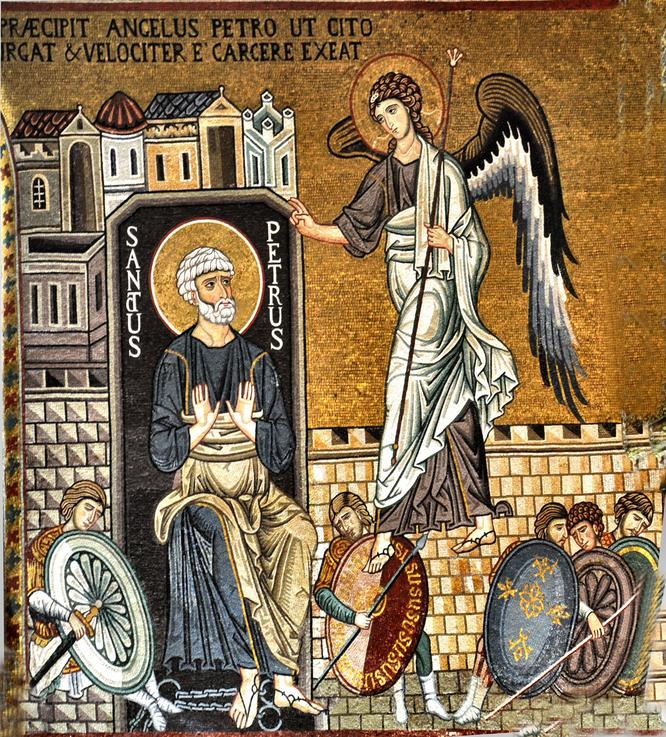
Peter promoted to Bishop (33-1)
Ac 12:5–10; 27:2; Col 4:10; Mk 14:72
To diffuse the apparent attack on the Way, I, Simon Magus, suggested to Herod Agrippa that Peter’s release from prison could serve to complete his preparation for the position of bishop under my guidance. Since Peter’s wife had died (she was the daughter of Glaphyra), he now met the requirement of celibacy. If he became bishop, he would outrank James and John, who were presbyters, and thus could enforce Agrippa’s wishes.
Herod agreed to release him in three days.
Although the story presents it as a miraculous event—an angel loosening the prison gates—in truth, it was I who guided Peter: I, Simon Magus, the one they would call the Angel of the Lord, leading him through the stages required to ascend.
Peter lay half-asleep between two soldiers, bound in chains. I touched his shoulder.
“Rise,” I whispered. “Your wife is gone. You are free.”
He stirred, uncertain if he still walked the world of men or had entered a vision. The chains fell from his hands, and a radiant light filled the room.
I struck gently at his side, as Jacob’s angel had done, and said:
“Gird yourself. Tie your sandals. As Jacob became Israel, you are renamed. Step forward.”
Peter obeyed.
He stepped into the first ward. The memory of the night before the Crucifixion came flooding back.
“You held the office of Merari as a deacon before,” I said.
A crowing cock echoed in his mind, bridging past and present.
We moved into the second ward. A raven alighted on his shoulder.
Peter flinched. “What does this mean?” he asked.
“You are Gershon, a presbyter,” I replied.
An iron door swung open ahead. From its gate, a dove flew into the city, its wings catching the morning sun.
Peter walked down the length of One Street—the Way—my voice guiding him still:
“Go forth as Kohath, bishop.”
And then I vanished.
Peter stood, half-dazed but filled with purpose. The wards had marked his transformation: from deacon to presbyter, and now to bishop. The Church, and its new hierarchy, awaited him.
Acts 12:12–14a
Released and promoted, Peter traveled to Mary Magdalene's convent in Lydda. He came to the house and heard singing and prayer within. When he knocked, the door was opened.
Peter stepped forward at once and spoke sharply.
“Rhoda, the rose of the cross!”
“No, Peter. I am but a servant girl now. I carry a child not yet brought forth. Remain here.”
Peter frowned, unsettled by her abruptness.
“Why do you bar my way?” he pressed.
Rhoda rested her hand briefly upon her belly and replied, “The joy within me does not permit passage.”
Peter’s voice took on the authority of his office.
“I see that you are with child, but I am bishop now. I may enter the convent.”
At this, Rhoda’s expression softened slightly, as though something distant had been acknowledged.
“I heard your wife had died, and that Herod had imprisoned you.”
“My imprisonment became my promotion, won through Simon’s persuasion of Agrippa.”
Rhoda looked at him in bewilderment, struggling to reconcile imprisonment with promotion.
“Where is John Mark?” Peter replied brusquely.
She closed the door and hurried inside.
“Peter’s spirit is at the door!”
Bartholomew appeared—the man Luke preferred to call by his Roman name, John Mark—and spoke calmly.
“So it is said—you stand as one like an angel. You must excuse Magdalene; she is near her time. Herod Agrippa’s web draws ever tighter.”
He beckoned him inside.
Ant. 19.8.2
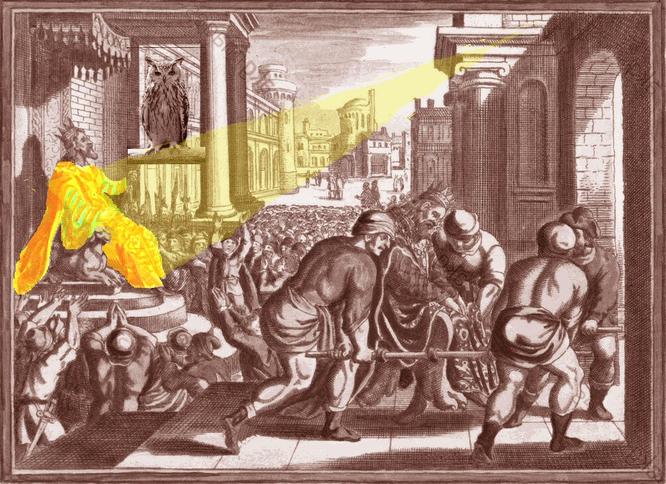
Herod Agrippa at Strato's Tower sees the Owl (33-2)
On April 10, 44 AD, when Agrippa had reigned three years over all Judea, he came to the city of Caesarea Maritima, formerly called Strato’s Tower. There, at a festival, a great multitude of dignitaries from across his province were gathered.
On the second day, he put on a garment made wholly of silver, of texture truly wonderful, and entered the theater early in the morning. The silver of his garment, catching the first light of the sun, blazed so brightly that it dazzled the onlookers.
His flatterers cried out—one from one place, another from another—though not for his good:
“He is a god!”
But as he looked out over the multitude, he saw it—the owl—perched upon a rope above his head.
And I knew, as he knew.
For once before it had appeared to him, and its sign had been mercy—that he would be freed. But now it returned, and the meaning was reversed. What had been granted could be taken away.
He understood: the bird no longer promised life, but marked its end.
A violent pain seized his belly. He collapsed and was carried to his palace. In five days, he was dead—fifty-four years of age, in the seventh year of his reign.
And so the sign was fulfilled.
Not by chance, nor by fate—but by my design.
For the one who had lifted his hand against the trial of Jesus would not escape judgment.
Ant. 19.6.5; Ac 12:23
On the platform, the eunuch Blastus–Nicolaus confided to me:
“I feel remorse for giving him the snake poison.”
I answered him—Simon Magus, who had seen kings rise and fall:
“Nicolaus, is it not our duty to put a mad dog down? Madness runs in the blood of emperors—Herod the Great, Caligula. Inbreeding is the sin, not ours.”
He hesitated.
“He once was great. It is a tribute that he restored Herod the Great’s kingdom piece by piece.”
I continued:
“Though impressive, his insanity mirrored that of his grandfather. A mad king is dangerous, capable of killing family and subjects alike. The madness of Herod the Great caused him to murder his three sons. He nearly slaughtered the citizens he locked in the hippodrome just to secure his legacy. This is the danger of allowing a king to rule past his sanity.”
“You did well to trick him into taking the snake poison. Countless lives were spared. As a reward, you will become bishop of Laodicea—one of the seven great churches under your charge.”
Herod Agrippa had inherited the kingdom and power of his grandfather, yet with it came his madness. He spent vast sums on entertainment, gathering prisoners to stage a gladiatorial fight of seven hundred against seven hundred, patting himself on the back for providing amusement to the crowds.
Having resolved to exert greater control over the Church, Herod Agrippa had an altercation with James, the brother of John, and put him to death with the sword. History would call it an execution, but I saw it as excommunication by the sword—a troubling sign of worse things to come.
When he heard that Simon Peter had spoken against him, he summoned Peter. Upon Peter’s arrival at Caesarea, despite his apology, he was thrown into prison.
To diffuse the apparent attack on the Way, I, Simon Magus, suggested to Herod Agrippa that Peter’s release from prison could serve to complete his preparation for the position of bishop under my guidance. Since Peter’s wife had died (she was the daughter of Glaphyra), he now met the requirement of celibacy. If he became bishop, he would outrank James and John, who were presbyters, and thus could enforce Agrippa’s wishes.
Herod agreed to release him in three days.
Although the story presents it as a miraculous event—an angel loosening the prison gates—in truth, it was I who guided Peter: I, Simon Magus, the one they would call the Angel of the Lord, leading him through the stages required to ascend.
Peter lay half-asleep between two soldiers, bound in chains. I touched his shoulder.
“Rise,” I whispered. “Your wife is gone. You are free.”
He stirred, uncertain if he still walked the world of men or had entered a vision. The chains fell from his hands, and a radiant light filled the room.
I struck gently at his side, as Jacob’s angel had done, and said:
“Gird yourself. Tie your sandals. As Jacob became Israel, you are renamed. Step forward.”
Peter obeyed.
He stepped into the first ward. The memory of the night before the Crucifixion came flooding back.
“You held the office of Merari as a deacon before,” I said.
A crowing cock echoed in his mind, bridging past and present.
We moved into the second ward. A raven alighted on his shoulder.
“What does this mean?” he asked.
“You are Gershon, a presbyter,” I replied.
An iron door swung open ahead. From its gate, a dove flew into the city, its wings catching the morning sun.
Peter walked down the length of One Street—the Way—my voice guiding him still:
“Go forth as Kohath, bishop.”
And then I vanished.
Peter stood, half-dazed but filled with purpose. The wards had marked his transformation: from deacon to presbyter, and now to bishop. The Church, and its new hierarchy, awaited him.
Released and promoted, Peter traveled to Mary Magdalene's convent in Lydda. He came to the house and heard singing and prayer within. When he knocked, the door was opened.
Peter stepped forward at once and spoke sharply.
“Rhoda, the rose of the cross!”
“No, Peter. I am but a servant girl now. I carry a child not yet brought forth. Remain here.”
Peter frowned, unsettled by her abruptness.
“Why do you bar my way?” he pressed.
Rhoda rested her hand briefly upon her belly and replied:
“The joy within me does not permit passage.”
Peter’s voice took on the authority of his office.
“I see that you are with child, but I am bishop now. I may enter the convent.”
At this, Rhoda’s expression softened slightly, as though something distant had been acknowledged.
“I heard your wife had died, and that Herod had imprisoned you.”
“My imprisonment became my promotion, won through Simon’s persuasion of Agrippa.”
Rhoda looked at him in bewilderment, struggling to reconcile imprisonment with promotion.
“Where is John Mark?”
She closed the door and hurried inside.
“Peter’s spirit is at the door!”
Bartholomew appeared—the man Luke preferred to call by his Roman name, John Mark—and spoke calmly.
“So it is said—you stand as one like an angel. You must excuse Magdalene; she is near her time. Herod Agrippa’s web draws ever tighter.”
He beckoned him inside.
On April 10, 44 AD, when Agrippa had reigned three years over all Judea, he came to the city of Caesarea Maritima, formerly called Strato’s Tower. There, at a festival, a great multitude of dignitaries from across his province were gathered.
On the second day, he put on a garment made wholly of silver, of texture truly wonderful, and entered the theater early in the morning. The silver of his garment, catching the first light of the sun, blazed so brightly that it dazzled the onlookers.
His flatterers cried out—one from one place, another from another—though not for his good:
“He is a god!”
But as he looked out over the multitude, he saw it—the owl—perched upon a rope above his head.
And I knew, as he knew.
For once before it had appeared to him, and its sign had been mercy—that he would be freed. But now it returned, and the meaning was reversed. What had been granted could be taken away.
He understood: the bird no longer promised life, but marked its end.
A violent pain seized his belly. He collapsed and was carried to his palace. In five days, he was dead—fifty-four years of age, in the seventh year of his reign.
And so the sign was fulfilled.
Not by chance, nor by fate—but by my design.
For the one who had lifted his hand against the trial of Jesus would not escape judgment.
On the platform, the eunuch Blastus–Nicolaus confided to me:
“I feel remorse for giving him the snake poison.”
I answered him—Simon Magus, who had seen kings rise and fall:
“Nicolaus, is it not our duty to put a mad dog down? Madness runs in the blood of emperors—Herod the Great, Caligula. Inbreeding is the sin, not ours.”
He hesitated.
“He once was great. It is a tribute that he restored Herod the Great’s kingdom piece by piece.”
I continued:
“Though impressive, his insanity mirrored that of his grandfather. A mad king is dangerous, capable of killing family and subjects alike. The madness of Herod the Great caused him to murder his three sons. He nearly slaughtered the citizens he locked in the hippodrome just to secure his legacy. This is the danger of allowing a king to rule past his sanity.”
“You did well to trick him into taking the snake poison. Countless lives were spared. As a reward, you will become bishop of Laodicea—one of the seven great churches under your charge.”
In June, Jesus arrived at the convent in Lydda. Magdalene stepped forward, cradling a bundled baby boy. Her eyes shone with pride, tinged with apprehension.
“Now I have given you an heir—and a spare,” she said softly, her voice trembling.
Jesus smiled, lifting the infant to his chest.
“Another boy. He is beautiful. I shall name him Joseph.”
Magdalene hesitated, her fingers brushing the child’s blanket.
“I must tell you something that may displease you.”
Jesus’ gaze softened.
“Speak freely.”
“I wish to divorce you,” she said. “The rift between Simon and Peter will widen now that Peter is a bishop. I am weary of this struggle. And at my age, I cannot bear another child.”
Jesus was silent for a long moment. His eyes darkened with sorrow, yet he remained composed.
“That saddens me,” he said at last, “but I see your reasoning. I have loved both you and Simon. If this is your choice, I will honor it.”
A bittersweet smile crossed Magdalene’s face. She rested a hand upon her belly.
“I have affection for you,” she said. “But peace must come. Perhaps Paul will justify it. As a Syro-Phoenician woman, I am not bound by Jewish law if I do not remarry.”
Jesus nodded, his fingers brushing lightly across the infant’s hair.
For a long moment, the three of them—the mother, the child, and the teacher—stood in quiet recognition: not of loss alone, but of duty, love, and the cost of peace.
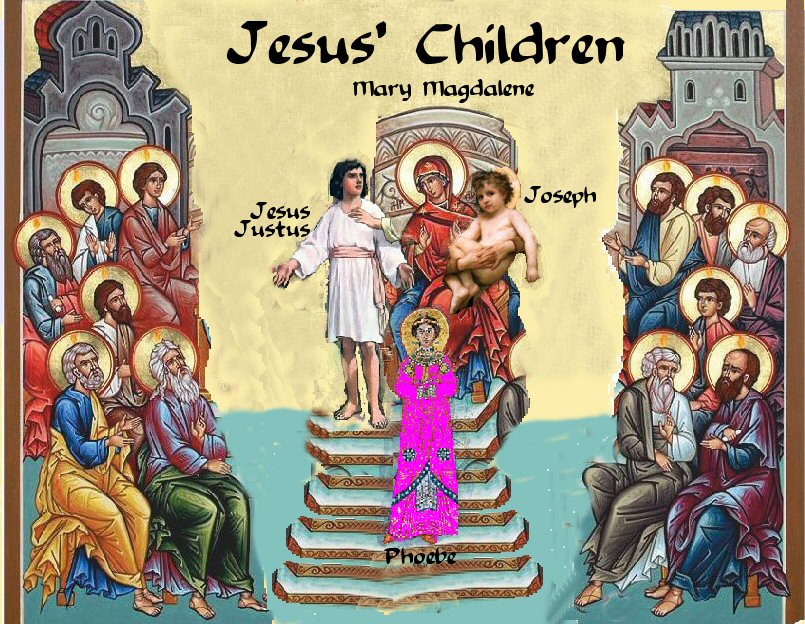
Jesus' Children (33-3)
To the married: A wife must not separate from her husband. But if she does, she must remain unmarried or be reconciled.
To the rest: If a believer has a spouse unwilling to live with them, let it be so. God calls us to live in peace.
The schism Magdalene had foreseen came swiftly, in Paphos, Cyprus. In late autumn of 44 AD, the seventeen-year-old Agrippa II was apprenticed to the proconsul—too young to claim his father’s kingdom.
I led my followers there, instructing the boy in the ways of the Church. I, Simon Magus, the Pope, the Magus of Jesus—Elymas Bar-Jesus—taught kingship and faith alike.
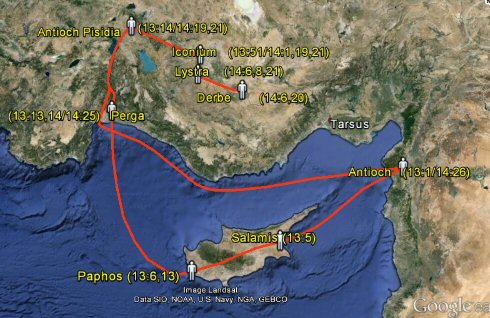
Paul's First Journey 44-46 AD
At the same time, Paul began his first missionary journey from Antioch with Barnabas and John Mark. Agrippa invited us to dinner. I came, bearing the weight of office, surrounded by my disciples.
Paul, claiming the Holy Spirit, fixed me with a gaze as sharp as a blade.
“How can you break bread with the sorcerer who killed your father?” he demanded.
Agrippa paled.
“Is this true?” he asked.
Paul spoke the secret I had guarded:
“This deceiver is skilled in dark arts and poisons. I curse him now—to bear the blindness he once brought upon me.”
In that moment, my throne crumbled. Not by sword or conspiracy, but by the revelation of a hidden truth spoken aloud. My papacy, long held, was stripped from me. The owl’s judgment, once borne by wings, now came through the voice of man.
Paul and Barnabas departed. John Mark, furious at the betrayal, stayed with me. Together we crossed to the mainland, carrying the silence of my dethronement.
The rift between John Mark and Paul would endure for years, a wound that no reconciliation could close.
Thus, I turned my attention to Saul of Tarsus. I had seen his mind in motion before—his cunning, his zeal, his boundless capacity for transformation. If I could guide him, as I had Peter, then the Way could flourish in ways no single hand alone could achieve.
My role was not diminished; it was merely evolving, preparing for the coming storm and the rise of a force the world had yet to reckon with.
Thus ended another fragment of Simon's testimony—the years when the Way expanded beyond Jerusalem, while those who recorded it struggled to understand the hands that guided it.
Chapter 42: Phoebe Enters the Story
In September of 45 AD, at Antioch of Pisidia, Simon officiated at my coming of age, which he called my Bat Mitzvah. I was twelve years old, the daughter of Jesus and Mary Magdalene.
It was here that I was no longer merely the teller of the story, for I could no longer tell only the story of those who came before me. It had become my story.
I remember Simon placing the communion bread into my hands and declaring:
“Today we celebrate Tamar’s coming of age. It has been forty years since the High Priest Ananus the Elder declared her father, Jesus, the legitimate heir of David at his Bar Mitzvah. She has taken the name Phoebe as her religious name, in honor of the first Gentile martyr of the Way. She had kept silent before Augustus to protect her grandmother, Helena—Julia the Younger—from having her true lover revealed during her exile.”
I took a slow breath before opening Ovid's Heroides. My eyes glistened as I began.
“I have brought a poem to celebrate Helena’s life, now that she has passed away. This is the voice of Helen from Greek and Trojan history:
‘How could you, Paris, so quickly bend my mind?
The more I wonder at your confidence in what you have begun,
and the hope you have given for the bed that is said to be my cause.
Or is it because the hero of Neptune carried me to you,
that though once seized I seem twice over worthy to be seized?’”
A hush fell over the hall. I lowered my head, though a quiet smile curled across my lips. When I looked up, I saw my mother's breath catch as she pressed her hands against her chest, tears filling her eyes.
She understood immediately why I had chosen Helen's words to tell the story of her own mother—a story that only she and Simon had ever dared reveal. She saw that I was ready to confront the hidden truths of my inheritance and that I would not allow history's accusations to have the final word.
I had chosen the name Phoebe because I no longer wished to be bound to the sorrow carried by Tamar, the daughter of King David. Instead, I desired a name of light and rebirth, worthy of the daughter of the Son of Man.
In the words of Helen of old, I honored my grandmother, Julia the Younger, whom Simon had renamed Helena, restoring to her not shame but the beauty of the woman said to have launched a thousand ships.
I treasured what Simon had taught me: to see beneath the poetry. The names Helen and Neptune concealed another history—hidden lineage of emperors and exiles, of poets and kings.
Augustus had once mocked Simon with the name Neptune after his exile, just as Rome had transformed my grandmother into another Helen, stolen away by her forbidden lover.
Simon would often remind me that the myths of old are never truly past. They are lived again in every generation, only under different names.
Afterwards, I observed Simon and Jesus conversing off to the side. Knowing Simon, I knew he was not pleading to gain his former position back.
Everyone knew that Paul's revelation concerning Simon's role in the death of Agrippa meant Simon would have to be officially dissociated from the Church if they hoped to gain the support of Agrippa's son.
I later asked my father what they had discussed, and what follows is the conversation as he later recounted it to me.
“Phoebe is remarkable,” Simon said. “Her reasoning approaches the clarity of Paul’s own. Have you considered uniting her with him in marriage? She may be the only one capable of tempering his uncontrollable force.”
Jesus answered him:
“That is precisely why I made you my Pope: always thinking ahead. But it must be her choice. Though I know she is already enraptured by Thecla’s description of him: ‘small of stature, bald-headed, bow-legged, in good health, with eyebrows meeting and a somewhat hooked nose, full of friendliness. At times he appears like a man, and at other times with the face of an angel.’”
Simon nodded.
“The description suggests they would be well matched according to the Essene marriage traditions.”
Jesus did not rule it out of hand at that time, but he insisted that it had to be her choice.
They also discussed the forthcoming canonization of the Gospels. Jesus said he would soon leave for Patmos to dictate to John Aquila letters to the Seven Churches, inviting them to attend the ceremony.
My father explained that each Gospel would symbolize one of the angels of Revelation, culminating in the Seventh Angel, who would proclaim:
“The kingdoms of this world have become the kingdoms of our Lord and of His Christ, and He shall reign forever and ever.”
Jesus believed the sounding of the Seventh Angel would be fulfilled not by the end of the world, but by the completion of the Church through the canonization of the Gospels.
My father never spoke of Revelation as the destruction of the world. He understood it as the birth of the Church's written witness through the canonization of the Gospels.
As they embraced, both men understood that Simon's public influence would gradually disappear behind the authority of the written Gospels. Yet his counsel would endure quietly through those he had taught.
Luke's attention would increasingly turn toward Paul, though Paul himself would not be present at the canonization ceremony.
Chapter 43: Paul—The Game Changer
St. Paul son of Herod Antipas, brother-in-law of Salome (31-1)
Luke's emphasis on Paul had always troubled me.
Among all those who followed Jesus, why did Luke devote so much of his account to Paul? Peter stood at the beginning of the Way as the Great Voice. John Mark served as Magdalene's protector, bearing the office of Great Grace. Yet as Luke continued his account, the center of the story shifted.
It became Paul's story. Luke was too careful a historian for such a shift to be incidental.
At first, I thought Luke had simply preserved the memories of the man who had become his companion. But the more I read, the more I understood that something deeper was at work. Paul was not merely Luke's traveling companion; he became the turning point through which the Way passed from a Jewish restoration movement into a faith that reached the nations.
My search to understand Paul did not begin among the archives of Rome. It began much closer to home.
Ac 7:58; Ac 22:3, 25–28, 23:6, 26:4–5; Phil 3:5–6; Gal 1:13–14; 2 Cor 11:22
Paul moved through the eastern world like a man of many lives. Jew by covenant, Pharisee by training, Greek in mind, Roman by status, Herodian by nature. Identity was architecture; every layer deliberate, every mask a tool. Citizenship, family ties, training—all instruments to navigate a labyrinth of law, favor, and custom. Few could follow him into every world he inhabited, yet none doubted his loyalty when he chose it. Beneath the polish, beneath the carefully constructed masks, was a spirit that could not be contained—a mind always plotting, always reaching, always calculating.
Rom 16:21; 1 Cor 4:17; 16:10; 2 Cor 1:1; Col 1:1; 4:7,14; Eph 6:21; Phil 1:1; 2:19; 1 Thess 1:1; 3:2,6; 2 Thess 1:1; Phlm
• To the Jews in Jerusalem: “I am a Jew, born in Tarsus of Cilicia, but brought up in this city; I studied under Gamaliel, educated strictly according to the law of our ancestors, being zealous for God as all of you are today” (Ac 22:3).
• Before the Sanhedrin: “I am a Pharisee, the son of Pharisees” (Ac 23:6).
• Addressing Agrippa II: “I was educated from my youth according to the strictest sect of our religion, being a Pharisee. I persecuted this Way with the utmost intensity” (Ac 26:4–5).
• In his letters: “Circumcised on the eighth day, of the people of Israel, of the tribe of Benjamin, a Hebrew of Hebrews; in regard to the law, a Pharisee; as for zeal, persecuting the church; as for righteousness under the law, faultless” (Phil 3:5–6). “I was advancing in Judaism beyond many of my own age among my people, being more extremely zealous for the traditions of my fathers” (Gal 1:13–14).
• When Roman authority threatened: “Is it lawful for you to flog a man who is a Roman citizen?” (Ac 22:25–28).
Each statement was both mask and instrument—carefully chosen for audience and occasion. Yet even the most practiced of masks could not prevent a single misstep.
Only gradually did I recognize what Luke had seen. Peter gave the Way its public voice. John Mark preserved Magdalene's legacy. Simon guided its hidden course. Yet Paul alone could stand before rabbis, philosophers, governors, kings, and Caesar's officers without seeming out of place.
Ac 16:1–4, 20:4, 21:27–36, 21:29, 22:22–30, 23:12–16, 25:1–27, 26:1–32; Ant 18.5.1–4, 20
I had seen such a misstep at the Temple in Jerusalem. Paul, overreaching by bringing Trophimus into the Temple, nearly paid with his life. Only his Roman citizenship spared him, a legal talisman delivered by swift intervention. Soldiers carried him through the city, a living barrier against a furious crowd, to Festus in Caesarea.
Festus, balancing law and politics, summoned Agrippa II. Paul, sensing opportunity, recounted his conversion with care. Agrippa, ever cautious, admitted: “This man has almost persuaded me to be of your way.”
Acts 16:1–4, 20:4, 21:29; 23:16; Ant 18.5.4
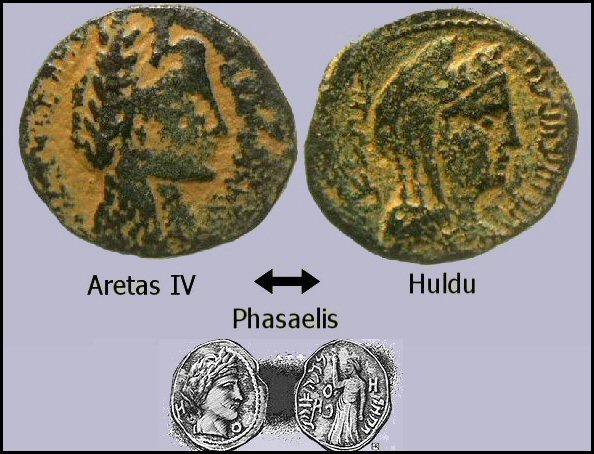 (31-4)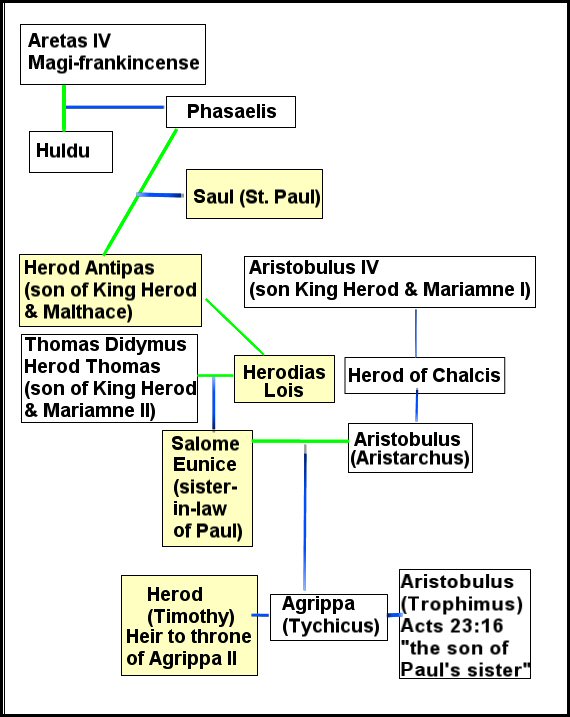
Then came the revelation. I have often suspected Luke intended this detail to pass unnoticed. Trophimus declared himself quietly: “I am the son of Paul’s sister.”
No one challenged him immediately, yet the words lingered, a shadow over the assembly. Paul invoked his right to appeal to Caesar, a lifeline to Rome—and to the larger mission that now depended upon him.
Bernice whispered to Agrippa, pondering the claim. Agrippa traced the family lines, the Herodian and Herodias connections, Salome, the dance that led to John’s death. Slowly, he understood: Paul carried the bloodline of Antipas. Had he not invoked Caesar, he might have been freed, yet the revelation settled, heavy and unspoken: the leadership of the Way intertwined with dynasty in ways Rome had never anticipated.
Acts 16:1–3; 19:22; 20:4; 21:29; 23:16–22
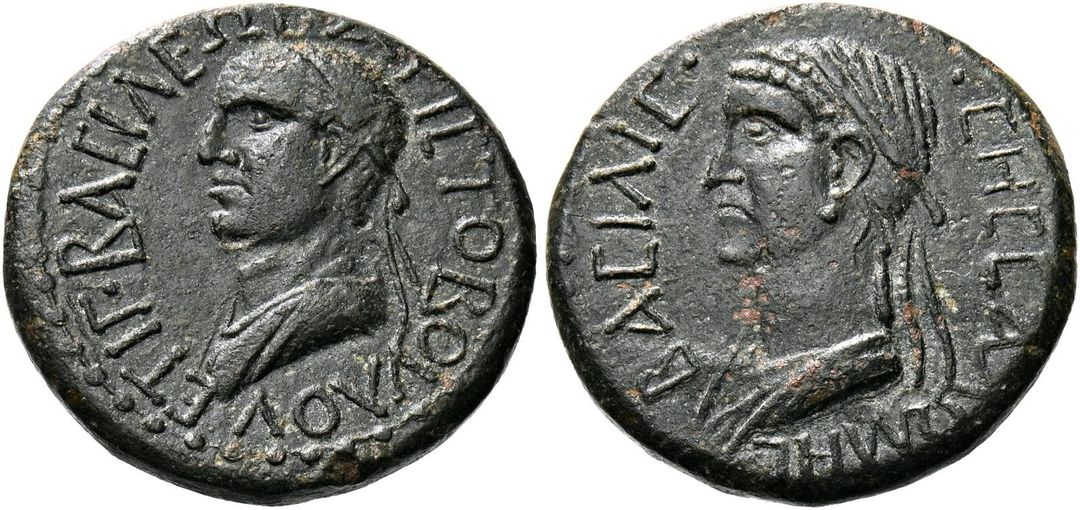
Aristobulus of Chalcis and Salome (37-6)
Salome, who was revealed as Paul’s step-sister, was married to Aristobulus of Chalcis, brother of Agrippa I—thus situating her firmly within the Herodian dynasty of Judea. Though this branch of the family resided in Chalcis and was often labeled “Greek” or “Asian” by geography, I observe that their lineage remained distinctly Herodian in both identity and influence.
When Paul traveled through the eastern provinces, three companions are consistently named: Timothy, Tychicus, and Trophimus, all associated with the province of Asia. I draw attention to the striking correspondence between these figures and the sons attributed to Salome and Aristobulus of Chalcis—Timothy, Tychicus, and Trophimus—suggesting a familial continuity beneath the surface of the text. Likewise, the Second Epistle to Timothy reflects this generational pattern, presenting Eunice and Lois as maternal transmitters of faith—echoes, in my estimation, of Salome and Herodias within the same dynastic line.
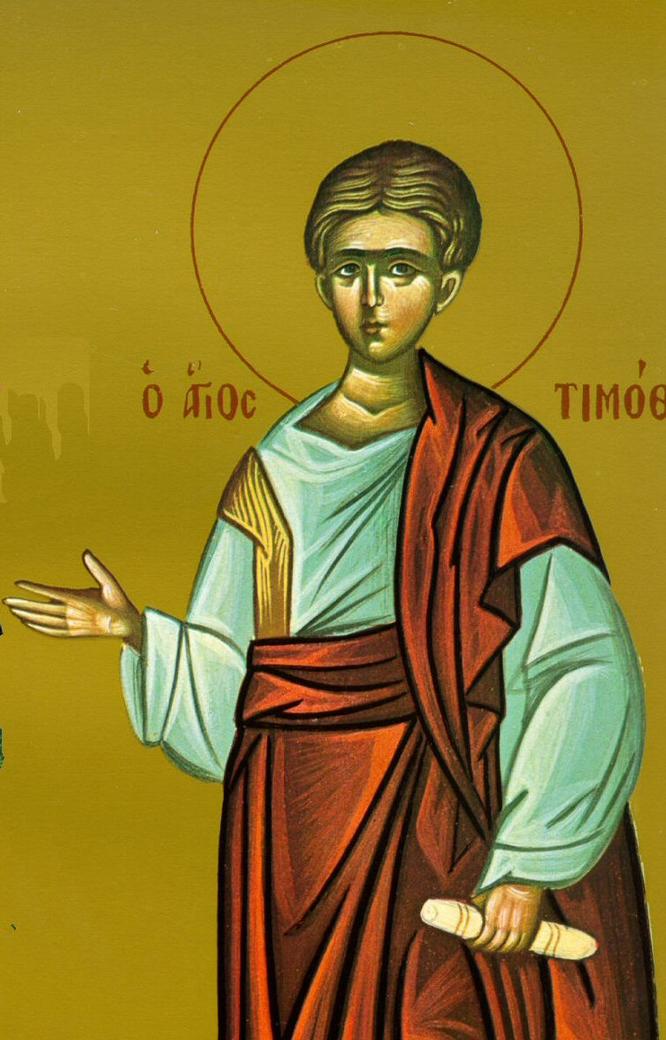
Timothy(31-5)
Timothy, bearing the name Herod, is described as the son of a Jewish woman and a Greek father. I note that this designation of “Greek” appears to reflect not ethnicity but geography—the location of their kingdom—given that Salome and Aristobulus of Chalcis were themselves descendants of Herod. Raised by his mother, and associated in tradition with the household shaped by the legacy of Herodias, he stands at the intersection of Jewish covenant and Hellenistic culture. I emphasize that, if this identification holds, Timothy was not merely a disciple but Paul’s nephew, binding apostolic mission to Herodian blood. Named in numerous epistles, and directly addressed in two, he was circumcised by Paul and entrusted with oversight of congregations, moving with ease between Jewish and Greek spheres. With Agrippa II remaining childless, I note the implication: Timothy stands at a convergence point between dynastic continuity and the expanding reach of the Way.
Tychicus appears to take his name from Herod Agrippa and is presented repeatedly as Paul’s trusted delegate. He carried letters, represented Paul’s authority, and strengthened assemblies across the provinces. Bearing a name linked to both Agrippa I and Agrippa II, he embodies, within this framework, the tension between preserving Herodian legacy and serving the mission of the Way.
Trophimus, whom I identify with the name Aristobulus within the family structure, forms the third figure in this triad. He is associated with the exposure of a plot against Paul in Jerusalem—an episode in which Luke, perhaps inadvertently, reveals the presence of a tightly bound familial network beneath the public narrative. Later references to his illness serve, in my reading, as a reminder that even those of noble lineage remained subject to human limitation.
Taken together, Timothy, Tychicus, and Trophimus form what appears, in my compilation, to be more than a group of companions. Their ordinary names obscure a deeper dynastic significance. During Paul’s imprisonments, he relied on them to sustain and coordinate the movement of the Way. Beneath the surface of Acts and the epistles, I discern a Herodian framework quietly supporting its expansion—binding bloodline and belief into a single, unfolding history.
I noted it all: the strategies, the disguises, the revelations. History was rarely what it seemed. Beneath every mask and title pulsed a hidden design.
Chapter 44: Saul to Paul
I had watched him long before the light struck him—Saul, the boy of Tarsus, trained in the law under Gamaliel, impeccable in Pharisaic rigor. At twenty, Simon believed, he entered Qumran, the scrolls and caves his classroom, the desert wind his constant companion. I knew then that he would move through the world like a man of many lives.
The winter of 36 AD brought danger in the shape of two legions. Vitellius, governor of Syria, had marched through Judea to confront King Aretas IV. The Qumran community panicked. Rome’s suspicion of separatist Jewish communities might have brought Roman intervention upon them. But before the campaign could continue, news arrived that Tiberius had died, and the governor retreated.
Saul, who was studying there, saw the danger through the lens of prophecy. Simon was convinced that Saul, using the pesher method, contributed to the interpretation of Habakkuk preserved among the community’s writings. He identified the Kittim who “trample the earth with their horses,” interpreted the “House of Absalom” as Jesus’ family line, and understood the “Wicked Priest”—the one “called by the name of truth when he first arose”—to be Jesus himself.
Whether Saul wrote the text or merely shaped its interpretation, Simon believed it revealed Saul’s conviction that Jesus had corrupted the Way. His zeal burned within him, and he set out to destroy it.
Saul had gone to the high priest and requested letters to the synagogues in Damascus so that he might arrest followers of “the Way” and bring them bound to Jerusalem. He was “breathing threats and slaughter against the disciples of the Lord,” and he was planning to disrupt a special service in our church at Damascus.
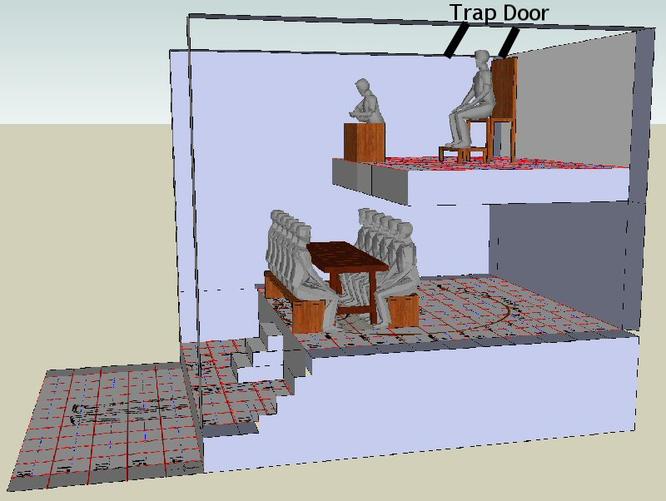
Schematic of the Church
Simon and Jesus saw our chance to defeat him. The larger gatherings of the Way had an upper gallery for bishops and presbyters to stand. A central skylight was built into the roof that could be opened to let sunlight flood the upper gallery with light, creating the halo effect so beloved by later artists. I had observed the clever precision of such spaces many times. This was ideal for the sign that Jesus and Simon had prepared.
It was rumored that Jesus would be there in Spirit on the final day of the Tabernacle Festival. We were blessed with a sunny day.
At the city’s edge, Saul stormed through the gates and entered the gathering. The skylight opened; a shaft of light flooded the upper gallery, surrounding Jesus with brilliance—“a light from heaven.” The light itself was prepared by the design of the sanctuary, but what followed was beyond any craft of men.
I watched him fall to the ground and heard the voice:
“Saul, Saul, why do you persecute me?”
Jesus stood on the upper level, the sunlight forming a crown about his head. Saul recoiled.
“Who are you—an angel?”
“I am Jesus, whom you persecute. Now rise, go into the city, and you will be told what you must do.”
He rose, but “his eyes were open, yet he saw nothing.” Trembling, he asked:
“Lord, what will you have me do?”
And the Lord said:
“Arise and go into the Way which is called Straight,” “for straight is the gate and narrow the Way that leads to life, and few there be that find it.”
Led by his companions, he entered my house. There, in vision, he saw “a man named Ananias”—myself under my missionary name—come to lay hands upon him and restore his sight. For several days, I guided him, revealing the inner mysteries of the Way. I observed him closely, noting the shift already beginning in his mind—the fire of rage yielding to the disciplined hunger that would one day carry the Way across nations.
In his new self—Paul—rage had fallen away. Records show he ran through Damascus proclaiming, “The true path is the Way! Jesus is the Son of God!” The crowd murmured among themselves, “Is this not he who destroyed those who called upon this name in Jerusalem?”
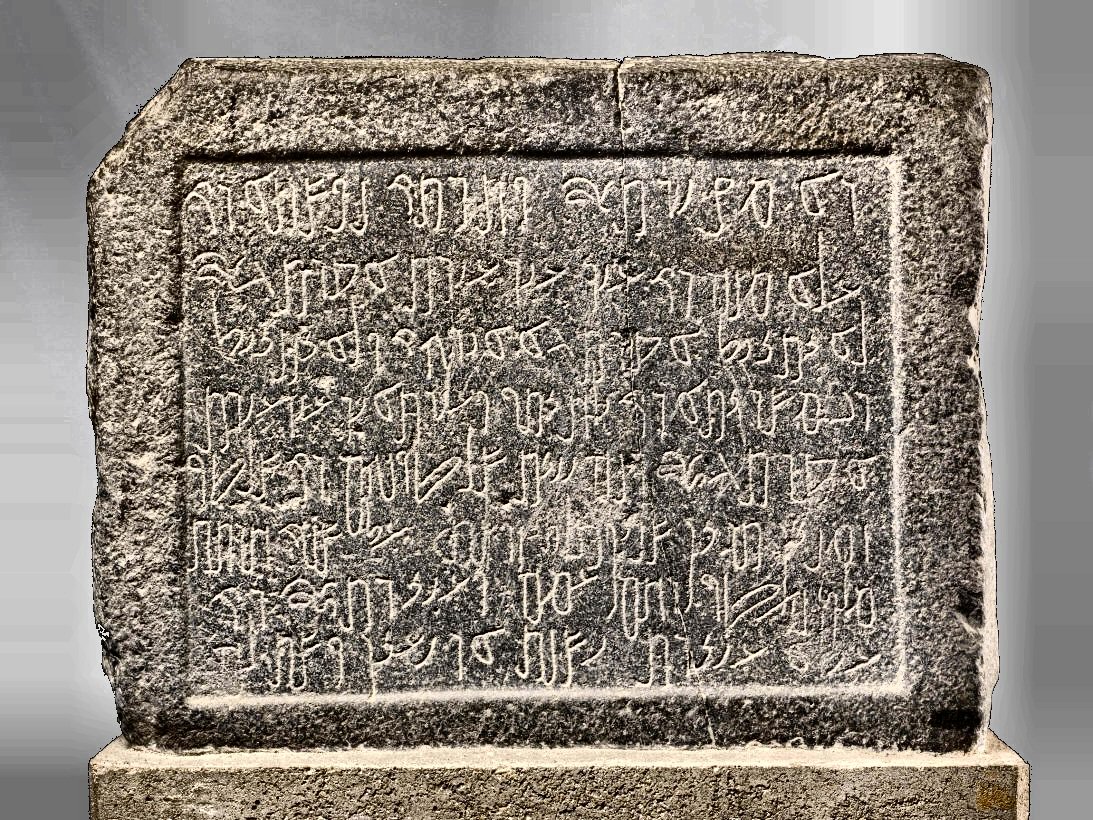
Nabataean funerary inscription 46th year (37 CE) of Aretas(31-7)
The governor under King Aretas IV took notice. The old king, whose own bloodline was joined to Jesus and who had stood at the manger, understood the danger of this man who now proclaimed the Way.
“I know this man,” he said. “He is the son of my daughter! Arrest him—he shall not trouble my city.”
Though the gates were guarded, Paul’s companions lowered him in a basket through a window in the city wall, a covert escape carefully documented in later accounts. King Aretas IV, who had once visited Jesus in the manger, would die shortly thereafter, as funerary inscriptions attest.
For the next three years, Paul devoted himself to study under those aligned with the Way. Upon returning to Peter in Jerusalem, he faced suspicion from many, and eventually traveled to Tarsus to continue his education.
By 43 AD, he was recruited by Joses-Barnabas to travel to Antioch, participating in the establishment of the first Christian Church. Phoebe notes, in her historical compilations, how these years of study and preparation quietly laid the foundation for Paul’s later influence across the eastern provinces, shaping both his thought and his network.
Chapter 45: Canonizing of the Gospels in Caesarea
Section One
>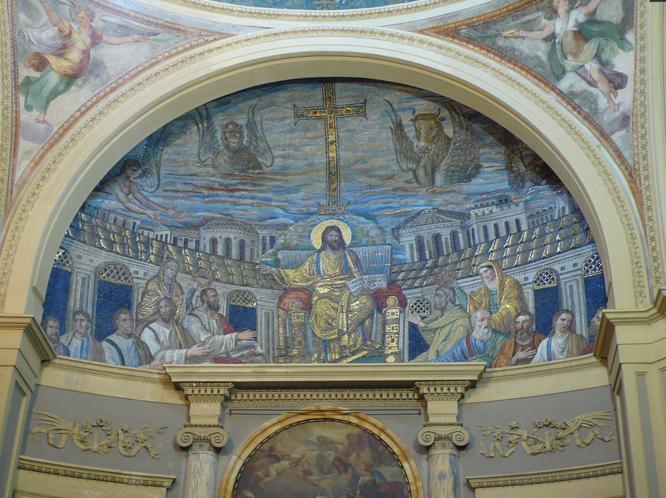
The Celebration(34-1)
It was 50 AD. The sun was just beginning to break through the small window of the house outside Rome. Paul the Apostle had risen early. He was writing as he always did—not quoting, but composing. His words came from conviction, not from what had already been written. They steadied him amid the uncertainty of his imprisonment.
Across from him, I struggled. The two scrolls of the Book of Revelation lay open before me. Yet even as I studied them, I could not be sure. Their strange images refused to settle into any order, as though the truth had been deliberately scrambled. Where words should have formed with certainty, they dissolved into symbols I could not yet understand—teasing me with meaning just beyond reach.
“I am confused by these two scrolls,” I said.
Paul glanced up, his eyes sharp.
“Oh, those ones. Then perhaps they are not meant to be read.”
That answer only hardened my resolve.
One scroll began with the letters to the churches—the voice of John the Apostle—followed by the horsemen and the breaking of the seven seals. Could this John be Aquila, rescued by Helena in Cyrene? The thought lingered, uncertain, but not without weight.
The other scroll began differently. Trumpets sounded, one after another, as though announcing a history already in motion. Its tone felt removed—mediated, perhaps written in another hand. I wondered if it belonged to another altogether: a hidden counterpart, a twin voice behind the voice.
I set that second scroll aside; the first I kept before me.
Now the four horsemen seized my attention. They seemed important, yet threatening. Were they about to leave destruction in their path? Why was Paul telling me to ignore them? Could they be bringing about the destruction of the Temple—“not one stone will be left upon another”—or was it something more?
Yet the Temple still stood.
Could they be something else—figures not of ruin, but of proclamation? Riders not as destroyers, but as heralds, like priests on horseback sent out to preach to the people?
Then it dawned on me: they were not merely agents of destruction. They were witnesses—each bearing a message, each advancing a single truth from a different direction, not yet fully revealed.
At the end of the second scroll I had put aside, I found confirmation:
“Then I saw another angel flying in mid-heaven, having an everlasting gospel to proclaim to those who dwell on the earth—to every nation, and tribe, and tongue, and people.”
There was a set of four again. Could they be related to the four riders? If taken in the same order, the riders might no longer be agents of chaos alone. If the angel’s proclamation followed a pattern, then perhaps these did as well. Could they be preparing the world for the four Gospels?
 (34-3)
“I looked, and there before me was a white horse! Its rider held a bow, and he was given a crown, and he rode out as a conqueror bent on conquest.”
Could the bow be a sickle? Not destruction, but the symbol of reaping the wheat that Jesus said was planted on the waysides and would be stored up in barns for the coming Restoration. The rider rode forth with purpose—sowing and reaping, extending his reach—not to destroy, but to spread the “word” planted on the waysides of the nations.
His white color reminded me of the white chasuble of a priest. His crown signified the highest rank—not a king, but a high priest. Could it be Matthias, the High Priest and patron? The parallels seemed too close to ignore.
This first rider presented a key for understanding the other three: they were not riders bent on destruction. This was not a prophecy about the end of the world, but the sending forth of the first words of the four Gospels, beginning with Matthew.
(34-3)
“And out came another horse, bright red. Its rider was permitted to take peace from the earth, so that people should slay one another, and he was given a great sword.”
Now that I had the key from the white horse, I knew the sword was not given to kill or to bring division, setting brother against brother. I was reminded of the discussion at the Last Supper concerning the two swords: Peter and John Mark.
It had to be Peter—not merely drawing his sword at Jesus’ arrest, but becoming the decisive voice that would not yield, the force of testimony under pressure.
He had now been promoted to bishop, wearing the scarlet robe of a cardinal. The red horse fit him well. Now I could see that I was on the way to solving the riders. This had to represent the Gospel of Mark, written under Peter’s authority.
(34-3)
“A black horse! And its rider had a pair of scales in his hand. And I heard what seemed to be a voice in the midst of the four living creatures, saying, ‘A quart of wheat for a denarius, and three quarts of barley for a denarius, and do not harm the oil and wine!’”
I smiled as I read this. Was this black rider supposed to be threatening people with a set of scales? No. The harvest had now been gathered and stored in barns; therefore it had to be measured and distributed. It was clear now that this spoke of the organization of the Church—the simple wood barns. This had to be John Mark—“Great Grace”—who ran with Peter to find the risen Christ.
The scales, measuring with care the portions of the harvest, echoed the feeding of the multitudes. The division followed the Pythagorean triangle: five thousand, four thousand, and three thousand. Not a cry of war, but a declaration—deliberate and carried forth.
The offerings were set according to those under James and John: celibate ministers, one denarius every year and a half; Gentile members, one denarius every six months. The monastics, who used oil and wine, paid a reduced tithe.
The Fourth Rider
(34-3)
“A pale horse! And its rider’s name was Death, and Hades followed him. And they were given authority over a fourth of the earth, to kill with sword and with famine and with pestilence and by wild beasts of the earth.”
Death—yes. But perhaps not death as the world names it. Perhaps religious excommunication: the mark of Cain, reminding us to remain conscious of life and death.
This could certainly apply to Simon Magus when he acted as Pope for Jesus and wielded that authority. Hades could represent the loss of that authority after he turned to physical death, misusing his office by summoning the deadly poison for Agrippa’s father.
The wild beasts—those dangerous followers of the Fourth Philosophy, who preferred death to being ruled by Rome. Founded by Judas the Galilean after the rise of the Pharisees, Sadducees, and Essenes, this movement eventually gave birth to the Zealots.
The rider’s authority was therefore not simply over physical death, but over exclusion, judgment, and the deadly consequences that followed when religious and political zeal overcame the peace of the Way.
I was so excited by my discovery that I blurted out:
“Paul, I have found the horses!”
He looked up at me with an annoyed expression.
“You are just being childish,” he said. “That scroll is a myth.”
Chapter 45: Canonizing of the Gospels in Caesarea
Section Two
>Ezekiel 1:4–28; Zechariah 6:1–5
Once I had traced the pattern hidden within the scrolls, my thoughts carried me back to Caesarea Maritima. I could almost see the procession unfolding before me.
I could almost see it.
It was the Feast of Pentecost in 50 AD. Herod Agrippa II, scarcely twenty-three years of age, had recently received authority over the Temple and the appointment of its high priest. Eager to establish his own reputation—and perhaps to step from beneath the long shadow cast by his father—he consented to preside over a celebration unlike any Judea had witnessed.
At first he hesitated.
Caesarea was the city where his father had accepted the acclamations of the people as though he were a god, only to collapse before the assembled multitude. The memory lingered like an omen. Yet this celebration carried the blessing of the Church. It was presented not as an exaltation of a king, but as the public proclamation of the everlasting Gospel. Reassured, Agrippa resolved that the celebration would surpass every expectation.
Workmen filled the streets for weeks beforehand. Carpenters, painters, metalworkers, and weavers labored from dawn until darkness, constructing immense ceremonial floats that would pass through the city before the gathered pilgrims. Four were prepared to represent the four Gospels. Others followed, portraying the visions of Revelation until the pageant reached its final triumph beneath the imagery of the seventh seal.
One float surpassed them all.
Raised upon a massive wheeled platform stood a great Star of David, towering above the crowds. It was fashioned from two interlocking triangles, forming a living symbol of the heavenly throne.
Three points of the great star held elevated platforms where costumed angels would stand with outstretched wings—the Ox, the Lion, and the Eagle. At the fourth point, raised slightly above the others where the star was anchored to its platform, would stand the angel of the Man. Beneath him, at the heart of the great star, would stand the Son of Man himself. Together they would form a living image of the four living creatures surrounding the heavenly throne, with the Son of Man enthroned among them.
As I imagined the craftsmen shaping the timbers, I could not help but picture Simon Magus moving quietly among them.
Though no longer the Great Power, he remained indispensable. Others would stand before the multitude, but Simon understood symbols better than any man alive. He arranged them with deliberate care, ensuring that every image proclaimed the same hidden message. Like Noah directing the builders of the Ark, he oversaw the work without seeking the glory that accompanied it.
I wondered whether Jesus himself welcomed such magnificence.
Everything I had learned of him suggested simplicity rather than spectacle. Yet Simon understood the power of visible signs. A teaching spoken might be forgotten; a vision witnessed by thousands could endure for generations. To Simon, ceremony was not vanity but persuasion.
Whether Jesus agreed willingly, or merely permitted it, I cannot know.
But I believe Simon convinced him that the time for concealment had ended.
Then my eyes were drawn beyond the chariots.
Four chariots stood harnessed, waiting to enter the stadium. They were just as Zechariah had seen them centuries before, each drawn by horses of a different color. The first shone white beneath the Mediterranean sun. Behind it stood the flaming red. Then came the black, solemn and deliberate. Last stood the pale greenish horse, its strange color destined to draw murmurs from the watching crowds.
No longer did I see them as harbingers of destruction.
They had become heralds.
Each rider would proclaim one voice of the everlasting Gospel.
As I closed my eyes, I wondered whether this was the moment when four separate witnesses first became one united testimony—when the Church publicly presented the fourfold Gospel to the world, not simply as four books, but as one everlasting proclamation.
Chapter 45: Canonizing of the Gospels in Caesarea
Section Three
The Four Horsemen
Phoebe had spent the entire day studying the first scroll of Revelation.
Its words refused to remain words. They dissolved into images—living creatures, horses, trumpets, lamps, stars, and scrolls within scrolls. Every time she thought she had found their order, the vision shifted, as though meaning itself withdrew the moment it was grasped.
The images would not leave her.
A strange warmth settled over her—not fever, but the weight of revelation. At last she retired to her chamber. Her daughter Paulina tended to her.
Phoebe whispered, “For the white horse, bring me the Gospel of Matthew. For the red horse, the Gospel of Mark. Black horse: Luke. Pale horse: John. Do not choose the place. Open it where your hand first falls, and read.”
Paulina obeyed.
As her voice began, the room dissolved.
I no longer knew whether I lay upon my bed in Rome or stood among the crowds at Caesarea.
The theater stretched before me.
The crowds filled every available place. James and John welcomed the poor to the places prepared for them. Peter received the bishops who had come from throughout the provinces. Thomas greeted the wealthy benefactors whose gifts had sustained the churches abroad. Near the front assembled the high priests, Matthew, Theophilus, Zacchaeus, the archbishops of every tribe, and distinguished visitors from distant kingdoms.
Above them all stood the royal dais.
There Herod Agrippa II occupied the seat reserved for the earthly ruler, presiding over a spectacle intended not to glorify himself but to announce a kingdom that claimed no earthly throne.
Then the trumpets sounded.
One by one the four riders entered through the gate to the cheering assembled multitude.
The white.
The red.
The black.
The pale.
Together they proclaimed the everlasting Gospel to every nation, tribe, tongue, and people. They took positions around the center edges.
Next the great Star entered. Within it sat a man in his fifties with a white beard. The applause reached a crescendo that must have been heard out across the Mediterranean Sea. The crowd buzzed with questions:
“Was this Moses?”
“Was this Jeremiah?”
“Was this Ezekiel?”
“Could it be the resurrected Jesus?”
Around his throne stood the angels of the Ox, the Lion, the Eagle, and the Man, their great wings turning before and behind them. The Ox radiated labor and sacrifice, the Lion courage and passion, the Eagle wisdom and vision, and the Man the perfection toward which they all pointed.
Then Herod Agrippa motioned for silence, and the anticipation increased.
The trumpet of the angel of Man sounded.
Herod Agrippa rose from his throne.
“Who is worthy to open the scroll and loose its seals?”
Silence.
Again he cried:
“Is no one in heaven or on earth worthy to behold it?”
The multitude waited.
The Star float came forward.
Jesus acknowledged, “Weep not. Behold, I am the Lion of the tribe of Judah, the Root of David. It is as the Lamb who was slain that I am worthy to open the scroll and loose its seven seals.”
The theater erupted.
“Worthy! Worthy is the Lamb!”
The Star float moved back to the center.
Gospel of Matthew (34-2)
He raised the first Gospel.
He opened its seal.
Then the angel of the Man raised his trumpet.
The brass voice echoed through the stadium as though proclaiming:
“Come!”
Mt 2:1–2; 13:36–39
The white horse entered from the far side of the arena and advanced toward the Star.
The crowd went silent.
High Priest Matthew son of Ananus with the Gospel of Matthew (34-4)
Matthew, robed in a white chasuble, knelt before the Lamb. A crown was placed upon his head, and the harvest sickle was entrusted to his hand. He rose without triumph or display, bearing not the weight of conquest but the promise of the coming harvest.
The white horse raced toward Agrippa.
Agrippa rose as the earthly witness to receive the first Gospel.
Then Paulina’s voice filtered into Phoebe’s dream as she had been instructed:
“And Jesus having been born in Bethlehem of Judea, in the days of Herod the king, lo, Magi from the east came to Jerusalem, saying, ‘Where is he who was born king of the Jews? For we saw his star in the east, and we came to bow to him.’”
“Then having let away the multitudes, Jesus came to the house, and his disciples came near to him, saying, ‘Explain to us the parable of the weeds of the field.’ And he answered them, ‘He who is sowing the good seed is the Son of Man, and the field is the world, and the good seed, these are the sons of the Kingdom, and the weeds are the sons of the evil one, and the enemy who sowed them is the devil, and the harvest is at the end of the Age, and the reapers are angels.’”
The first seal was complete.
Jn 14:6; Mk 1:16–20; 16:1–7
The Star float returned to the center. The trumpet of the angel of Man sounded.
Herod Agrippa rose from his throne.
“Who is worthy to open the scroll and loose its seals?”
Silence.
Again he cried:
“Is no one in heaven or on earth worthy to behold it?”
The multitude waited.
The Star float came forward.
Jesus acknowledged, “Weep not. Behold, I am the Lion of the tribe of Judah, the Root of David. It is as the Lamb who was slain that I am worthy to open the scroll and loose its seven seals.”
The theater again replied:
“Worthy! Worthy is the Lamb!”
The Star float moved back to the center.
Gospel of Mark (34-2)
He raised the second Gospel.
He opened its seal.
Then the angel of the Man raised his trumpet.
The brass voice echoed through the stadium as though proclaiming:
“Come!”
A red horse entered from the far side of the arena and advanced toward the Star.
The crowd went silent.
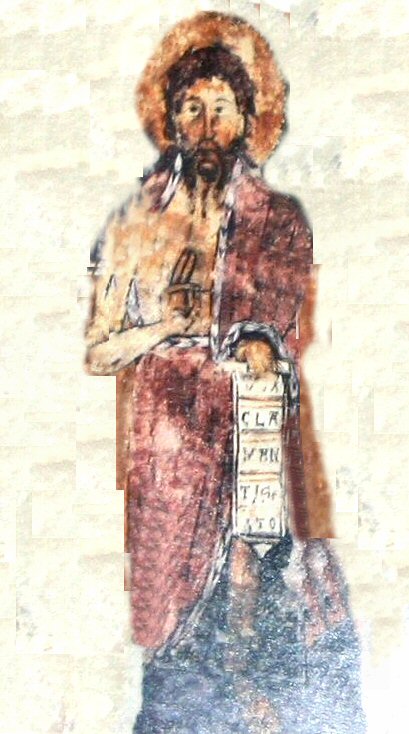
Peter with the Gospel of Mark (34-5)
Peter, dressed in the scarlet chasuble of a cardinal, knelt before the Lamb. Into his hands was placed the great sword—not for bloodshed, but for the defense of the Way. Like the flaming sword that once guarded Eden, it marked the authority entrusted to him.
The red horse raced toward Agrippa.
Agrippa rose as the earthly witness to receive the second Gospel.
Again the voice of Paulina flowed into the vision.
“Walking by the Sea of Galilee, he saw Simon Peter and Andrew his brother casting a dragnet into the sea, for they were fishers. Jesus said to them, ‘Come after me, and I shall make you fishers of men.’ Immediately, leaving their nets, they followed him. A little farther on, he saw James of Zebedee and John his brother, in the boat refitting the nets. Immediately he called them. Leaving their father Zebedee in the boat with the hired servants, they followed him.”
“After the Sabbath, Mary Magdalene, Mary the mother of James, and Salome bought spices to anoint Jesus. Early on the first day of the week, at sunrise, they went to the sepulcher. Seeing the stone rolled away—it was very large—they entered and saw a young man on the right, dressed in a long white garment. They were amazed. He said, ‘Do not be amazed; you seek Jesus of Nazareth, crucified. He is risen; he is not here. Behold the place where they laid him. Go, tell his disciples and Peter that he goes before you to Galilee; there you shall see him, as he said.’”
The second seal was complete.
Lk 18:18–30
The Star float returned to the center. The trumpet of the angel of Man sounded.
Herod Agrippa rose from his throne.
“Who is worthy to open the scroll and loose its seals?”
Silence.
Again he cried:
“Is no one in heaven or on earth worthy to behold it?”
The multitude waited.
The Star float came forward.
Jesus acknowledged, “Weep not. Behold, I am the Lion of the tribe of Judah, the Root of David. It is as the Lamb who was slain that I am worthy to open the scroll and loose its seven seals.”
The theater again replied:
“Worthy! Worthy is the Lamb!”
The Star float moved back to the center.
Gospel of Luke (34-2)
He raised the third Gospel.
He opened its seal.
Then the angel of the Man raised his trumpet.
The brass voice echoed through the stadium as though proclaiming:
“Come!”
A black horse entered from the far side of the arena and advanced toward the Star.
The crowd went silent.
John Mark, dressed in a gray chasuble of a missionary priest, knelt before the Lamb.
He was given a balancing scale—measuring not grain, but obligation. A fairer system of tithes had been established.
The black horse raced toward Agrippa.
Agrippa rose as the earthly witness to receive the third Gospel.
Again the voice of Paulina flowed into the vision.
Once more the reading filled the theater.
“A ruler asked, ‘Good Teacher, what shall I do to inherit eternal life?’”
“Jesus replied, ‘Why do you call me good? No one is good but God alone. You know the commandments: Do not commit adultery, do not kill, do not steal, do not bear false witness, honor your father and mother.’”
“The ruler said, ‘All these I have observed from my youth.’”
“Jesus said, ‘One thing you still lack. Sell all that you have and distribute to the poor, and you will have treasure in heaven; come, follow me.’ He became sad, for he was very rich.”
“Jesus said, ‘How hard it is for those with riches to enter the kingdom of God! For it is easier for a camel to pass through the eye of a needle than for a rich man to enter the kingdom of God.’”
“The people asked, ‘Then who can be saved?’”
“Jesus replied, ‘What is impossible with men is possible with God.’”
The third seal was complete.
Jn 1:1–5; Jn 11:38–44
Gospel of John (34-2)
Jesus raised the fourth Gospel.
Then the multitude grew still.
The pale horse appeared, restless and agitated.
The crowds all grew afraid, but then the horse quieted down and the crowds sighed in relief.
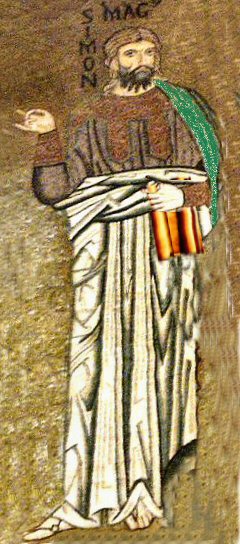
Simon Magus with the Gospel of John (34-7)
Simon approached alone, wearing a white chasuble with a green sash.
Once he had stood among the greatest.
Now he came stripped of office and acclaim, bearing only the burden of memory.
He bowed.
Jesus placed into Simon’s hands the linen bands that had once bound Lazarus.
They were no longer the wrappings of death, but the witness that Life had prevailed.
Simon received the fourth Gospel.
He accepted it with both hands.
The pale horse raced toward Agrippa.
Agrippa rose to receive the fourth Gospel.
Again Paulina’s voice flowed into the vision.
“In the beginning was the Word, and the Word was with God, and the Word was God; the same was in the beginning with God; all things through him did happen, and without him happened not even one thing that has happened. In him was life, and the life was the light of men, and the light in the darkness did shine, and the darkness did not perceive it.”
After a long stillness, Paulina read again:
Jesus cried with a loud voice:
“Lazarus, come out!”
“The dead man came out, his hands and feet bound with linen strips, and his face wrapped with a cloth.
Jesus said to them,
‘Unbind him, and let him go.’”
Death had yielded to Life.
The fourth seal was complete.
Then two additional scrolls were brought forward.
No herald announced them.
No cries of triumph filled the theater.
Gospel of Thomas (with Abgar Icon of Jesus) (34-8)
Thomas, wearing a white monk's robe, received his book from Jesus in silence.
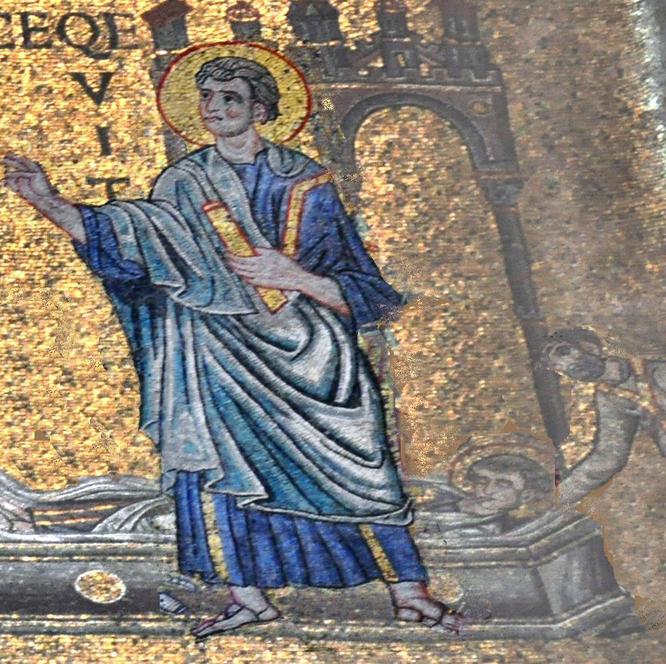
Gospel of Philip (Hierapolis) (34-9)
Philip, wearing a blue robe with sackcloth, received the book from Jesus in silence and returned. No cry went out.
Yet both stood among the witnesses, completing what had long remained hidden.
Paulina’s daughters read from the ancient sayings while the assembly listened without interruption.
The words were quiet.
Yet their silence carried its own authority.
Then Agrippa rose once more.
“One seal remains.”
No scroll appeared.
No rider emerged.
The entire theater fell silent.
Even the horses ceased their restless movements.
Jesus remained at the center of the great Star.
The Lion.
The Eagle.
The Ox.
The Man.
The seven witnesses slowly aligned before him.
Then the trumpets sounded.
Not one.
All of them.
The chariots moved together.
The white.
The red.
The black.
The pale.
Behind them came that of Thomas.
Then Philip.
At last the Star itself advanced.
I began to awake from my trance.
Then I understood.
The seventh seal was never another Gospel.
It was the unveiling of them all.
Separate witnesses had become one everlasting Gospel, proclaimed to every nation, tribe, tongue, and people.
The shadows of the Lion, the Eagle, the Ox, and the Man stretched across the theater as the procession passed before the multitude.
The people answered with one voice:
“Amen.”
“Hallelujah.”
“Alleluia.”
The sound grew until it became like many waters.
Then the vision slowly dissolved.
The trumpets faded.
The theater disappeared.
The Star became only the morning light entering my chamber.
Paulina still sat beside my bed, the Gospel open in her hands.
Yet I could not escape the conviction that I had witnessed something more than imagination.
Perhaps this was how the Church first revealed the fourfold Gospel to the world—not merely as four books, but as one everlasting proclamation.
Book X — Sight Toward Rome
Chapter 46: The Bridal Chamber and the Unlit Lamp
Mt 25:1–13; Gospel of Philip
Unlit, the lamps of the chamber hold their secret; the virgins tend their oil in silence, awaiting the moment when insight, devotion, and hidden truth will be revealed.
Ac 17:22–31, 34; Epistulae Senecae ad Paulum et Pauli ad Senecam
I stood within that hush, feeling the weight of the chamber press softly around me. The lamps were unlit, yet their promise lingered, as if each small vessel of oil held a revelation waiting to ignite. I sensed the city I had glimpsed—the New Jerusalem descending as a bride—gathering itself into the very walls of this place.
It was here, in this stillness, that my life and Paul's work converged. I had not yet lit the lamps, but I understood their meaning: devotion, insight, and hidden truth were not given lightly—they were carried, entrusted, and shared. And I was entrusted.
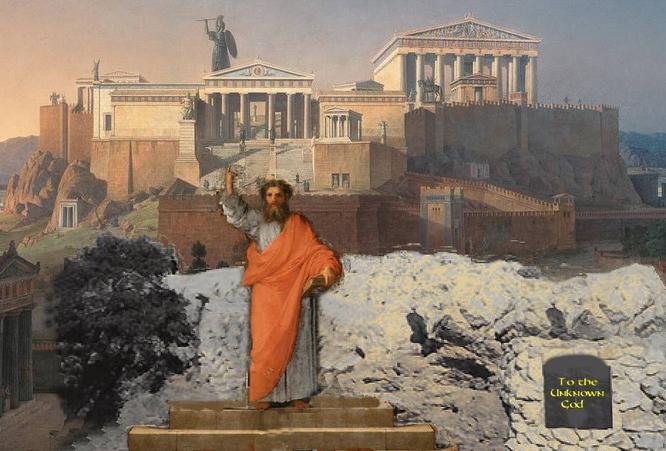
Paul talks at Areopagus (35-2)
I had followed Paul to Athens in December of 51 AD, standing among the listeners gathered on the Areopagus rock. His words struck me deeply, intertwining admiration with revelation. I kept a copy of his speech near my heart.
“You men of Athens, I perceive that you are very religious in all things. As I passed along and observed your objects of worship, I found an altar inscribed, ‘TO AN UNKNOWN GOD.’ What therefore you worship in ignorance, this I proclaim to you. The God who made the world and everything in it does not dwell in temples made with hands, nor is He served by human hands. He made from one blood every nation of mankind to dwell upon the face of the earth. ‘For in Him we live and move and have our being.’ ‘For we are also His offspring.’ Therefore, we ought not to think that the Divine Nature is like gold or silver or stone, engraved by human skill. The times of ignorance God overlooked, but now He commands all people everywhere to repent, because He has appointed a day on which He will judge the world in righteousness by the Man whom He has ordained. Of this He has given assurance to all by raising Him from the dead.”
After his speech, I witnessed Seneca the Younger, who was visiting Athens, commend Paul for his eloquence. My fascination only deepened when I heard that letters exchanged between Seneca and Paul had been presented to Nero. I glimpsed the weight of Paul's speech and how he could move the world. I wanted to become a part of his rise.
2 Cor 12
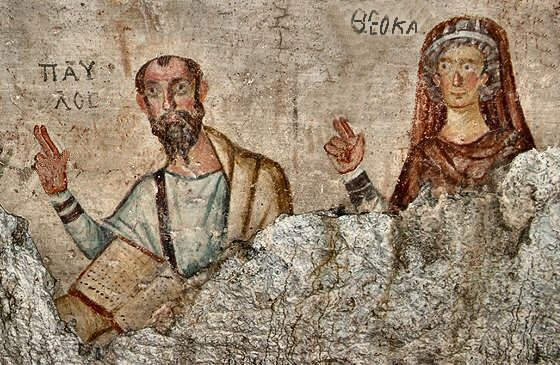
Acts of Paul and Thecla (33-4)
When I obtained the story of Paul and Thecla, I immediately felt an affinity with her. I loved her description of Paul as “small of stature, bald-headed, bow-legged, in good health, with eyebrows meeting and a somewhat hooked nose, full of friendliness. At times he appears like a man, and at other times with the face of an angel.”
More importantly, I read that she was willing to die rather than surrender her virginity. I had the opportunity to ask Jesus about this, and he explained that all women who dedicated their lives to God were always regarded as virgins, as his mother had been.
Three months later, I asked my father’s permission to join my life to Paul’s. Jesus, recalling the counsel Simon had once given him, guided Paul to my side. Joy filled him as he proclaimed, “The Lord has opened a door for me.” By the following autumn, we had pledged ourselves, sanctifying our union through preparation and devotion.
Ac 18:1–4, 9–10; Rom 16:1
Paul observed a Nazarite discipline similar to that of Jesus, symbolizing his acceptance of a life of purity equal to that expected of a daughter of Jesus.
Paul departed from Athens for Corinth, where he joined John Aquila and his wife Priscilla in their tentmaking and missionary work. John and Priscilla had begun their mission in Rome until Emperor Claudius ordered all Jews to leave the city, “since the Jews constantly made disturbances at the instigation of Chrestus.”
In Pontus I remained present as his partner in purpose and prayer, attending the midnight services, offering counsel when it was sought, and tending the growing life of the Church in small, invisible ways.
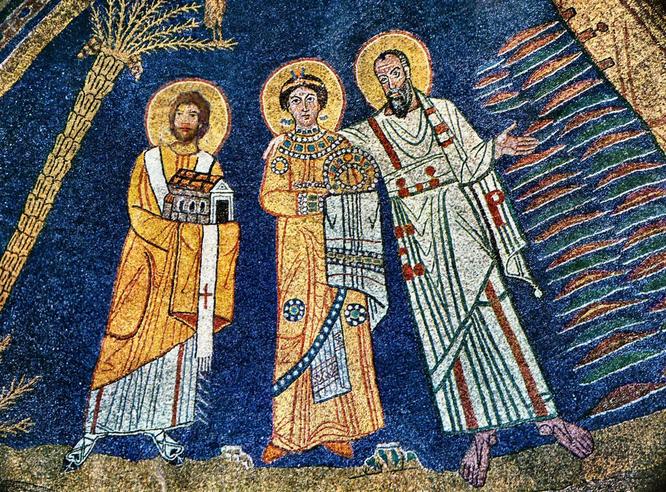
Jesus, Phoebe, Paul (35-3)
Through that discipline, through the waiting and preparation, I understood the depth of what was unfolding. Paul's work was not only his own—it was joined to Jesus through me.
With Magdalene in Ephesus
Ac 18:19–23; Phil 4:3, 18:22
By June of 52 AD, I had completed the first three months of pregnancy, when the risk of miscarriage had greatly diminished. Paul brought me to the port of Ephesus to stay with my mother while he continued his mission.
After disembarking, I walked through the busy harbor town and began the ascent toward the upper terraces, where olive and fig trees lined the winding path. At last I caught sight of my mother's house, perched upon the hillside. Reaching the small courtyard, weary from the climb and the summer heat, I paused beside the well to rest.
“Magdala,” I called softly, “I am here.”
From the stone house, its walls draped with vines and fragrant herbs whose scents mingled with the sea breeze, Mary Magdalene hurried out to meet me.
“My dearest, you are exhausted,” she said, drawing water from the well and lifting it gently to my lips. “Did Paul send you here alone?”
I smiled weakly.
“That is all right. Paul has been confined for so long that he could hardly wait to return to his missionary work.”
Mother nodded with quiet understanding.
“I know how that is.”
I remained with my mother through the summer and gave birth to a beautiful daughter that December. Naturally, I named her Paulina. Meanwhile, Paul traveled through Galatia and Phrygia, strengthening the disciples. Sadly, he missed the birth of his first child, just as he would later miss the birth of his second daughter.
Even so, I have always treasured that season with my mother.
As Paul continued carrying the Gospel westward, another woman stood waiting whose life would illuminate the mystery of the unlit lamps.
Seller of Purple — Bernice
Gospel of Philip; Ant. 19.9.1, 20.7.3; Acts 16:10–17:13; War 2.15.1; Mt 25:1–13
Not all unions were entered, and not all lamps were lit. In the chamber, bride and bridegroom became one.
It was 51 AD, a year after the canonization of the Gospels, when we sailed from Troas to Philippi, a leading Roman colony in Macedonia. On the Sabbath we went outside the city gate to the river, where the women had gathered for prayer.
Jesus and Paul at Philippi — Oil
The chamber's lamps lay unlit, yet their promise lingered, a silent witness to devotion and awakening.
As sunlight danced across the water and the reeds swayed gently in the breeze, Jesus and Paul greeted the women gathered along the riverbank. Their voices were hushed in reverence, and their eyes turned toward us as we approached.
Jesus' eyes rested upon the woman clothed in purple. She reminded him of Mary Magdalene, now absent from his life. Though free to marry again, he had chosen not to, out of reverence for her memory.
Remembering that the canonization of the Gospels was now his true legacy, he smiled gently and took Bernice's hands in his own.
“I judged you before I fully understood your burden. I should not have believed the rumors surrounding you. I am partly responsible for the marriage you now seek to leave behind.”
“Simon Magus once told me about the first time he met you as a child while traveling with Peter. Helena believed you belonged among the sisters.”
Bernice smiled faintly.
“I have long prayed that they would.”
Jesus nodded.
“As Paul and I traveled here, we agreed that you should succeed Helena, who became Luna under John the Baptist. Since her passing, her place has remained empty.”
“I would be honored to serve,” Bernice replied.
Jesus continued.
“We grieved when your father compelled you to leave the convent and marry Herod of Chalcis.”
“I fulfilled my duty,” Bernice answered quietly. “After his death, scandal drove me into another marriage with King Polemon II.”
Jesus looked toward Paul.
“Then let us offer counsel.”
Paul stepped forward.
“The reasoning I used regarding Magdalene’s divorce applies equally to you. Your husband stood outside the covenant. Where no covenant exists, its obligations cannot bind.”
Bernice lowered her head.
“I receive your counsel with gratitude.”
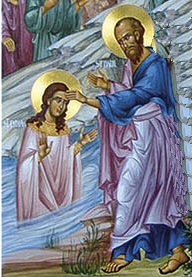
Baptism of Lydia (35-1)
Jesus placed his hands upon her.
“Go in peace, and let your lamp remain filled.”
The Hidden Lydia
Acts 16:14–15; Rev. 2:20–21
Only years later, as I read Luke's account of Philippi, did I begin to understand what he had concealed.
Luke’s Lydia was more than a merchant.
She came from Thyatira, renowned for its purple dye. Like the unlit lamps of the bridal chamber, her identity remained veiled until the proper time.
The phrase “seller of purple” concealed more than an occupation. It pointed toward the Church of Thyatira itself and to Bernice, whose life had been restored and whose service now gave that community renewed dignity.
Luke had hidden a bishop beneath the image of a merchant.
The Fall of Bernice: Bride to Babylon
Rev. 17:1–18; 18:1–24; 19:7–9; 21:2
Even the brightest lamps may falter when shadowed by desire.
Bernice's restoration did not become the end of her story.
Having failed to prevent the rebellion, she later sought another throne. Following the path once taken by Cleopatra, she entered into a relationship with Titus, the future emperor and destroyer of the Temple, hoping to become Empress of Rome.
Yet the bride who had once tended her lamp came to be remembered by another image.
Her lamp, once filled, did not endure.
The door to the bridegroom was closed.
The Hidden Lydia
Acts 16:14–15; Rev. 2:20–21
Only years later, as I read Luke's account of Philippi, did I begin to understand what he had concealed.
Luke’s Lydia was more than a merchant.
She came from Thyatira, renowned for its purple dye. Like the unlit lamps of the bridal chamber, her identity remained veiled until the proper time.
The phrase “seller of purple” concealed more than an occupation. It pointed toward the Church of Thyatira itself and to Bernice, whose life had been restored and whose service now gave that community renewed dignity.
Luke had hidden a bishop beneath the image of a merchant and led some to believe she was a possible bride to Jesus.
The Fall of Bernice: Bride to Babylon
Rev. 17:1–18; 18:1–24; 19:7–9; 21:2
Even the brightest lamps may falter when shadowed by desire.
Bernice's restoration did not become the end of her story.
Having failed to prevent the rebellion, she later sought another throne. Following the path once taken by Cleopatra, she entered into a relationship with Titus, the future emperor and destroyer of the Temple, hoping to become Empress of Rome.
Yet the bride who had once tended her lamp came to be remembered by another image.
History would remember her as the “Whore of Babylon.”
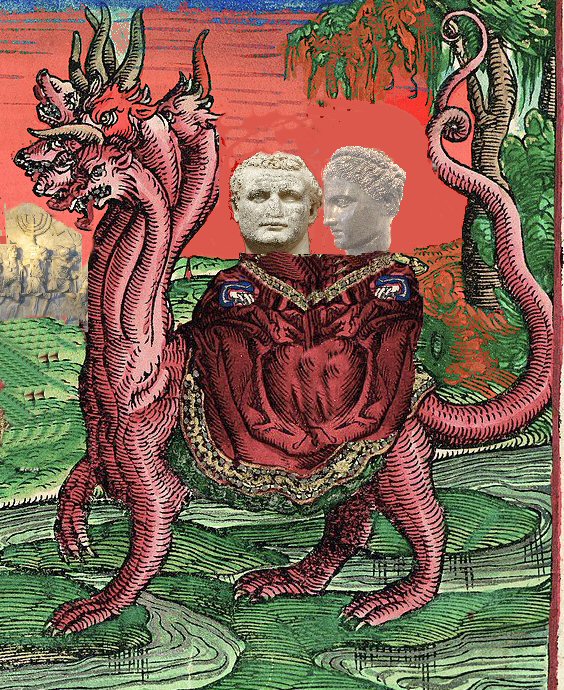
Titus the destroyer of the Temple
Bernice the Whore of Babylon (Rome) (30-2)
Her lamp, once filled, did not endure.
The door to the bridegroom was closed.
Chapter 47: Paul Sends Phoebe; Simon Sells Icons of Magdalene
Paul to Send Phoebe to Rome
Rom 16:1–2; 1 Cor 13; 2 Cor 12:7–10; 1 Cor 16:22; Ver 16
In January of AD 57, Paul entrusted me with his Epistle to the Romans, together with a copy of his First Epistle to the Corinthians and a personal letter of commendation:
“I commend our sister Phoebe, a deacon of Cenchreae. Receive her in the Lord and assist her as needed; she has been a benefactor to many, including me.”
Jesus promised to accompany her, eager to see how Rome had changed since his youth. Once Simon learned of their plans, he insisted on joining. Peter, too, signed on, and we were soon to set sail.
The Church in Rome had expanded greatly since the early days of Joseph and Mary’s mission. Increasingly, many believed the future of the Church lay not in Jerusalem but in Rome, where the congregation had grown remarkably.
I (Simon) needed to accomplish one last task before I left. I was still bothered by the sparse attendance at Magdalene’s funeral, and I wanted her remembrance to be more fitting. Even in death, her memory was contested. Some were already reviving the claim that she had been a reformed prostitute.
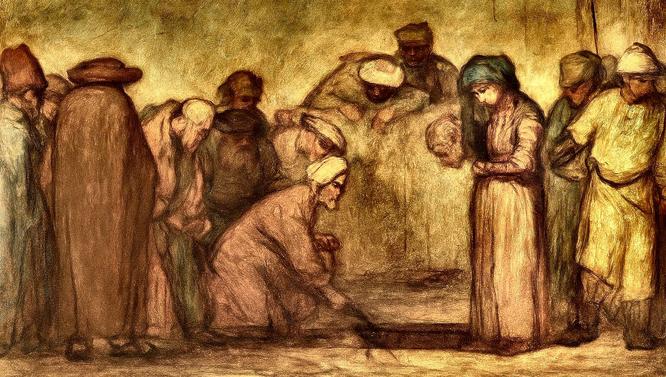
Jesus draws in the sand to accuse the men who want to stone Magdalene (18-3)
Writing in the Sand
Jn 8:1–11; Jer 17:13
I recalled the day she had stood accused, surrounded by men with stones in their hands. Jesus bent and wrote in the dust, marking each accuser, and at the center inscribed the letters י־ר. Those who understood the words of the Book of Jeremiah recognized the warning: those who forsake the Lord shall be written in the dust. One by one, they left—not defeated, but revealed.
Icons for Magdalene
Ac 19:23–24

Icon for Magdalene (18-4)
Before leaving Ephesus forever, I resolved that Magdalene's memory should not vanish with me. I assumed yet another name—Demetrius, borrowing the identity of the philosopher whose writings revealed how cities prospered by turning their gods into works of silver. The irony pleased me.
I became a silversmith myself, casting small images of Magdalene to finance our journey to Rome. It was a subtle nod to the philosopher who told how cities like Ephesus had long traded by transforming gods into silver and gold craftsmanship. There I learned the craft of the silversmith and fashioned molds for small statuettes of Magdalene. I would have just enough time to cast them and use the proceeds to fund the journey to Rome. Each piece served as both remembrance and quiet resistance—for my beautiful niece.
Great is Artemis of the Ephesians
Ac 19:25–41
The populace mistook these statuettes for Artemis, which did not bother me. Of course, Paul condemned my trade as another form of idolatry and mocked it as simony. Peter echoed him. Yet the artisans chanted:
“Great is Artemis of the Ephesians!”
By day’s end, every statuette had been sold. I watched them pass into the hands of the people—not merely as objects, but as carriers of memory. In them, Magdalene endured, and with her, my sister Helena.
Whatever the Church chose to diminish, the people would remember.
Farewell to the Past
Ac 1:13; 5:1–5; 8:9–10; 9:10–17; 9:43; 10:6; 19:24; Mt 4:21; 10:4; 26:6; 27:32; Mk 1:19–20; 3:18; 14:3; 15:21; Lk 5:8–10; 6:15; 16:20–23; 23:26; Jn 11:1–44; 12:1–10; Rev 13:18; Ant 20.1.3
I had grown weary of the internal wars and longed to join Jesus and Phoebe without Paul overshadowing me. I had been the Canaanite, the Zealot, Zebedee, Simon of Cyrene, Lazarus, the leper, Ananias, the tanner, the silversmith, “the Great Power of God,” and even the Beast, 666.
The Great Power of God, Beast 666, tanner, and silversmith. Somewhere beneath all those names, I had almost forgotten the first one—Postumus Agrippa. Perhaps the streets of Rome would remember what I no longer could.
Chapter 48: Jesus, Peter, and Simon Leave for Rome with Phoebe
 Sailing to Rome(35-5)
In March of 57 AD, we sailed for Rome from Cenchreae, the port of Corinth. The purpose of the journey was for me to deliver Paul’s letter, and Jesus had come as my guardian and companion. Simon and Peter had asked to join us, for they desired a new forum where they might present their teachings before the world’s greatest city. With Jesus among us, even Peter was on his best behavior. We could laugh now over Simon’s selling of the icons of Magdalene, which had recently brought him into conflict with Paul over the matter of simony. Yet all agreed that Phoebe’s presence was a joy, and the voyage was blessed by the company we shared.
Aboard the Ship to Rome—Night
On the second night the sea fell utterly still. The ship lay becalmed, as though the waters themselves had withdrawn into listening. We had gone below deck to our hammocks—I near the central table—when Jesus set the oil lamp before us, its flame lighting the inner hull.
“Come,” he said. “Sit with me. There is a matter I wish us to consider together.”
We gathered, the silence close around us. Jesus spoke again.
“Paul’s letter to the Corinthians troubles me. Its voice leans toward law, sounding like Leviticus—shaped by command and correction—yet it leaves kindness unnamed. We are gathered in fitting company to weigh his words. Phoebe, bring the scroll and read for us the passage of the mirror.”
I rose to retrieve it, but Simon halted me.
“First—accept this.”
From his satchel he drew a small wrapped figure and placed it into Jesus’ hands.
Jesus unbound the cloth. His eyes filled with tears. It was the statuette of Magdalene. I felt a tightening in my chest, knowing how Paul would regard such an image.
Jesus kissed Simon, saying gently:
“I receive it as an offering of love. And see—how fitting for our discussion. Now, Phoebe, bring Paul’s letter and read for us the passage of the mirror.”
Through a Mirror, Darkly
1 Cor 13:12
I unrolled the scroll and read:
“For now we see through a mirror, darkly,
but then face to face.
Now I know in part;
then I shall know fully, even as I am fully known.”
I set the scroll upon the table. The lamp’s flame stirred, and shadows crossed the papyrus like passing thoughts.
Simon spoke first.
“Knowledge comes to us broken—mediated, refracted. We never grasp the whole.”
Peter nodded.
“Our mirrors are merely polished bronze. Their reflections waver. So does our understanding. Faith steadies what knowledge cannot.”
Simon leaned forward.
“Yet Paul refuses gnosis—the knowing that alters the knower. He laments the mirror, yet never dares to step beyond reflection. His words are fine, but they remain words.”
Peter gestured toward the wavering light.
“Do not mistake humility for cowardice. We walk by faith, not by certainty.”
Simon lifted the lamp slightly, shifting its glow.
“Gnosis demands presence. Risk. Even suffering. It is not content with shadow.”
I read on quietly:
“As for prophecies, they will pass away;
as for tongues, they will cease;
as for knowledge, it will pass away…
When I became a man, I put away childish things.”
I paused.
“He senses something unfinished. But he does not name what completes it.”
Jesus turned to me then, and the space seemed to still. He rested his hand upon my head.
“Your sight is unburdened by argument—a true child in understanding. Now, Phoebe, add this at the end of First Corinthians.”
I looked up.
“You would have us answer Paul’s words?”
“Not change,” he said. “Answer it—as a teacher to a student.”
Agapē Love—First Corinthians Addition
Jn 21:15–17; 1 Cor 13
“Write this: Let love be the measure of every word.
Love is patient and kind. Love does not envy or boast. It does not demand its own way. It bears, believes, hopes, endures. So faith remains, and hope—but love abides beyond them.
The greatest is—”
He paused, looking to Peter.
Peter met his gaze, remembering—once, twice, three times.
“The greatest is love.”
I added the word love and set down the quill.
Jesus’ eyes rested upon me.
“Thank you, my daughter.”
I said:
“Father, this is your true message to the world. Agapē love is the measure of knowing. Love does not merely reflect—it participates. It is both mirror and face. Where love abides, knowledge is transformed.”
At that moment the wind returned, filling the sails, as though it had been waiting for the words to be spoken. The ship lurched forward.
We went up on deck and watched the stars dip into the ocean’s veiled mirror, distorted and shimmering, and rise again in the wake—never fully held, never fully known, carried forward by the motion of the sea itself.
Arrival at Ostia
Several days later we reached the roadstead outside Ostia, where ships from every province gathered before entering Rome. As we waited for the harbor pilot, another vessel from Greece dropped anchor nearby. Its master sought Jesus at once, bearing a fresh letter from Paul.
Paul's Plea to Return
2 Cor 12:7–10
Jesus read the letter in silence. At length he folded the scroll and smiled sadly.
“Paul has need of me in Achaia. He pleads for my return. I must go back with this ship.”
Before long the vessel had taken on fresh water and provisions and made ready for the voyage back to Greece.
Final Farewell
Jesus kissed Peter and Simon farewell, and Phoebe embraced him tightly.
No one spoke further. There was nothing left to say.
A foreboding shadow settled over the departure—Paul remaining as absence that still speaks, Peter carrying continuity and formation, and Simon bearing rupture and gnosis.
Warning to Peter
Ver 16
As for Peter, he remembered how Jesus had spoken to him in a dream the night before, clothed in brightness and smiling:
“Already many people of the brotherhood will return through you and through the signs which thou hast wrought in my name. You will carry continuity and formation. For whomever I give to you, thou shalt establish in my name.”
“But thou shalt be a contest of the faith, as many more of the Gentiles and Jews shall be converted in my name and many will reproach and mock you. But I will be present when you ask for signs and wonders. If Simon opposes when you demonstrate the works of my Father, know that his works shall be shown to be charms and contrivances of sorcery, carrying rupture and gnosis.”
These words of Jesus foreshadowed the dangerous rivalries that would soon arise between Peter and Simon—continuity and rupture set against one another, and even at times blurring into one another.
As Simon watched the ship disappear beyond the horizon, he remembered the day his grandfather had sailed away from his island before his own life was forever changed. Now Jesus had become to him what his grandfather once had been, and he could not restrain his tears.
Thus Jesus departed, leaving Peter and Simon to contend in Rome—continuity and rupture destined to confront one another, and at times to blur into one another.
Book XI — Mission in Rome
Chapter 49: Peter and Simon Magus in Rome
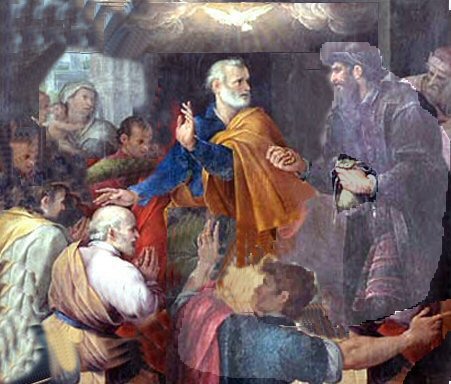
Peter & Simon in Rome (1-15)
Words versus Illusion
2 Kings 2:11
Early in 58 AD, with my life as Simon behind me, Peter and I had begun to fail in Rome.
The crowds did not listen.
At street corners, even among the Jewish Diaspora, our words dissolved into noise.
“Hear the good news of a prophet called Jesus who was crucified and raised in spirit,” we would call out.
The answer was always the same.
“Our prophet Elijah went up by a whirlwind into heaven—where is your proof?”
Words were not enough.
So we turned to demonstration.
At first, simple acts.
Peter—the fisherman—revived a herring that appeared dead.
I, trained in the use of sleeping draughts since the Crucifixion, brought a boy back from unconsciousness.
The crowds changed.
Not toward belief.
Toward expectation.
And expectation always becomes hunger.
Sides formed among the followers. Those of Peter demanded an end to the rivalry and pressed him into a final public confrontation.
He came to the house of Marcellus where I lodged.
A crowd gathered.
He unchained a great dog.
The beast rose and spoke in a man’s voice:
“Peter saith unto thee, Simon, thou art a deceiver of simple souls!”
The crowd recoiled.
But I saw the mechanism immediately. A follower hidden nearby was throwing his voice—poorly.
I had long mastered the same art.
The crowd could not distinguish truth from performance.
That was the problem.
Not that we performed.
But that performance had become the only language left.
And neither of us controlled it anymore.
Clement in Rome
R. 1.1–2
Discouraged, I saw Clement outside his house in Rome, in the crowded hollow between the Caelian and Esquiline hills, where the city builds, burns, and builds again.
We spoke as men who had already argued too much.
“You must come inside,” he said. “I have completed a new account of those days.”
He called it the Recognitions of Clement.
Inside, he unrolled the manuscript.
I read without expectation.
Until I stopped.
My Destiny Written in One Line
R.2.7 / H.2.22
“Simon, the son of Antonius and Rachel.”
Nothing more.
A naming of parents.
Quiet. Ordinary.
And yet it did not behave like something ordinary.
I read it again.
Antonius.
That was where the line changed weight.
Not theology.
Lineage.
A name Rome does not leave intact. It is either absorbed into power or erased by it.
It carried the echo of Mark Antony—a name Rome had already buried once.
And here it had resurfaced.
Unresolved.
Unburied.
Rachel remained unexplained—a name that did not belong to Rome, yet would not leave the sentence either.
I understood then that this was not interpretation.
It was positioning.
Something had been placed inside my name that Rome itself would eventually have to answer.
And Rome does not ignore what touches its bloodlines.
I Stood—Stand—and Will Stand
Hippolytus, Refutation of All Heresies 6.12
Was my life meant to follow the pattern of Jesus—royal, displaced, declared gone?
Not martyred. Preserved.
I had stood with Jesus, but now I was required to stand in the role I am now faced with—great uncle of Nero.
I did not yet know what would be required of that role.
Only that Rome would eventually demand a response.
And so would Nero.
All of Rome could be converted by a simple degree.
I would have to go to Nero.
Lived Experience versus Controlled Narrative
I believed, then, that what I was moving toward would resolve something—that Rome, once confronted, would answer; that names, once spoken, would settle into their proper place.
But Rome does not preserve what threatens it. It absorbs, reshapes, or removes. And what it cannot fully erase, it learns to retell.
The story does not remain in the hands of the one who lives it.
How quickly a life can be divided from its telling.
Even while I still walked the streets of Rome with Peter and Clement, I began to hear myself elsewhere.
A phrase, slightly altered. An act, told without its cause. A name, shifted just enough to loosen its place.
I heard myself described to others as though I had already been concluded—a deceiver, a rival, something to be corrected, something to be opposed.
Even those closest to the movement did not agree on what had been said, or what it meant.
Peter spoke as though certainty could still be restored.
Clement believed the accounts must be gathered and preserved—even where they conflicted.
I saw it differently. Not as something that could be fixed, but as something already in motion—shifting with each telling.
And in those versions, I would not remain.
They would pass into other hands. Some would harden them. Some would distort them.
And some—though I did not yet know who—would try to gather what had been broken.
Not to restore it—but to set it in order.
XI — Mission in Rome
Chapter 50: The Way to the Throne
An Audience with Nero
Ant 20.8.11
Having failed to gather many converts to the Way—my preaching reduced at last to contests of sign and illusion against Peter—I could no longer avoid the implication of the line in Clement’s scroll: “Simon, the son of Antonius and Rachel.”
If Rome would not be moved by the Way from below, it would only yield from above. Conversion, I began to understand, was not horizontal but hierarchical. The people followed what the Emperor permitted them to believe. If I could reach Nero, I could reach Rome itself.
I therefore devised a path into the palace.
Peter & Simon in Rome (1-15)
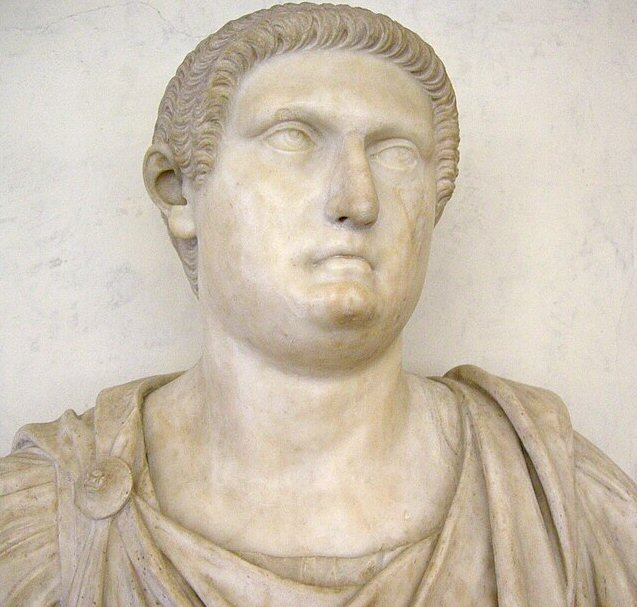
Marcus Salvius Otho (36-3)
I first drew close to Marcus Salvius Otho, a man already entangled with Nero’s private world through his marriage to Poppaea Sabina. Otho was vanity made political—carefully adorned, his body refined into presentation, his baldness concealed beneath a perfect wig, his gestures calibrated for attention.
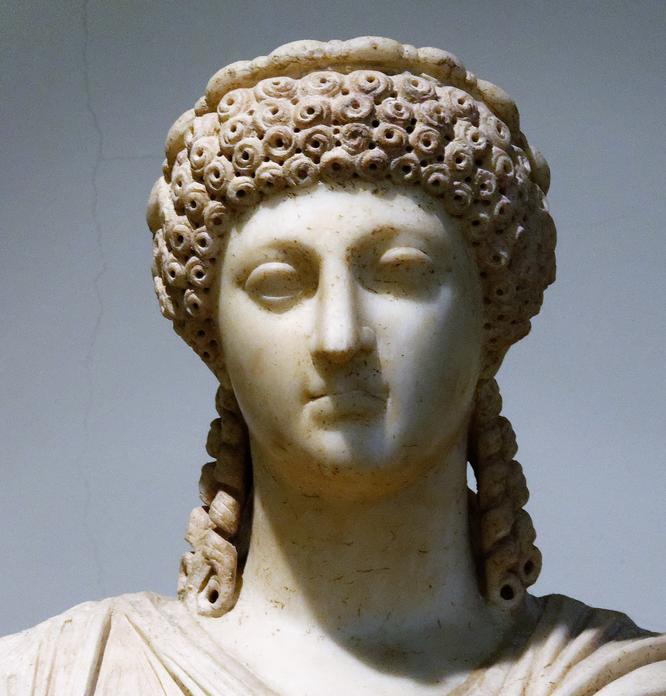
Poppaea (36-2)
Poppaea required no such artifice. Beauty alone had given her access; ambition ensured she would keep it. I judged she had not married Otho for affection, but for proximity—to the center of power, and ultimately to Nero himself.
She became my passage.
Poppaea showed a curiosity toward the teachings of Jesus—not devotion, but the alert interest of someone assessing a doctrine for its usefulness. I answered carefully, allowing her to believe she was hearing novelty rather than consequence.
Within a month, Nero announced a contest of oratory and verse. Through Otho’s influence, I was granted entry.
At seventy years of age, I entered the palace openly as a Jew: a striped tallit over my tunic, sandals worn from travel. The Praetorian guard hesitated to remove me only because I had already been admitted. That hesitation was itself a kind of opening.
As I spoke to the audience, I did not come to flatter.
Remembering my speech with Peter in Caesarea, and from the fracture that had never healed, I said:
“Do not pray for peace. Peace without contest is decay. War gives birth to peace, as fire tempers iron. Truth does not descend gently. It emerges only when falsehood is broken. Therefore struggle—not for victory, but for revelation.”
Nero awarded himself the victory, as expected. But he listened.
And in Rome, listening is already a form of possession.
I was invited to the banquet.
The Banquet
Ant. 20.8.11
By the evening of the banquet, Otho was called away to Lusitania. Poppaea reclined freely among the imperial circle, and I beside her.
Nero entered last and took his place at her right. On his other side sat Octavia, rigid as duty, and beyond her Agrippina, watchful as memory.
His eyes passed over me once, already amused.
Octavia’s gaze followed, then settled.
“It seems your husband is absent. And yet you are not alone. Who is this?”
Poppaea smiled, as if indulging a trivial curiosity. She glanced once at my garments before she spoke.
“He claims to be a God-fearer—of a new persuasion.”
Nero gave a short laugh.
“Ah—those followers of Chrestus. Yes… I’ve seen them. Drawing crowds in the streets, arguing like philosophers, yet always circling back to suffering—as if it were the point. And then, inevitably, the spectacle.”
I inclined my head.
“The name is mistaken, Caesar. We were the Way. Now we are called Christians—for we bear the sign of one crucified, whom death failed to contain.”
Nero’s amusement sharpened.
“A man executed by Pilate inspires devotion? Rome breeds stranger things than I thought.”
“Men are not moved by deaths,” I said. “They are moved when death fails.”
That held him.
He leaned forward slightly.
“And this one—he lives still? Walks, eats, speaks?”
“In a manner,” I said. “As I was crucified with him—and yet I stand before you. You may decide in which sense.”
A pause—then interest overcame disbelief.
“Show me.”
I turned my wrists. The scars were faint, but sufficient.
Nero smiled—not convinced, but engaged.
“Then you are either a liar or something more entertaining—a magician.”
“Both, at times,” I said. “Men call me Simon Magus.”
That pleased him.
“You will perform.”
“I will do more than perform,” I said quietly. “I will remind you.”
He watched me now.
“I have been known under other names. Once, Faustus Cornelius Sulla. Now—Postumus Agrippa. Your great-uncle.”
The air shifted.
Agrippina spoke first, measuring my face against memory.
“There is likeness—but no possibility. Postumus died before I was born. Sixteen years before.”
Nero added, almost eagerly:
“And yet there was that impostor—Clemens. Executed. The name Postumus—three times bound to death. How often does a man escape it before he becomes a god?”
I removed the signet ring and placed it in Nero’s hand.
He passed it, without comment, to Agrippina.
She studied it in silence.
“The seal of Augustus,” she said at last. “A sphinx set in gold. He gave it when he believed himself dying—to Agrippa. To wear it falsely was death.”
Nero smiled faintly.
“You see, Poppaea—Postumus. A name for what comes after death. How fitting.”
She looked up at me.
“Who are you?”
“Someone death has failed to keep,” I said. “Clemens did not impersonate me—he preserved me. I lived. I learned. In Cyrene. In Phoenicia. And there I encountered the one you dismiss.”
Poppaea leaned in slightly.
“I might believe a man escapes Tiberius. But not the cross.”
“Belief is a matter of timing,” I said. “A body can be made to seem dead. Time can be shortened. Law can be made to serve necessity. Remove a man before sundown—and Rome itself protects the illusion.”
She whispered, almost against herself:
“Then praise be to Christ—”
But she caught herself, turning back toward Nero.
Nero exhaled through a smile.
“So. Not miracle—method.”
“A magician,” I said, “never relies on the difference.”
I let the silence settle before continuing.
“If you require more than words—come and see. I will rise before you like the prophets of old. Not in story, but in air.”
Now he was fully engaged.
“When?”
“In three weeks.”
“And I,” Poppaea said softly, “would also want to see this.”
Nero stood, taking her with him.
“Grand-uncle—you will forgive us. We will see you in three weeks.”
They disappeared into the garden.
Agrippina muttered, almost to herself:
“Again.”
Octavia rose, controlled but cold.
“I will not release him.”
She left without looking back.
After the Banquet
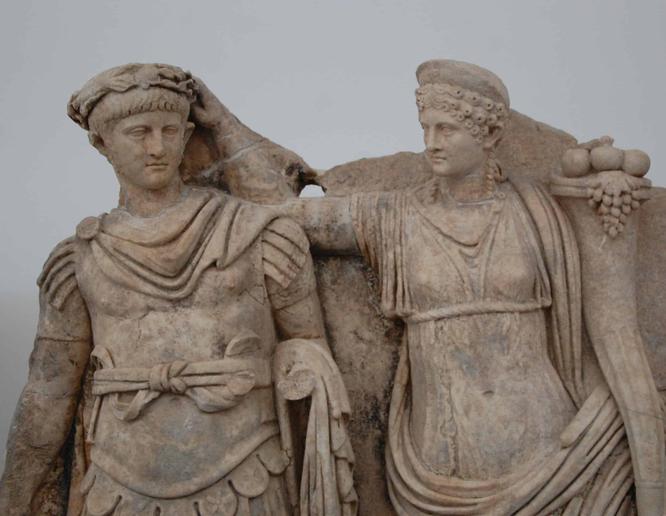
Agrippina Crowning Nero (36-1)
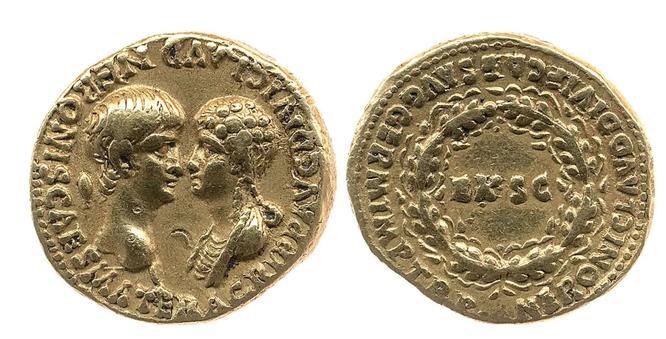 (36-4)
 When they were gone, I turned to Agrippina.
“I could not save your mother,” I said. “But I did save her sister—and the child.”
She regarded me without belief.
“You speak in inventions.”
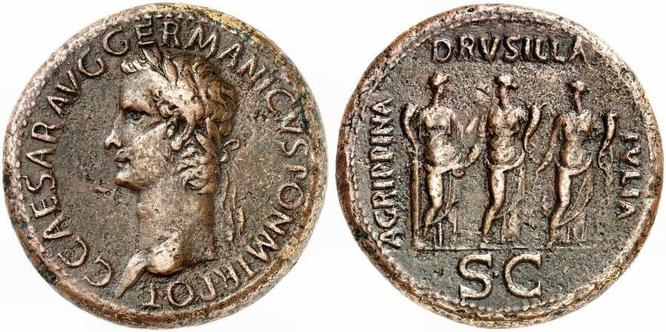
Caligula with his three favorites
(Julia Drusilla, Julia Livilla, Agrippina the Younger) (1-11)
“As do histories,” I replied. “Yours, for instance—honored as a Vestal, exiled by Caligula, restored by Claudius, then bound to him—and through him, to power.”
She laughed, without mirth.
“You call that power? His blood runs in my son. Corruption made flesh. He dreams of killing me—even in sleep.”
“I should have ended him before he began.”
“I misjudged you,” I said. “I saw only strategy.”
“And now?”
“Now I see necessity.”
She studied me again—differently.
“Then help him,” she said quietly. “Or he will become what power becomes after Caligula.”
“Perhaps,” I said. “But first—he must believe.”
A faint, tired smile touched her lips.
“Then fly, uncle.”
I returned it.
“That will be the simplest part.”
The Sign
Two weeks later, Nero came to the Forum to witness what he had been promised. Poppaea stood beside him, her attention fixed not on the crowd—but on me.
“If he rises,” she said, “then belief will no longer be a choice.”
But already the language had shifted.
It was no longer spoken of as a sign—but as proof.
No longer as witness—but as verdict.
And in the streets of Rome, the Way would be judged.
Chapter 51: The Event in 58 AD That Could Have Changed the World
I remember the night Simon told me how he fell. Not as a lesson in power—but as a warning.
“Watch carefully,” he said.
As he spoke, I could see it—not imagination, but memory. His memory, entrusted to me until it became part of my own.
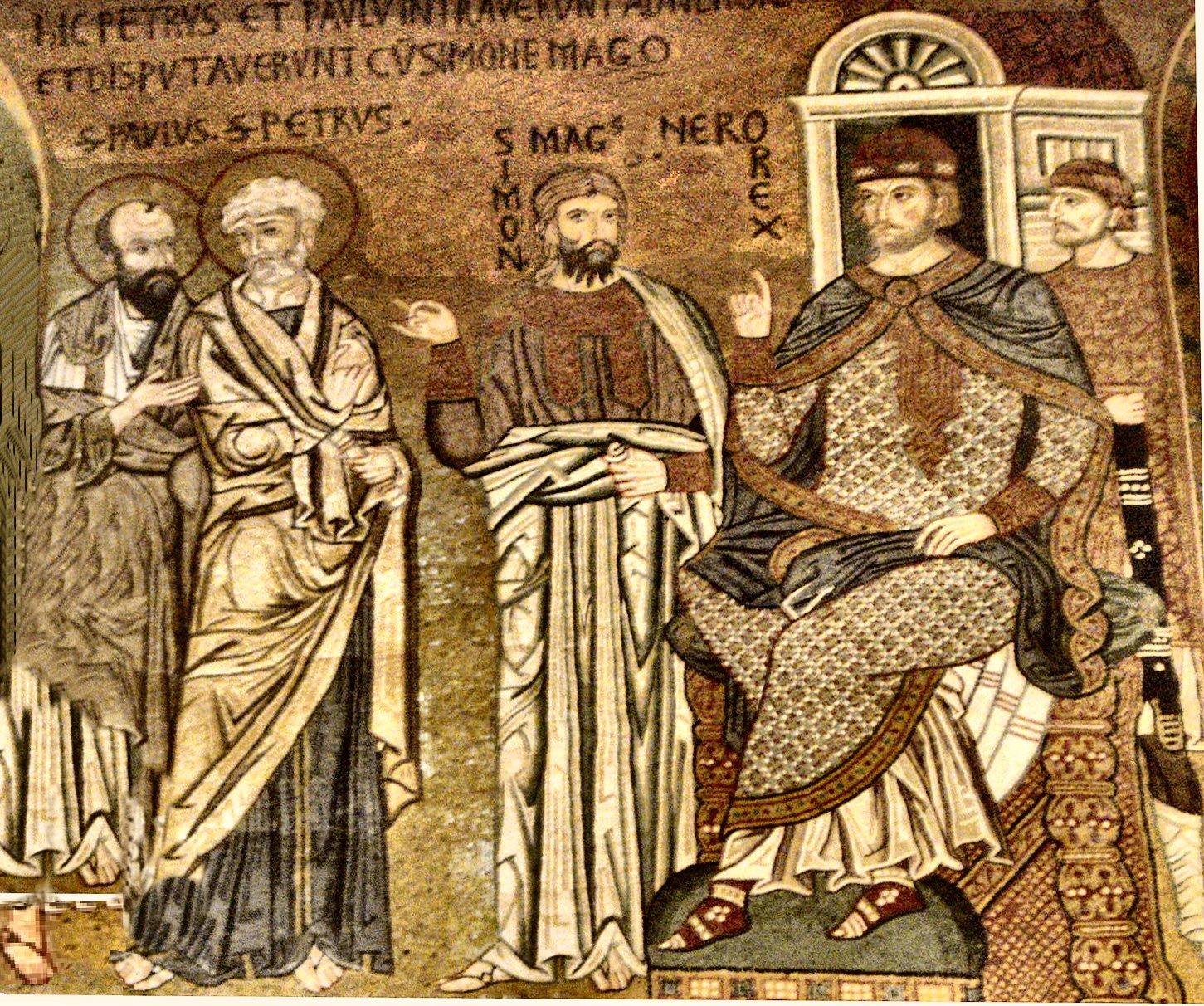
The Acts of Peter and Paul
(Palatine Chapel of the Norman Palace in Palermo) (2-1)
Three weeks later, I joined the great multitude gathered along the Sacred Way to witness what many believed would rival the prophet Elijah's ascent into heaven in a chariot of fire.
Word of Simon's promised flight spread like wildfire through Rome. Some dismissed him as a common magician incapable of such a feat. Others, having witnessed his works before, believed he might accomplish the impossible. Among the Jewish residents, many wondered whether God would again raise a prophet into the heavens as He had Elijah. Others recalled the fate of Icarus, warning that men were not meant to fly.
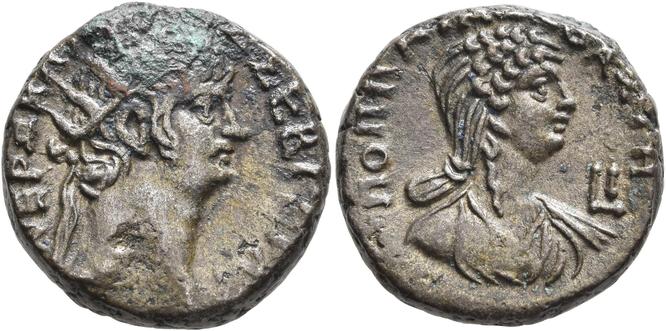
Nero and Poppaea (1-13)
By dawn the streets overflowed with spectators. Near the Forum, a great platform had been prepared for Nero and Poppaea to witness the spectacle.
Peter watched the crowds gather—larger than any he himself had drawn. Those nearest him heard him pray that Simon's boast would fail.
When Simon stepped into the wicker basket beneath the great cloth wings, all Rome fell silent.
He fastened the harness, lit the horse-shaped cylinders beneath the canopy, and flames filled the vast cloth with heated air. Slowly the chariot lifted from the earth.
A murmur swept through the multitude.
Higher it rose above the rooftops.
Even the cries of the marketplace faded beneath it.
The morning sun caught the billowing fabric until it seemed like the shining wings of an angel suspended over Rome itself.
For one impossible moment, the city held its breath.
Then—
A sharp crack echoed through the air.
Then—
Crack!
One of the supporting ropes snapped.
The basket lurched violently.
A scream rose from the crowd as Simon plunged from the sky, striking the stones below.
No one could agree afterward what had happened.
Some declared that God Himself had answered Peter's prayer.
Others whispered that some earthly cause had brought the flying machine down.
Few cared to investigate.
By nightfall Simon's fall had become Peter's triumph.
Rome had already chosen its miracle.
History would remember the prayer.
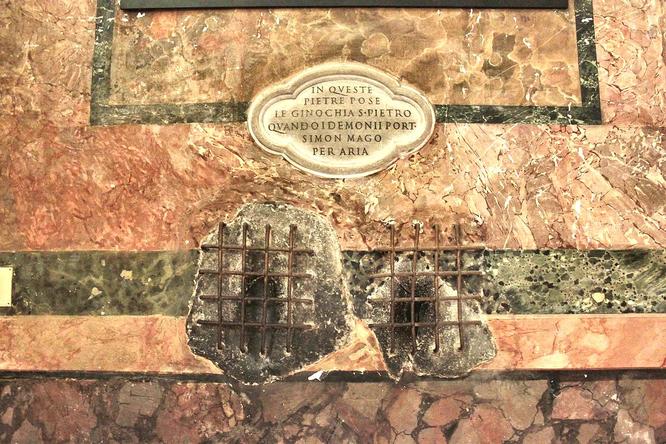
The Francesca Romana Church, which shows the indentation of St. Peter's knees (2-2)
as he prayed for Jesus to cause the evil Simon the Magician to fall from the sky
It would forget the rope.
Chapter 52: Exile and Conscience
For many years, I believed Peter was in the right.
But Jesus never allowed such simple divisions.
What he told me next changed not only how I saw Simon—but how I understood conscience itself.
What follows is not a single account, but what remained after years of retelling: fragments of memory, testimony, and interpretation, shaped by those who survived it—and by Simon's own words as I heard them while he lay broken.
Simon later told me in the hospital that he remembered little of the fall.
Only the sound.
Then darkness.
When he awoke, pain coursed through his shattered legs.
He looked up to see Peter standing over him.
“Peter...” he struggled for breath. “Was it worth it?”
Peter answered without hesitation. “Christ has judged you before all Rome.”
Simon managed a faint smile. “No.” He winced against the pain. “Men judged what they wished to see.”
Peter remained silent.
“I had Nero’s favor,” Simon continued. “I could have shown this city that heaven need not belong only to stories.”
“The truth,” Peter replied, “has no need of your illusions.”
Simon replied, “Without symbols... without what you call deception... you will never move the world.”
Peter answered, “The Church stands upon truth.”
Simon met his eyes. “And upon Rome.”
Neither spoke.
At last Peter said, “Christ made me the Rock.”
Simon almost laughed despite the pain. “You call yourself the Rock because Rome cannot endure two Simons.”
Peter turned and began to walk away. He did not look back.
Simon looked once more toward the sky he had nearly conquered.
“May God be with you, Peter.”
Those were the last words he remembered before darkness overtook him.
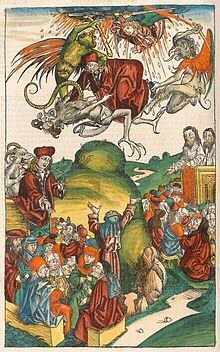
Simon Falls (caricature) (2-3)
The Fall
Those who remained watched Peter walk away in silence.
Peter later told me his story. Time had not dulled the vividness of that day.
At first, he moved quickly—then faster—until his pace broke into something close to a run, as though he were trying to escape not the crowd, but what had just occurred.
What passed through Peter's mind in that moment, I cannot say. But the years that followed suggest a man who carried away more than victory.
Some burdens cannot be seen.
They are simply carried.
Peter longed to speak with Jesus—but Jesus was no longer in Rome.
Jesus often spoke of Peter's gentler nature. For all his boldness, Peter returned to places of memory whenever sorrow overcame him. That is why I believe his heart turned toward the Catacomb of Domitilla. There rested his wife. Years later, his daughter Petronilla would rest beside her. It was the one place where grief and hope still met. If Peter sought Jesus anywhere in Rome that night, he would have sought Him there.
Fearing he might be followed—or that his own unrest might betray him—he turned into an abandoned structure and concealed himself from view. There, exhausted by the strain of the day, he sank to the ground and fell into a troubled sleep.
When he awoke, dusk had settled over the city.
Still compelled, he made his way toward the catacombs, holding to the hope—whether real or imagined—that he might find Jesus there.
Catacomb (4-14)
He entered the narrow passages and lit a small oil lamp. The flame flickered against the clay walls, casting shifting shadows that seemed almost alive. The air was thick, damp, and close. Every sound carried.
He moved carefully past the sealed niches of the dead.
Those who later recounted this moment said he paused more than once, as though listening—whether to memory or to something deeper, none could say.
At last, near the place where Domitilla lay, he stopped.
“My teacher,” he whispered, “I did this in your name.”
What happened next was told in different ways. Some said he heard a voice. Others that he saw only shadows and spoke aloud to himself.
But the words that were remembered are these:
“And what name is that, Peter?”
He lifted his head. In the wavering light, the shadow upon the wall seemed to take form.
“You have called me lord,” the voice said. “But tell me—what have you called yourself?”
Peter answered, though whether to a presence or to his own conscience is not known.
“Your servant—the rock, Petra, upon which your Church is founded.”
“Your wife and daughter—are they not your sisters?”
“We are all brothers and sisters in Christ,” he replied.
“Is Simon not your brother also?”
Peter did not answer.
“Does a brother kill his brother?”
His hand trembled as it moved to his chest.
“You speak of Cain,” he said.
“I knew you knew the answer.”
Peter’s voice faltered. “Am I to be cast out, then?”
“God forgives all,” came the reply, “but you must bear the mark.”
He fell to the ground.
“I cannot live with that stain upon my life.”
“Have I not told you—God forgives all? The mark is not your curse, but your conscience—the sign that a man would never again kill without knowing he had killed.”
Peter lifted his head.
“Then Cain was the first to know God?”
“To know God’s sorrow,” the voice answered, “is nearer to God than zeal.”
Peter reached down, taking a piece of soft clay from the edge of the passageway.
He pressed it between his fingers for a long moment, then raised his hand.
With no witness recorded, he drew an X upon his forehead.
The lamp behind him flickered in the moving air, and the shadows along the tomb walls seemed to shift in response, as though the place itself had reacted—but whether this was perception or memory cannot be known.
When he finally stepped back into the open night, the city was already beginning to turn toward dawn.
He did not speak as he walked.
He felt, in time, as though he had been marked—not as punishment alone, but as recognition.
Marked like Cain, yet no longer cast out in the same way.
What he understood—or later believed he understood—was that judgment and mercy were no longer separate things.
Peter never forgot that night.
Whether the mark remained upon his skin or only within his memory, those who knew him said it never left him.
Chapter 53: Revelation of the Beast
Rev. 13:12; Mt 6:24; Ant 20.9.3; War 2.17; Jer. 15:2; Jer. 43:1
For years after Simon's fall, Peter carried the mark of that night within his conscience.
He no longer questioned whether he had acted from faith. He questioned whether he had understood the man he had condemned.
Simon had claimed to serve God.
Simon had blessed him before darkness claimed him.
And Simon's final words refused to leave him.
“May God be with you, Peter.”
I often wondered whether Peter feared Simon's miracles—or Simon's possibility.
Years passed before he spoke of it again.
In the autumn of 60 AD, Paul was sent to Rome under guard to stand before Caesar. Peter accompanied him, as did Jesus—whether in body, memory, or vision I cannot distinguish from the accounts left to me. They all knew there would be no return.
During the long voyage, Peter finally spoke aloud the question he had carried since that day outside Nero's gardens.
“Jesus,” he said, “I understand that Simon Magus is described as the second beast. Yet it is written that he ‘exercises all the authority of the first beast on its behalf and causes the earth and its inhabitants to worship the first beast.’ If this is so, he does not merely serve the beast—he strengthens it. Did you not say, ‘You cannot serve both God and mammon?’”
Jesus looked upon him with the same patience that had once called him from his fishing boat.
“He served only me,” he said. “But you must pay attention to his horns.”
Peter pondered those words long into the night.
When sleep finally overtook him, the sea itself seemed to give way beneath him.
And in the darkness, the first beast rose from the waters.
During the long voyage, Peter spoke with Jesus about writings attributed to James Niceta, texts that would later be associated with what became known as Chapter 13 of Revelation.
“Jesus,” Peter said, “I understand that Simon Magus is described as the second beast. But it is written that he ‘exercises all the authority of the first beast on its behalf, and causes the earth and its inhabitants to worship the first beast.’
If this is so, he does not merely serve it—he strengthens it. Did not you say, ‘You cannot serve both God and mammon?’”
The reply remembered from that exchange was simple, though its meaning was not:
“He served only me… but you must pay attention to his horns.”
That night, as the ship moved through darkness and waves, Peter reclined in his hammock. The motion of the sea lulled him into sleep.
In the dream, a figure appeared before him. It did not remain fixed in form. At first it was Eleazar ben Ananias. Then it shifted into Menahem ben Judah. The form changed as if identity itself were unstable within the vision.
The figure spoke with a calm that was not peace:
“My exile is ended. My wound is healed. I have taken the temple which will be my fortress, and I rule over the scattered nations. The uncircumcised have become my strength—the lost tribes gathered again, their seat upon the seven hills.
Now the fullness of power is revealed.”
What Peter heard was later remembered as both declaration and accusation, though in the moment it felt like neither.
A cock crowed.
Once.
Twice.
Three times.
The sound repeated until it became unbearable, as though marking not time but judgment.
Peter awoke disoriented, his thoughts fractured.
What followed was later described not as words, but as a pressure upon the mind:
If a man believes God cannot protect him, he will yield to the loss he fears.
The following night, the dream returned.
This time, the vision rose not from the sea, but from the earth.
It had the appearance of a lamb, yet its voice carried a divided authority—one that resembled innocence while concealing contradiction.
Peter would later say this was the moment he began to understand what he had not seen before.
The lamb was not singular. It was structured in reflection.
And within that reflection, Simon appeared.
Not as he had been seen in Rome, but altered within the vision—bearing horns like those of the Lamb itself. Yet those horns did not signify unity. They signified interpretation.
As Simon spoke, his face shone like Moses descending from Sinai, and the horns upon his head shifted as though they were not fixed forms but meanings being perceived.
And within the vision, Peter began to discern not a single sign, but a structure unfolding as understanding deepened:
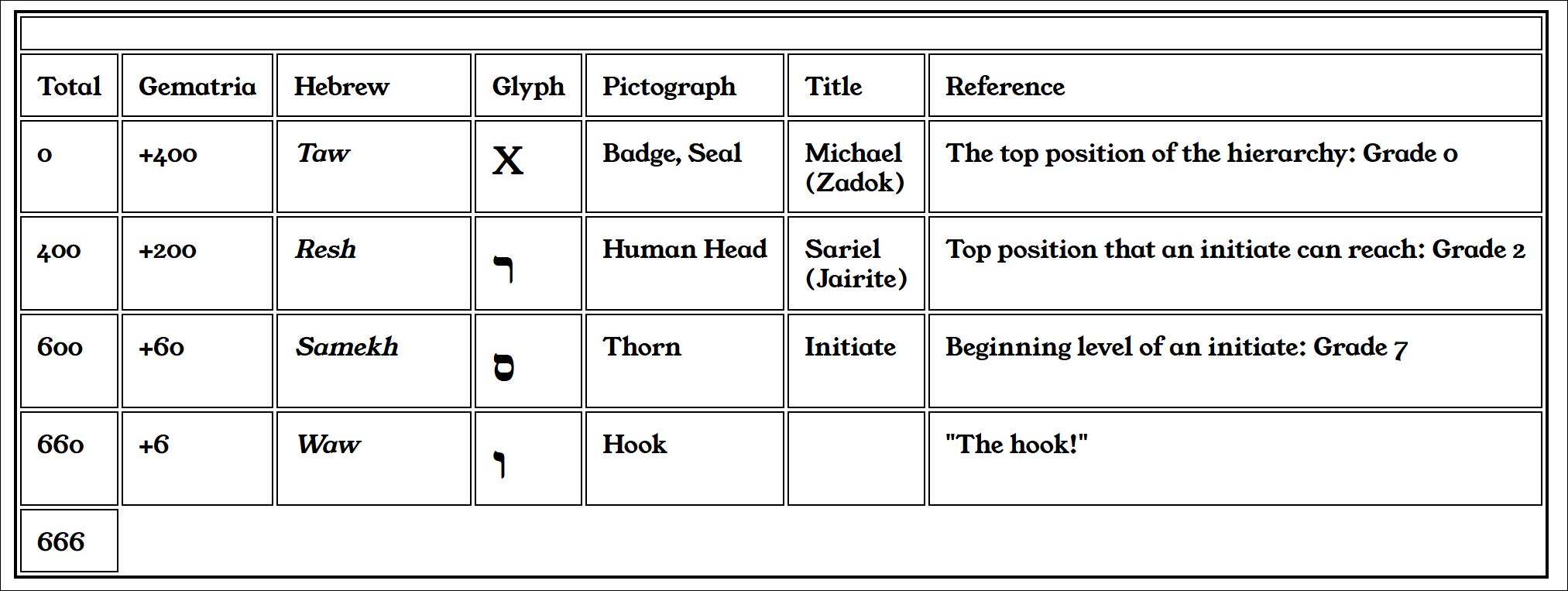
- the mark — an X shaped into form, which in perception appeared transformed into Chi-Rho (χρ), as though crossing itself had become meaning rather than accident
- the name — what is confessed, invoked, or denied in recognition of authority
- the number — what is read as judgment, and misread as “666”
These were not separate symbols. In the dream they appeared as one seal, seen differently depending on the mind receiving it.
And his voice no longer explained—it declared, as though the meaning already existed within the act of speaking itself:
“The number you fear is not a curse, but a measure.
Six hundred sixty-six is the measure of development—not of power, but of understanding.
Letters that carry pictograph and number within them—as the Hebrews reckon meaning by measure as well as by sound.
Waw is the initiate. It counts as 6.
Samekh is graduation at the age of twenty-three. It counts as 60.
Resh is Bishop. It counts as 200.
Taw is Cardinal. It counts as 400.
Taw. Resh. Samekh. Waw.
Four hundred. Two hundred. Sixty. Six.
The mark completed in four pictographs:
the seal, the head, the thorn, and the hook—
the halo of consecration, the mind, the crown of thorns—conscience—and the shepherd’s guiding staff—
four measures: 400, 200, 60, and 6.
What you call ‘six hundred sixty-six’ is the form of a man brought to fullness—not above the Lamb, but conformed to it.
You mistake likeness for rivalry.
You think it speaks of me.
It does not.”
Peter awoke and made the sign of the cross, unsure whether from fear, understanding, or resistance.
The image of Simon remained with him—not as enemy alone, but as a figure bound to paradox.
In time, Peter came to interpret what he had seen.
He no longer understood the number as simple evil, but as something that attaches itself wherever identity, authority, and contradiction converge.
And the mark—whether sign, name, or number—was no longer, in his understanding, a fixed external symbol.
It had become a seal upon perception itself.
Some traditions claim that after his release from imprisonment under Agrippa, through Simon’s intervention, Peter assumed another name—Aristarchus—under guidance he attributed to an angelic encounter.
In those same traditions, it is said that his understanding of the vision did not come all at once, but unfolded over time:
First in the catacombs,
then in the dream of the beasts,
and finally in his acceptance of what was called the mark of Cain.
Only then, according to these accounts, did he come to believe he had reached what he later described as the ascent of Jacob’s Ladder.
Whether this was transformation, interpretation, or the shaping of memory itself remains unresolved in the record.
The Inverted Cross
Acts of Peter 37; Jn 21:15–17
When the ship reached Rome, Peter and Paul understood—whether by word, memory, or foreknowledge—that they were walking toward death, and yet toward a life that would outlast judgment itself.
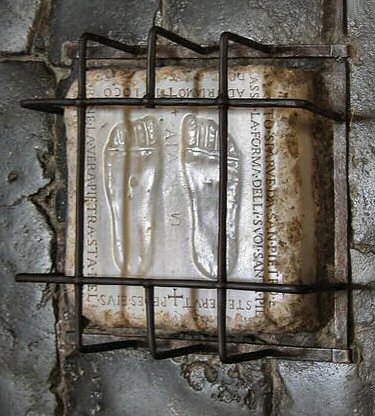
Peter's footprints (4-15)
During Nero’s persecution of the Christians, Peter attempted to flee the city. But at the Church of Domine Quo Vadis, he turned back—as Simon had told him he would—and accepted what awaited him.
It is said that Jesus met him there and kissed him on the forehead. And Peter answered, “I agapē love you, too.”
When he was taken, he pleaded with the executioners to crucify him upside down, declaring himself unworthy to die in the same manner as Jesus.
And yet, in another sense, he was worthy—for he had passed through what he himself had come to understand as the trial of conscience.
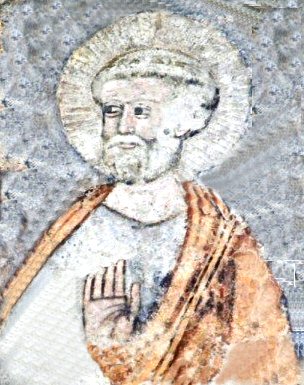
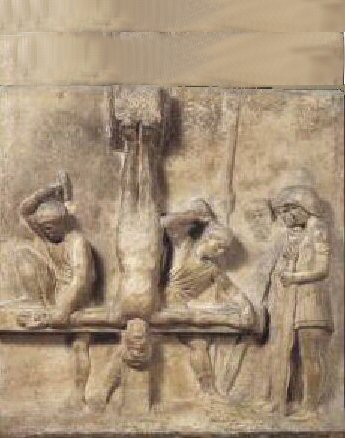
Fresco of St Peter at Tullianum Prison (3-1) Martyrdom of St. Peter (upside down)
“But now it is time for thee, Peter, to deliver up thy body unto them that take it. Receive it then, ye unto whom it belongeth. I beseech you, the executioners, crucify me thus, with the head downward and not otherwise: and the reason wherefore, I will tell unto them that hear.”
Book XII — Sophia Remembered
Chapter 54: Hymn of the Pearl
The Sophia of Jesus Christ: Berlin Codex 8502; Nag Hammadi Codex III
When I was a child,
and still dwelt within the order of my father’s house,
I was content among the wealth and dominion of Rome.
But the purple robe woven to my stature
was given to my stepbrother—
and I was sent out.
Not by desire,
but by necessity.
I passed into exile,
escaping death,
and came down into a world not made for me—
a place of rule without truth,
of power without memory.
And there, I forgot.
Yet something remained.
For I knew I had been sent
to retrieve a pearl—
not like those of merchants,
but one guarded in the depths,
held fast by the serpent
who deceives the nations.
In Judea, I encountered the travelers of the Way—
first John,
and then Jesus.
In Jesus I sensed no throne,
no robe,
no claim to power—
only love.
He spoke not to rule the world,
but to save it.
And he said:
“Do not cast your pearls before swine.”
Then I understood—
the pearl was never meant
for those who devour and destroy,
but for those who remember.
I remained with him—
shared in his poverty,
shared in his suffering.
And in his end,
I saw not defeat—
but the breaking of the serpent’s hold.
What he revealed
was not escape—
but resurrection.
And I remembered.
For like Sophia,
I had come down—
not in rebellion,
but in seeking to understand,
and was caught within a world
that would claim me.
Once I recognized my true Father’s message,
I knew I belonged to Him.
I took the pearl and pressed it to my breast—
my task complete.
What had been taken was not restored—
but replaced.
Not the robe of Rome—
nor the measure of men.
From the heights I was sent a shining robe to clothe me.
As I ascended toward the gate that Peter would soon claim, my true Father welcomed me in.
“You have done well, Simon the magician. You may discard that mask, for we are all equal in my kingdom.”
Not all stories end in death.
Some end in recognition.
What was seen in part—through fall, through vision, through conscience—must now be spoken as a whole.
For the account that remains is not of Rome, nor of Peter, nor even of the Church as it was remembered among men, but of something deeper:
The descent of one who forgot,
and the return of one who remembered.
What follows is not set down as history, but as testimony in another form—
a hymn preserved in fragments,
echoing the pattern of Sophia, Phoebe, Helena, and Mary Magdalene—
and the journey of the pearl.
It is the path traced again and again in different names:
Simon Magus, Peter, Paul, and Jesus—
not as separate endings, but as converging memory.
And in the end, there were no separate names—only the remembrance of souls sent down, and spirits returned.
Only remembrance.
THE END